Cybersecurity solutions buyers are worn out by the constant barrage of stale content flooding their search results, inboxes and social media.
Only brands that are willing to pause the content machine long enough to develop true empathy for their audience will be able to make any progress towards the mecca of trust and authority.
97th Floor believes that Empathy, paired with Innovation and Profitability, produces Great Marketing—marketing that fosters relationships and ultimately sales. We unlock empathy for our client’s customers through an exhaustive process of in-depth persona research and customer journey mapping.
Our customer journey maps reveal the questions, actions and touchpoints of an audience at each stage of the funnel: awareness, consideration and decision. Using these maps as a launching pad for every marketing campaign makes delivering "the right message at the right time" a reality.
The following are real persona customer journey maps created for our clients in and adjacent to the cybersecurity industry. They have been anonymized, but all other information is as-delivered to our clients.
Most buyer personas get built, presented, and shelved. This short video breaks down why — and what the ones that actually drive content decisions look like instead.


Vivint Solar is a brand that needs no introduction — mostly because they’ve been introducing themselves from our doorways for years. Of course, it doesn’t hurt that they are a multi-billion dollar, door knocking solar juggernaut, but it wasn’t always this way.
Their street presence had never been stronger, they came to 97th Floor with an online presence that was lackluster. Their success in the neighborhoods had left smaller shops eating their digital lunch. They’d seen the gap in their strategy and had a desire to translate their success from the streets to the internet — and in the process, open the door to the even wider audience to be found online.
At the start, we had hardly anything to go on. Vivint Solar hadn’t put a deep SEO plan in place before, and while they organically dominated branded searches, they hadn’t turned any attention to non-branded search terms. So, we began from square one. Not that we minded, we always love painting on a blank canvas.
{% video_player "embed_player" overrideable=False, type='scriptV4', hide_playlist=True, viral_sharing=False, embed_button=False, autoplay=False, hidden_controls=False, loop=False, muted=False, full_width=False, width='1920', height='1080', player_id='25873143908', style='' %}
Vivint Solar needed a clear, intentional SEO strategy. And, because all SEO measures take time to bring in results, it also needed to be enacted soon so that they could establish themselves. With that in mind, we got right to work.
We began as we always do, with market research to reveal the strengths and weaknesses in the strategies of Vivint Solar’s competitors. This kind of research is essential because it identifies gaps that our client can fill — as well as places where they can step up their game in order to keep up.
In Vivint Solar’s case, we discovered that many of their competitors’ ranking pages had great domain authority, and they had already targeted many non-branded terms. With this information, we were armed to take the next step and conduct informed keyword research.
Our keyword research revealed crystal-clear opportunities for optimization and new content. As Vivint Solar was already a known brand — and already bringing in traffic from branded searches — we focused all attention to increase our share of voice via non-branded terms. Our keyword research quickly uncovered non-branded keyword opportunities that would aid consumers along their buyer’s journey. We launched a comprehensive blogging strategy with the intent of attracting inbound traffic through these non-branded terms and increasing on-page conversion through compelling CTAs and copy.
As we mentioned, time was of the essence. We needed to get Vivint Solar’s new blog pages ranking quickly, and link building was an essential part of that race against time. Links build the authority of a page in little time, allowing the page to rank much more quickly than it would on its own.
Our strategy didn’t end there. While our ultimate goal was to increase Vivint Solar’s presence online so they would not be totally reliant on door-knocking, what if there was a way to take advantage of those prolific efforts? Using localized SEO, we launched pages for every locale where Vivint Solar is active, over 100 (but we’ll get to that later). This provided pages tailored to the needs and offers of various states and cities, connecting door-knockers and potential customers quickly and effectively.
With these strategies in place, and a thorough technical audit completed, we put our plans into action — starting with content creation. Together with the Vivint Solar team, we researched, outlined, and produced over 200 articles targeting our various non-branded keywords.
Once article creation was underway, we turned our focus to link building. Our competitive research informed this strategy from the beginning, including the frequency of our backlinks and their quality. After the first month of outreach, we were able to gain over 30 backlinks each month to the Vivint Solar site, each one obtained naturally on quality websites. Not to mention, each link was optimized for a specific page and corresponding keyword. This aided our content in ranking quickly for our intended keywords.
Additionally, we helped Vivint Solar build out robust versions of their local pages, which at the time included 23 states with additional locales within each state. By the time we were done, we had over 100. We built out and optimized local pages and search terms in each of these respective markets.
While the above components are critical to any digital transformation, we knew it was important to look even deeper into Vivint Solar’s funnel than simply awareness-level content. We analyzed the conversion path for Vivint Solar, and identified potential weaknesses or misalignment of message. We then added resources to optimize the user’s experience once they’d entered the funnel, and throughout their journey. We fully audited and optimized email messaging, and created valuable content by breaking down complex industry topics and making them more digestible through quality UX design.
Here at 97th Floor, we love working with remarkable partners like Vivint Solar. Together we moved quickly to not only meet, but exceed the goals we set at the onset of the project.
Before 97th Floor began working with Vivint Solar, only 5% of their organic traffic was non-branded, and today 33% of all visitors are coming from non-branded keywords. Additionally, total organic traffic has increased by an incredible 45% year over year. This was accompanied by a comparable rise in revenue, and a 40% increase in new users. This increase in traffic and conversions has manifested in hundreds of thousands of dollars in recurring revenue brought in from digital channels.
Today Vivint Solar has a shining reputation in residential solar on the streets and on the web — a true physical to digital transformation. Their prospective customers used to have to wait to be found. Now they are able to find Vivint Solar on their own. Through our combined efforts the two methods work together, making Vivint Solar an unstoppable force with a good reputation on the streets and online.
Keyword research is a necessary step that you do to understand your market, and plan your SEO strategy. But what if you could use it to learn about user intent, restructure a whole site, and increase conversions as well as traffic? That’s exactly what we did with this client.
CBD American Shaman is a health company that sells CBD oils. While it’s a competitive market, their products have an edge on the competition because they’re water soluble. Despite this, they were struggling to capitalize on their great product with the kind of SEO traffic that it warrants.
Yet the potential was there: An audit revealed that the more specific SERPs previously targeted for the product had a pretty small search demand — but the right strategy could capture a large amount of traffic. Think “CBD oil” with 1 million searches versus “water soluble CBD oil” with only 1,300.
97th Floor was brought in with a clear business question to address: How do we capitalize on this great demand and become a breakout CBD shop?
Like much of SEO, the solution starts on the site-level. The CBD American Shaman site was hosted on a custom CMS (rather than WordPress, Shopify, or Hubspot, etc.), which always complicates technical SEO solutions. Their CMS was completely done by hand. The site organization was also done by hand, and more subject to human error.
They had a wide list of products, but their site wasn’t utilizing this wide variety to capture organic search. Their site’s architecture was flat, lacking the intuitive hierarchy that both Google and the user need to easily navigate and understand a site. In the beginning, there were only three categories on the CBD Shaman site: wellness, pets, and beauty. This organization made sense at the conception of the site, when the company offered few products. However, as their business scaled and expanded, that category structure no longer made sense, and in fact, felt difficult to navigate and drastically out of date.
It soon became clear that a total overhaul of the site’s organization was necessary. Any SEO tactics would yield mitigated returns unless the site was a complete, SEO-driven overhaul.
Just as a doctor treats a whole patient rather than a symptom, we chose to stop looking at each individual problem, and instead gather it all into one place and focus on the most essential and basic purpose of the site. In this process, keyword research and mapping were essential in understanding how to treat the site as a whole — curing all of its symptoms, rather than just hitting one at a time.
Keyword research is important, but like any data, it means nothing on its own. It’s what you do with the insights gleaned from research that matters. So — while sometimes all you need from your keyword research is a handful of new keywords to tackle — for CBD American Shaman, keyword research would go on to guide the entire reconstruction of their site.
We used our keyword mapping to guide the new site’s entire structure. By using keyword research as the foundation of the site, we captured more authority, and redistributed that authority back to the site’s most relevant and converting pages.
For example, the category page for /cbd-oils now houses all of the CBD oil products, allowing for more weight to target that high-volume keyword as well as an ease for the user in browsing the different oils available. In the previous version of the site, the following page was trying to rank for “CBD oil,” /vg-cloud-terpene-rich-cbd-oil-tincture. See the problem? Yes, it was a CBD oil product, but its strength was wasted in attempting to rank for “cbd oil” and it was poorly optimized for a user from coming form a Google SERP.
With the knowledge that these new category pages were much more likely to rank in Google SERPs, we followed our keyword research further. We used it to map and reorganize the entire site, categorically moving pages to align with relevant category pages rather than stand on their own. By connecting these further pages to those authoritative category pages, it allows us to pick up additional traffic from newly targeted keywords.
Evaluating the keyword landscape — which keywords ranked for which landing pages, and which keywords should be combined moving forward — was a BIG project. Pulling all of our ranking keywords, separating them by landing page, and creating new keyword groups took us a full month.
We had to determine what keywords should rank for a single landing page versus separate landing pages, which allowed us to find instances of keyword cannibalization. We also had to cross-reference each keyword within the designated SERP to identify whether a category page or an individual product page was needed to best fit the ranking criteria for that SERP. It was a lot of work, and a lot of detail, but it paid off.
Under the “shop” menu on the homepage, we added sixteen new categories, all based on newly selected high-potential keywords. It turned out that not only did search engine bots like this kind of layout, but users did too. Within weeks, CBD American Shaman saw a 13% increase in organic traffic, not only that, we saw an unexpected radical bump in conversion rates. Which makes sense when you consider how this also drastically improved navigation and the user experience.
CBD Shaman has an extensive product offering that is always being added to. With all of these choices, the shopping experience was previously overwhelming to users. Products were difficult to locate, and customers had no clear understanding of where to find certain products, or even what products were offered. Instead, the site was set up in such a way that they'd have to endlessly scroll through lists of product after product, without the ability to filter based on product type or use. It was hurting their sales, and alienating their customer base. So we knew it had to change.
They are constantly evolving their product catalog. With their previous strategy, a single product page may have built up a lot of authority over time, only to be taken down, and that authority would then be redirected to an unoptimized page or lost completely. With our new category-centric strategy, the business’s evolution is supported. No matter which products are added or taken away, the authority will remain in the category pages. These pages stay consistent in a constantly changing website, allowing users to always find their way.
The result is an SEO framework that not only worked on the onset, but it’s proven effective even a year later. This keyword mapping system has paved the way to double organic traffic for CBD American Shaman.
Many ecommerce businesses begin with a D2C model, selling quality products on their own site while dreaming of the days they’ll hit it big by getting serious traction in a major brick and mortar.
It’s a big step and an exciting achievement, but it also carries risk. As you push your product through bigger stores, you give up control over your brand and your ability to connect directly with your customers. It’s often a matter of trading control for (hopefully) greater volume.
This was Zhou — a nutrition brand thrilled to fulfill their longtime goal of seeing their product in 433 Target stores across the US, but worried about the new lack of control. They wanted to retain a hand in their own success, and see that their entrance to Target was a success in terms of actual foot traffic and revenue.

Zhou presented 97th Floor with a fixed budget for advertising in 433 specific locales. The task was one Zhou had never attempted before — drive foot traffic and sales with Facebook Ads to physical Target locations through geo-targeting, in addition to Target’s online landing page. Driving and tracking success via Facebook Ads to your own landing page is easy to track and control, but driving foot traffic to a secondary store is another story.
Ultimately, the strategy and results were so positive that after two weeks, Zhou found extra budget to push towards these ads.
It’s quite a triumph when longtime D2Cs enter big-time stores like Target. But success isn’t guaranteed. The D2C still has to do the work of getting their brand recognized in stores, and pushing foot traffic into those stores to actually buy the product.
In order to start off with a bang and keep the momentum going long term, Zhou allocated some budget to getting products moving in the locales they were entering. Pushing that traffic, especially in those first few weeks, would prove critical in making their transition into Target stores a success.
Zhou came to us with a moderate budget, but when split over 433 different markets even a sizable budget goes pretty fast. We began with a total budget of $30,000, which meant each store got only $4.62 in daily ad spend. This meant we had to be pretty picky and intentional about where we put our money. The tactics we used had to be effective and incredibly targeted. We also ran this project for just two weeks, so time was of the essence. After those first two weeks and initial $30,000, Zhou was so impressed with the results that they decided to push an extra $10,000 toward another five days of campaigning.
We decided that higher click through rates and lower cost per clicks would be the best markers for our success in this particular campaign. In addition to revenue information gathered from Target. This was because we weren’t trying to drive sales directly, but rather foot traffic to brick and mortar Target locations as well as their online landing pages.
The two products that Zhou placed in Targets were Collagen Peptides and Hairfluence supplements. The primary target for these products were women, so we catered our copy and ad images towards that demographic.
We built out a strategy with ads for 160 different geo-targeted markets, including up to 27 stores within each market. The Target logo was prominent in the ad visuals, highlighting that the product was now available at Target. That math adds up to thousands of different geo-targeted ads, each directed at their specific markets. And, to complicate things even further, we wanted all of them to go up within Zhou’s first few weeks inside Target.
With that great volume of ads to set up in such a short period of time, we knew we had to be careful how we approached their launch. If we put them all up at once there was a high likelihood that the Zhou account would be disabled. Which would throw a real wrench into the already time-sensitive campaign. So, we played it safe and uploaded them in batches, day by day.

This turned out to be a strategic advantage, because after the first week, we located the underperformers and pulled them, reallocating their budget to the highest performing ads and locales. This helped us make the very most of the budget, and see quicker and more substantial results from our efforts. It’s always a good feeling to put your money where the data is.
We also created a live dashboard with Google Data Studio so we could see the performance of our ad variants across all locations in real-time. We shared this with the executives at Zhou and their parent company (Nutraceutical) who then shared it with Target. Target was able to provide us with in-store conversion data, allowing us to truly see the impact of our efforts on the bottom line. At this point, Zhou, thrilled about the increasing conversion rates, sent that extra $10,0000 to continue the campaign.

Together, Zhou and 97th Floor truly revolutionized the process of entering brick and mortar stores as a D2C. Zhou kept control of their brand, and pushed customers toward their new Target locations. No longer do D2Cs just have to sit back and hope that greater volume will mean greater results. Instead, they can still have a hand in their own success.
And, it wasn’t just Zhou that profited. This strategy was a win-win for both Zhou and Target — Target gets customers in their doors, and Zhou gets revenue and product recognition. This ad strategy and real-time dashboard were so successful together that Zhou now uses this framework as a playbook when guiding new product lines to enter big retailers like Walmart, Sam’s Club, Costco, and more.
Ultimately, Zhou saw a 27.46% increase in in-store purchases in just one week of this campaign. Proving to themselves, and other curious D2Cs, that profitable partnerships with big-names like Target are not only possible, but probable, with the right ad strategies.

Often digital and brick and mortar marketing are seen as opposites rather than partners, but Zhou proved that it doesn’t have to be that way. Online shopping might be the new frontier, but there will always be a place for the convenience and experience of local brick and mortars. Zhou and 97th Floor’s partnership led to great results, revolutionary processes, and a successful start to Zhou’s product pushing in Target.
Zhou kept control, but was able to take advantage of Target’s wide reach. Now, Zhou is looking for even more products that they can push through this process and get inside of brick and mortar stores.
It’s a situation many marketers are familiar with: a great product in a stagnant market. A brand deserving more recognition, fighting for a slice of market share.
This story was certainly relatable for eFileCabinet. But with big marketing goals and a team open to creative solutions, they were ready to implement a strategy that would cement their foothold in the market.
After implementing a multi-pronged campaign — holistic SEO, advertising, content, and email marketing, all wrapped around a creative and expertly executed conference — they were not just seeing results, they were seeing stars.

eFileCabinet makes the champion of document management software. They aim to take the pain out of complex filing and digitizing processes.
While their product was ahead of the curve, they woke up one day to find smaller competitors coming to steal their market share. eFileCabinet needed digital marketing expertise, they needed new approaches, and they needed a team that could ramp up and execute quickly. They found it all with their partnership with 97th Floor.
Our efforts culminated in a campaign so exciting that it not only won multiple awards (and the attention of the press), but also brought in the largest influx of leads eFileCabinet had ever seen.
While it’s fun to smash a few printers, the excitement and attention of a campaign fades, and without the foundation of a well-oiled lead machine, the true potential of that campaign won’t be realized.
In this article I’m covering the ins and outs of this campaign, but if you want to jump to a specific section, go for it!

If you’ve read any similar articles on our blog, highlighting real life marketing wins, you know the first step is typically customer research with the intent to create buyer personas. Audience insights, usually housed in buyer personas, are a critical element necessary before engaging in any campaign. But many marketers (even savvy marketers) underestimate the power of persona creation. Personas are especially crucial when working with an agency. Armed with the insight that only comes via detailed personas you can begin to create marvelous work.
eFileCabinet’s software could serve nearly any business (we all need to organize documents, don’t we?) but when we identified specific audiences that would benefit the most immediately, we were able to refine our customer personas to the most important ones.
The first step in creating personas is always basic market research. eFileCabinet already knew that many of their best customers worked jobs that needed constant document organization. We narrowed down the four most common fields to: HR, accountancy, insurance, and legal.

With four focus audiences in place, we took it one step further, delving deeper into what made these people tick. What were the biggest pain points they encountered in their jobs? Why would they come looking for eFileCabinet?
eFileCabinet introduced their team at 97th Floor to a handful of customers, thus giving us a direct line of communication with our target audience. These in-depth interviews helped shape the final touches on our persona development. Not to mention these interviews made for exceptional case studies down the line.
During the persona discovery process, it became clear to eFileCabinet as well as 97th Floor that our four audiences were not solely document filing drones, but people.
So, instead of marketing to people that live to digitize documents, eFileCabinet changed their strategy to market to humans.
We did a 38-point technical audit and discovered a number of things that were dragging down our rankings. The site was fine, but we were able to clean it up and really make it shine. After all, technical SEO really does lay a foundation for holistic SEO strategy. With a site humming along from a search engine perspective, SEOs could turn their attention to rankings.
Keyword research is an important piece of any SEO campaign, but without personas, keyword research will always be a weak final product. The personas guided the SEOs at 97th Floor in running the keyword research and keyword selection process. We had four different personas, which called for four specific rounds of keyword research. The strategy was to capture these audiences through awareness- and consideration-level keywords specific to their industries.

A collection of product- and market-focused keywords were selected to spearhead the campaign. Originally, eFileCabinet only ranked for about 10,000 keywords, but today they double that, and which contributes to nearly double increase in month over month organic traffic.
Today eFileCabinet ranks for a host of relative market keywords in varying stages of the buyer’s journey, from “going paperless,” to “office management systems,” to “wet signature,” to, “document manager,” to, “hr document filing.” Today, eFileCabinet has effectively transformed into an entirely new SEO force to be reckoned with, picking up 281% more organic leads than the previous year.
Digital advertising can capture an entirely different set of prospects than organic SEO. With our personas in mind, we created a segmented series of campaigns spanning across three platforms: Facebook, LinkedIn, and Google Ads.

Facebook Ads’ detailed demographic targeting gave us the freedom to launch ads that reached a wide but tailored audience. We created targeted ads to those who act like past purchasers, which attracted a new audience of people who behaved like our existing audience. Or in other words, they actually followed through on our CTAs. Facebook is also where we focused retargeting efforts, reminding those who had visited eFileCabinet before what they had left behind.

LinkedIn was instrumental in pinpointing audiences based on job position and industry, which was absolutely critical for our advertising campaign. This allowed us to pinpoint exactly who we wanted to market to, and align that with our constructed personas. Because the targeting was so precise, we were able to build unique ads, copy, landing pages, and lead magnets that were directly tied to any one of our audiences. For example, accountants would see ads about accounting document filing software, while legal assistants would see ads about legal document filing software.

Google Ads allowed us to market to an intent-based audience via keyword targeting. This let us reach people at their stage in the journey, including those with serious intent to buy. Google Ads also worked hand in hand with the SEO strategy. Together with eFileCabinet, we found high-converting keywords, we took that info to our SEO team members and — bringing in the benefits of paid through organic — saving a lot of money in the process.
Testing multiple ad variants was essential in ensuring the different campaigns were attracting the right audiences, and pivoting the ad copy if they were not. In total, hundreds of ad campaigns, with thousands of ad variants were created across the three platforms.

These campaigns brought extraordinary results. We had over 400 MQLs, increased conversion rates on Google Ads by 131% (.54% → 1.25%), with click through rates almost tripling (1.35% → 3.97%). All by simply focusing on the real people behind the job titles, rather than just the jobs themselves.
The secret to great email marketing is a good workflow and customer-centric logic in place. Again, it’s about the people. Email automation platforms, by themselves, lack logic and intelligence. It takes an experienced hand to turn a list of subscribers into leads, leads into customers, and, if you’re lucky, customers into raving fans. The first step, then, is to take full advantage of the email platform and create strategic workflows for each customer persona at each stage of the buyer journey.
Because eFileCabinet’s platform audit uncovered a series of misfiring workflows, overlapping data points, and repetitive offers, the first step in their email marketing strategy was to restructure the entire setup, including campaigns and workflows for each audience.
By creating a dedicated lead nurture experience that hinged on the user’s industry and stage in the customer journey, eFileCabinet could best meet the needs of their users within this channel.
Here’s the thing, everyone talks about the funnel as if it were actually a funnel. Even we are guilty of it. But today’s customers are so savvy that they don’t often progress down the funnel in the direct, linear fashion we want. So having built-in logic to your email campaigns that intelligently delivers what they want (which may not be the next step in the funnel) is imperative to properly nurturing a large and growing list. That’s what we accomplished with eFileCabinet.

I can be honest here, right? Document management software isn’t the most exciting industry in the world. Because of this fact, content needed to be fresh, unique, insightful, and just maybe, a little exciting too.
With the traditional content channels, our efforts encompassed a broad range including ad copy, articles, ebooks, case studies, and email copy. We created four different content campaigns, each pertaining to one of our buyer personas.
The following assets were produced to support the content journey of each of these campaigns:

Sounds like a lot right? It is. That’s the point. Shortcuts in content marketing don't exist. There is only efficiency and experience and, eventually, expertise.
These assets, executed well, and delivered at the right time have created a near-flawless content flywheel, which contributes to perfect adherence to lead nurture goals quarter after quarter.
Squeaky clean SEO, targeted PPC, segmented emails, and persona-driven content left eFileCabinet well on their way to becoming the leading figure in the industry. This would be the time when most brands would queue the fist pumps and pop open the champagne bottles to celebrate.
But eFileCabinet was only getting started. Now was time for the fun stuff.
Everything was humming along nicely digitally, but eFileCabinet had a long-time challenge they wanted to tackle next: Trade shows. Quite a different world than the digital marketing landscape they’d just conquered.
Trade show sponsorships had been lackluster in the past, but they believed there was opportunity still on the table. Together, we dreamed up many ways to get more out of upcoming trade shows. We did countless brainstorming sessions and built decks describing options. It was a battle royale of creativity. When the smoke cleared, one idea stood out as the clear winner: the Rage Cage.
Key takeaways
Holistic SEO is a unified approach to search optimization that treats a website as a connected system rather than a collection of isolated tactics. Instead of focusing on single levers like keywords or links, holistic SEO aligns user experience, content quality, authority signals, and technical performance to support long-term growth. At 97th Floor, holistic SEO is operationalized through the XACT framework, ensuring every optimization supports both search engines and real users.
Traditional SEO is often executed in isolation. Holistic SEO is designed to work as a connected system that compounds over time.
When people ask what is holistic SEO, the simplest answer is this: it’s SEO designed to survive algorithm changes by improving the entire system, not just one part of it.
At 97th Floor, holistic SEO is executed through the XACT framework, which organizes strategy into four core pillars: UX, Authority, Content, and Technical. Together, these components support semantic SEO, topical authority, and sustained organic growth.
Good UX keeps users engaged, which reinforces relevance and performance signals across search.
Authority helps search engines determine who deserves to rank when content quality is similar.
Strong content frameworks allow sites to own topics rather than compete page by page.
Without a strong technical foundation, even great content and authority underperform.
Together, these four pillars create a system where improvements compound over time—the defining characteristic of effective holistic SEO.
Holistic SEO only works when each of these pillars is treated as part of a larger system. Focusing too heavily on one area (content, links, or technical fixes) can create short-term gains. That looks good in reports, but it rarely produces sustainable growth on its own.
That’s because SEO isn’t a monolith. It can’t be painted with a broad brush. A truly comprehensive strategy will act like a flywheel where progress in one area supports others, and over time, results compound.
Or, to put it another way, more SEO doesn’t necessarily lead to proportionally more results. What matters is where those efforts are applied, and how well they work together.
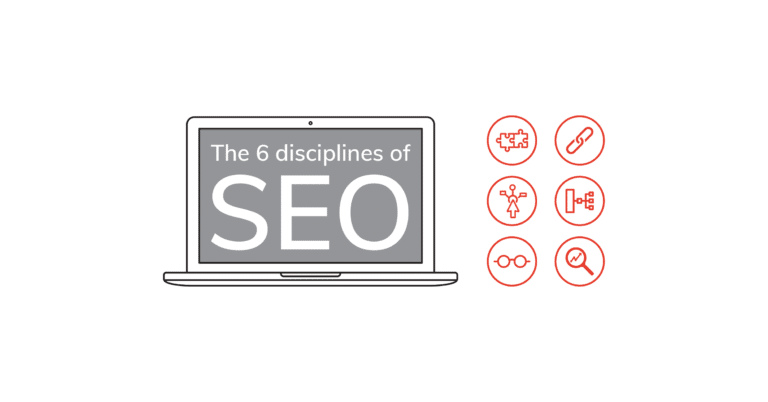
This is the origin of the 6 Disciplines of SEO framework. Designed by 97th Floor, this framework exists to help move teams from doing more SEO, to doing holistic SEO.
As Google’s algorithm has matured, there have been ground breaking updates which have improved overall user experience.
Much of how the industry views SEO today is because of these wide reaching (and sometimes earth-shattering) updates. For over a decade the theme has been Google making changes, and SEOs trying to intuit the signals with moderate success.

Today, we see that Google is releasing frequent broad core updates aimed at improving the algorithm from a holistic perspective. Google has clarified that for each of these updates the advice they give comes down to making great content that is high quality, expertly written, trustworthy, unique, and valuable to the user.
We suggest focusing on ensuring you’re offering the best content you can. That’s what our algorithms seek to reward.
While this advice is good, it isn’t enough. Optimizing for users over bots makes Google an ally rather than an enigma, as you both work towards the same goal: a better experience for the people behind the searches.
Enter the holistic strategy any SEO can adapt: The 6 Disciplines of SEO.

A note on our naming convention: we get that a lot of these words sound made up, but we chose to name the disciplines with a focus on the the ability derived from each. Yes, they are weird. That’s by design; weird things are easier to remember.
Here are some examples of what execution can look like within each of these disciplines.
The SEO industry has a wide and comprehensive list of recommended best practices. And, luckily, Google has provided fairly explicit guidance on what websites can do to be compliant with their guidelines. In addition, we’ve executed internal strategies which have yielded results which challenge previous assumptions and best practices.
Armed with all of this knowledge, you can make sure your site is properly aligned and thereby maximize your SEO efforts.
One client came to 97th Floor with stalled SEO efforts, despite their best efforts. Some digging during our onboarding site audit uncovered that they were unaware a manual action penalty had been placed on their site. Google Search Console revealed that structured data was being misapplied to a specific segment of the site's blog pages.
In the past, this site’s posts had included a comments section. But over time the comments became too much to moderate and they ultimately decided to disable comments for the site. In doing this, however, they forgot to disable the structured data on the backend that called out the recently disabled blog comments.
Once this was discovered, it was imperative that all of the residual structured data was removed from those pages. Doing that reassured Google that the client’s site wasn’t claiming to have something on-page that they didn’t actually have. It was a relatively easy fix, but not an obvious find for the untrained eye.
Fixes were applied. The next step was to put together a reconsideration request and submit it to Google. Once the reconsideration request was filed, the penalty was lifted within a week and the site saw significant increases in organic traffic from that point on.

Google isn’t outright about much of their algorithm. This is why the latest user-experience based algorithm update Page Experience, is getting so much attention. This update and the trends in recent updates pay particular attention to the Usability discipline, which ensures the overall SEO strategy is UX based.
Improved user experience is important to have baked into any SEO strategy from the beginning, because it has the potential to aid both your SEO-focused goals and your bottom line business goals like conversions.
An ecommerce business came to 97th Floor with a dilemma: users were reaching their product pages, but not converting. Hypotheses were formed and ranked as to what site changes might have the greatest impact on UX, but even the most intuitive hypotheses aren’t a place to end.
Multi-variant testing showed which variations brought in the most conversions and new revenue. This was a luxury ecommerce business, even small upticks in conversion rates can show significant increases in revenue, which means they stood to gain quite a bit. In this case, almost every variant showed a positive increase in both conversions and revenue. Overall, implementing these changes led to a 29% increase in revenue over just a few weeks.
In prioritizing the usability, our client gained tangible and actionable information about what their customers like to see on their site, which in this case was removing the financing option from their checkout.

Readability in this sense refers to the ease of reading your site for bots, not humans. Readability in this sense should not be confused with user-focused readability scores that measure the sophistication and ease of reading of your copy.
Cleaning up your site’s readability can play a significant role in its ability to rank, because metadata are an important way bots analyze the content on your pages.
Improving the metadata that adorn a site’s pages is an essential way to signal to Google the relevance of the on-page content to the target focus keyword.
The most critical ways to improve readability include:
A new client approached us with hopes to increase their blog’s organic traffic. They had been blogging for years, but they weren’t seeing the traffic increases they were hoping for. An audit revealed that they were misusing H1 and H2 tags throughout their blog, at the fault of the customer template they were using. They’d chosen to use more H1 tags as H2 tags, effectively using multiple H1 tags per page. But that looked most attractive on their template, so they unknowingly were shooting their blog’s readability in the foot.
They had no idea they were defying Google’s guidelines. And while their use of H1 tags might have been easier on the eyes, it wasn’t helping them win Google’s favor. Once the H tag errors were resolved, our client saw an immediate jump in traffic. These simple readability changes brought in a golden age of SEO for their site that is still going strong.

A healthy backlink profile has always been a major part of a site’s rankability. A healthy backlink profile requires various tactics to not only increase backlinks; including branded links, anchor text distribution, link velocity, and more. Not only external links, but internal linking structure is a critical (and often overlooked) part of the linkability of a site.
Here are a couple ways you can do this:
Our client was stalled ranking in position 5 on their chosen SERP, and needed to move up to gain the visibility they desired. An analysis of their site revealed they had several pages that all concerned the same topic, which can create confusion for Google. In addition, most of their pages were four links from the homepage, while few were just one or two links away.
By creating a map for Google’s bots using internal linking (using just 7 new links), the site jumped in ranking from position 5 to position 1.
This keyword had an average month search volume of 15,000 searches, which means moving from spot 5 to spot 1 generated an average of 3,300 additional clicks to the client’s webpage per month for just this keyword alone.

Indexability is how well Google is able to crawl and index a site. Google indexes sites similar to how books are indexed in a library, collecting relevant information about your site and making it easier for users to find. So, it’s in your best interest to be sure Google can easily index your site, and that it’s getting the relevant information from your site that it needs.
While readability deals exclusively with metadata, indexability is a bigger umbrella that deals with the indexability of your entire site.
If Google can’t access and process your website’s content effectively, it won’t rank your site’s URLs very well. If part of your site is unindexed or poorly indexed, Google won’t know what your website is all about. This leads to missing pages, poor rankings, and overall less traffic. Once you discover symptoms of crawlability or indexability issues on your site, you’ll need to investigate further to uncover the source.
These areas of investigation often include:
In a technical site audit for a client, we discovered some irregularities in their indexation. Further digging uncovered pages missing from the overall coverage of the site, which is a common symptom of an indexability error.
The execution of a log file analysis directed our efforts in improving indexability. The analysis revealed several actions that could be taken to fix the indexing issues the site was experiencing, including: clearing a number of redundant subfiles that Google was crawling, broken pages that needed to be redirected, and other folders Google was crawling that didn’t play a role in the overall SEO strategy.
A strategic clean up of the site’s indexability issues resulted in not only immediately more traffic, but an increase in organic revenue for our client. In the 30 days immediately following the rollout of these changes, Google organic transactions increased by 25.86%.

At 97th Floor we have about a dozen platforms to track our campaign’s performance but most commonly we use Ahrefs, Google Analytics, and Stat. You can decide what platforms and strategies are most effective for your company, however, no matter what platforms you decide to use, it’s important that you’re accurately tracking the progress of your campaigns.
The most crucial part of this data mix is making sure that the deployment and configuration of Google Analytics is not only correct but that it’s tracking the right conversions as they relate to our SEO strategy and client business goals.
Below are some ways that we do this:
You can’t make informed decisions if you aren’t tracking relevant data. Our teams consistently identify goals and values for clients in order to better track the impact of the ongoing SEO strategy in place for them.
As we continue to iterate on what is driving the most conversions to the site, we’re able to focus the strategy efforts into the parts of the site that are making the most difference for the client’s bottom line.

Holistic SEO requires visibility across the entire system. That means using tools that help teams understand how content, UX, technical performance, authority, and indexing work together.
There is no single “holistic SEO tool.” Instead, effective teams assemble a stack based on their maturity, goals, and internal capabilities.
Below are common tool categories that support holistic SEO execution:
As teams mature, the goal is not to add more tools, but to ensure the data they provide is actionable and aligned with business outcomes. Tool selection should always be driven by what decisions need to be made, not by feature checklists.
Holistic SEO is best understood in practice. The following examples show how aligning multiple disciplines leads to sustainable ranking improvements, traffic growth, and measurable business impact.
National Funding is a leading financial services company providing tailored financing solutions for small and medium-sized businesses.
The challenge
After a Google algorithm update, National Funding lost rankings for high-value keywords such as “bad credit business loans.” These rankings were critical to lead generation, and isolated fixes were not producing results.
The strategy
97th Floor implemented a holistic SEO strategy focused on restoring trust, relevance, and structural clarity across the site. This included:
The results
This systemwide approach restored and strengthened keyword visibility, leading to:
Rather than overcorrecting in one area, the holistic strategy allowed improvements to reinforce each other.
Gigamon is a network analytics vendor providing hybrid cloud infrastructure, security, and observability solutions for enterprise organizations.
The challenge
Gigamon was investing heavily in SEO but could not break into the top rankings for the highly competitive keyword “network security.” Despite doing many things right, progress had stalled.
The strategy
97th Floor took a counterintuitive, holistic approach. Instead of forcing incremental gains on the primary keyword, we:
The results
The strategy produced rapid and compounding gains:
Today, this page remains the top driver of organic traffic for Gigamon, a clear example of how holistic SEO can unlock competitive keywords by strengthening the system as a whole.
Each of these six disciplines is aimed at taking into account the various aspects of an SEO strategy. When built and executed properly, these six disciplines will positively impact the bottom line and delight your visitors.
Knowing when to reexamine each of these 6 areas of SEO will come down to knowing the symptoms of issues relating to each discipline. This goes beyond just seeing a decline in ranking or traffic. In fact, it’s knowing the specific symptoms and how to treat them that can make your SEO strategy powerful.
As you grow to understand each of these 6 realms you’ll be able to build effective. Just remember: you will get more out of strategies that are flexible and produce the greatest yields long-term.
As more time is spent mastering each of the six disciplines, your SEO strategy evolves from a collection of tactics into a cohesive system—one that compounds over time, driving lasting growth and resilience in the face of every algorithm update.
Generic ad copy and keyword-stuffed blog posts won’t get you far. The key to effective marketing is intentionality. Every piece of your holistic marketing strategy should be fine-tuned to target the niche of people who are most likely to convert and provide business value. A holistic marketing strategy optimized with detail is marketing worth investing in.
So what does intentionality in a holistic marketing strategy mean?
Be specific about the goals, knowledgeable about the audience, and create every bit of content with the audience and specific goals in mind.
Algorithmia provides a machine learning infrastructure that allows enterprises to be more successful in their machine learning efforts. They came to us because they are in a competitive market, up against companies like Amazon and Microsoft in both SEO and digital advertising. As a relatively young company, they knew they would need to be intentional in their strategy in order to succeed in that competitive space.

With their goals for organic traffic and leads in mind, we performed thorough site, keyword, and content audits in order to better understand where Algorithmia’s SEO stood. They had been producing content, but not at scale, and were missing the opportunity to increase their domain authority by targeting top-of-funnel keywords with new and optimized articles.
This kind of content shows potential customers and Google that Algorithmia is an authority on all things machine learning.
We also conducted audits of their previous ad strategies and took a deep dive into our target audiences to determine the best way to get the right people to convert on our ads.
After gathering data on their audience and previous marketing strategies, we put a strategy into action. While we did add new top-of-funnel content to the SEO strategy, we didn’t forget about users further down the funnel. We continued to create content that serves the needs of more qualified audiences as well. A holistic approach is key to intentional marketing.
As for digital advertising, we honed in on very specific job titles, such as VP of Engineering, Senior Data Engineers, etc. We did days of research to truly understand who our audience personas are on a human level. This research included spending time on sites and social media pages that our audience spends time on and gaining a thorough understanding of their roles, responsibilities, pain points, and sense of humor. This information allows us to truly connect with users by mentioning familiar problems they face and other aspects of their daily lives, making our ads feel less like ads. Once we understood those target customers better, we created ad copy messaging and design that was tailored just for them.
We chose LinkedIn as our main ad platform, since it is where those ideal customers were most likely to be found and easiest to target. LinkedIn’s Lead Gen Forms allow users to convert directly on LinkedIn, which provides a more direct path to conversion and simplifies the user experience. We knew that our audiences were marketing-averse and sensitive to user experience, so we were pleased to see this ad feature more than double our conversion rate.
Tracking the right metrics is just as important as selecting the right strategy. For Algorithmia’s SEO, we created a dashboard of every piece of content published, and tracked performance metrics on a micro scale. Because Algorithmia’s goals were tied to the success of the content we were creating, it was important that their teams could see the results of each piece of content in real-time.

The content we produced for Algorithmia has proved itself to be an evergreen source of organic traffic to the site. We spent the first 4 months creating content, and an additional 4 months building links, and within that time our content earned over 10,000 organic visits from Google.
For digital advertising, understanding the quality of each lead, rather than just the quantity, was critical to understanding the ROI. So, we made a point to personally document the quality of every single lead that came in. We made sure we knew where the greatest number of high-quality leads were coming from, so that we could fine-tune our strategy even more as we got more performance data.
When we implemented the highly detailed ad targeting for our personas, we achieved a 48% increase in qualified leads month-over-month and a 187% increase in weekly percentage of quality leads over 9 weeks.
The final step in an intentional strategy is to consistently follow through. In marketing, you can’t just set it and forget it. You have to continually watch for changes in performance and reevaluate results.
We continuously track and monitor keyword rankings to keep up with Google’s ever-changing SERPs and continually optimize our ad targeting, always looking for new ways to connect with our audience. Another thing to keep in mind is that digital advertising audiences get fatigued quickly, requiring ad copy and creative to be refreshed often. This also allows for testing and refining the messaging and tone of the ads.
Holistic marketing strategy should have a singular goal, serving the customer. Staying on top of changes in performance will allow you to help your company shift and change with the tides of digital marketing and bring in the best results over time.
Every business serves real people, not algorithms. And people want to feel understood.
Sure, you could employ a cookie-cutter digital marketing strategy that works for a few months, call it a success, and move on. But cookie-cutter strategies won’t get you results. Stay customer focused, stay holistic, stay intentional.
It’s no secret that conversion rate optimization (CRO), is an essential part of business strategy in this digital age. No matter your business model, your online presence is imperative to your success.
Marketers have known this for decades. But optimizing a site for the customer’s journey can’t just be intuited out of thin air. Every action a potential customer makes on the website is a part of their personal journey, and small changes can make a big difference when looking at the site holistically. The ease of a customer’s journey is essential in turning potential customers into active, happy customers.
CRO is the process of removing barriers to conversion, enticing action, and creating an overall positive page experience for your customers.
It’s easy to think there’s some kind of “magic bullet” when it comes to CRO-- a tried and true formula that produces immediate results for every industry and website. Unfortunately, there’s not. Instead, the true secret to CRO is knowing what to test and how to test it. You need intuition to know what to test, but sometimes the results of those tests will surprise you.
CRO testing is a quantifiable way to discover what is truly working on your site and what is not. It will save you money in the long term, with the potential to increase your revenue in the short term. Plus, you’ll learn things about your customers that you never imagined.
KOIO sells handcrafted Italian leather shoes. Their boots had hit a wall: they had consistent traffic viewing their product pages, however these users rarely added products to their cart. They were unsure what they could do to turn more visitors into customers, so they came to 97th Floor with the goal of capturing more users who were bouncing from their pages.

97th Floor knew KOIO’s situation and recommended a CRO campaign to provide actionable insight as to what site changes would produce the most dramatic results. They are a B2C business whose primary customer is a luxury audience willing to purchase products at a high price point. As a result of the average product price, revenue increases were closely tied to higher conversion rates. This made CRO an incredibly effective strategy in achieving their goals.
Audit: First, 97th Floor analyzed KOIO’s site and noted points of the customer’s journey with the highest potential for improvement. We worked to understand what bumps in the customer journey might cause potential customers to leave the purchase pages prematurely (and why). We did this by actively seeing things through the customer’s eyes. With the customer’s journey in mind, we identified areas where we could improve or modify KOIO’s current value propositions and CTAs.
Another site variation we were especially interested in was understanding the behaviors of their mobile and desktop users. Nearly 70% of users on KOIO’s site are on mobile devices, so we wanted to know: how effective was KOIO’s site for mobile users?
Using the findings from the audit, we made tactical hypotheses about what changes would best improve conversion rates. Then we designed a campaign to test which elements were the most potent forces for conversion.
Based on the specific situation and KOIO’s unique goals, we recommended multivariate testing-- a type of CRO in which several different variations are tested simultaneously and data is collected about each variation’s effectiveness.
Hypothesis: In order to optimize the testing process, we gave each of our hypotheses a score based on which ones we expected to perform the best. We thought about user experience, and the messaging they were exposed to on the product level. Then we scored them as to how likely the change was to increase the likelihood of sales. After our ranking evaluation, we placed each hypothesis on a priority road map to be sure that the majority of our resources focused on testing the highest potential variations.
Tests: After we’d formed our strategy, it was time to start testing. In order to be most efficient with our client’s budget, we set an appropriate timeframe for running tests, and determined to only continue running the tests that showed significant improvements. More traffic means faster results, and because our previous SEO strategy was already bringing in the traffic we needed, the results came quickly. For this test, getting significant results took about two weeks.
In addition, we ran two separate tests: one on the desktop site, and the other on mobile. For both tests, we kept the content nearly identical, but altered the placement of different elements as outlined above-- more on the importance of this strategy later.
As these tests were running, we monitored the results to evaluate trends and pivot as needed. For example, one of the tested variants (making “free shipping and returns” float) quickly showed that the results wouldn’t be helpful, so that variant was stopped.
Once the tests were in place, the results began rolling in.
If you remember, we started with five hypotheses and dropped one (that was clearly showing negative results). The four test variants that continued all resulted in positive lift percentages on the desktop test. The highest of these increases was a jaw-dropping 28.5%. Now, let’s emphasize that having several high performing variants is an unusual occurrence in CRO. Usually one variant pulls ahead as the clear leader. We were delighted to see that in this case, every variant was a positive one. This is a good reason to run multiple tests, so you get a clear picture of what is possible, rather than running the risk of missing something in testing a single hypothesis.
The highest individual increase was a 52% revenue increase for the variant in which we removed the financing option. This particular variant also brought us new information about KOIO’s customers-- their luxury audience did not respond as well to the product when asked if they’d like to choose a financing option. This is a valuable insight into how their customers want to be addressed and treated. However, if we had not run these tests it would have been easy to overlook a small detail like this, without which we would have lost both the 52% increase, and the valuable insight into our customer’s desires.
KOIO also gained valuable insight into their customers’ mobile experience as a result of CRO testing. A common misstep in any sort of multivariate testing is to run a desktop test, and blanket apply the findings to both the desktop and mobile versions of the site. Fortunately, 97th Floor knew better. We tested the mobile and desktop experiences separately, allowing us to see distinctions in desktop and mobile behavior. Our client was then able to take this information and create a plan for a separate mobile-optimized site.
With this information, we organized the product pages to better serve the customers, and the rest is history.
The total result for all of the variants combined was a 29% increase in revenue in 18 days. Those kinds of growth numbers are worth stopping for: CRO is no joke. Because of these higher conversion rates, our client experienced more than a quarter jump in sales and the bounce rate dropped significantly. Most importantly, KOIO now has a clear game plan based on solid data that they will use to maximize their revenue into the future.
KOIO is now bringing in more revenue than ever, because of the simple steps they took with us to optimize their site for their customers.
CRO has the potential to provide businesses with actionable insights that make a real impact — but it must be done right. Testing backs up intuition, and the two make an unstoppable CRO pair.
One of the not-so-secret secrets to successful marketing is knowing your audience. Arguably, the best way to do this is to use persona based marketing. When we onboard new clients at 97th Floor, we always ask for their existing personas, and they often shrug their shoulders and rifle aimlessly through some papers. “I think we had some made about a year or two ago,” they say. But in this age of smart digital marketing, that just won’t fly. The world needs more personas—and better personas. We at 97th Floor have the expertise, and we’re here to make the internet a better place. So we put this guide together to help you build personas for your business that will bring in consumer insights that will elevate all of your marketing efforts and increase your revenue.
A buyer persona is a fictional depiction of an ideal, individual customer. Creating and applying a buyer persona helps marketers craft campaigns that feel more true and have more impact. A good buyer persona can turbocharge the understanding of your customers, leading to more traffic, higher conversions, and eventually, bigger revenue figures.
This is Tony Zambito in 2001. He invented the concept of buyer personas, according to
himself and the internet. “Buyer personas are research-based archetypal (modeled) representations of who buyers are, what they are trying to accomplish, what goals drive their behavior, how they think, how they buy, and why they make buying decisions.”
Sound familiar? Maybe you're thinking of a time when you fit in a very small chair at a very small desk and were instructed that 5 W's and an H - Who, What, When, Where, Why, and How - belong in every story. Hmm. And we didn't think they taught marketing that young. But the truth is that you need these components for your company's storytelling and you must have them for your consumers' sake.
While we're here, let's consider what a persona is not.

Consider this quote from Scratch: “Consumers aren't as interested in your story until it helps them tell their own. Personas are a powerful and concise way for you to use data to understand your consumers—and help your whole company understand your consumers - so that they are ultimately interested in your brand story”. Sounds rather important, right?
Persona based marketing is the practice of building your entire marketing strategy around detailed, data-driven buyer personas. Instead of creating broad, one-size-fits-all campaigns, you develop messaging, offers, and experiences tailored to the specific needs, motivations, and challenges of your ideal customers. This approach ensures every ad, blog post, email, and social media update speaks directly to the people most likely to engage with your brand. When executed well, persona based marketing increases clicks and conversions, builds trust, fosters loyalty, and keeps your brand top of mind for the audiences that matter most.
In the past few years, our client teams at 97th Floor have launched wildly successful campaigns driven by insights discovered through building personas.
In-depth personas are invaluable to our teams and our clients.
Rachel Bascom, head of content at 97th Floor, shares these benefits from using personas:
And if your personas are doing that, they're ultimately bringing you this:
We're confident that data-driven personas enable every department to work better for clients and the company.
How should you create a buyer persona? The ingredients are simple, and the process is not rocket science. Like baking bread, you already own most ingredients—flour, water, yeast, salt—and the things you don’t already have in your cupboard are easily accessible.

Begin with a little market research. What data do you already have about your customers? What are their current job titles, responsibilities, and interests? If you can, use a tool like SparkToro to find out more about what your customers care about. Ask: Why would they benefit from your brand? What are their pain points, and how does your offer solve them? The more research you can do, the better.
Then add a little speculation. If your persona loves running, you can assume they’ll care about running form or proper running shoes. If they’re a busy mom, you can assume they’re looking for ways to relax and save time. Some assumptions are okay, and even needed, but be sure you don’t get off track.
Once you flesh out your customer with a few assumptions, mix your research and speculation together with a knowledge of the user journey for your product or service. For instance, how do they come in contact with your brand? Will they be eager to buy, or will they need a little persuasion? What appeals to them on your site?
Finally, sprinkle a little creativity on top. This is the fun part: make it a story. Be as specific as you possibly can. What is their name? What do they look like? How does an average day in their life flow? Don’t be shy, write it out. Use your imagination. The end result should be fun, spunky, realistic, and easy to remember.
In baking bread, you simply put the dough in an oven. For personas, however, you need something much more rare: objectivity. A good persona requires you to set aside what you think you know about your customers and to see what the data tells you. This is very, very difficult for most businesses, which is why it makes sense to ask someone else to do it for you. When it comes to paying someone to create a customer persona for you, the greater the objectivity, the more you will pay. Spend less, and you will have a few assumptions mixed in with your objective assessments.
However, assumptions, especially when used in the less-critical and less-controversial parts of the buyer persona, are likely a good trade-off for many businesses. Not everyone needs to spend $50,000 to get something truly useful.
The personas that we build for our clients at 97th Floor are a mix of strategic assumptions and objective research. We are intentional in our approach, choosing where we can assume and where to use data. It might not be the right approach for every business, but it’s appropriate for most businesses most of the time.
Let’s break it down.
There are three major parts to buyer personas
As you might presume, demographic information tells us the external details about the persona. This describes the age, gender, racial identity, socio-economic details, family status, occupation, and such. We glean it from a number of sources: existing customer profiles, analytics data, competitive analyses, etc. We use whatever we can get our hands on.
When we build our personas, we use a balance of assumption and evidence. Our stance is that in this area, the information that we infer is good enough for the purpose, and the potential mistakes are low-impact ones. But don’t get me wrong, you shouldn’t go wild with assumptions here.
There isn’t much value in knowing that your average age customer is 37 rather than 39 or 40. But there is a significant difference in the average age of 30 instead of 45. Be careful that you have enough evidence for the correct ballpark. But don’t waste resources digging into teeny specifics if they aren’t likely to be impactful.
Remember that a buyer persona is different from a target audience. This is not a broad composite, but a fictionalized specific individual. There is value in having a target audience in mind--in knowing a range that describes the whole of your customers--but the value of a buyer persona is to clearly envision one perfect client.
The demographic information describes the external details of the individual, while the psychographic information describes her internal life. We want to know what she likes and dislikes, what makes her excited or nervous, what she reads and who she follows. This is the information that a savvy marketer will prize.
We obtain this through research into tens of thousands of individuals’ web habits. With this information, we can better predict the specific behaviors and biases of a likely customer, but also general principles that describe a lot of people. There are tools out there that will help you to accomplish this task with some confidence--just don’t forget the critical role of objectivity here. We’ve seen clients with personas that only really describe the client themselves. It’s an awkward conversation: “Since you’re just launching Bob’s Widgets, is it realistic that your persona is already a member of the Bob’s Widgets Fan Club?”
When you get the psychographic profile right, it’s almost magic. For example, our research might uncover that people who like your brand are also fans of the Chicago Bulls or the Los Angeles Dodgers. It is probably too specific to know which particular team they root for, but it is useful to know that your audience is sports fans (as opposed to, say, fans of quilting or politics or tattoos).
Many clients we onboard don’t have personas (or have only target audience information). Others have spent tens of thousands of dollars on specialists to get personas built. These expensive ones are often very slick, visually stunning, but a little impractical. While there is a lot of good stuff in these large personas, the mental strain to use them—and to tell what is most important—is too much. So we developed a convenient method that uses our inherent human neurological strengths to make it memorable.
We tell a story.
Maybe our stories aren’t on par with Shakespeare, but we are not doing this to scratch a creative itch. We are doing this because, as humans, we remember stories. We also remember songs, but that seemed like a little too much. So we’ve chosen to always tell a story about our persona.
There is no new information in the story. All the data we use for the story is already covered in the demographic and psychographic sections. But when we craft it into a couple of clear, easy-to-read paragraphs to describe the character succinctly, suddenly she is easier to understand and easier to remember. Because of that memorable image, it is easier to keep clearly in mind, and thus easier to create campaigns just for her.
Critically, when we tell a story, we have more of the facts in easily accessible memory. Without personas, marketers will create campaigns crafted for one or two of the most obvious customer characteristics, and they generally fall pretty flat. They’re not much better than target audience descriptions. But a good story to anchor our memory allows us to retain a fuller picture of the individual. In turn, our campaigns therefore have more depth, fullness, and richness. They are, simply, more effective campaigns.

She tried to diet and exercise, but her goal seemed so distant. Plus, was it even realistic for her to lose 50 pounds when she barely had time to pee alone before one of her hungry kids found her? She wanted more direction, maybe from a personal trainer or dietician, about what her goal weight should be. But they were so expensive.
She’d tried doing her own research about her BMI and ideal weight. But those gave her wide ranges or goal weights that seemed impossible.
Do you see how this little clip from Sharon’s life makes her a tangible woman? We feel her discomfort at the party. We understand why she is the perfect customer for this fitness company. We even get excited to find marketing strategies that will help Sharon find our client’s company and feel empowered on her next birthday.
Personas that hang around in a company’s back pocket unused aren’t doing anyone any good. A successful buyer persona is one that gets frequently referenced and utilized. The team has read it, talked about it, and knows it. They know that fictionalized individual as well as they know each other. She feels real to them.
Not only should these personas feel real to your team. You should lean on them during planning and writing content. This is the essence of persona based marketing. For instance, as you're sitting down to plan out Q2’s content, turn to your personas. Mention, “Taylor (your persona) has young children. During Q2 those children will start summer break. How might that affect the kind of content she wants to access during that time? How might it affect how much time she has to engage?” Use the persona’s name. There’s power in shared vocabulary. Of course “Taylor” won't mean much to those outside this team, but your marketing team should be using your persona’s names. Use the personas to tap into the daily life of your content consumers, and they will feel a more realistic connection to your company.
All of this work might seem like the buyer persona is creating extra work: compressing data into a single point, and then it has to be expanded again when doing the actual marketing. The magic of the buyer persona is that it enables, and even encourages, the marketer to work at an individual level but to have that function at a broad scope. The compress-decompress that the buyer persona facilitates will hone the edge of the campaign. In practice, if it’s done right, it can feel like a superpower.
We create personas for clients as a service, or we upgrade existing ones, but personas are only the launching pad into the deep pool of consumer-facing work. Here are a few examples of great client work powered by a marketing team that understands its audience using the processes we describe above.
Wikipedia's Jimmy Wales built the world's biggest knowledge base by knowing exactly who he was building it for. He shares the one insight that turns audience research into a real negotiating edge.
eFileCabinet came to us with a goal of increasing its brand visibility. In a fairly stagnant industry, their cutting-edge technology had a hard time gaining the excitement it deserved. Our team came together to define who eFileCabinet’s customers were. Like most businesses, they required multiple personas, but one particularly useful buyer persona portrayed an accountant who was frustrated with endless paper filing and tedious office chores.
Sure, this persona is an accountant, but he was far from boring.
We looked closely at what human emotions and pain points he faced, as well as ways he might enjoy letting off steam. The answer: taking a hammer to the often-frustrating office equipment he sits in front of every day. Enter: the Rage Cage.
So they could live the Office Space dream, our team crafted an experience for an accounting conference that would give them what they really wanted—the chance to smash old office equipment. Then we connected with these individuals to introduce them to the benefits of eFileCabinet’s problem-solving, headache-reducing software. This became an award-winning campaign that brought eFileCabinet the highest influx of MQLs in a single month and 100+ closed deals. None of this would have been possible without concrete, memorable, human buyer personas.
One 97th Floor client, a data service company called Qubole, was facing a long sales cycle that they were eager to tighten. We knew that buyer personas would undoubtedly help Qubole target the most promising potential customers. So we took a closer look at Qubole’s ideal buyers and got to work.
We created a persona who was a data scientist at a growing tech business that needed to scale quickly. We got to know his pain points with bringing on a data company, including security and IT complications. Knowing this information, we created a hyper-focused content strategy that was built with him in mind.
With the help of this persona sitting in the driver’s seat of our newly targeted content strategy, Qubole’s traffic and conversions skyrocketed. In fact, 97th Floor's strategy led to a 600% increase in organic traffic and a 300% increase in qualified organic leads. In addition to chopping their buyer’s cycle from 240 days to only 90 days.
As with most NBA teams, the Utah Jazz found themselves struggling to sell their summer season ticket. They came to us with a desire to increase their summer ticket sales and maybe, just maybe, they’d be able to do something never done before: sell out the entire lower bowl for the summer season. As always, we began with the audience and personas.
Because we are from Utah, we knew what a typical Utah Jazz fan looks like, and so we had a good understanding of the audience to begin with. The final version of our persona consisted partially of what we knew from the standard Jazz fan and was merged with the data we had collected about folks who buy low-cost items (like summer season tickets) via Facebook Ads. Once we had our more specific persona, building the campaigns in Facebook Ads came very naturally.
First, we fanned out our ads’ reach to a wide audience of Jazz fans on Facebook. Then, we conducted tests to see which ads were the most effective at increasing sales (this information even informed our personas to make them better for the next round). We found that segmentation, even to a non-Utah Jazz audience, and sales-focused ad copy brought in a positive ROAS, a great achievement for the low budget of their summer season marketing. Our knowledge of the buyer personas of these summer customers gave the Utah Jazz an increase in ticket sales by over 300% MoM.
Our beauty and skincare client uses playful design, sustainable ingredients, and
delicious flavors to deliver products that feel like a treat for their consumers. But the company wasn’t leveraging its audience to maximize conversions. They needed real customer personas, complete with a goal and journey for each.
Using analytics, we built—you guessed it—5 consumer personas.

Each persona included personality traits, concerns, risks, influences, an analysis of the buyer’s current status with the company, and solutions for improvement.
This in-depth analysis led to a full-funnel strategy, including launching on new platforms.
Our research helped us craft persona-focused messaging. Our discovery that certain personas were interested in astrology inspired our design team to create these stunning ads for a zodiac sign campaign, targeting shoppers based
on their birthday.
And the results? Highest-ever engagement, volume of purchases, and ROAS of all client ads.
Using only
4.1%
of total ad budget
Accounted for
42.5%
client's total purchases
While achieving
Historic ROAS
of all purchases
As these examples show, personas are not reserved for folks in content marketing roles. Entire teams from SEOs to paid media specialists to, well, everyone, should be well-versed in your buyer personas because a good persona will have insights that influence every decision from every member of a marketing team.
We've all stumbled through a cluttered Walmart. The seasonal decor, random furniture, and crates full of $5 movies and cereal boxes stall your progress to the single thing you came here for. Pretty annoying, huh?
In 2009 Walmart addressed the mess with Project Impact. The project's purpose was to improve customer experience by reducing clutter and improving the aesthetics to compete with Target. This idea came from a survey that asked customers, "Would you like Walmart to be less cluttered?" The answer was an overwhelming, Yes. But who wouldn't say yes?
Walmart halted the project when the first 600 locations that they tidied saw year-over-year sales plummet. Walmart lost an estimated $1.85 billion in sales. It appeared that all the extra clutter led to people buying more.
Fueled by turkey and pumpkin pie and armed with a Christmas wishlist, nearly 155 million Americans make Black Friday weekend the biggest shopping event of the year. Seattle-based outdoor retailer REI would rather not participate.

Instead of wow-ing shoppers with massive markdowns, REI closes its stores, activity centers, distribution centers, call centers, and headquarters for its annual #OptOutside campaign.
In 2015, REI saw 10 times more traffic than any other retailer on social media as thousands posted with the hashtag.
In 2021, REI expanded the campaign to challenge its members and community to get outside and build an inclusive outdoor space.
And yearly earnings? Up and up.
Alright, alright. So we can't really say for certain that Walmart wasn't using personas and that REI was. But what we can say for certain is that REI understood its mission and its consumers' habits and lifestyle far better than Walmart did.
Persona based marketing is an ongoing process that shapes every part of your overall strategy. The more you refine your personas with real data and insights, the more precise your targeting, messaging, and campaigns will become. If you’re ready to turn buyer personas into a powerful growth tool, let’s talk about how 97th Floor can help you build and use them to drive measurable results for your brand.
See how an audience-first approach translates to bottom-line results.
O.K. before you keep reading I have to apologize, I hate case studies and examples of sites that don't show the sites involved. One of the things that I try to do to set us apart from a lot of blogs is to give specific ideas on how to do things, but in the case study below I can't. We are growing and have a lot of clientele that just won't let us share their info, or even mention them as a client. That is fine, I guess if I was a 100 million a year plus company with very intelligent competitors I wouldn't want our service providers giving away our secrets either.
With that said this will still be really cool to share and I will show you (doctored) screen shots from their analytics.
We helped a friend/client launch a blog in October and it has been some of the most successful blog marketing we have done to date in the realms of blog optimization and social media saturation to a brand new domain and website.
The blog is general and covers a lot of different topics mostly internet and advertising related, which helps. If you have a niche blog you can still have tremendous success in blog promotion, especially in terms of links and subscribers which is the most import aspect of a blogs success in my opinion.
The Stats: The blog is exactly 39 days old it has a total of 21 pages, it has received over 165,000 uniques, over 3,000 links and over 1,117 subscribers. The subscribers and the amount of branding we have seen (see below) are what we are most exited about.
We have had campaigns that generate more traffic and links then this blog (I am working on another case study where I will actually show you an example of an article that had over 150k visits in one day, and has had over 3k links just to the article), but what is different about this site is the vast amount of subscribers and the consistent traffic. Barely any of this traffic is from Digg, the blog is receiving thousands of visitors a day on a consistent basis. So it has been a combined effort on behalf of the posts instead of one home run submitted to Digg with one traffic spike and virtually no traffic a week later. The lowest day so far as been over 1,600 visitors and the highest has been 14,922 with several days over 10k.
Graph screen shot of the blogs entire life so far:
Page Views to some of the URL's:
Traffic Sources: (what is best about this is Direct Traffic to the domain, is over 14% which is over 24,000 visitors. Remember this blog is only 39 days, that is some sweet branding)
The majority of the initial traffic came from StumbleUpon, I think that is why the subscriber rate has been so good. We also get a tremendous amount of traffic from other hub sites picking up our stories and linking to them.
How to do it: I would credit a handful of things the the sites success.
1.) The site owner has fallen in love with marketing and has done a great job with generating outstanding content. He has engulfed himself in Social Media and in his competing blogs and really understands how to generate good content for his audience.
2.) We mapped out and understood our audience prior to launch. We actually had a good amount of posts ready before launch so that we wouldn't lose steam. After the first few pages being submitted to social sites we let the sites subscribers and community promote the rest of our content as it was created.
3.) The Domain is easy to remember, easy to spell and all that. By watching the direct traffic to the homepage and branded search terms in Google we are really seeing that a good domain can go a long way.
Again I apologize for not being able to give away more. I'm working on about 3 posts that all give away the farm with specific examples. Also remember this site/company did not exist before the last week in October, there wasn't a huge brand name to piggy back off of or any prior marketing or advertising to build off of. This was brand new, raw straight out of the gates marketing.