



On-page SEO can add a high level of value to your digital marketing efforts. Simply explained, it’s the optimization of individual web pages to rank higher and earn more relevant traffic in search engines. It mainly involves aligning page-specific elements like content, title tags, and URLs with targeted keywords.
But why is On-Page SEO so critical? In the competitive digital arena, the visibility of your website in search engine results can be a game-changer. On-page SEO ensures that your site's content is relevant to your audience and compelling to search engines.
To begin your On-Page SEO optimization, start with keyword research. This process involves identifying the terms and phrases your target audience uses when searching for products or services like yours. It’s more than just guessing popular search terms; it requires understanding the nuances of your audience's language and behavior. Tools like Google Keyword Planner and Ahrefs provide insights into search volumes, competition levels, and trends, enabling you to pinpoint relevant and attainable keywords.
Search intent refers to the purpose behind a search query – whether users are looking to buy, learn, or find a specific website. By comprehending this intent, you can tailor your content to meet these needs, ensuring that your site not only attracts traffic but also delivers value, resulting in a higher chance of conversion.
The adage “content is king” holds true in On-Page SEO. High-quality, unique content is what sets your site apart. This content needs to be original, valuable, and great at audience engagement. It should answer questions, solve problems, or provide insights, establishing your site as an authority in your field.
The right formatting can give your On-Page SEO extra leverage. For example, headings should include relevant keywords and accurately reflect the content below them. Similarly, paragraphs should be concise, focused, and interwoven with targeted keywords without compromising natural readability.
User experience and engagement include factors like site navigation, readability, and visual appeal. Engaging multimedia elements like images, videos, and infographics can keep visitors on your page longer and reduce bounce rates.
Optimizing URLs means making them concise, readable, and keyword-rich. A well-structured URL provides both users and search engines with a clear indication of what the page is about. Similarly, a logical site structure helps search engines crawl your site more effectively and helps users find information quickly.
Page loading speed and mobile-friendliness are critical to user experience. Be sure to pay attention to your page’s loading speed and compatibility with mobile devices! Slow-loading pages can lead to high bounce rates, and mobile-friendly design has become more and more essential as more users access the internet via mobile devices. Tools like Google’s PageSpeed Insights can help identify and rectify issues that may be slowing down your site.
Schema markup is a form of microdata that helps search engines understand the content of your pages and provide richer search results. Implementing schema markup can enhance the way your pages are displayed in search results with rich snippets, which can improve click-through rates.
An On-Page SEO checklist is a handy tool to ensure that each page on your site is optimized. This checklist can include items like keyword placement, meta descriptions, image alt texts, and URL structure, ensuring a comprehensive approach to page optimization.
SEO templates for title tags, meta descriptions, and URLs help standardize optimization across your website. These templates ensure that key elements are optimized for search engines and compelling for users, blending SEO best practices with persuasive marketing language.
Optimizing for featured snippets and rich snippets is an advanced On-Page SEO strategy that significantly increases your visibility in search results. Featured snippets are short excerpts from your web page that appear at the top of Google's search results, often answering a specific question. To optimize for these, your content should be structured in a way that Google can easily extract and display the information. This includes using clear, concise answers to common questions, and logically organizing content with headings and lists.
Rich snippets, on the other hand, enhance your search listings with additional information like ratings, prices, or author details. This is achieved through structured data markup, which helps search engines understand specific details about your content. By optimizing for these snippets, you can make your listings more attractive and informative, potentially increasing click-through rates.
A robust internal and external linking strategy is vital for On-Page SEO. Internal linking helps search engines understand the structure of your site and distribute page authority throughout your pages, while also keeping users engaged and navigating through your site. It's important to use descriptive anchor text that indicates what the linked page is about.
External linking, when done well, can lend authority and relevance to your content. Linking to reputable, authoritative sites can enhance the credibility of your content. Conversely, receiving high-quality external links from other authoritative sources can significantly boost your site's SEO performance.
Utilizing monitoring and analysis tools like Google Analytics and Google Search Console can provide insights into how users are finding and interacting with your site. These tools can help you understand which pages are performing well, which keywords are driving traffic, and where there might be issues to address. Regular analysis allows you to refine and adjust your SEO strategy, ensuring that your efforts align with changing search trends and user behaviors.
On-page SEO has the potential to give your website a significant boost. By understanding and implementing the techniques and best practices discussed, from keyword research to technical optimization, you can significantly enhance your site's visibility and quality of user experience. Remember, SEO is not a one-time task but an ongoing process of refinement and adjustment. Staying informed and adaptable in the face of evolving search engine algorithms and user expectations is key to maintaining and improving your site's search engine performance.
On-page SEO involves optimizing elements on your website (like content, HTML, and site architecture) for search engines. It differs from Off-Page SEO, which focuses on external signals like backlinks and social media presence.
Keyword research helps you understand the terms your target audience uses in search engines. It's essential for aligning your content with the queries that drive traffic to your site.
Content quality is paramount in On-Page SEO. High-quality, relevant content not only satisfies search engine algorithms but also engages and retains users, increasing the likelihood of conversions.
Absolutely. On-page SEO involves optimizing site navigation, pagespeed, and content readability, all of which enhance the overall user experience.
Meta descriptions provide a summary of a page's content in search results. While they don't directly affect rankings, compelling meta descriptions can improve click-through rates.
With the increasing prevalence of mobile browsing, mobile-friendliness is crucial. It affects not only user experience but also rankings, especially since Google's move to mobile-first indexing.
Schema markup is a form of microdata that helps search engines better understand and represent your content in search results, potentially enhancing visibility and click-through rates.
SEO is dynamic, so regularly reviewing and updating your strategy is vital. This includes staying abreast of algorithm updates and evolving user behaviors. Each website is different, so use your data to identify how frequently your updates need to occur.
Yes, by enhancing the relevance and quality of your content and improving the user experience, On-Page SEO can lead to higher engagement and conversion rates.
Use tools like Google Analytics and Search Console to track metrics like organic traffic, bounce rate, and conversion rates. Regular monitoring allows you to gauge the effectiveness of your SEO strategies and make data-driven adjustments.
A robots.txt file tells search engine crawlers which parts of a site should or should not be crawled. robots.txt files contain directives that instruct search engines on how to crawl a site using the Robots Exclusion Standard, a set of rules that search engines adhere to when crawling a site.
Robots.txt is essentially a set of instructions that marketers can give directly to Google and other search engines. Search engines have a ‘crawl budget’ (a certain amount of pages that they will crawl at a time). Using robots.txt, you can instruct Google not to crawl unimportant or non-public pages and to spend more time crawling the pages that matter.
A robots.txt file helps search engines prioritize important content, ensuring that valuable website pages are crawled and indexed efficiently. This file also plays a role in preventing search engines from accessing sensitive or irrelevant areas of a website, such as admin pages or duplicate content. By managing crawler access, robots.txt helps improve website loading times and conserves server resources, contributing to a better user experience and potentially enhancing search rankings. Robots.txt files are not the appropriate tool for keeping a web page out of Google. To prevent a page from appearing in Google, block indexing or password-protect the page.
Crawl directives in a robots.txt file manage how search engines navigate through a website. These directives specify which areas of the site should be crawled and which should be left out, enabling site owners to control crawling traffic and ensure that search engines focus on the most relevant and important content.
The robots.txt file must be placed in the root directory of a website. This placement is crucial because search engine crawlers look for the robots.txt file in this specific location. If placed incorrectly, crawlers might ignore the directives, leading to unintended crawling and indexing issues.
For websites with multiple subdomains, it's important to have a separate robots.txt file for each subdomain. Each subdomain is treated as a separate entity by search engines, and therefore, requires its unique set of directives to manage crawler access effectively.
Understanding the syntax and structure of robots.txt files is key to creating effective directives.
The User-Agent directive is used to target specific search engine crawlers. It defines which crawler the subsequent rules apply to. A wildcard (*) can be used to apply rules to all crawlers, or specific crawler names can be specified for more targeted directives.
Caching directives in a robots.txt file influences how search engines store and retrieve cached versions of a website's pages. These directives can be used to indicate which pages should not be cached, ensuring that users always access the most current content and that sensitive information remains protected.
The Disallow directive tells crawlers which URLs or paths should not be visited. This directive is essential for preventing search engines from accessing certain parts of a website, such as admin areas or pages with sensitive information.
The Allow directive is used to specify which pages or sections of a website should be crawled, particularly useful when dealing with more complex URL structures or when needing to override a broader Disallow directive.
The Crawl-Delay directive instructs search engine crawlers to wait a specific amount of time between requests. This can be useful for sites that experience high server load, ensuring that the site's performance is not impacted by crawler activity.
Including a Sitemap directive in the robots.txt file is a best practice as it directly points search engines to the website's sitemap. This makes it easier for crawlers to discover and index all the important pages on a site.
Beyond the basics, there are advanced techniques and considerations for managing robots.txt files to optimize a website's SEO performance.
Ensuring that CSS and JavaScript files are crawlable is essential for modern SEO. These files contribute to the rendering of webpages, and blocking them can prevent search engines from properly understanding and indexing a site's content.
Using tools like Google's Search Console to test and validate robots.txt files is critical. These tools can identify issues with the file, ensuring that it effectively guides search engines without unintended consequences.
Gaining insight into the inner workings of search engine crawlers' parsing of robots.txt files is invaluable for creating effective SEO strategies. In 2019, Google took a significant step by making their robots.txt parser open source. This move has opened up opportunities for SEO professionals and webmasters to understand precisely how Google interprets robots.txt directives.
By examining Google's parser, one can gain a deeper understanding of the nuances of crafting a robots.txt file. This knowledge is instrumental in troubleshooting potential issues and refining the file for optimal SEO impact. To delve deeper into Google's approach to parsing robots.txt files, you can explore their documentation and even contribute or utilize their code for your needs. This resource serves as a comprehensive guide, offering a glimpse into the intricate process of how search engines interpret robots.txt directives.
It instructs search engine crawlers about which parts of a website should or should not be crawled.
It helps search engines prioritize important content, prevents crawling of sensitive or duplicate content, and can improve website loading times.
While the robots.txt is a set of instructions for crawlers to follow, not all crawlers will obey. Most crawlers will respect the robots.txt, however, it is not a foolproof method for hiding information from all crawlers.
Not all websites need a robots.txt file, but it is beneficial for larger sites or those with specific areas that should not be crawled.
Common mistakes include placing the file in the wrong directory, using incorrect syntax, and inadvertently blocking important content.
Tools like Google's Search Console offer functionalities to test and validate robots.txt files.
No, it only affects how search engines crawl and index the site, not its appearance to users.
Changes may take some time to be reflected in search results as search engines need to recrawl the site.
While not immediately crucial, it's good practice to implement a robots.txt file from the start to establish good SEO habits.
In digital marketing, understanding SEO is crucial for success. However, one concept that often eludes even seasoned professionals is keyword cannibalization. This phenomenon, while not immediately evident, can significantly hamper a website's SEO performance. Understanding keyword cannibalization shapes how we approach content strategy and keyword optimization.
Keyword cannibalization occurs when multiple pages on a website compete for the same or similar keywords. This internal competition can lead to a host of issues, diluting the efficacy of your SEO efforts. Instead of consolidating authority in one comprehensive page, search engines are left to choose between several weaker pages. This can result in lowered rankings, reduced traffic, and a less optimal user experience.
Addressing keyword cannibalization requires a blend of strategic planning and technical SEO knowledge. By identifying and resolving these issues, we can streamline our SEO efforts, ensuring that our website speaks with a unified voice to both users and search engines. In this article, we'll explore the intricacies of keyword cannibalization, its impact on SEO, and practical strategies for detection, resolution, and prevention.
Keyword cannibalization refers to a situation where multiple pages on a single website inadvertently compete against each other for the same or similar keywords. This internal competition can lead to a myriad of issues impacting a website's search engine performance.
Imagine a scenario where a website has several articles or pages targeting the keyword "best digital marketing strategies." Instead of reinforcing each other, these pages clash, vying for attention from search engines like Google. This confuses search engines trying to determine which page is the most relevant for the given search query. Consequently, rather than boosting the website's visibility, it causes a dilution of its SEO efforts.
Keyword cannibalization is not always obvious. It often lurks in the shadows of a website's content strategy, unnoticed until its effects become pronounced. It can manifest in various forms, such as multiple blog posts covering similar topics, product pages with overlapping descriptions, or landing pages that target the same audience, but with slightly different angles.
Understanding the intricacies of keyword cannibalization can help you find the right balance in content creation and keyword targeting to ensure that each page on your website serves a unique and distinct purpose in your overall SEO strategy.
Let's dive into why keyword cannibalization can be so detrimental, and why addressing it is paramount for maintaining a healthy and effective SEO strategy.
Understanding these negative impacts isn’t just about cleaning up a few web pages; it's about refining the overall content strategy to ensure that every page on the website works harmoniously towards the same SEO goals.
Detecting keyword cannibalization involves identifying which pages are competing against each other for the same keywords. Recognizing these issues early can save a website from the pitfalls of diluted rankings and wasted SEO efforts. Here are some techniques and tools to uncover keyword cannibalization:
By regularly monitoring and analyzing your SEO data, you can identify and address these issues promptly, ensuring that your website’s pages are optimized for maximum visibility and effectiveness.
Once keyword cannibalization is detected, the next step is to resolve it. This process involves making strategic decisions about your website’s content and structure to ensure that each page serves a unique purpose and targets distinct keywords. Here are some effective fix-it strategies:
By implementing these strategies, you can effectively resolve keyword cannibalization issues. This not only improves your website’s SEO performance but also enhances the user experience by providing more focused and relevant content.
Now that you know how to detect and resolve keyword cannibalization, let’s discuss how to best prevent it. This requires foresight and regular maintenance of your website’s SEO strategy. Here are some tips and strategies to avoid the pitfalls of internal competition among your pages:
By adhering to these practices, you can effectively prevent keyword cannibalization, ensuring that your website's content strategy remains robust and your SEO efforts are not undermined. Regular monitoring, strategic planning, and a focus on quality, comprehensive content will keep your website healthy and competitive in the search rankings.
Understanding these aspects of keyword cannibalization can help in developing more effective SEO strategies and in maintaining the health and competitiveness of your website. Regular monitoring, strategic planning, and adaptability are key in navigating the challenges of keyword cannibalization.
This concludes our comprehensive guide on understanding, detecting, resolving, and preventing keyword cannibalization. If you have any further questions or need assistance with your SEO strategy, feel free to reach out to our team at 97th Floor.
Look for fluctuations in page rankings for similar keywords, a decrease in organic traffic for certain pages, and instances where the wrong page ranks higher for a specific keyword.
In paid campaigns, keyword cannibalization can lead to competing ads from the same website, potentially increasing the cost-per-click and diluting the effectiveness of ad spend.
Yes, it can lead to a confusing user experience if multiple similar pages appear in search results, making it difficult for users to find the most relevant content.
Content teams should collaborate closely, maintain a comprehensive content calendar, and regularly review and update keyword strategies to ensure alignment and prevent overlap.
A well-structured site architecture, with clear categories and subcategories, helps search engines and users navigate the site and understand the context and relevance of each page.
The frequency depends on the size and dynamics of your website. For most sites, a quarterly SEO audit is sufficient to catch and address any cannibalization issues.
If multiple pages compete for the same keywords, it can lead to lower-quality traffic and diluted conversion pathways, impacting overall conversion rates.
SEO tools like Ahrefs, SEMrush, and Google Search Console are effective in identifying keyword overlaps and tracking the performance of specific keywords.
Yes, if old content is updated without considering current keyword strategies, it can inadvertently compete with newer content for the same keywords.
For businesses with multiple locations, keyword cannibalization can lead to confusion in local search results, where the wrong location page ranks for location-specific searches.
Website migrations are when websites undergo significant changes in their setup or infrastructure. This can encompass various elements such as the site's platform, structure, content, design, or location.
At its core, a website migration is akin to relocating a physical store. Just as in a physical move, the goal is to transport everything valuable to a new location while aiming to improve or maintain visibility and accessibility to customers. Any time a website undergoes such a change, Google’s crawl of the website is no longer accurate. If not well planned and executed, migrations can lead to issues like broken links, lost content, and a decline in search engine rankings, which can have a significant impact on a website's visibility and traffic. Thus, the goal of a site migration is to ensure that search engines can effectively find, crawl, index, and rank the new site structure. A successful migration mitigates these expected losses in traffic as much as possible.
Site migrations come in various forms, each with its unique challenges and requirements. Understanding these types helps in planning and executing a migration strategy that aligns with your specific goals. Here are some common types of site migrations:
Each type of migration demands a tailored approach. For example, platform migrations require thorough testing of the new platform's capabilities, while domain migrations need meticulous planning to ensure that the new domain maintains the legacy domain's authority. Similarly, structural changes demand a deep understanding of user behavior and SEO principles to ensure that the new structure enhances the user experience and search engine visibility.
Before embarking on a site migration, it's crucial to define clear, measurable goals. These goals will guide the entire migration process, informing decisions and strategies. Goals typically fall into categories like improving site performance, enhancing user experience, increasing security, or aligning the site with a rebranding initiative.
For example, if the goal is to improve site performance, you might focus on platform migration to a faster, more reliable hosting environment. If enhancing user experience is the priority, the migration could involve a redesign for better navigation and mobile responsiveness. Defining these goals helps in creating a focused migration plan that targets specific outcomes, reducing the risk of scope creep and ensuring that the migration delivers tangible benefits.
A detailed migration plan is the blueprint for success. This plan should outline every step of the process, from initial audits to the final launch and post-launch activities. Key elements include:
A comprehensive plan ensures that everyone involved understands their roles and responsibilities, which is crucial for coordinating efforts and minimizing disruptions during the migration.
Site migrations typically involve the transition of hundreds, thousands, or even millions of pages. While it would be ideal to evaluate each of these URLs and their content one by one, it will be impossible to do so.
To prioritize your focus, identify the pages that currently bring in the most amount of traffic. In addition, identify the pages that have the greatest current traffic potential—pages that rank for high-intent keywords (regardless of how high they’re currently ranked) to make sure you can customize the transition of these pages.
In addition to evaluating rankings and traffic, it's crucial to consider the pages with the most backlinks directed toward them. By examining these three key factors—rankings, traffic, and backlinks—we can effectively pinpoint focus pages for site migrations. While assessing rankings helps identify pages currently performing well in search engine results, analyzing traffic highlights those bringing in the most visitors. However, backlinks serve as a valuable indicator of a page's authority and importance within the digital ecosystem. Pages with a significant number of backlinks often possess inherent value in terms of SEO and online visibility. Therefore, incorporating backlink analysis alongside traffic and ranking evaluations ensures a comprehensive understanding of which pages warrant priority attention during the migration process.
Content and URL mapping involves taking an inventory of all existing website content and URLs and determining how they will be transferred to the new site. This step is crucial for maintaining SEO value and ensuring a seamless user experience.
Effective content and URL mapping prevents broken links, preserves SEO value, and ensures that valuable content is not lost during the migration.
Technical preparation and thorough testing are vital to mitigate risks. This involves:
Site migrations, while offering significant benefits, can be fraught with potential pitfalls. Being aware of these and taking proactive measures to avoid them is crucial for a successful migration. Here are key pitfalls to watch out for:
One of the most common fears during a site migration is the loss of search engine rankings. This can occur due to improper redirection, loss of content, or changes in site structure that search engines don't favor. To mitigate this, ensure that 301 redirects are correctly implemented, and the new site structure is SEO-friendly. Aim to minimize or eliminate redirect chains as they can impact authority, crawl budget, and page speed.
Extended downtime during migration can negatively impact user experience and search engine rankings. Planning the migration during low-traffic periods and having a contingency plan for unexpected issues are essential steps to minimize downtime.
Failing to map old URLs to new ones properly can lead to broken links, resulting in a poor user experience and loss of SEO value. A thorough audit of the website content and structure, along with meticulous mapping of URLs, is vital to prevent these issues.
Site migrations can be more complex and time-consuming than anticipated. It's important to allocate adequate resources and time and have a buffer for unexpected challenges.
The work doesn't end with the migration. Post-migration activities like monitoring the site for issues, analyzing traffic data, and making adjustments based on user feedback are crucial for the long-term success of the migrated site.
Keeping all stakeholders, including team members and website users, informed about the migration process helps in managing expectations and reducing confusion.
By being aware of and actively planning to avoid these pitfalls, businesses can ensure a smoother, more successful site migration process.
Website migrations are pivotal events in the lifecycle of a digital presence, requiring careful planning, execution, and follow-up. When done correctly, they can significantly enhance site performance, user experience, and alignment with business objectives. The key lies in understanding the different types of migrations, clearly defining goals, crafting a detailed plan, and being mindful of potential pitfalls.
It's essential to approach site migrations not just as technical challenges, but as opportunities for growth and improvement. By leveraging best practices, staying informed about the latest trends in SEO and website management, and learning from successful case studies, businesses can navigate the complexities of site migrations with confidence.
A well-executed site migration can lead to improved search engine rankings, better user engagement, and, ultimately, a stronger online presence. It's a strategic investment in the future of a website, and by extension, the business it represents.
The most crucial factor is thorough planning. This includes understanding the scope of the migration, setting clear goals, meticulous mapping of content and URLs, and preparing for potential challenges.
To protect your SEO rankings, focus on implementing proper 301 redirects for all old URLs, maintaining the quality and structure of your content, and ensuring that the new site is fully optimized for search engines.
The duration varies widely depending on the complexity of the website and the type of migration. It can range from a few weeks to several months. It's important to establish a realistic timeline with allowances for unforeseen issues.
Common mistakes include failing to redirect URLs properly, underestimating the resources and time required, neglecting SEO considerations, and not thoroughly testing the new site before going live.
A slight drop in traffic immediately following the migration is normal. However, if proper SEO practices are followed, this should be temporary, and traffic should rebound and potentially improve over time.
Content plays a critical role. It's important to audit and map your content, ensuring that valuable, high-performing content is retained and correctly transferred to the new site.
Yes, one of the main goals of site migration is often to improve site performance, such as loading speed, mobile responsiveness, and user experience, which in turn can positively impact SEO and user engagement.
Use tools to monitor backlinks and ensure redirects are correctly pointing to the new URLs. You may consider reaching out to the administrators of external sites linking to your content and requesting them to update the links. We recommend utilizing redirects, as results may vary when working with administrators on external sites.
Post-migration, monitor the site for technical issues, track SEO performance, and gather user feedback. Be prepared to make immediate adjustments to resolve any problems that arise.
A title tag is a fancy name for the title of a web page. These tags are displayed on search engine results pages (SERPs) as the clickable headline for a given result and are important for usability, SEO, and social sharing. The title tag of a webpage is meant to be an accurate and concise description of a page's content. Here's an example from Google:
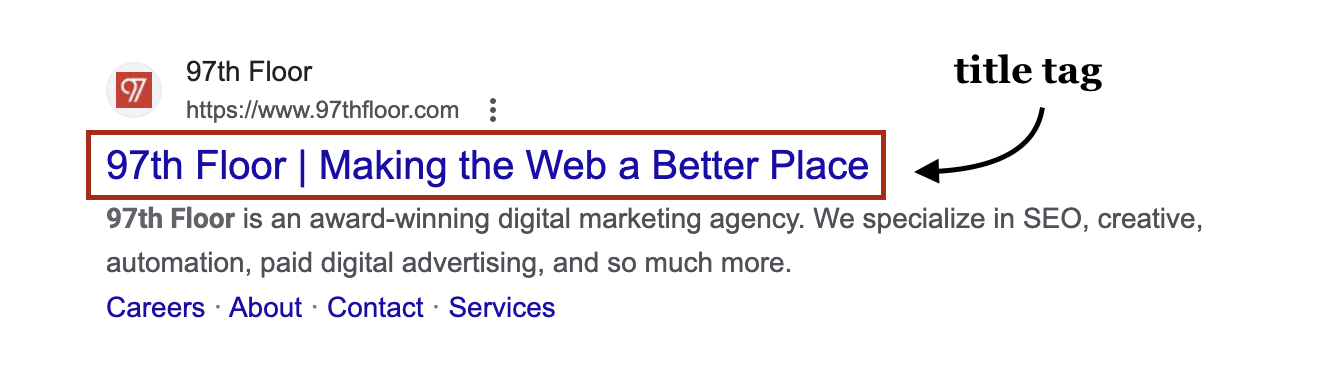
Title tags’s main job is to help search engines understand what your page is about. When the search engines are given the right information, they’re more likely to show your content to the right audience. For example, when a user performs a search, search engines use the title tag as a primary source to determine the relevance of your page to the user's query.
What’s more, title tags are the first impression users have of your site on the SERPs (search engine results pages). A well-crafted title tag has a lot of influence on whether users decide to click on your link, or a competitor’s. Where competition for attention on the SERP is fierce, a compelling title tag can be the difference between a user visiting your site or scrolling past it.
The goal is to create a title tag that is both interesting to users and optimized for search engines. Here are the key elements to consider:
To better understand effective title tag creation, let's examine some real-life examples:
These examples demonstrate how a well-crafted title tag can succinctly convey the general idea of the page's content while integrating keywords and branding effectively. However, it’s important to analyze your competition—the top 10 results of Google—to know what will truly make you stand out from the rest.
Here’s a quick dive into the HTML coding of title tags. The title tag is a part of the head section of an HTML document and is defined as follows:
<head>
<title>Your Page Title Here</title>
</head>
Here's a breakdown of this structure:
Here are some common pitfalls to be aware of when crafting title tags:
By steering clear of these common errors, you can craft title tags that are both SEO-friendly and appealing to your audience.
The following tools can help in researching keywords, analyzing the effectiveness of your title tags, and ensuring they are appropriately optimized for search engines and users:
Tracking and measuring the impact of your title tag optimization efforts is essential for understanding their effectiveness and making informed adjustments. Here’s why it’s important and how to go about it:
By effectively tracking and measuring, you can fine-tune your title tags to better meet your SEO objectives and cater to your audience’s preferences.
Title tags are a critical component of your website's SEO and user experience. An effective title tag can significantly improve your site's visibility on search engines, attract more clicks, and provide a clear and concise summary of your page's content. By understanding the importance of title tags, following best practices for creating them, avoiding common mistakes, utilizing the right tools, and regularly tracking their performance, you can enhance your website's overall effectiveness and reach your digital marketing goals.
Aim for 50-60 characters to ensure it displays properly on SERPs without being cut off.
No, each page should have a unique title tag to accurately represent its content and avoid confusion for search engines.
Keywords are vital for SEO, but they should be used naturally and relevantly.
Including the brand name can be beneficial, especially for brand recognition, but it's not mandatory, especially if space is limited.
Yes, they're a key factor in how search engines understand and rank your pages.
Review and update them as needed, especially if there are changes in your content or SEO strategy.
The title tag is the clickable headline in SERPs, while the meta description provides a brief summary of the page’s content.
Absolutely. An engaging and relevant title tag can significantly increase CTR.
No. Title tags are designed to lead potential buyers onto a landing page, not to invite action.
Monitor metrics like CTR and page ranking, and use tools like Google Search Console for insights.
A meta description is a succinct summary appearing under the title of a webpage in search engine results. They serve as brief overviews, providing searchers with insight into the content of the page. While not a direct ranking factor, meta descriptions play an important role in influencing user behavior.
Meta descriptions are instrumental in boosting click-through rates (CTRs), as they offer the first impression of your page's content to potential visitors. A well-crafted meta description can entice users to click on your link, thereby increasing the organic traffic to your website. This increased engagement signals search engines that your content is relevant and valuable, indirectly benefiting your page's ranking.
A meta description must be concise yet comprehensive. Generally, the optimal length is about 155-160 characters. This range ensures that your description is long enough to provide essential information, yet short enough to prevent truncation in search results.
Creating a compelling meta description requires a blend of creativity and strategy. Here are key tips:
While keywords in meta descriptions don't directly influence rankings, they are often highlighted in search results when they match the search query. This highlighting can draw the searcher's eye and increase the likelihood of a click. Remember, the use of keywords should feel natural and contextually appropriate.
Good Example:
Title: “Foundry & Metal Casting”
Meta Description: “Find top-quality foundry supplies & metal casting equipment to improve your foundry flow and productivity. Get started with General Kinematics.”
Title: "Ultimate Guide to Mediterranean Diet Recipes"
Meta Description: "Explore our comprehensive guide to Mediterranean diet recipes. Discover delicious, heart-healthy options and start your journey to wellness today!"
Why It Works:
Bad Example:
Title: “Foundry & Metal Casting”
Meta Description: “From the scrap yard to shipping, General Kinematics foundry equipment has a solution to improve your foundry flow and productivity. With the largest selection of vibratory and rotary foundry machinery equipment available in the industry, GK can create process flow improvements that will show real value to your throughput.”
Title: "Best Fitness Tips"
Meta Description: "Fitness, health, exercise, tips, gym, workouts, weight loss, muscle gain, fitness tips, health advice."
Why It Doesn't Work:
The good example works well because it clearly communicates what the user can expect from the page, uses relevant keywords naturally, and includes an engaging call to action. On the other hand, the bad example fails as it prioritizes keyword stuffing over delivering a meaningful summary, resulting in a lack of clarity and engagement.
Meta descriptions should serve as a window to your content, enticing users to visit your page for more. They must balance SEO with user experience, offering clear, engaging, and relevant information.
Each type of page demands a tailored approach to its meta description. The key is to align the description with the page's primary goal and content, ensuring it's an accurate and enticing preview of what's to come.
Search engines constantly evolve their algorithms, and staying ahead of these changes is crucial for SEO success. For instance, recent updates have seen search engines like Google using machine learning to better understand and match search queries with relevant meta descriptions, emphasizing the need for clarity and relevance in your meta descriptions.
Looking ahead, the trend is moving towards even more personalized and contextually relevant search results. This evolution means that meta descriptions will need to be more targeted and finely tuned to meet the specific needs and intents of different search queries. As voice search and AI technology continue to advance, the way meta descriptions are interpreted and valued by search engines might also change, necessitating a flexible approach to SEO.
Meta descriptions themselves don't directly impact SEO rankings. However, they are crucial for click-through rates (CTRs). A well-written meta description can entice users to click on your website link, leading to higher organic traffic and potentially improving your page's perceived relevance and value to search engines.
The effectiveness of meta descriptions can be gauged through click-through rates (CTRs) in tools like Google Search Console. A higher CTR generally indicates a more compelling meta description.
All websites can benefit from optimized meta descriptions, but they are particularly crucial for e-commerce sites, blogs, and websites in competitive industries where a compelling description can be a differentiator in search results.
Revision should be based on performance and changes in content strategy. If CTRs are low or if there’s a significant change in your page content or SEO strategy, it’s wise to update the meta description.
Yes, misleading or irrelevant meta descriptions can lead to higher bounce rates as visitors may not find what they expected based on the description.
Avoid overusing keywords (keyword stuffing), being too vague, duplicating descriptions across multiple pages, and exceeding the character limit that leads to truncation in search results.
Meta descriptions complement title tags and headers by providing a concise summary of the page’s content. Together, they give search engines and users a clear idea of what the page is about, enhancing overall SEO effectiveness.
While the core principles remain the same, for mobile users, brevity and clarity become even more crucial due to smaller screen sizes.
Reflect your brand's tone and personality in your meta descriptions. Whether it's professional, witty, or friendly, consistent use of your brand voice can enhance brand recognition and appeal to your target audience.
Meta descriptions are a part of your content marketing and SEO strategies. They contribute to brand messaging, help improve organic search visibility, and can influence the success of your digital marketing efforts by attracting more clicks from potential customers.
Content marketing is a long-term marketing strategy for attracting and engaging an audience through the creation, publication, and distribution of relevant, valuable, consistent content. Its primary aim is to attract and retain a specific audience, ultimately driving them to take profitable actions, be it a purchase, sign-up, or any other desired outcome.
Content marketing is useful for building trust and credibility with your audience, enhancing SEO efforts by creating content that ranks and drives organic traffic, positioning your brand as an industry leader, and supporting the buyer’s journey as they move from awareness and consideration into purchasing.
Content marketing caters to both audiences and brands. For one, audiences are often much more receptive to content that provides them with real value (think infographics, videos, and blog posts) than to advertisements, increasing the effectiveness of content marketing versus traditional marketing in promoting action. Some statistics of content marketing benefits include:
Source: https://www.demandmetric.com/content/content-marketing-infographic
Producing high-quality content that addresses the needs and challenges of your target audience helps you increase your brand's visibility in search engines and across various online platforms. Effective content that's optimized for search engines (SEO) can lead to higher search rankings, making it easier for potential customers to discover your brand organically. As your content gets shared and linked to, your brand's reach and recognition can also expand, enhancing overall brand awareness.
Trust isn't just about telling the truth about your service or product. It's about being a reliable, consistent, and valuable resource for your audience. When trust is woven into the fabric of your content marketing strategy, it becomes a powerful tool for long-term success.
Consumers who trust a brand are more likely to stay loyal, even when competitors might offer better prices or promotions.
Trust also plays a pivotal role in recommendations. Satisfied customers who trust a brand are more likely to recommend it to friends and family, expanding your audience organically.
When potential customers trust your content and, by extension, your brand, they are more likely to take desired actions, like signing up for a newsletter or making a purchase.
Content marketing is a powerful tool for generating leads and converting them into customers. For example, many companies use lead magnets (ebooks, product guides, webinars, etc.) to attract traffic and customer’s attention. These lead magnets build a positive brand image, add value to your company, and ideally result in more potential buyers. By creating content that speaks to different stages of the buyer's journey, you can attract prospects at every level of readiness.
Compared to traditional forms of advertising, content marketing often offers a higher return on investment (ROI). While creating high-quality content requires an initial investment of time and resources, once published, evergreen content (content based around evergreen rather than timely topics) can continue to drive traffic, engagement, and conversions over the long term.
Repurposing content is a creative way to cut down costs and continue to receive returns on ideas proven to attract customers. Once a base of quality content to pull from is established, you can easily modify and mold it to fit current needs. For example, think of how this applies in the “hub-and-spoke” model. Your company will always have “hubs”; topics around which they want to establish authority; and “spokes”, supporting content that links back to the “hubs”. Pulling from your content base to fit the trends surrounding your “hubs” allows for the creation of many “spokes”, all leading back to your objective. Repurposing your pre-made content is ideal in its cost-effectiveness as well as labor efficiency.
Furthermore, you can minimize costs by repurposing content in a way that provides even more value to your brand. An example of this would be to structure existing content — supplementing with new content as necessary — using a hub-and-spoke model to build authority in a specific topic. This approach often has a great deal of SEO benefits alongside general authority building.
Content marketing should be guided by a strategy built around the buyer’s journey.
A buyer moves through three stages in the typical marketing or sales funnel: awareness, consideration, and decision. Marketers know these stages as “TOFU” (top of funnel), “MOFU” (middle of funnel), and “BOFU” (bottom of funnel). Each of these stages is an opportunity for content that meets your audience where they are to help them progress towards decision and purchasing.
Here’s what we mean.
At this stage, buyers are experiencing a problem or need but might not yet fully understand it or know the solutions available. Content marketing's role here is to capture their attention and provide valuable, educational content that addresses their pain points. This content should focus on raising awareness and helping buyers define and understand their challenges. Examples of content for this stage include blog posts, articles, infographics, and videos that highlight common problems and challenges within the industry or domain.
Once buyers have identified their problem and are actively seeking solutions, they move into the consideration stage. Here, they are researching different approaches, strategies, and products to solve their problem. Content marketing's role in this stage is to provide in-depth information about potential solutions and guide buyers toward considering your brand as a viable option. Content should highlight your brand's expertise, showcase case studies, and offer detailed comparisons between different solutions. Whitepapers, eBooks, webinars, and product comparison guides are effective content types for this stage.
In the decision stage, buyers have narrowed down their options and are ready to make a purchase decision. Content marketing's role here is to provide the final push needed for them to choose your product or service. Content should focus on the unique value proposition of your offering, addressing any remaining concerns or objections the buyer might have. Testimonials, customer success stories, free trials, and product demonstrations are excellent content types for this stage. These types of content help build trust and confidence in your brand.
Throughout all these stages, the key is to provide relevant, valuable, and personalized content that addresses the specific needs and concerns of the buyers.
Remember that the buyer's journey is not always linear, and buyers might move back and forth between stages. Content marketing should be adaptable and provide support no matter where a buyer is in their decision-making process.
Many types of content can add value for an audience. Consider what information you need to share and where your audience is to determine the best combination of content types. Below is a non-exhaustive list of content types and their benefits and features.
| Content Type | Example | Features and Benefits |
| E-book and Whitepapers | Allow brands to take a deep dive into a specific subjectMay include research and case studiesOften used as a lead magnetPositions brand as an expert | |
| Webinars | Brands engage with audience in real-time, getting immediate feedbackRecorded webinars are easily re-purposed into other content forms Hosting guests can increase the content’s value and increase its reach | |
| Interactive Tools | Require participation, leading to longer engagement and increased website dwell timeOffer users personalized results, increasing perceived valueUsers often share results and tools on social media, inadvertently promoting your brand | |
| User-Generated Content | UGC is perceived as more authentic than brand-produced content, as it comes directly from peers or other consumers.Brands can save on production costs and resources.Fosters a sense of community around a brand, with users feeling more engaged and connected. | |
| Social Media Posts, Stories and Highlights | Stories allow brands to share in-the-moment updates, making content more immediate and authenticThe ephemeral nature of stories (typically disappearing after 24 hours) creates a sense of exclusivity, urging users to view content before it vanishes | |
| Polls and Surveys | Offer a straightforward way for brands to gather feedback on products, services, or content preferencesRequire user interaction, leading to higher engagement ratesResults can provide valuable data on user preferences and behaviors, guiding future marketing strategies | |
| Infographics | Visual data representation is often more engaging than text-heavy content, capturing and retaining audience attentionInfographics are often shared across social media platforms and websites, increasing their reachcan be repurposed for other content forms, like blog posts or videos. A well-designed infographic can remain relevant and shareable for years | |
| Directly reach your audience via their inboxSegmenting an email list based on behaviors and preferences allows you to deliver more relevant and personalized contentEmail is effective for lead nurturingTrackable metrics such as open rates, click-through rates, and conversions help you refine your strategy | ||
| Podcasts | Podcasts attract audiences who prefer auditory learning, expanding your reach to individuals who may not engage with written content or who are multitasking while listening An audio format allows you to convey your brand’s personality and connect on a personal levelRegularly sharing information on a podcast can position your brand as an industry authority | |
| Video | Combining visual and audio makes content more engaging and suitable for conveying complex informationVideos allow you to demonstrate products, services or processesVideos evoke emotions, improving brand recall | |
| Blog Content | Long-form content provides room to dive deep into subjects, offering readers comprehensive insights.Search engines often favor detailed, value-rich content, leading to improved rankingsRegularly publishing in-depth articles showcases a brand's expertise, positioning it as a thought leaderGuest authors bring new insights and expertise, enriching the content offeringComment sections allow readers to share their views, ask questions, or provide feedback, giving brands direct insight into their audienceDiscussions in the comment section can inspire future content topics or address areas of interest or confusion |
Creating content is only one part - and a small part - of your content marketing strategy. Follow these steps to build an informed strategy that will guide your audience to purchase.
First things first, you need to know who you are talking to.
Deep dive into demographics, including age, gender, and location. Understand what your audience loves, and hates, what they are motivated by, and understand their online behavior patterns. Are they avid readers? Do they prefer video content?
Even if you have personas built out for your customers, take this as an opportunity to refresh what you know - or think you know.
Platforms like Google Analytics or Facebook Insights can provide data about your audience’s behavior, preferences, and demographics. You can also jump into a more advanced tool like Sparktoro, or conduct customer surveys and customer research interviews.
Finally, be sure to group your audience into distinct categories based on their shared characteristics and behaviors. One content strategy will not fit all. Design content that speaks directly to each persona, addressing their specific needs and pain points.
Once you know your audience, set goals and KPIs to guide the rest of your strategy build-out.
SMART goals are specific, measurable, achievable, relevant and time-bound.
You will know whether your content strategy is successful or not by tracking key performance indicators established before the campaign launches.
Quantitative metrics may include traffic data about the number of visitors to your site, and engagement rates such as likes, shares, comments, and overall interaction with your content.
Qualitative metrics for your content plan can come through feedback and reviews from your audience. Before and after surveys can help you gauge how your content is influencing the overall perception and image of your brand.
SEO Performance goals can also be a strong indicator of content strategy success. Monitor where your content ranks for targeted keywords, and watch for backlinks. A high number of quality backlinks can improve your SEO and suggest that your content is deemed valuable by others.
Conversion metrics are perhaps the most important. Ensure that your content strategy is contributing to the overall growth and revenue goals of your company. You may want to track the number of leads generated from a content piece or the number of direct sales or other conversion types.
The content type that you choose to use will be largely dependent on where in the buyer’s journey that content will appear for your audience.
If you’ve considered your audience’s needs and questions at each of the stages of the buyer’s journey, you can then consider what content format is best to answer those questions and communicate what your audience needs to move down the pipeline.
Consider which content formats resonate most with your audience. Perhaps you learned in your audience research that your audience has a strong preference for videos as opposed to long-form blog content. Lean into any of these insights.
Investigate what content types your competitors are using to identify any gaps or opportunities for differentiation. As you move along to implementing your strategy, don’t be afraid to try out different formats. Monitor the response and be ready to adapt based on feedback and results.
Once you know what content you will create, decide how you will distribute it. Will content go out in an email? Do you need brochures or posters for an event? Prioritize channels where you know your audience spends their time. If your target demographic frequents Instagram, it makes sense to prioritize that platform.
Note that different platforms have unique nuances. Tailor your content to fit the specific channel’s audience and format. Regularly posting and engaging on your chosen channels helps maintain visibility and fosters trust with your audience.
Put all of your content creation and distribution plans into one content calendar. Make a short-term strategy spanning 3-6 months.
Organizing topics and post dates in advance ensures you maintain a consistent posting schedule. Be mindful of your own budget and resources to build a calendar that is realistic and effective.
This is also a great time to consider who will be in charge of creating what content. Perhaps you have a large content team that can fulfill your strategy. But maybe you need to hire an external videographer to help with other content. Make these plans now so that every detail of execution is accounted for.
And you’re off! Get creating, sharing and analyzing. As your content strategy begins to reveal its strengths and weaknesses, adapt and stretch yourself to experiment with new ideas.
Build times for a regular analytics review of your content strategy’s performance. Evaluate success based on your established KPIs, and make adjustments as needed.
Here are ways to build upon your content strategy to win loyalty from your audience and get the most out of your resources:
With this framework, you're well-equipped to create, distribute, and measure content that truly resonates with your audience.
To maximize your reach and effectiveness, it's crucial to integrate content marketing with other marketing efforts.
Keyword-Driven Content:
High-Quality Backlinks:
Enhanced User Experience (UX):
Sharing and Amplification:
Influencer Collaborations:
Trending Content:
Content is the backbone of successful digital marketing. It's the medium through which brands can inform, inspire, entertain, and connect with their audience.
Content marketing is a strategic approach focused on creating, publishing, and distributing valuable, relevant, and consistent content to attract and retain a clearly defined audience, ultimately driving profitable customer action.
Unlike traditional marketing, which often focuses on promoting products or services directly, content marketing emphasizes providing valuable information or entertainment to the audience. It builds trust and positions the brand as an industry expert.
SEO (Search Engine Optimization) ensures that your content is visible to search engines and ranks well for relevant search terms. Good SEO practices drive organic traffic to your content, increasing its reach and effectiveness.
The frequency depends on your brand’s goals, resources, and audience’s needs. However, consistency is crucial. Whether it’s once a week or once a month, ensure you maintain a regular schedule.
It varies by industry and target audience. Blog posts, videos, infographics, podcasts, and eBooks are all popular. The key is to understand your audience’s preferences and provide content that meets their needs.
Measure metrics such as website traffic, social media engagement, lead generation, and sales conversions. Tools like Google Analytics can offer invaluable insights. Regularly reviewing these metrics will indicate the effectiveness of your strategy.
Ensure your content is authentic, transparent, and consistently valuable. Avoid clickbait, address audience concerns proactively, and engage responsively. Building trust is a long-term process but is vital for sustainable success.
While the strategies and platforms might vary, content marketing is adaptable to almost all industries. It’s all about finding the right voice, medium, and message for your specific audience.
Content marketing is versatile. Start with what you can manage, like writing your own blogs or creating simple videos. As you gain traction, you can consider reinvesting in higher-quality content or diverse formats.
A value proposition is a clear, concise statement that explains how a product or service solves a problem, delivers specific benefits, and tells the ideal customer why they should choose it over competitors. This statement should be easily understood and clearly communicate what makes the business unique and valuable.
A well-crafted value proposition speaks directly to the target customer's needs and desires, setting the tone for everything the company does. A few of its characteristic benefits include the following:
Crafting an outstanding value proposition involves a series of steps that focus on understanding the customer, highlighting the benefits of your product or service, and differentiating your brand from competitors.
Start by identifying the primary problem or need your target customer faces. This involves thorough market research and customer insights. Understanding the problem in depth allows you to tailor your value proposition to address these specific pain points.
Once you understand the customer's problem, articulate how your product or service provides a solution. Focus on the benefits rather than just the features. (A feature is a key aspect of a product or service, while a benefit is how those features can improve a consumer's life by making things easier or more enjoyable.) Benefits are what truly resonate with customers, as they explain how your offering improves their lives or businesses.
Clarify the value that these benefits bring to the customer. This could be in terms of time saved, costs reduced, increased efficiency, or improved quality of life. The goal is to make the customer see the tangible impact of your offering on their daily lives or operations.
Draw a clear connection between the value your product or service provides and the customer’s initial problem. This linkage ensures that the customer understands how choosing your offering directly addresses their needs.
For example, imagine you offer a meal kit delivery service. Your customer's initial problem is finding it challenging to prepare healthy meals at home due to a busy lifestyle. To connect value to your product, emphasize how your service provides pre-portioned ingredients with easy-to-follow recipes, addressing their need for convenient and nutritious meals without the hassle of meal planning and grocery shopping.
Explain why your solution is better than the competition. This could be due to superior quality, unique features, better pricing, or an exceptional customer experience. It’s about positioning your brand as the preferred choice in the market.
Consider using proven templates and methodologies to structure your value proposition. These tools can help ensure that your value proposition is clear, concise, and compelling.
Crafting a powerful value proposition is a strategic process that requires deep understanding, clarity, and an emphasis on differentiation. When done correctly, it becomes a powerful tool for attracting and retaining customers.
When developing a value proposition, there are special considerations to keep in mind to be sure it resonates effectively with the target audience and aligns with the brand’s overall strategy.
Value propositions can vary significantly depending on their target audience and the specific goals they aim to achieve. Here are a few you’ll frequently come across.
Customer value propositions focus on the benefits a product or service offers to its buyers. It highlights what sets these offerings apart from competitors, emphasizing aspects like quality, price, convenience, or the customer experience. The goal is to clearly articulate why a customer should choose a particular brand.
Employee value propositions are aimed at current and prospective employees. They outline the unique benefits and opportunities provided by an employer, such as career development, work-life balance, company culture, and compensation. This type of proposition is key in attracting and retaining top talent.
These propositions relate to a company's mission and vision, describing the broader impact of the organization on its community or the world. They often focus on values like sustainability, social responsibility, or innovation, appealing to stakeholders who share similar ideals.
Each type of value proposition serves a distinct purpose and targets different audiences, but all play an important role in conveying the unique value and identity of your brand.
The consequences of a poorly defined or executed value proposition can be significant for businesses. Understanding these impacts is crucial for organizations to prioritize crafting and maintaining an effective value proposition.
Understanding and mitigating these risks is essential for businesses aiming to maintain a strong market presence and achieve long-term success.
Exploring examples of effective value propositions provides valuable insights into how successful companies communicate the value of their products or services. These examples serve as inspiration and guidance for crafting your own compelling value proposition.
Apple’s value proposition focuses on innovation, quality, and a seamless user experience. They emphasize the elegance and simplicity of their products, appealing to consumers who value design and functionality.
Lyft presents itself as a friendly, accessible alternative to traditional taxi services. Their value proposition highlights convenience, competitive pricing, and a commitment to a positive community impact, attracting customers looking for more than just a ride.
Nike's value proposition centers on inspiration and innovation in the world of sports and fitness. They offer high-quality athletic products and inspire their customers to achieve greatness, appealing to athletes and fitness enthusiasts.
WordPress communicates the ease and flexibility of creating a website or blog. Their value proposition caters to users seeking a user-friendly, customizable, and scalable platform for their online presence.
Grammarly’s value proposition is about helping users improve their writing. They offer an easy-to-use tool that ensures clarity, effectiveness, and mistake-free writing, appealing to a wide range of users from students to professionals.
Visa emphasizes security, convenience, and global acceptance. Their value proposition appeals to consumers and businesses looking for reliable and widespread payment solutions.
Stripe positions itself as the developer-friendly online payment platform, highlighting features like easy integration, global payments, and powerful APIs, appealing to online businesses and e-commerce platforms.
These examples demonstrate how a well-crafted value proposition can succinctly convey the unique value and appeal of a brand, setting the stage for successful marketing and customer engagement.
Once a value proposition is developed, it's crucial to test and refine it to ensure it effectively resonates with the target audience. This iterative process helps in fine-tuning the message for maximum impact.
Message testing involves presenting the value proposition to a segment of the target audience to gather feedback. This can be done through surveys, focus groups, or one-on-one interviews. The goal is to understand how the message is perceived and whether it successfully communicates the intended value.
A/B testing is a powerful tool for testing value propositions, especially in digital marketing. By creating two versions of a webpage, email, or advertisement, each with a different value proposition, you can measure which one performs better in terms of customer engagement and conversion rates.
Pay-per-click (PPC) advertising campaigns can also be used to test value propositions. By creating different ads with varying messages, you can analyze which proposition drives more clicks and conversions. This method provides real-time feedback and allows for rapid iteration.
Value propositions encapsulate the unique value a company offers to its customers, differentiating it from competitors and driving customer engagement and loyalty. Crafting an effective value proposition requires a deep understanding of the target audience, clear communication of benefits, and continuous testing and refinement.
Whether addressing customers, employees, or other stakeholders, a well-defined value proposition serves as a guiding light for all organizational activities, ensuring consistency and alignment with the brand’s core values and objectives.
The primary purpose of a value proposition is to communicate the unique value and benefits of a product or service to the target audience, convincing them to choose it over alternatives.
An effective value proposition resonates with your target audience, drives customer engagement, and leads to increased sales or conversions. Testing and feedback are key indicators of its effectiveness.
Yes, a value proposition should evolve to stay relevant to changing market conditions and customer preferences. Regular assessment and updates are essential.
A value proposition should be customer-centric, focusing on how the product or service benefits the customer. It should address their specific needs and pain points.
No, a value proposition is different from a brand slogan. A slogan is a catchy phrase used for branding, while a value proposition is a strategic statement explaining the unique value of a product or service.
To ensure alignment, your value proposition should reflect your brand's core values, voice, and personality. It should be consistent with the overall brand messaging.
Yes, businesses can have multiple value propositions if they serve different market segments or offer a range of products and services. Each value proposition should be tailored to its specific audience.
A value proposition guides content marketing efforts by defining the topics, tone, and approach of content. It ensures that content aligns with the brand's offerings and customer values.
Your value proposition should be updated whenever there are significant changes in the market, customer preferences, or your product or service offerings. Regular assessments are essential.
Above-the-fold in marketing signifies the portion of a webpage that is visible without scrolling.
The term hails from the day of Sunday newspapers. When you’re reading a paper, the term "above-the-fold" refers to the upper half of the front page of a newspaper. This space is highly prized and contains the most critical headlines and stories. As the first thing readers see when glancing at a newsstand, it has to be compelling enough to encourage a purchase.
In marketing, this segment of the website's design must be carefully crafted, containing elements that engage, inform, and prompt the users to take action. The term "fold" here refers to the digital line dividing what's immediately visible on a web page from the content below.
On average, site visitors decide whether to stay on a page after only 10 seconds, and these visitors aren’t generous about second chances. A well-designed above-the-fold section sets the tone for the entire site and can keep visitors engaged, leading to site exploration and conversion.
While this may not be a definitive list of every element that should appear above-the-fold, these five things must appear for your site to have a fighting chance for audience attention.
Each of the following images are great examples of Above-the-Fold homepages. Note the simple designs, carefully placed CTAs, engaging images, and brand positioning techniques.

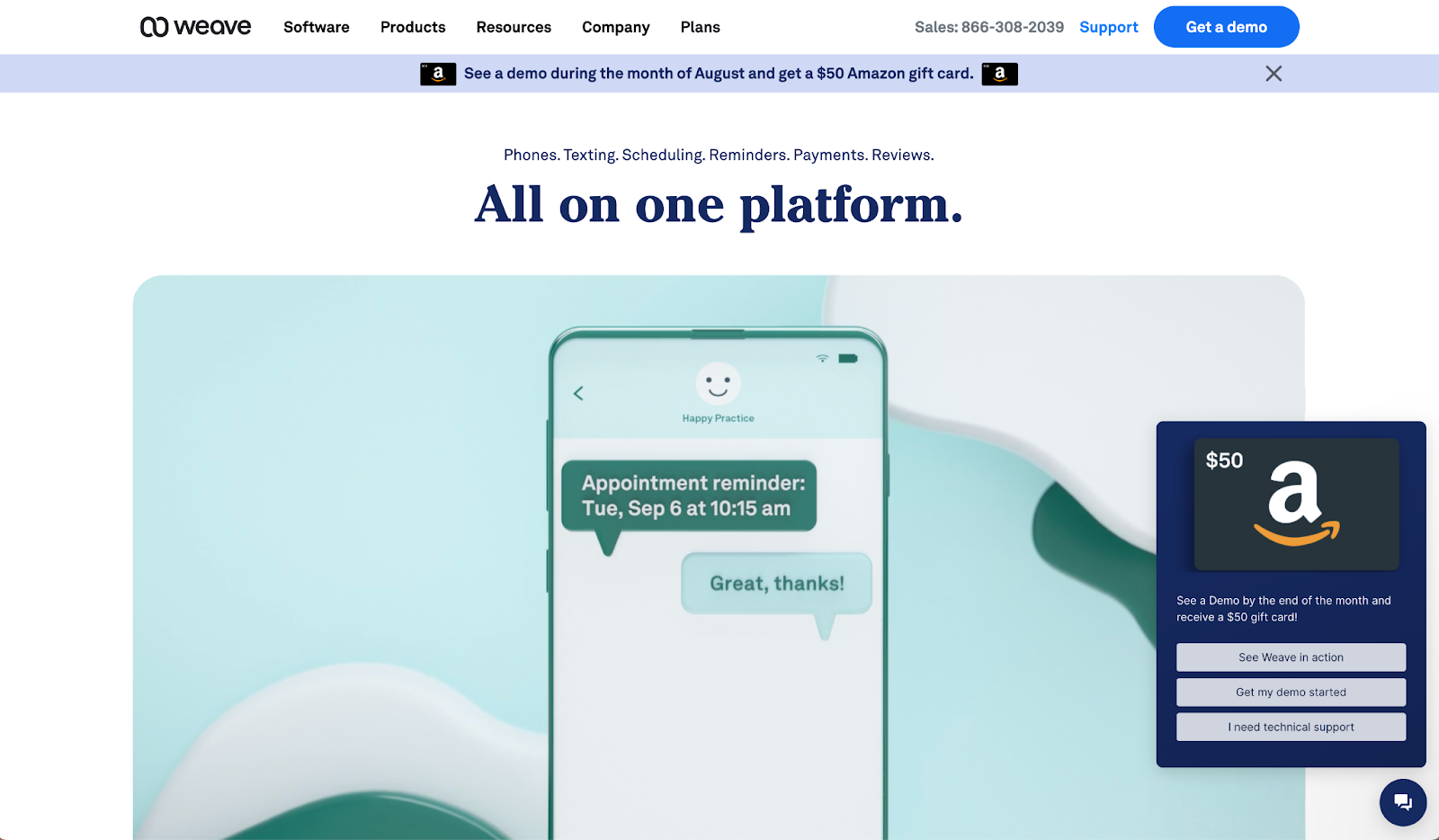
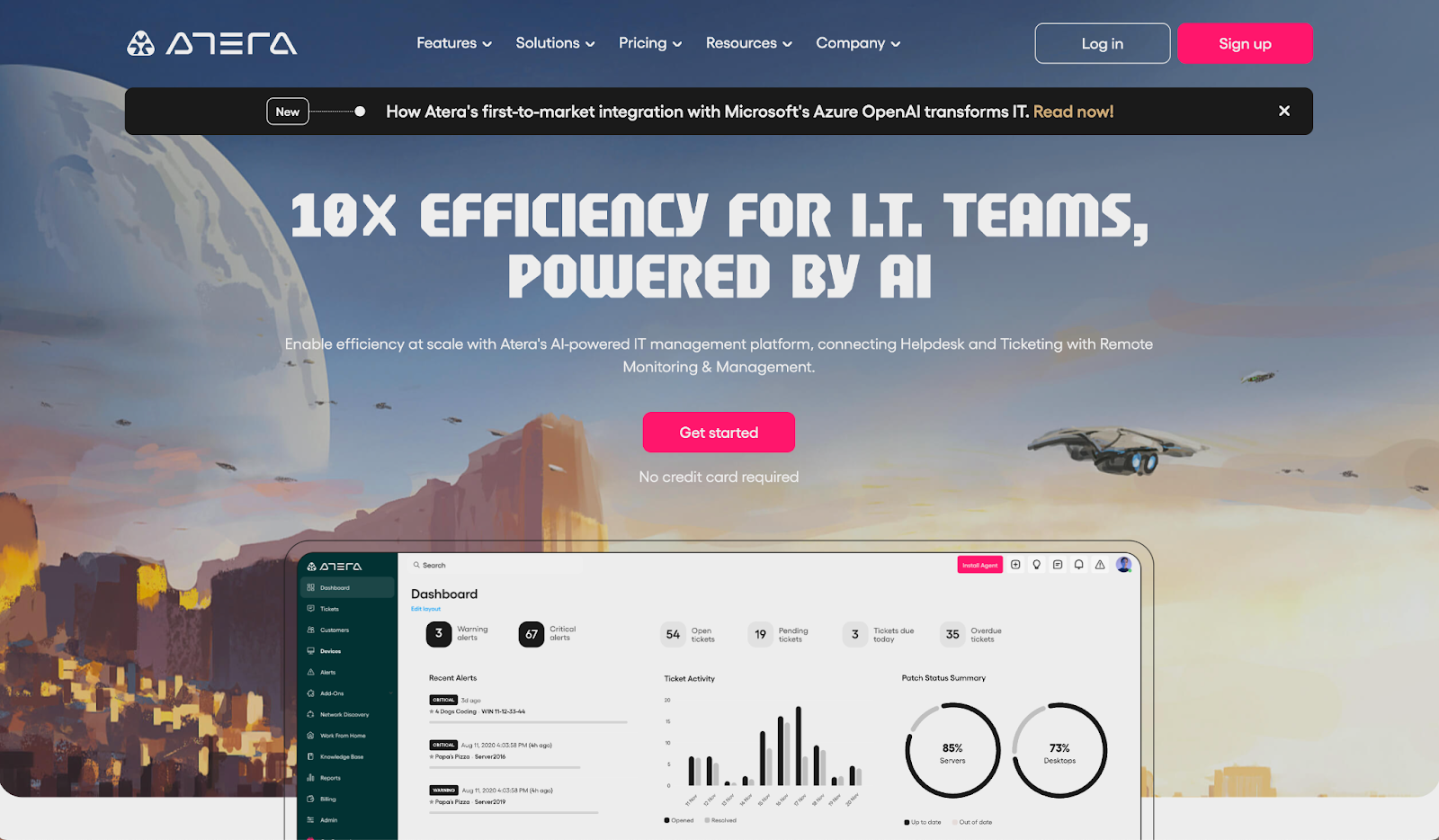
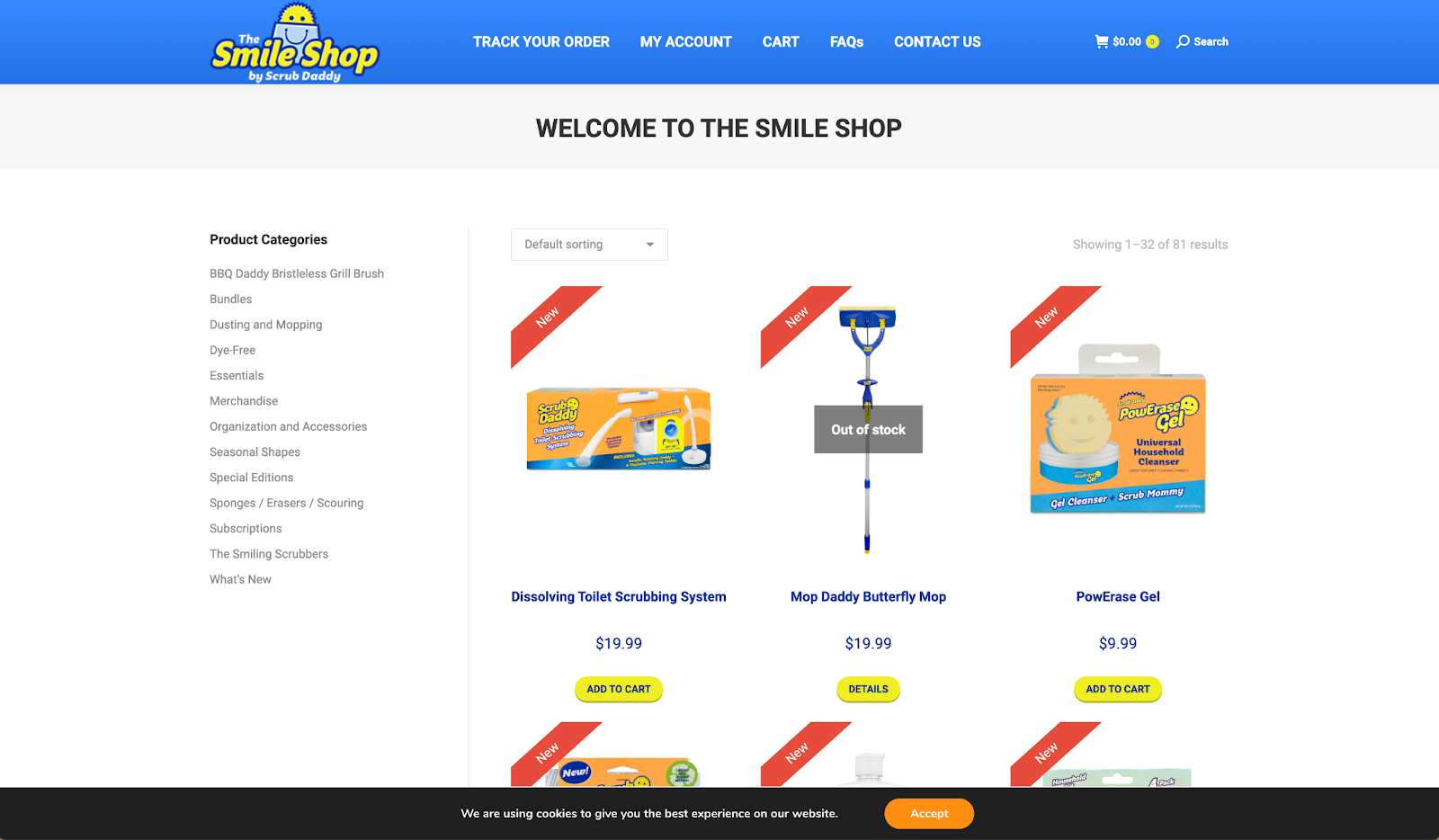
Regularly analyze site performance and optimize your above-the-fold content to increase engagement. There are many ways to find out what is working and what isn’t.
The concept of "above-the-fold" is an enduring principle that's evolved from print to digital.
Through strategic design, engaging content, responsiveness, and ongoing optimization, the above-the-fold section can become a powerful tool for enhancing user experience and boosting conversions on your website.
It refers to the area of a web page visible without scrolling, holding key elements like headlines, images, and CTAs.
It's crucial for immediate engagement, setting first impressions, and influencing user behavior.
Benefits include immediate user engagement, higher conversion rates, and improved user experience.
Focus on simplicity, engage your audience with visuals and compelling copy, ensure usability across devices, and provide immediate solutions to user challenges.
A/B testing, heatmaps, user surveys, and analytics tools like Google Analytics are valuable for testing and measuring performance.
Regular and continual testing is recommended to stay current with user needs and trends.
Yes, responsive design ensures that Above-the-Fold principles are effective across all devices, including mobile.
The term originates from newspaper design, where the top half of the front page was prime real estate for engaging readers. The principle remains the same in digital media.
While not directly an SEO factor, a well-designed above-the-fold area can reduce bounce rates and increase user engagement, indirectly improving SEO.
Simplicity is usually favored, as it promotes clarity and helps users quickly grasp the main message. Complex designs may confuse or overwhelm visitors.
Call to Action (CTA), Value Proposition, User Experience (UX)
Google Search Console, formerly known as Google Webmaster Tools, is a free service provided by Google to help website owners monitor, maintain, and troubleshoot their site's presence in Google Search results. It offers tools and reports that provide insights into how Google's search engine views your website, allowing you to make data-driven decisions to improve your site's search performance.
There are plentiful advantages to using Google Search Console, including:
Embarking on your Google Search Console journey is simple and streamlined. Here's a brief breakdown of the steps:
Ensuring the rightful owner has access to sensitive data is paramount for Google. There are several methods to verify your site:
A sitemap aids Google in understanding your website's structure. To add one:
With the sitemap submitted, Google can more efficiently crawl and index your site.
One of the standout features of Google Search Console is its Performance Report. This report provides a wealth of information on how your website performs in Google Search. Key insights include:
By analyzing these metrics, webmasters can optimize their content to enhance visibility and user engagement.
This tool serves as a diagnostic center for individual URLs, allowing you to:
By using the URL Inspection Tool, you can ensure each page on your site is accessible and optimized for Google Search.
The Index Coverage Report provides a comprehensive view of the indexing status of your site's URLs. It highlights:
It’s a crucial tool for identifying and fixing issues that might be preventing Google from indexing your pages.
Google Search Console's Enhancements Report provides insights into specific features and enhancements, such as:
Using the Enhancements Report, webmasters can improve the overall user experience of their sites.
This report notifies site owners if there are any manual actions taken against their site due to violations of Google's Webmaster Guidelines. Such actions could be a result of:
It's imperative to address these issues promptly to restore your site's standing in Google Search.
The Links Report provides insights into:
Link data can be invaluable for both understanding your site's authority and refining your link-building strategy.
Google Search Console isn't just about monitoring; it's about action. Armed with the data from GSC, you can embark on various technical SEO optimizations:
Introduced by Google, Core Web Vitals are crucial performance metrics that impact user experience:
Google Search Console's dedicated report on Core Web Vitals helps site owners understand and improve these vital metrics.
Your visibility on search engines hinges largely on your site's indexability:
Leveraging GSC’s Performance Report allows for an in-depth understanding of:
By regularly analyzing and optimizing for search queries, you can better align with searcher intent and drive organic traffic.
Google Search Console’s Index Coverage Report is instrumental in highlighting any crawl errors or warnings affecting your site. Addressing these promptly can enhance your site's visibility and user experience. Here’s how you can resolve common issues:
Regularly monitoring and addressing these errors ensures Googlebot can efficiently index your site.
Security issues can harm both your site’s users and your standing in search results. GSC’s Security & Manual Actions report lists potential security threats, such as:
Upon identifying any security threats, act swiftly to rectify them and then request a review via GSC to confirm the issue's resolution.
Sometimes, even without crawl errors, certain pages might not be indexed. To address this:
Regular monitoring and swift action can help maintain your site's optimal presence in search results.
As your familiarity with Google Search Console deepens, you can leverage more nuanced data to analyze performance:
Gaining these insights helps shape your ongoing SEO strategy to align with evolving trends and user behaviors.
Given the mobile-first indexing approach of Google, ensuring both mobile and desktop versions of your site are optimized is crucial:
By catering to both mobile and desktop users, you ensure a seamless experience, irrespective of how they access your site.
In addition to the plethora of reports and tools, Google Search Console also offers insights, which delve deeper into user behavior and content performance:
Harnessing these insights can refine your content strategy, aligning more closely with your audience's preferences and needs.
To fully harness the potential of Google Search Console, it's essential to stay updated with the platform's latest changes:
Google offers a plethora of resources to help users make the most of GSC:
Leveraging these resources can significantly enhance your proficiency with Google Search Console.
Should you encounter challenges or have specific questions, reaching out to Google's support is an option:
While Google Search Console is user-friendly, don't hesitate to seek assistance when needed. It ensures you utilize the platform to its full potential.
Google Search Console is a free tool provided by Google that helps website owners monitor, maintain, and troubleshoot their site's presence in Google Search results. It provides insights into website performance, indexing status, and optimization opportunities, making it essential for businesses aiming for visibility in search results.
While both tools provide insights into website performance, they serve different purposes. Google Analytics focuses on website traffic, user behavior, and conversions, whereas GSC offers insights into how Google views your site, such as indexing status, search queries driving traffic, and potential issues affecting search presence.
No, GSC is designed for website owners to monitor and optimize their own sites. You'd need to verify ownership of a website to access its data in GSC, so competitor monitoring directly through the platform isn't possible.
Setting up GSC is straightforward. It involves adding your website, verifying ownership (using various methods like adding a meta tag or uploading a file), and then you can start accessing the data. While the setup is simple, maximizing its utility might require a deeper understanding.
After initial setup, it might take some time for GSC to gather and display data about your website. However, once it's been running for a while, you should have continuous access to updated insights.
GSC provides valuable insights like which search queries bring users to your site, pages with indexing issues, mobile usability concerns, and more. By addressing these insights, you can improve your site's visibility and performance in search results.
Core Web Vitals are a set of performance metrics introduced by Google to measure user experience on web pages, focusing on loading performance, interactivity, and visual stability.
Manual actions are instances where Google's human reviewers determine that parts of your site don't comply with Google's webmaster quality guidelines. To address them, you'd first need to identify the issue, make necessary corrections, and then request a review via GSC.
Absolutely. GSC has a "Mobile Usability" report that highlights issues affecting mobile users. As mobile search grows increasingly important, understanding and optimizing for mobile users is crucial for businesses.
Google places a high priority on data security. Only verified owners and designated users of a website can access its GSC data. It's always a good practice to limit access to essential personnel and use strong, unique passwords for accounts.
An editorial calendar serves as the backbone of successful content marketing campaigns. The significance of an editorial calendar lies in its ability to streamline content creation processes, ensuring that all marketing efforts are aligned with the company's overall goals and messaging. It aids in planning out content topics, publishing schedules, and distribution channels, making it easier to maintain a steady flow of content. This planning tool also enhances team collaboration and communication, as it provides a clear roadmap of what needs to be created, by whom, and when. By having a visual overview of all planned and published content, businesses can avoid duplication of efforts and ensure that their content strategy remains focused and coherent.
An editorial calendar is crucial for tracking the performance of different content pieces. It allows marketers to analyze which topics and types of content are performing best and adjust their strategy accordingly.
An effective editorial calendar is more than a simple schedule of blog posts; it's a comprehensive framework that encompasses various elements essential for successful content planning and execution. Understanding these key components can significantly enhance the utility of an editorial calendar.
By incorporating these components, an editorial calendar becomes a dynamic tool that not only organizes content but also assures alignment with the strategic objectives of the business.
Creating an editorial calendar may seem daunting at first, but with a structured approach, it can be broken down into 7 manageable steps. Here’s a guide to help you craft an effective editorial calendar:
Start by clarifying what you want to achieve with your content. This could include increasing brand awareness, generating leads, or boosting customer engagement. Your goals will guide the type of content you produce.
Know who you’re creating content for. What are their interests, pain points, and preferred content formats? This understanding will help you create relevant and engaging content.
Gather your team for a brainstorming session to come up with content ideas that align with your goals and audience interests. Think about themes, topics, and the types of content that will best convey your message.
Select the tools or software you’ll use to create and manage your editorial calendar. This could be a simple spreadsheet or a sophisticated content management system, depending on your needs.
Decide on the frequency of your content publication. This will depend on your resources and the capacity to produce quality content consistently. Balance is key; too much content can overwhelm your audience, and too little can allow them to forget about you.
Assign who is responsible for creating, editing, and publishing each content piece. This ensures accountability and smooth workflow.
Your editorial calendar should be a living document. Regularly update statuses and due dates to ensure that your calendar remains a valuable source of truth. Then review and adjust it based on content performance, team feedback, and changes in your marketing strategy.
Selecting the right format for your editorial calendar is pivotal in ensuring its effectiveness and usability. The format should match your team's workflow and the complexity of your content strategy. Here are some considerations to guide you:
The key is to choose a format that aligns with your team’s size, the complexity of your content strategy, and the resources available. A well-chosen format will not only keep your content strategy organized but also enhance your team's productivity and collaboration.
Implementing an editorial calendar successfully requires more than just selecting the right tool and populating it with content ideas. Here are some tips to ensure your editorial calendar is effective and truly beneficial for your content strategy:
By following these tips, you can ensure that your editorial calendar is not just a scheduling tool, but a strategic asset that contributes significantly to the success of your content marketing efforts.
This is a basic example of a content calendar spreadsheet. Pay attention to the various columns and how they are organized. Each marketing team’s calendar will vary, so keep in mind the ability to customize your calendar to your own needs.
| Content Theme/Topic | Content Type (e.g., Blog Post, Video) | Publication Date and Time | Content Description | Assigned Team Member | Status (Planning, In Progress, Completed, Published) | Performance Metrics (e.g., Views, Engagement, Conversions) |
| SEO Best Practices | Blog Post | 2023-12-15 10:00 AM | Tips for optimizing website SEO | John Smith | Completed | Views: 500, Engagement: 30, Conversions: 5 |
| Social Media Strategy | Video | 2023-12-20 3:00 PM | Explainer video on social media | Sarah Johnson | In Progress | - |
| Email Marketing Tips | Blog Post | 2023-12-25 9:30 AM | Email marketing strategies for 2024 | Emma Davis | Planning | - |
| Product Demo | Video | 2024-01-05 2:15 PM | Demonstration of our latest product | Mark Anderson | Planning | - |
| Year-End Recap | Blog Post | 2023-12-31 11:45 PM | Review of our achievements in 2023 | Mia Brown | Published | Views: 1000, Engagement: 50, Conversions: 10 |
Here are two templates for editorial calendars you can use to begin organizing your creation process. Both are easy to use and accessible online.
An editorial calendar is more than just a content scheduling tool; it's a strategic asset that can significantly enhance the effectiveness of your marketing efforts. Providing a structured approach to content planning ensures that your marketing activities are aligned with your business goals and resonate with your target audience.
The key to a successful editorial calendar lies in its ability to balance structure with flexibility, allowing for creativity and responsiveness to market trends. Whether you opt for a simple spreadsheet or a sophisticated content management tool, the most important aspect is that it fits your team's workflow and meets your strategic objectives.
An editorial calendar is a schedule that outlines when and where your company plans to publish upcoming content. It typically includes publication dates, content descriptions, assigned writers or creators, and the channels through which the content will be shared.
It helps in organizing content creation processes, aligning content with marketing goals, ensuring consistent content delivery, and enhancing team collaboration.
By providing a clear framework and schedule, it ensures that content is strategically planned, relevant, and aligned with audience interests and business objectives.
Key components include content themes and topics, publishing schedules, content formats and channels, assignments and deadlines, status tracking, and performance metrics.
Regularly, ideally weekly or monthly, to adjust to new insights, changes in strategy, and emerging trends.
Yes, by ensuring regular and strategic publication of content, which is key for SEO. It also helps in planning around keywords and important events or dates.
The format, whether a spreadsheet, digital calendar, or a specialized tool, should match your team's size and the complexity of your content strategy.
Provide training, emphasize its benefits, and integrate it into your regular workflow. Encourage feedback and make adjustments as needed.
Yes, various tools like Trello, Asana, CoSchedule, and dedicated editorial calendar software offer enhanced features for managing content.
Track the performance of your content against set goals, analyze the effectiveness of your scheduling, and assess team productivity and content quality.
A Demand-Side Platform, commonly referred to as a DSP, is an advanced technological platform that allows advertisers and agencies to buy digital advertising inventory from a multitude of publisher sites and mobile apps through one integrated interface. The primary functionality of a DSP is to facilitate the process of purchasing display, video, and mobile ads using automated processes and algorithms. Beyond mere ad buying, DSPs provide tools for tracking, reporting, targeting, and optimizing digital advertising campaigns in real-time, thus streamlining the traditionally complex manual processes.
DSPs have emerged as an indispensable tool for modern advertisers—they provide advertisers with unparalleled reach. Through DSPs, advertisers can access vast inventories from numerous publishers, ensuring their ads are seen by their target audience. Moreover, DSPs bring efficiency to the ad-buying process. Advertisers no longer need to negotiate individually with each publisher; DSPs offer a centralized platform for purchasing ad spaces across multiple sites. Additionally, the real-time data analytics tools within DSPs allow advertisers to monitor and adjust their campaigns instantly, ensuring optimal performance. In essence, DSPs bring precision, efficiency, and scalability to digital advertising, making them invaluable assets for businesses seeking a robust online presence.
At the heart of the DSP's functioning lies the concept of programmatic advertising. This is an automated, technology-driven method of buying and selling ad inventory. Instead of manual negotiations and purchases, programmatic advertising relies on algorithms and real-time data to make decisions. One of the most popular methods within programmatic advertising is real-time bidding (RTB). Here, when a user visits a webpage that has ad space, an auction takes place in mere milliseconds. Advertisers bid for that ad space, and the highest bidder gets to display their ad to the user. This whole process is facilitated by the DSP, which assesses the value of the impression based on the data available about the user, decides on a bid, and serves the ad—all in real time.
The world of digital advertising can sometimes feel like a maze of acronyms, with DSPs and Supply-Side Platforms (SSPs) being two of the most frequently mentioned. While they might seem similar, their roles in the advertising ecosystem are distinct. An SSP is essentially the counterpart to the DSP but for publishers. While DSPs allow advertisers to buy ads, SSPs enable digital media owners, like publishers, to sell their ad space. In simple terms, the DSP represents the demand (from advertisers) and the SSP represents the supply (from publishers). When a DSP sends out a bid for an ad space, it's typically an SSP that receives and manages that bid on the publisher's end. This interaction ensures that both advertisers and publishers get the best possible deal in real time, making the process efficient and beneficial for all parties involved.
Choosing the right DSP can be the defining factor in the success of an advertising campaign. It's imperative to consider several critical factors:
Begin by clearly defining your advertising goals. Whether you're aiming for brand awareness, lead generation, or conversions, this will help narrow down DSPs tailored to your objectives. Engage in demos and trial periods. Before fully committing to a DSP, experiencing its interface, tools, and customer support firsthand can give invaluable insights. It's also wise to seek feedback from peers and industry experts. Their experiences can guide you toward platforms that consistently deliver results. Additionally, always prioritize transparency. A DSP that is forthright about its costs, data sources, and partnerships will ensure there are no unpleasant surprises down the line. Lastly, evaluate the scalability of the DSP. As your business grows, you'd want a platform that can efficiently handle increased demands and diversifying requirements.
As the significance of digital advertising has grown, so has the number of DSP companies. Here are some of the most popular DSPs:
Stepping into the DSP realm can feel like learning a new language due to its unique terminologies. To help, here are a few key terms:
While both DSPs and Ad Networks facilitate the purchase of ad inventory, DSPs offer a broader scope, allowing advertisers to buy from multiple sources through real-time auctions. In contrast, Ad Networks typically aggregate inventory from various publishers and sell it to advertisers at a markup.
While both DSPs and Ad Networks facilitate the purchase of ad inventory, DSPs offer a broader scope, allowing advertisers to buy from multiple sources through real-time auctions. In contrast, Ad Networks typically aggregate inventory from various publishers and sell it to advertisers at a markup.
Most top-tier DSPs integrate with third-party verification tools that assess the quality of the ad placements and ensure they're in brand-safe environments. They also offer features like blacklists and whitelists to give advertisers control over where their ads appear.
No, while DSPs initially focused on display advertising, their capabilities have expanded. Today, many DSPs can handle various formats, including video, mobile, native, audio, CTV, and even digital out-of-home ads.
With increasing concerns about user privacy, DSPs have adapted by ensuring compliance with global privacy regulations, like GDPR and CCPA. They employ anonymized data and maintain transparent data practices to prioritize user privacy while still offering targeted advertising solutions.
Most DSPs operate on a Cost-Per-Thousand (CPM) basis, where advertisers are charged for every thousand impressions their ad receives. Some DSPs may also charge platform or service fees. It's vital to discuss pricing structures upfront to avoid any unexpected costs. Transparency is key.
Absolutely. Many DSPs offer integration capabilities with other marketing tools such as Customer Relationship Management (CRM) systems, Data Management Platforms (DMPs), and analytics tools. This helps in creating a unified and more efficient marketing ecosystem.
While some DSPs might have minimum spending requirements, others cater to a range of budgets, including smaller ones. It's always advisable to check with individual platforms about their spending thresholds and policies.
DSPs leverage vast amounts of data, allowing advertisers to segment and target specific audiences based on demographics, interests, online behavior, geography, and more. Advanced algorithms analyze this data to ensure ads reach the most relevant and potential customers. DSPs also allow you to use industry/job functions, retargeting abilities, amb lists, and 3rd party lists, which makes it easier and cheaper to target your audience.
The beauty of DSPs lies in real-time analytics and optimization. If an ad isn't performing as expected, advertisers can instantly adjust targeting, bid strategies, or even creative elements. Many DSPs also offer algorithmic optimization, which auto-adjusts campaigns based on performance metrics.
Ad fraud is a legitimate concern in digital advertising. To combat this, leading DSPs incorporate sophisticated fraud detection tools and work with third-party verification services. They constantly monitor for suspicious activities and ensure that advertisers' budgets are spent on genuine, high-quality impressions.
Programmatic ads through DSPs allow you to track the conversion paths of your customers through multiple touch points (known as cross-device tracking). For example, Stackadapt, a prominent DSP platform, uses IP addresses to do this. This gives a unique advantage that other platforms don’t have. Consider the abilities of various DSPs when selecting what will best serve your needs.
