



Nobody wants to say it out loud, but the entire SEO industry is guessing right now. Not strategizing. Not optimizing. Guessing.
"All of these tools that are like, here's how you rank in AI overviews...we're really just guessing," says Marie Haynes, who studies AI patents and documentation daily. When someone at the bleeding edge of search research calls the tools worthless, that's not false modesty. That's reality.
Here's the proof: AI overviews change every two days, with 56% of the entities mentioned shifting each time. Your ranking report from Monday? Meaningless by Wednesday.
Meanwhile, conference attendance has gone through the roof. Not because people are learning, but because everyone's desperate for answers nobody has. "The top of the top, they know maybe 5% more than what most people know," notes 97th Floor CEO Paxton Gray. Everyone's hearing the same observations repeated because that's all anyone's got.
The Google DOJ trial exposed something critical: NavBoost and user signals aren't just ranking factors. They're THE factors that matter once you clear basic quality thresholds.
Haynes says marketers are still trying to game the machines, but it doesn't matter anymore. The AI systems just watch what users actually click on and adjust from there.
This changes everything. Perfect technical SEO? That just gets you in the game. User behavior determines who actually wins.
The shift is brutal for traditional SEOs. "If I've got a 400 word prompt, that's not a keyword," Haynes points out. Position tracking becomes meaningless when the query itself keeps morphing. The metrics that mattered for 15 years are suddenly irrelevant.
Haynes has already rebuilt her entire approach: "I'm trying to spend more time in GA4 metrics, looking at engagement metrics. Did I actually improve the amount of time people spend on my site? Did I improve the number of clicks that I got?"
While marketers debate AI overviews, Haynes is learning to code AI agents through Google's Agent Development Kit. This isn't future talk—it's happening right now.
"My little agents that I'm using to improve content or to look at Google Analytics, when they start working together, they're gonna do like 100 times the work that I could do." Not ten times. One hundred times.
The coding barrier that once protected technical professionals? Disappearing. Haynes went from not knowing how to code at all to building functional agents. ChatGPT walked her through downloading VS Code and installing it, step by step.
The window for advantage is temporary. "We're going to have this era where anybody can code something and for a little while, the people who can code stuff can use it to give you a big advantage."
Google offers a free Python crash course. From there, language models guide you through building whatever you imagine. The marketers learning to "vibe code" today will crush those waiting for tools to catch up.
Conference attendance has exploded, way up from three years ago, even after COVID. But the learning isn't happening there.
"A few years ago, if I wanted to learn what's working in SEO, we had a whole community of people that would happily share," Haynes remembers. "A lot of the people who are actively sharing what's working now, they're not actually providing any proof."
Gray says the same people keep showing up to conferences hoping someone finally has answers, but they just hear the same recycled talking points every time.
The real learning happens in small groups doing actual testing. Haynes runs The Search Bar community where members share daily discoveries. Gray describes 97th Floor's internal approach: constant testing with rapid knowledge sharing among team members.
Media coverage makes things worse. Haynes shares a revealing example: An interviewer asked Sam Altman about building a bunker. Altman mentioned having a well-built basement. The media ran headlines about the OpenAI CEO preparing for AI doom.
"I would encourage people to pay attention to the AI leaders and what they're saying"—not the clickbait versions. Haynes listens to leader interviews while cooking dinner, getting information straight from the source.
The Era That Feels Like 2007 All Over Again
"It feels very much like SEO felt back in like 2007, 2008," Gray says. "A lot of different stuff would work and then wouldn't work. There's so much to test and there's so much unknown."
But this time is different. The chaos isn't a transition—it's the new permanent state. "Something that worked for you yesterday, you might not be successful a week from now," Haynes confirms. Even the AI systems themselves are "changing daily too."
The knowledge gap has collapsed. Previously, size and investment created advantages. Now "it's really like speed and willingness to forego some of the old learnings and adopt new learnings," according to Gray. A solo marketer willing to experiment can outmaneuver agencies stuck in old patterns.
The measurement problem compounds everything. "Every tool samples and extrapolates from that sample," Gray notes. "But really that's insufficient when it comes to actually getting a true status of where things are."
The Practical Playbook for Survival
Waiting for clarity means falling behind permanently. Here's what Haynes recommends right now:
Use language models daily. Treat it like learning a new language. If ChatGPT gives you too many steps at once, tell it to slow down and walk you through one thing at a time.
Learn to code something. Take Google's free Python crash course, then let AI teach you the rest. Security concerns will get solved as you go.
Focus on user satisfaction. GA4 engagement metrics matter now, not keyword rankings.
Listen to AI leaders directly. Skip the media spin. "Pay attention to what the AI leaders are saying," not sensationalized quotes. They "believe that they're changing humanity."
Build or join a testing community. Share what works with actual data. Gray's team does this internally. Haynes built The Search Bar for the same purpose.
The Jobs Question Everyone's Afraid to Ask
The disruption will accelerate, but Haynes stays remarkably optimistic about what emerges.
Haynes says we'll always have work, it'll just look completely different. "If you told people a hundred years ago that you and I would be doing what we're doing now and that this would be potentially a revenue driver—that wouldn't even register."
A century from now? "We'll have jobs, but they won't be what we do today."
She sees broader transformation coming: "We're living in a dark age...everybody's eating junk food. I think that AI has great potential to improve our health tremendously. We're going to look back at this age and go, I can't believe people lived in pain."
The marketing transformation is just one piece. "There is going to be an era of prosperity," Haynes believes, despite acknowledging "there's gonna be some job loss and some very challenging times" first.
The Bottom Line
The old SEO playbook is dead. Conference circuits won't save you. Yesterday's tactics are worthless today.
But for marketers willing to become beginners again, the opportunity has never been bigger. Those learning new languages—both AI prompting and actual coding—while focusing on user satisfaction over algorithm manipulation will define the next era.
"Test things and then see what works," Haynes advises. In a world where AI overviews change every two days and tools are just guessing, that's the only strategy that matters.
Start experimenting today. Not because the path is clear, but because it isn't.
01:26 - Working on AI agents and Google's development course
04:34 - AI overviews change every 2 days
06:10 - Industry missing user interaction signals
41:11 - AI creating work-free future
43:51 - Tips: Use LLMs daily, learn to code
Learn about Marie’s work and join her community at https://www.mariehaynes.com/
Google’s Python Class: https://developers.google.com/edu/python
Google’s Agent Development Kit: https://google.github.io/adk-docs/
Connect with Marie on LinkedIn: https://www.linkedin.com/in/marie-haynes
Connect with Paxton on LinkedIn: https://www.linkedin.com/in/paxtongray/
Looking for an agency that'll be worth the investment? 97th Floor creates custom, audience-first campaigns that drive pipeline and conversions. Get started here: https://97staging.com/lets-talk/.
Marie Haynes is a leading expert in AI and Search. She helps her clients prepare for agentic search, surfacing more often in LLM tools like ChatGPT and using AI in their workflows.
When’s the last time that Google sent you search results that weren’t at all what you were looking for? It’s rare, but it’s happened to all of us.
Maybe you searched for a recipe and ended up with a 1500-word blog post instead.
Perhaps you were looking for a list of the best blenders with product reviews but got an in-depth piece on “how to choose a blender” instead.
Maybe you were looking for broadcast details for a sporting event and landed on a product page for a streaming service.
Each of these are examples of a misalignment of page type when compared to user intent for each search query. And because of that frustration that you and countless other users feel in those situations, a main priority for Google’s algorithm is to correctly decipher user intent and align results and associated page types accordingly.
This is why page types matter so much in SEO strategy. Let’s dive into it, and how you can shore up your strategy to incorporate this key piece.
So, what do we mean when we say “page type”? Generally speaking, most written content online falls into a certain format based on user intent and where they are in the funnel. For example, some of the main page types include:
Depending on what a user is expecting to see, an appropriate page type can make all the difference to their experience — and by extension, your ability to capture their attention and prevent them from bouncing.
In the early days of SEO, less-sophisticated algorithms didn’t consider page type. It was not uncommon to see a bottom-of-the-funnel product page turned into a Frankenstein’s monster of a blog post in order to stuff in as many keywords as possible.
Today, user intent and experience are more important than ever, and that includes selecting the appropriate page type for each keyword and optimizing accordingly within that format.
You know that page type matters. And you know you need to match it to user intent. But how do you do that? Let’s break down the most common page types.
Users searching a specific brand or service name are typically looking to go directly to branded pages with essential information and straightforward navigation. This might include existing customers looking to log into their accounts, or those who are already familiar with the brand through other demand generation or nurture strategies.
If your keyword starts with “how,” “what,” or “why,” then your best bet is blog or similar informational content. Even if those words are not included, however, most higher-funnel keywords will also fall into this category—as well as a significant chunk of mid-funnel queries. If intent is not immediately obvious, it typically only takes a quick Google search to identify the main intent of users searching for these keywords.
When users are in the consideration or mid-funnel stage of the buyer’s journey, they are likely to be actively researching and comparing various solutions to their problem. As such, case studies and comparison-type content is most appropriate for these queries. Mid-funnel blog content or category pages may also be appropriate for some topics. Keywords including “best” or “reviews” are good candidates for this page type.
At the bottom of the funnel, when users are ready to buy, it only makes sense to serve them with landing or product pages. In these cases, conversion should be the priority, but there are still ways to optimize for the SERP.
Over the years, Google has attempted to prioritize user intent as much as possible. The type of page that shows up in a SERP is determined by what Google thinks the user is looking for.
Sometimes, Google will test different page types, or show a mix of page types in order to meet varying needs of different users searching for the same keyword. In these cases, SERPs may be broken up by page type and thus limit the quantity of that page type that will show on page one.
For example, only two of the spots on a certain SERP may be reserved for product pages. , If you have a product page that you want to rank for that SERP, you will have just two chances, rather than the full 10, to get it to rank. This makes understanding the correct page type for your strategy even more essential.
Do I Have the Right Page Type for my Keyword?
Ensuring that your page type matches the keyword for which you want to rank will be much easier if you start with a full understanding of your audience and customer journey. Audience insights should inform your keyword selection, help you group keywords into audience-focused topic clusters, and provide a check that you have keywords across every stage of the funnel.
From there, you can derive search intent through keyword and SERP analysis, identifying which page types dominate the top results in each case.
Building a Balanced Site Architecture
Customer journey insights are also essential in organizing your site content into a structure that is easy for both Google and users to understand. Each funnel stage should contain corresponding content, with internal linking between them, to craft the user journeys that make the most sense in order to nurture customers towards final conversion.
Now that we have established that not all pages are built for the same purpose, it should be clear why optimization must be tailored accordingly. Each page type has its own goals, layout, and optimization priorities, all designed to serve user intent while sending the right signals to search engines.
Homepage and Brand Pages
Focus: Discoverability and crawl depth.
These pages act as gateways, helping both users and search engines navigate related sets of products or topics.
Best practices: Ensure proper internal linking to and from subcategories or product pages. Use canonical tags and pagination control to avoid duplicate content.
Pro tips: Metadata should be optimized for clarity and click-through-rate (CTR). Site structure and navigation should match content topic clusters and optimal user experience.
KPIs:
Blog and Resource Articles
Focus: Education, authority, and shareability.
Blog content should build topical authority and provide genuine value to readers. These pages often target informational or mid-funnel queries and play a crucial role in internal linking and audience nurturing.
Best practices: Use clear heading hierarchies, optimized images, and schema markup for articles. Include strategic internal links to guide users (and crawlers) toward related content and next steps.
Pro tips: Blog keywords should fit into a cohesive topical authority strategy. Just because a blog article is not intended to convert right away, does not mean that you cannot guide the user to eventual conversion. Mapping out cohesive topic clusters and customer journeys with your content will not help Google and users understand your business
KPIs:
Landing and Product Pages
Focus: Conversions, minimal distractions.
Landing and product pages exist to drive a single action, such as a form fill, demo request or purchase. The key is to minimize friction and distraction on these pages so the user has a clear path to conversion.
Best practices: Keep navigation limited to maintain focus. Align target keywords with ad or campaign messaging for consistency and relevance. Prioritize mobile performance and fast load times to support both user experience and Quality Score.
Pro tips: Metadata can almost be thought of in the same way as you would a search ad at this stage — the goal is to capture as many of these high-intent users as possible, and click-through-rate optimization is essential.
KPIs:
Comparison and Case Study Pages
Focus: Clarity, rich product info, and trust signals.
These pages are built for decision-making. Users arriving here want to understand features, pricing, and proof points before they buy.
Best practices: Implement structured data and FAQs to enhance SERP and LLM visibility. Use unique, detailed descriptions and user reviews to strengthen credibility and avoid duplicate content issues.
Pro Tips: Proper content hierarchy will aid in ranking for research queries, as well as improving user experience and engagement metrics. Formatted elements such as lists, FAQ sections, and comparison tables will aid your chances of showing in AIO.
KPIs:
No matter how badly you may want to get a certain page ranking for a specific keyword, it won’t happen if Google does not believe it matches user intent correctly.
One of the most common mistakes is trying to force it anyways, attempting to rank a blog post for a transactional keyword, or using a product page to target an informational query. Google quickly identifies the mismatch, and users do too. This results in poor rankings, low engagement, and wasted investment on content that fits neither the user’s needs nor your own goals.
Page type dictates how both Google and users interpret your content. A balanced SEO strategy ensures you have the right mix of page types across the funnel — aligning intent and format throughout, and giving you the best chance of boosting both rankings and conversions.
Running an ecommerce business is a lot of work. You’re managing all your products, solving your customers’ problems with great services, and trying to grow in a competitive industry. With AI changes coming to SEO as well, it’s hard to know where to start with SEO and marketing. The good news is you don’t have to figure it out on your own.
This guide explores the current state of ecommerce SEO with AI optimization involved and where it’ll be going in the coming years. Read on to learn how to handle your SEO to keep your ecommerce brand thriving.
Ecommerce SEO is the process of optimizing your online store so that your product pages, category pages, and brand pages rank higher in search results. Unlike traditional SEO, which often focuses on blog content and service pages, ecommerce SEO also deals with thousands of SKUs, filtering options, navigation, and constantly changing inventory.
Executing an intentional ecommerce SEO strategy is essential because organic search is one of the strongest revenue channels for online retails. When shoppers search, they’re already showing intent to buy—so ranking higher gives you the chance to be the product they see. Effective ecommerce SEO makes sure the right products appear at the right time for the right customer, which can help both your immediate sales and long-term brand visibility.
Even the most advanced AI tools and content strategies won’t deliver results if your key ecommerce SEO fundamentals aren’t in place. Before scaling product content or experimenting with automation, your site needs a strong technical foundation that helps search engines and AI tools discover and trust your pages. These four essentials make your store findable, fully crawlable, and ready to compete in organic search.
Search engines need clean, discoverable paths to your product and category pages. Use robots.txt and XML sitemaps to guide crawl behavior and make sure the most valuable URLs are included. For very large catalogs, monitor crawl budget and prioritize high-converting or frequently searched products so that they’re indexed quickly and consistently.
Filters, sorting, and faceted navigation can create thousands of parameter-based URLs that look like duplicate pages to search engines. Instead of letting your best pages get lost to crawlers, use canonical tags, “noindex” rules, and URL structure. In addition, check that you don’t have any actual duplicate pages and that could be confusing both your users and the search engines and consolidate those.
Most ecommerce traffic now comes from mobile, so your site must be fast, responsive, and easy to navigate on a phone. Optimize Core Web Vitals at the template level so that your product and category pages load consistently and quickly on any device. Other ways to pick up your site speed include compressing product imagery and streamlining scripts.
Structured data helps search engines understand and display your products more effectively. A good way to help create structured data is to add products, reviews, pricing, and availability schema to your site. This provides your customers and search engines with rich results like star ratings and stock status in search listings. Keep your schema updated to reflect inventory changes so that shoppers receive accurate, up-to-date information before they even click.
AI and SEO go hand-in-hand. AI helps you scale what used to require hours of manual research, writing, and analysis. It can cluster thousands of keywords into logical product and category groups, personalize recommendations based on user behavior, and forecast demand by analyzing past performance and seasonality. AI search SEO allows you to build smarter navigation structures and target intent-based search opportunities more effectively.
AI can also automate repetitive tasks, such as generating product descriptions, meta tags, FAQs, and schema markup at scale. With the right prompts and review workflows, these outputs stay accurate to brand voice while freeing your teams to focus on higher priorities. AI-driven anomaly detection and performance monitoring tools can also surface issues—like sudden ranking drops, broken pages, or out-of-stock items—before they meaningfully impact your company.
However, AI should act as an assistant, not a replacement. Your team and your agency will provide the expert creative direction while AI speeds up the process.
A strong ecommerce SEO content strategy includes more than blog posts. The goal is to help shoppers make confident decisions while signaling relevance and authority to search engines. Here are a few ways to help build out your strategy.
Your blog should focus on topics that closely align with your products and the problems they solve. Target high-intent queries like comparisons, “best of” lists, and how-to content that moves potential customers toward purchasing.. Each article should support a product or category.
Evergreen content (like buying guides and care instructions) builds compounding search value over time. Seasonal or trend-driven content helps you stay relevant during peak shopping windows or product launches. Both matter—evergreen builds foundation and seasonal captures timely demand.
Long-tail content like “how to choose,” “best for,” and detailed FAQs helps potential customers confidently purchase. Some other content types you might want are comparison grids, sizing explanations, and care instructions.
Stack Overflow built a billion-dollar brand on the exact kind of Q&A content AI now answers in seconds — and paid the price. Jimmy Wales explains what the 90% collapse reveals about content strategies that won't survive the decade.
Every piece of content should strategically link to the right product and category pages. Internal linking helps search engines understand relationships between pages and distributes authority where it matters most. Use clear calls-to-view products, related collections, or comparison pages to guide both users and search engines toward your most valuable URLs.
Off-page SEO helps build the authority, trust, and credibility that search engines use to determine which brands deserve top rankings. For ecommerce sites, it’s about earning signals that show your products are valued by real customers. Here are a few strategies to boost your off-page SEO:
As you scale, SEO needs often evolve beyond basic optimizations. Deciding whether to manage SEO in-house or to partner with an agency depends on your specific needs and goals. Most ecommerce SEO agencies offer technical audits, on-page optimization, content strategy, link-building, and performance reporting. They often bring specialized experience with product feeds, schema markup, faceted navigation, and large catalog indexing—areas that can be difficult for generalist marketers to manage.
If rankings are flat or your internal teams are stretched thin, an agency can help. Other common signals it might be time for agency help include frequent site changes, large or rapidly growing product catalogs, and the need for structured testing to improve performance.
When you need agency help, 97th Floor takes a strategic, outcome-driven approach that can change the way your company handles SEO. Rather than applying surface-level fixes, we optimize information architecture, content ecosystems, and product discovery workflows to influence full-funnel performance. Our team combines expert strategy with AI-supported execution to scale insights, reduce manual lift, and align SEO outcomes with real results.
Search engines need clear signals about which version of each page is intended for each audience—otherwise, rankings can become diluted and customers may land on the wrong currency, language, or shipping region. International ecommerce SEO helps you make sure shoppers see the right page for their location. Here are a few tips to get you started:
While position improvements matter, the real SEO impact shows up in revenue, conversion rates, customer lifetime value, and product discoverability. The goal is not simply to rank—it’s to drive profitable, sustained growth from organic search. Below are a few ways to track how well your SEO strategy is working:
When SEO goals map directly to revenue and merchandising priorities, it becomes a scalable lever for long-term ecommerce growth.
Even experienced teams can run into challenges when scaling product catalogs and content. Recognizing and resolving them early can help you grow sustainably and reach your customers effectively. To up your SEO strategy, make sure you avoid:
Ecommerce SEO is shifting from static keyword targeting to dynamic, personalized experiences powered by AI and real-time intent signals. AI search engines are getting better at predicting what shoppers want before they explicitly say it. That means personalized recommendations, dynamic product rankings, and individualized search results will become standard—requiring ecommerce brands to optimize for user intent and behavior.
Another development on the horizon is voice commerce and conversational queries.
As voice assistants and conversational interfaces evolve, queries are becoming longer and more natural. You’ll want to be ready to handle question-based searches, comparisons, and instructional content to meet shoppers where they are.
Shoppers increasingly search using images, screenshots, and voice—often all in the same product search. Product pages in coming years will need rich visuals, clean metadata, and structured information to perform well in visual and AI-driven environments.
Expect search results to look more like curated guides than lists of blue links. AI-driven shopping assistants will become commonplace, pulling product data, reviews, inventory, and pricing from multiple sources at once. Brands that invest now in structured data, differentiated content, and flexible content pipelines will be positioned to lead the next era of ecommerce discovery.
If you’ve ever Googled something in the last year, you’ve likely seen an AI summary pop up at the top of the SERP page. Whether you read that answer or not, having those AI summaries on search engine results has changed the way users interact with websites and the way SEOs are approaching optimization.
Even though SEO is shifting, there’s no reason to worry about its future. SEO is around to stay—and so is AI. The key is learning how to use both together in an effective way to get your content to your audience and to help you reap the benefits of online visibility. Read on to learn all about AI and SEO, best practices for adjusting your strategy, and where the future of search is going.
SEO is what helps your page show up on search engines to meet user queries. However, recently, the top slots are going to an AI summary, and the AI tool will search across pages to find information to fuel its responses. AI SEO also includes using AI like machine learning (ML), natural language processing (NLP), and predictive analytics as a tool in your own SEO process. It’s all about getting your website to display in AI searches as well as using it to help you improve your own work.
Unlike traditional search optimization, which largely focused on keyword placement, backlinks, and static algorithmic signals, AI-enabled SEO adds several new dimensions:
Here are some concrete examples of how AI capabilities are already being applied in search and SEO:
AI is reshaping the SEO landscape by powering smarter search engine results pages (SERPs) and fueling the rise of AI-driven answer engines. Instead of delivering a list of ranked blue links, modern SERPs often feature AI-generated summaries and at the top of a SERP to answer questions directly—reducing the need to click through to websites.
This shift moves the focus of SEO from traditional rankings to retrieval and representation. It's no longer just about being on page one—it's about being cited or summarized by AI models that interpret and surface the most relevant content from across the web. As a result, user behavior is evolving. Click-through rates (CTRs) on traditional organic listings are declining in some categories, while zero-click searches are increasing.
The goal now is to curate your content in a way that makes it easy for an AI tool to retrieve and summarize it.
Understanding which AI platform your content needs to perform in just got a lot clearer. SEO expert Eli Schwartz breaks down what Apple's partnership with Google Gemini means for the future of search — and why it cements Google as the dominant AI search platform you need to be optimizing for. This short video captures exactly how Google won the AI search war, and what that means for the strategy you're building right now.
As generative AI becomes more integrated into search engines and digital assistants, SEO strategies need to evolve to make sure your pages are staying on top and showing up in the right searches. AI usually considers these three key factors when choosing content to cite:
Certain formats tend to perform better in AI summaries, including:
AI can also help you work smarter, not harder. AI tools can automate keyword research, detect content gaps, and personalize experiences across channels to help you find the right areas to create content.
Integrating AI into your SEO strategy doesn’t need to be overwhelming. As SEO experts, we’ve worked hands-on with AI search optimization across many industries, and we’ve identified four best practices that can help your team adopt AI.
The best way to begin is with low-risk, high-visibility pilot tests. Try AI tools on smaller tasks—like keyword clustering, meta tag suggestions, or content outline generation—and track performance over time. Use these early experiments to measure output quality, workflow impact, and time savings. Once you understand where the tech shines (and where it doesn’t), you can scale up confidently.
Choose AI tools that work well within your existing SEO stack. You’re likely using CMS platforms like WordPress and Webflow or analytics tools like GA4, Looker Studio, or Search Console, and you want AI tools that work with those. Don’t just chase “shiny” AI features. Make sure they fit into your real-world systems.
AI is a powerful assistant but not a decision-maker. Use it to automate repetitive tasks, surface insights, and speed up processes, but keep humans in the loop for critical thinking and decision making. Humans need to make big decisions, look over AI content, and check for brand consistency.
AI in SEO is not a static playbook—it’s an ongoing evolution. Keep your team learning with hands-on training and encourage experimentation with new tools and techniques. Look for ways to bring real value into daily workflows: faster content ideation, smarter optimization, better insights. All of this will help you optimize for AI search SEO.
While AI gives you a wide range of advantages with SEO, there are some new challenges to prepare for, including:
As AI transforms how search works, the role of SEO professionals is evolving just as quickly. Instead of spending time on purely manual tasks—like keyword tagging, metadata updates, or technical audits—SEO pros are stepping into more strategic roles. Their job isn’t just to optimize for algorithms, but to understand how people and machines interact.
AI is a powerful tool, but it complements—not replaces—human expertise. Machines can generate content, identify trends, and automate repetitive tasks, but they can’t replicate human creativity. SEO teams must now balance automation with context, voice, and long-term vision.
At 97th Floor, we’ve embraced this shift by changing the name of our SEO department to the Search Department. This rebrand reflects a broader mandate: we’re no longer optimizing only for search engines—we’re optimizing for how people experience search across AI chat, answer engines, smart devices, and traditional SERPs.
As AI reshapes how people discover and consume content, the way we measure SEO success must also evolve. Here are our tips for measuring success.
The future of SEO is about aligning with how AI understands, retrieves, and delivers information. Several key trends are shaping what’s next:
To stay competitive, SEOs must prepare for ongoing shifts by adopting agile processes, investing in AI literacy, and building systems that track visibility across traditional and AI-powered platforms.
If you want to see what can be done with AI SEO strategy, look no further than 97th Floor’s campaign with Princess Cruises. We helped Princess Cruises move beyond siloed pages toward a tightly interlinked topical cluster model. The aim was to layout content in a way that signals topical authority, which helps AI systems find more contextually rich responses and increases the chance that Princess content is cited or summarized in AI-driven overviews.
The results were dramatic:
By marrying strategic direction with hands-on execution, we turned AI‑centric theory into concrete gains—while proving that human judgment, agility, and domain knowledge remain indispensable.
If your SEO team is wondering whether AI‑driven search is already rewriting the rules—this case shows it is, and early wins are possible. The shift is not hypothetical. It's real, and the rewards go to teams that think differently about content structure, authority, and AI visibility.
If you'd like to explore how generative search can work for your brand—or see how 97th Floor can help you architect a strategy and workflow—learn more about our AI SEO services.
Your content might already rank well in Google, but what happens when users never click through? With AI Overviews, Bing Copilot, Perplexity, and chat-based search, answers are being generated instantly, and often without the need for a typical site visit. That shift means the old playbook of targeting blue links and optimizing for CTR doesn’t cut it anymore.
AI search engine optimization (AI SEO) is the next frontier. Instead of chasing positions, brands now compete for visibility inside summaries, citations, and answer boxes. This guide breaks down how AI SEO works, the strategies that matter most in 2025, and which metrics to track as you future-proof your search presence in our AI-first world.
As SEO continues to evolve beyond clicks and rankings, the real question becomes: did you genuinely satisfy your audience with relevant content? This short video captures why engagement and user value now matter more than ever.
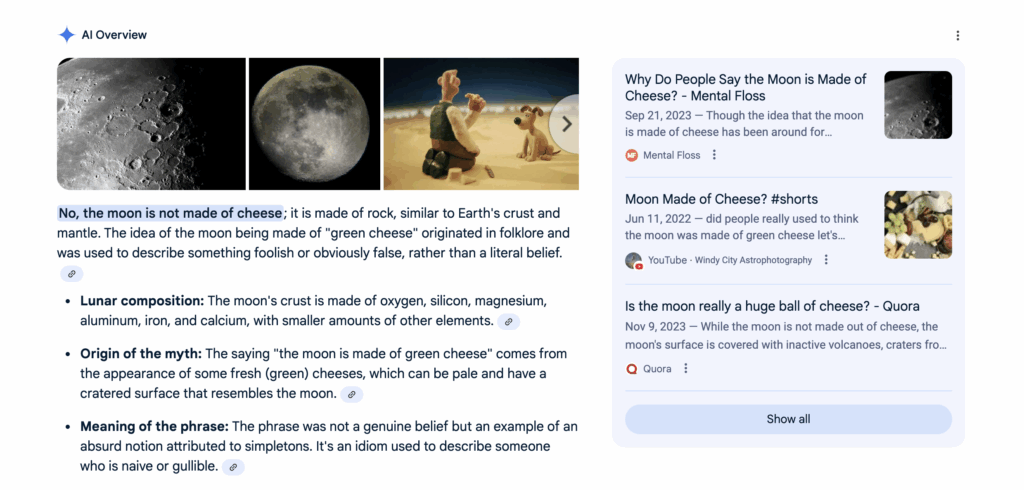
AI search engine optimization is about making your content answer-ready for systems powered by large language models (LLMs). Instead of just aiming for the “10 blue links” on a results page, AI SEO helps your content show up inside AI Overviews, generative snippets, and even chat-based answers.
Think of how these engines work. First, they retrieve documents that look relevant. Then, the model generates a response by summarizing those documents — and, if you’re doing something right, citing the ones it trusts. That citation is the new click-through.
So, do keywords and backlinks still matter?
Yes.
Are they enough on their own?
Not quite.
To get cited, your content has to speak the same language as the machine. Entity-rich writing, clear definitions, structured data, and clean metadata. The easier you make it for a model to sift through your content, the more likely it is to select your content as a reliable source.
Structured data and content have always been one of the primary answers for how to optimize for search engines, so a lot of what you naturally do is already helping. So, traditional SEO isn’t dead. Fast load times, strong technical health, and mobile readiness are still table stakes. What’s changed is the layer on top: your brand now has to prove it’s a trusted authority for both humans and algorithms.
We always talk about Google, but that isn’t the only search engine or resource for results. They show up across an expanding ecosystem, including:
The message for marketers is clear: you’re not just optimizing for Google anymore. AI SEO means building content that can be selected, summarized, and cited across multiple surfaces — and more importantly, wherever your audience is asking questions.
Structure. Writing quality. Authority signals. That’s what large language models (LLMs) are looking for when deciding which content to trust. Instead of optimizing for a ranking, you’re optimizing for selection inside an AI-generated answer. That process leans on a few core elements:
When these pieces come together, your content becomes easier for AI to interpret, summarize, and cite. It shifts the goal from driving clicks to earning visibility inside the answers people already see. So, the more quote-ready your content is, the more visible your content and brand will be.
Traditional SEO rewarded visibility. AI SEO rewards credibility. Instead of just climbing search rankings, the goal is to become the source that AI systems trust enough to cite.
Getting to page one used to be the win. Now, the real prize is being quoted inside an AI Overview or chat result. That means structuring passages so they can be pulled directly into answers. For instance, a product comparison table or a one-sentence definition has a better shot of being cited than a long block of copy. Rankings still matter, but citations are what earn attention in AI search.
Stuffing in the right keyword variation won’t convince a model that your page is the best fit. What does? Entities and their relationships. Imagine writing about “running shoes.” Instead of just repeating the phrase, you’d define cushioning types, list popular brands, and connect those details to activities like marathon training or trail running. That context helps AI systems map how your content answers more specific queries.
Click-through rate once measured success, but if users get their answer from an AI summary, no click happens. AI share of voice tracks how often your brand is cited across Google AI Overviews, Bing Copilot, or Perplexity. For marketers, this metric reveals whether your expertise is showing up where people are now spending their attention: inside the generated response itself.
If your pages aren’t being cited in AI answers, they might as well be invisible. The fix isn’t complicated, but there are a couple of specifics you need to incorporate.

Think about how an AI model scans a page: it’s looking for clear, digestible chunks. Start sections with one-sentence definitions, then expand. Use lists, tables, and step-by-step breakdowns, formats that can be lifted directly into generated responses. Adding FAQs within a topic cluster also improves your odds of citation because the content is already shaped like an answer.
If you’re writing about “how to refinance a mortgage,” opening with a single-sentence definition followed by a step-by-step list gives the model exactly what it needs. FAQs work the same way—they mirror the Q&A style AI results are built on.

Schema is like a cheat sheet for machines — it provides the machine-readable signals AI models rely on. A recipe site using FAQPage, HowTo, Article, Product, Organization, and Person schema makes it far easier for AI to parse instructions, videos, and timings than one with plain text alone. The difference? One gets cited as a trusted source in a generated answer, the other is overlooked. Don’t just add markup, but test it with validation tools and keep metadata (author, date, org) clean.
Search engines still look for authority signals; AI just weighs them differently. Include expert bylines, clear author bios, and cite credible sources. Backlinks and third-party mentions reinforce authority beyond your own site. A medical site with content written by an MD, backed by references from the Mayo Clinic, is much more likely to be quoted than a generic health blog.

Featured snippets are often the training ground — and the live data source — for generative answers. Write concise answers at the top of a section, then elaborate. Use bullet lists for processes, definition tables for comparisons, and direct phrasing that AI can easily quote. If you run an e-commerce site, turning your “best laptops for students” blog into a bulleted comparison chart increases the odds of winning a snippet today and being cited in an AI Overview tomorrow.
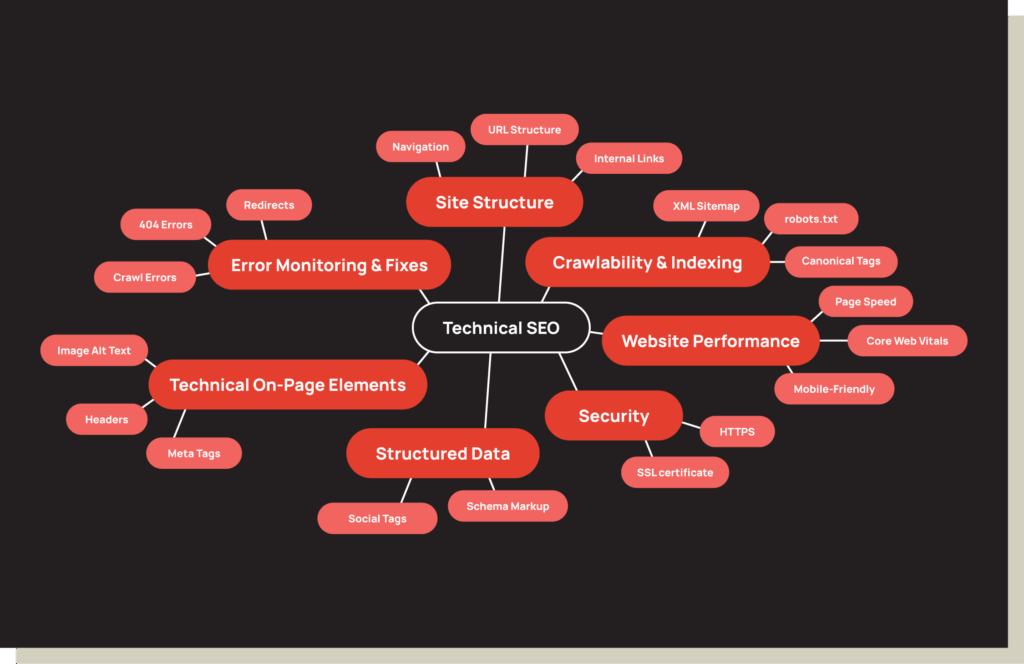
Even the best content gets skipped if it’s slow or messy, and AI search won’t cite a page that’s hard to access. Keep Core Web Vitals healthy, mobile UX smooth, and HTTPS standard. Maintain clean sitemaps and crawl budget hygiene so nothing gets missed. Don’t forget multimodal signals: alt text, transcripts, and captions increase the chance of your images, videos, or audio being pulled into AI responses.
Stale pages rarely get cited. Regularly update stats, examples, and dates to show relevance. Mark content with “last updated on” fields, and consolidate thin pages into authoritative hubs.
Take a cybersecurity blog that updates its “2023 phishing attack statistics” post with 2025 numbers. This signals relevance, while an outdated competitor page fades into the background. Adding “last updated” tags and consolidating thin content into a hub reinforces freshness, and that freshness helps your content stay visible when AI systems scan for the most current, reliable answers.
AI models cite what they can clearly identify. Use straightforward, factual phrasing. Reference reputable sources and include statements that stand on their own — short enough to be lifted directly into a generated summary. For example, writing “The average email open rate in 2025 is 21% (Statista)” gives AI a clean, source-backed fact it can lift directly. Compare that to burying the same stat inside a paragraph of fluff — harder to cite, easier to skip.
AI SEO relies on platforms that help with entity research, content optimization, technical checks, and — new to 2025 — tracking citations. Here’s where to focus when it comes to finding the right tools.
Tools like SEMrush Topic Research, Ahrefs Keywords Explorer, and AlsoAsked help uncover not just keywords, but the entities and questions AI models associate with them. For example, if you’re targeting “electric vehicles,” you’ll also see related entities like charging infrastructure, battery types, and federal tax credits — relationships you’ll want reflected in your content.
Platforms such as SurferSEO, Clearscope, and MarketMuse score your content against NLP models to highlight coverage gaps. Writing a guide on “remote team collaboration”? These tools surface semantically related phrases like project management software, asynchronous communication, and time zone overlap. This is how you make sure that your copy speaks the same language as AI search.
This is the newest tool category. New features from Sistrix, Ahrefs, and specialized platforms like Perplexity Pro Reports show how often your site is mentioned in AI Overviews, chat answers, or other generative surfaces. Instead of treating “AI share of voice” as an abstract idea, these tools quantify it.
Technical SEO underpins everything. Crawling and audit tools like Screaming Frog, OnCrawl, and Sitebulb keep Core Web Vitals, sitemaps, and log files clean, factors that directly influence whether AI systems can access and parse your content. Paired with ContentKing for continuous monitoring, you’ll know the moment a broken link, schema error, or slow load threatens your visibility.
For more context, Search Engine Journal’s roundup of AI SEO tools highlights how quickly this space is evolving.
Single pages being optimized are helpful, but you need them to come together with an entire optimized system, where every piece of content reinforces the rest. These three elements set that system up for success.
The hub-and-spoke model works especially well in AI search. A pillar page anchors the topic (say, “employee wellness programs”), while supporting articles dive into subtopics like fitness stipends, mental health benefits, or VTO policies. Interlinking signals topical authority and gives LLMs a clear map of how your content covers the space.
Think about outlines as blueprints for AI answers. Instead of writing a full draft and hoping it works for snippets later, design the structure up front. That might mean planning where a definition box goes, outlining a process as numbered steps, or slotting in a pros-and-cons table.
Treat expert input as a built-in stage of content design, not a final polish. Publishing with bylines, credentials, and references reinforces authority, but the real gain comes from weaving SME insights directly into the structure. That way, your content carries unique expertise that AI models can’t find in generic sources.
Click rates and rankings are still worth tracking, but when it comes to tracking AI SEO, there are some new (or reframed) metrics to monitor to see if your efforts are paying off.
Citation frequency is the new visibility metric. Track how often your site is referenced in Google AI Overviews, Bing Copilot, Perplexity, and other chat-based results. Some SEO platforms — Ahrefs among them — are rolling out features that quantify AI share of voice.
If you’re already tracking AI share of voice, the next step is to use that data strategically. Benchmark citation frequency against competitors to understand relative visibility, and watch for shifts in the types of queries where you’re cited. For example, an increase in citations around product-comparison queries might signal growing authority at the consideration stage of the funnel.
Organic metrics don’t disappear. Rankings, reach, impressions, and engagement still matter, especially when paired with assisted conversions and pipeline attribution. For example, if a product guide is cited in an AI Overview but also sees rising organic traffic and contributes to demo requests, you’ve got evidence that AI visibility is feeding the funnel, not just awareness.
AI search results evolve quickly, which means measurement has to be ongoing. Build quarterly checkpoints into your workflow: update schema, refresh content, and test snippet formats against key queries. A/B testing definitions, tables, or list structures can be especially helpful in determining what AI systems are most likely to pull into generated answers.
AI systems look for clear, scannable data when summarizing offerings. Product pages with benefits tables, comparison blocks, and FAQs are more likely to surface in AI Overviews.
One example comes from Princess Cruises, which needed to dominate Alaskan cruise searches. Instead of chasing keywords, they built topic clusters around their service pages: 70 new pieces of content, 23 optimized port landing pages, and a web of internal links pointing back to core pillars.
Within three months, this strategy drove a 261% increase in AI Overview mentions, capturing 66.2% of competitive mentions and 88.4% of impressions in AI-driven search. This 97th Floor case study shows how structuring content this way proves far more effective than traditional keyword targeting.
Guides and blog posts often answer early- or mid-funnel questions, which makes them prime candidates for AI answers. Starting with concise definitions, layering in structured summaries, and adding original charts or visuals helps these assets stand out. For example, a blog explaining “what is zero trust security” that opens with a crisp definition and includes a diagram will likely be favored over one with only dense paragraphs.
Glossaries and resource libraries are tailor-made for AI SEO. Short, canonical definitions backed by internal links to related topics create a knowledge graph effect that language models can navigate. For example, a glossary page might define an industry term in two or three sentences, then connect readers to deeper resources across your site. Even though the content is brief, its clarity and structure make it highly attractive for AI-generated summaries.
Optimizing for AI search raises new responsibilities. Accuracy and trustworthiness are even more important today to protect your brand. Here’s how to make sure your organization stays out of hot water.
Generative answers can spread errors if the sources feeding them are flawed. That makes it vital to maintain rigorous sourcing practices: cite reputable references, conduct boas checks, log updates, and monitor pages for outdated claims. Treat every page as if it could be quoted directly — because it might.
Generative AI has blurred the lines between original and machine-written material. To protect both your brand and your users, adopt clear policies on how AI is used in content creation. Human review and quality assurance should always be the last step before publishing. Where AI assistance is part of the process, disclosure fosters transparency and helps build trust.
Most teams start strong — refreshing content, adding schema, tracking AI citations. But if traffic plateaus, citations remain sparse, or entity coverage feels incomplete, it may signal the limits of internal bandwidth. What works this quarter may look different six months from now, and the brands winning citations are the ones adapting fastest. We can help with that.
We’ve built systems that scale with change: topic clusters that expand as industries shift, schema frameworks that grow with new content types, and measurement models that capture how AI surfaces your brand across platforms. The result is momentum, increasing visibility that keeps clients ahead while competitors scramble to catch up.
If your goal is to lead in an AI-first search landscape, our team has the playbook and the proof to make it happen. Let’s talk.
Generative Engine Optimization (GEO) is the next chapter in how brands win search visibility. If traditional SEO helped you win clicks on Google’s blue links, GEO helps you secure your spot in the AI-generated answers that people are now turning to.
This approach focuses on making sure your content and expertise show up in the summaries, overviews, and recommendations provided by generative AI search engines. Unlike standard search results, where ranking high meant being one of many clickable options, generative AI search can position your brand directly inside the answer. That’s a powerful shift, and it’s already changing how companies think about their content strategy.
Generative Engine Optimization is the process of improving your brand’s visibility within the answers produced by AI-powered search engines. It blends the principles of SEO with new strategies tailored specifically to how generative models source, interpret, and present information.
GEO in a nutshell: The art (and science) of making sure AI search engines not only find your content, but use it in their answers.
Also called AI SEO or AI Search SEO, GEO is all about anticipating how AI models select and structure responses so you can position your expertise where it matters most. It’s not abandoning SEO, but rather expanding your optimization efforts to include the algorithms shaping the new search experience.
Generative AI search engines combine traditional web crawling with large language models (LLMs) that synthesize information into a conversational or narrative format. Instead of serving a list of links, these systems:
The visibility challenge is that AI overviews and chat-style answers can drastically reduce clicks to individual sites. But they also give brands the chance to be the source inside the answer box.
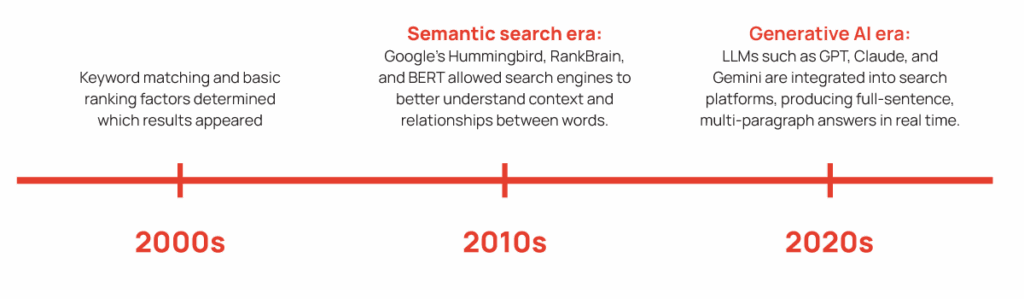
Search engines didn’t become “generative” overnight. The transformation has been gradual, moving through several distinct phases. In the early days of search during the 1990s and 2000s, keyword matching and basic ranking factors determined which results appeared. This gave way to the semantic search era in the 2010s, when advancements like Google’s Hummingbird, RankBrain, and BERT allowed search engines to better understand context and relationships between words.
Now, in the 2020s, we’ve entered the generative AI era. LLMs such as GPT, Claude, and Gemini are being integrated directly into search platforms, enabling them to produce full-sentence, multi-paragraph answers in real time. The search experience is no longer just about scanning a list of 10 blue links. It’s about receiving a ready-to-use answer. This shift is exactly why GEO is becoming an essential part of forward-thinking marketing strategies.
While Generative Engine Optimization builds on the foundations of SEO, it’s not a basic rebrand of what you’re already doing. GEO and SEO share core principles, but the way success is measured, the type of content created, and the optimization targets differ slightly.
| ASPECT | SEO | GEO |
| Primary Goal | Rank high on search engine results pages (SERPs) to drive clicks. | Be included as a cited or quoted source in AI-generated answers. |
| Optimization Target | Search engine algorithms (Google, Bing) for keyword-based queries. | AI models and their training signals (Google AI Overviews, Bing Copilot, ChatGPT, Perplexity). |
| Content Format | Long-form pages, blog posts, landing pages optimized for keywords and links. | Concise, authoritative statements, structured data, and clearly cited sources for AI parsing. |
| User Intersection | Users click a link to read content on your site. | Users may get your content directly in an AI response, with fewer clicks but higher brand impressions. |
| Measurement | Organic traffic, keyword rankings, CTR, backlinks. | AI visibility share, citation frequency, co-mention volume, referral clicks from AI platforms. |
Both SEO and GEO aim to connect your audience with the information they’re searching for. They each require:
The main difference is where and how the content is surfaced. SEO focuses on winning positions on SERPs, while GEO focuses on getting cited or featured directly inside AI-generated answers. This changes:
GEO works best when it’s layered into your existing SEO efforts rather than replacing them. A dual strategy might look like this:
Pro Tip: A combined SEO + GEO approach means you can capture both the click and the citation.
The click and the citation pull from different signals, reward different content structures, and serve different discovery moments — which means optimizing for one doesn't automatically earn you the other. Mike, Head of SEO at 97th Floor, gives the direct answer to the question most SEOs are asking right now: no, your Google rankings don't transfer to ChatGPT, and the gap between the two is wider than most teams realize. This short video breaks down exactly what AI search looks for and how to position your content to show up in both places.
AI-generated search features (like Google’s AI Overviews) are rewriting the rules of click-through behavior. Ahrefs reports a 34.5% drop in CTR for the top-ranking organic result when AI Overviews appear, based on 300,000 keywords.
A Pew study reinforces the behavior shift, citing that when an AI summary appears, users clicked traditional links only 8% of the time, versus 15% when no summary was shown. AI summary links were clicked in just 1% of visits, and users were more likely to end their session entirely (26% vs. 16%).
While Google counters these findings, arguing overall click volumes remain stable, publishers and marketers across the board are seeing clear signs of disruption.
Search is morphing into an answer-first experience. With generative AI tools delivering instant, synthesized content, users often get what they need without navigating to external websites. This zero-click dynamic is steering traffic away from source sites and towards the brands directly cited inside AI responses.
As visibility shifts from the link to the explicit quote or citation, it’s no longer enough to rank high. You need to be included in the answer. GEO equips you to optimize your content for algorithms and AI models that prioritize clarity and authority.
Being that trusted source inside the generative answer layer means you’re still seen—even if the click happens less often.
Even when click-through rates are lower than traditional SEO, being cited in an AI-generated response can lead to significant awareness lift and indirect traffic from brand recall.
GEO requires a little more than just tweaking your SEO playbook. To earn visibility inside AI-generated answers, your content needs to be structured and authoritative. Here’s how to get there.
AI search engines lean heavily on signals of Experience, Expertise, Authoritativeness, and Trustworthiness.
AI models select answers based on clarity, accuracy, and completeness.
Well-structured content is easier for AI to parse and quote.
The more your brand is mentioned and cited online, the more likely AI engines will reference you.
Your site still needs to be technically sound for AI crawlers to access and understand it.
Pro Tip: These best practices are easier to implement when you have a partner who understands both SEO and GEO.
Creating a Generative Engine Optimization strategy doesn’t have to mean reinventing the wheel. Instead, focus on tuning your content and technical setup so AI search engines see you as the go-to source. These five steps can help you set a strong foundation.
Start by identifying high-value AI search queries that matter to your business. Look for the questions your audience is already asking and see how AI search features answer them. Pay attention to the formats being used (whether it’s bullet lists or short explanatory paragraphs) and map these queries to different stages of the customer journey so you understand exactly where GEO fits in.
Once you know what you’re targeting, craft content that AI can easily parse and cite. Use clear, authoritative statements that stand on their own if quoted, and back them with citations to reputable sources. Place your most important facts and definitions early in the content so they’re more likely to be extracted and featured in AI responses.
Your technical foundation determines how accessible your content is to AI crawlers. Add schema markup for FAQs, how-to content, products, and organizational details to make your site more machine-readable. Refine your site architecture to improve crawl efficiency, and make sure your pages load quickly on all devices to meet the performance benchmarks AI models favor.
A strong GEO strategy doesn’t live only on your website. Share your optimized content across social platforms and partner channels to broaden your footprint. Earning mentions and co-citations on reputable sites increases your authority in the eyes of AI engines, making it more likely your brand will be included in generated answers.
Treat Generative Engine Optimization as an ongoing process. Track your AI citation share to see how often your brand appears in AI-generated responses, and measure any referral traffic from those sources. Use these insights to refine your strategy by testing new content formats, updating outdated pages, and adapting to shifts in how AI presents information.
The fundamentals of Generative Engine Optimization apply across all industries, but the nuances of implementation can vary. Here’s what to prioritize in four key sectors.
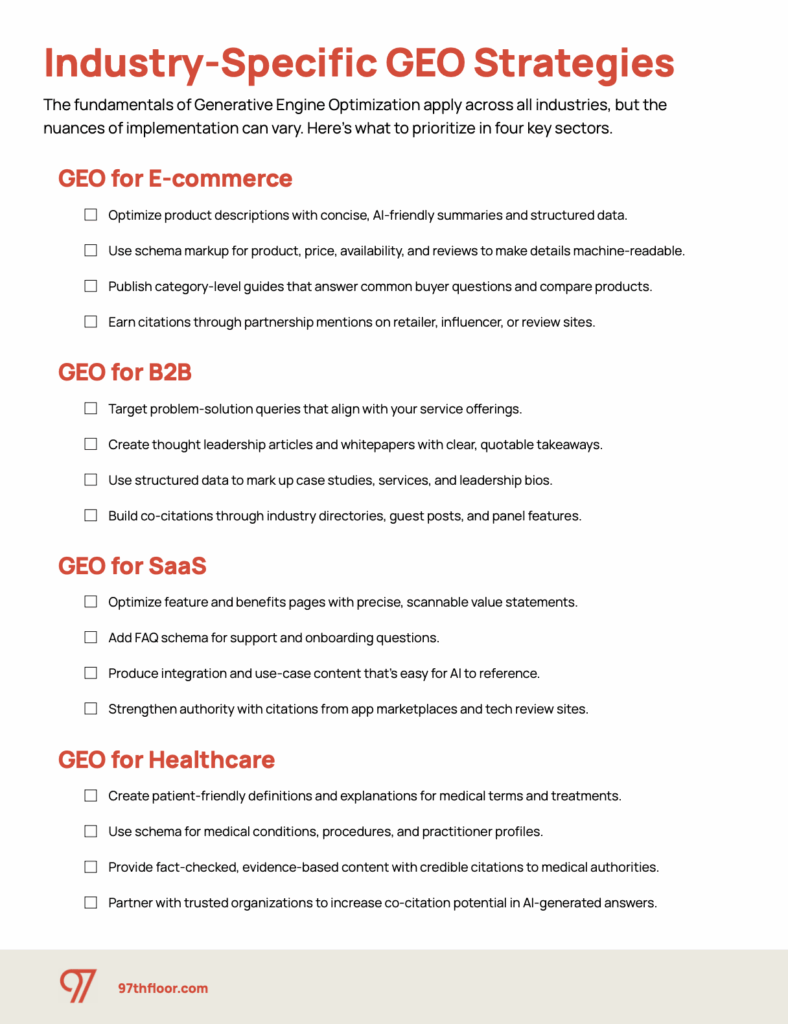
GEO is still young, but AI-powered search is evolving fast. Staying competitive means anticipating both technological shifts and changing user expectations.
Generative AI is becoming more context-aware, tailoring answers based on user preferences or location. Search platforms are also integrating real-time data, enabling AI responses to include the latest news, product inventory, or market updates. Brands that can deliver fresh, authoritative content quickly will hold a distinct advantage.
Search is expanding beyond typed queries to include voice, image, and video prompts. This opens GEO opportunities like optimizing images with descriptive alt text for AI citations or marking up how-to videos for voice-led answers.
No matter the format, AI will continue to favor clear, trustworthy content, so the core principles of GEO will remain the foundation for visibility.
A growing number of tools can help you navigate GEO to stay ahead of AI search trends. For example:
At 97th Floor, we’ve built GEO services that are designed to scale, engineered for performance, and focused on driving revenue. Our team blends technical expertise with creative strategy to make sure your brand isn’t just present in AI search, but is positioned as the trusted source.
If you're ready to show up in AI-generated results, let's build your strategy.
Running an ecommerce brand in 2025 is like hauling feral cats out of a burning building — noble work, but try it alone and you’ll come out with more scars than survivors. That’s because ecommerce isn’t a single challenge; it’s dozens of moving, clawing parts that demand your attention all at once. Scaling an online store goes way beyond having great products. Visibility, customer experience, and platform mastery all play a role in turning browsers into buyers.
Ecommerce agencies step in as that extra set of hands. They handle the heavy lifting across SEO, paid ads, conversion rate optimization, design, and retention so you can focus on keeping your business upright and your capital from bleeding dry.
In this guide, we’ll cover what ecommerce agencies actually do, how to know if it’s time to hire one, what makes a ‘best’ agency stand out, and seven agencies in the U.S. worth your attention in 2025 — including ours (because, full disclosure, we’re really good at what we do).
If you’re reading this, you probably already have a sense of what an ecommerce agency does. Still, let’s not skip the basics.
An ecommerce agency is a specialized partner built to help online stores grow faster, smarter, and with fewer headaches. Unlike general digital agencies, ecommerce agencies focus specifically on the unique demands of online retail.
That means:
They’re measured by commerce-specific metrics like average order value (AOV), lifetime value (LTV), return on ad spend (ROAS), and retention — not just traffic or impressions. All of this is to say an ecommerce agency’s job isn’t finished once visitors land on your site. Their role is encouraging those visitors to stick around and actually buy something.
We’re not going to sugarcoat it: Hiring an ecommerce agency isn’t cheap. But the right one can more than pay for itself by uncovering growth opportunities you didn’t even know existed. It’s like figuring out which wire to cut on a ticking bomb after watching one YouTube tutorial. Technically possible, but maybe bringing in a professional would be safer?
In other words, the benefits go way beyond saving time (though that’s nice, too). Here’s why brands turn to ecommerce agencies in 2025:
Without checking any listings, we’re pretty confident in telling you that there are thousands of agencies out there ready to take your call. But what separates the good from the genuinely great? Flashy websites and slick pitch decks are nice, but results are what actually matter. The best ecommerce agencies prove their worth by showing exactly how they’ve helped brands move the needle.
Not every agency that slaps ‘ecommerce’ on its homepage is worth your budget. The best agencies share a few traits:
Statista projects that worldwide ecommerce sales will hit roughly $3.66tn by the end of 2025. And, if you’re like me and don’t immediately recognize ‘tn’ as a unit of measurement, it stands for trillion (12 zeroes). That’s a lot of potential growth; having a dependable agency by your side can help your business carve out its share instead of getting buried under everyone else’s.
You made it. This is the list you came here for. These seven agencies stand out in 2025 not only for their services, but for their ability to deliver measurable, platform-specific results. We’ll cover who they’re best for, what services they offer, and what makes them different in a crowded space.
Best for: Integrated growth across SEO, paid, and conversion optimization
Most agencies promise growth. 97th Floor has made a business of proving it. With deep roots in content, SEO, and analytics, 97th Floor doesn’t just help ecommerce brands ‘get more traffic’ — they work with you to align every marketing channel to generate more sales, more efficiently.
97th Floor is a full-service growth agency with a knack for turning ecommerce complexity into measurable outcomes. Their bread and butter includes:
If you want a partner that doesn’t just tweak one channel but instead pulls the whole system into alignment, 97th Floor is a top choice.
Best for: Content-driven ecommerce growth
Content is king, but only if it ranks — otherwise it’s just some obnoxious court jester that capers around the digital courtyard juggling outdated keywords (don’t mind me; just stress testing a metaphor). Siege Media built its reputation on creating research-backed, SEO-optimized content that ecommerce brands can use to win organic visibility. If you’re tired of writing blog posts that nobody reads, this is an agency that can change the story.
Strengths include:
If organic growth is your north star, Siege is the kind of agency that can help you outrank competitors without relying solely on ad spend.
Best for: Platform migrations and storefront optimization
Technology can be a brand’s biggest advantage — or its biggest bottleneck. 1Digital® Agency specializes in fixing that problem by making sure your storefront is fast, functional, and scalable, no matter which platform you’re on. Whether you’re moving from Magento to Shopify, need a WooCommerce overhaul, or want to unify your BigCommerce setup, they’ve been there.
They offer:
Overall, 1Digital® Agency is a good fit for brands with growing pains tied to their tech stack.
Best for: ecommerce SEO at scale
SEO may not be flashy, but it’s the backbone of sustainable ecommerce growth. WebFX has built a reputation on measurable outcomes, particularly around SEO. They’re a fit for ecommerce brands that want more organic traffic and are ready to invest in long-term visibility.
Services include:
They’ve worked with thousands of clients and have the scale to match complex ecommerce needs.
Best for: Amazon and marketplace strategy
For many brands, Amazon is both an opportunity and an obstacle — massive reach, sure, but also high fees, fierce competition, and limited control over the customer relationship. Nuanced Media helps navigate that complexity by giving you a strategy not only for your own storefront, but also for Amazon, Walmart, and other marketplaces where your customers are already shopping.
Highlights:
Great for brands that want to diversify beyond their own dot-com.
Best for: Conversion rate optimization and UX
If you’ve ever looked at your analytics and thought, Why aren’t more people buying? Inflow is the agency built to answer that question. They specialize in conversion rate optimization and user experience, making sure the traffic you already have does more heavy lifting.
Core strengths:
Traffic is great. Conversions are better. If your store has healthy traffic but underwhelming conversions, Inflow is a CRO partner to look at.
Best for: Performance marketing and paid growth
Growth often comes down to how well you spend your ad dollars. Upgrow focuses on performance marketing — paid search, paid social, and scaling strategies — so ecommerce brands can grow quickly without throwing money into the void.
They offer:
For ecommerce brands ready to put budget into scaling, Upgrow brings the paid expertise to do it properly and profitably.
This has been fun, hasn’t it? I mean who doesn’t love a good listicle. But it's worth recognizing that knowing who the top agencies are is only the first step. The real challenge is figuring out which one you actually want a long-term relationship with. You’re not swiping for a quick fling here — you’re looking for a partner who won’t ghost you when the budget conversation gets awkward.
Not every agency offers every service, but most ecommerce specialists fall into one or more of these categories. Think of it like a restaurant menu — you don’t have to order Ultimate Feast, but it’s good to know whether crab is available and if the lobster is fresh.
The service menu is broad, but most ecommerce agencies will cover some or all of these areas:
Do you need all of that? Maybe not. But if you’re building a working relationship with an ecommerce agency, then it might be a good idea to find one that can do everything in case your needs evolve somewhere down the line.
We sell ecommerce services, so maybe we’re not the most objective source to be asking. But we also get it: in an economy like this one, it doesn’t make sense to invest in something you might not need. If that’s you, and you’re wondering if ecommerce is the next step for your business, consider asking yourself the following questions:
In the ‘in-house vs. agency’ debate, the tipping point usually comes when you realize a single marketing hire can’t cover the breadth of expertise you need. Agencies provide a full team of specialists for the cost of one or two more employees.
At this point, you know what ecommerce agencies do, you know what makes a great one, and you know which names stand out in 2025. So why should you consider 97th Floor? The short answer: because we choose not to focus on optimizing channels and instead put our expertise to work optimizing outcomes.
97th Floor has helped ecommerce brands grow by aligning creative, technical, and analytical expertise into a single strategy. Our teams handle everything end-to-end:
At 97th Floor, the goal isn’t isolated channel wins. The goal is connecting those wins so they push the whole business forward (metaphorical cats and all).Ready to scale smarter? Let’s talk. Contact 97th Floor today to see how we can help your ecommerce brand grow in 2025 and beyond.
You’ve been watching traffic slide for months. Competitors suddenly show up in AI Overviews, while your brand barely appears. Reports keep pointing to “algorithm changes,” but no one on your team can explain why conversions are down.
With how quickly algorithms and AI features can change, it’s no wonder businesses are struggling to keep up. But this is exactly where an AI SEO agency proves its worth. They combine machine learning, automation, and a strong dose of human expertise, all to help brands surface to the top of a sea of generative results.
Here, we’ll show you what makes an AI SEO agency stand out and explore the benefits of partnering with the right agency.
An AI SEO agency is built for the way search works now, not the way it worked five years ago. Instead of relying only on manual keyword research and historical data, these agencies use artificial intelligence to uncover opportunities faster and adapt to changes in your industry.
The big shift is focus. Traditional SEO looks backward — analyzing what drove results in the past. AI SEO agencies look forward. With predictive analytics and natural language processing, they anticipate where demand is moving and position your brand to show up at the right time.
AI also takes over the repetitive work: technical audits, clustering topics, generating schema, or tracking where your brand appears in AI Overviews and chat results. That gives strategists more space to do what matters most — build campaigns, craft content, and connect your message with real people. The tech handles the scale and speed; the people make sure the strategy is thoughtful, creative, and aligned with business goals.
The big question for a lot of marketers or small business owners is: what is an AI SEO agency going to do that I can’t do myself? The right agency isn’t trying to sell you shiny new tools, but they are trying to make your job easier.
In short, the biggest benefit is peace of mind. You don’t have to second-guess whether your SEO strategy can keep up with how search is changing.
Not every agency that talks about AI is actually using it in a meaningful way. Some lean too heavily on automation, others promise results they can’t deliver. When you’re shopping for a professional partner, it pays to know both the green flags and the red ones so you can avoid trouble in the first place.
There’s no shortage of agencies talking about AI, but only a handful have proven they can use it to drive real results. Here are 7 different agencies that are taking AI SEO marketing by the reins and forging a path forward.
97th Floor has built a reputation for staying ahead of how search evolves, including with AI SEO. We blend that technical expertise with creative execution. Our experience has shown that it’s not enough to help clients simply rank, but to build lasting authority.
The approach centers on entity-led content, structured data, and technical optimization — all critical for visibility in AI-driven results. But what sets 97th Floor apart is how we tie these tactics back to measurable outcomes. Campaigns aren’t judged only by traffic; they’re evaluated on real business impact like qualified leads, revenue growth, and brand recognition.
As a full-service AI SEO agency, 97th Floor brings together strategists, analysts, writers, and developers under one roof. That integration makes it easier to adapt to search shifts and deliver cohesive campaigns. For brands that want both innovation and accountability, 97th Floor is a partner that delivers both.
Siege Media is known for combining SEO with content marketing, and they’ve quickly adapted those strengths for the AI era. Their focus is on creating high-value content that performs in both traditional search results and AI Overviews.
One of their core advantages is a data-driven approach to identifying opportunities competitors miss. Instead of chasing broad keywords, Siege Media zeroes in on topics where brands can earn visibility, citations, and long-term traffic value. Their emphasis on Generative Engine Optimization (GEO) positions clients to surface in emerging search formats like Google’s AI-driven results.
Directive Consulting specializes in SEO for B2B brands, and they’ve built their reputation on tying search efforts directly to revenue. Their approach to AI SEO reflects that same focus: less about vanity metrics, more about connecting demand generation to long-term business growth.
Where Directive stands out is in GEO. They design strategies that anticipate how AI will surface information and make sure that clients show up in the conversations and citations that influence buying decisions. Combined with their full-funnel approach, this helps brands capture visibility at every stage of the customer journey.
For B2B companies that want search strategies aligned with sales outcomes, Directive is a solid choice. Their emphasis on revenue impact makes them a strong choice for teams under pressure to prove ROI from SEO investments.
Spicy Margarita is a boutique agency that’s carved out a name in B2B by building content designed for AI visibility. Instead of focusing on keyword volume alone, their strategies emphasize answer-ready content — the kind of material that AI systems parse, cite, and elevate in Overviews.
Their specialty is blending content-led SEO with GEO. That means they are focused on crafting resources that address buyer questions directly and position brands as credible sources in emerging AI-driven results. Conversion is always at the center — rankings matter, but only if they lead to qualified leads and revenue.
uSERP is known for its focus on authority building in the age of AI search. Their approach combines technical SEO, advanced link building, and their proprietary Answer Engine Optimization (AEO) framework, which helps brands surface in AI-generated results and conversational queries.
Unlike agencies that chase short-term visibility, uSERP invests in strategies that strengthen a site’s credibility across multiple signals. That means better rankings in traditional SERPs and more frequent appearances when AI systems pull answers from trusted sources. Their track record includes hundreds of clients across industries.
iPullRank has earned respect in the SEO world for tackling enterprise challenges at scale. Their approach, called “Relevance Engineering,” blends semantic modeling with technical SEO to deliver strategies that line up with how search engines — and increasingly, AI systems — interpret meaning.
This focus on depth has led to billions in organic search value generated for clients. iPullRank’s strength lies in taking complex enterprise sites and making them more discoverable, structured, and ready for AI-driven interpretation. Their emphasis on technical precision and semantic relevance sets them apart from agencies that rely too heavily on surface-level tactics.
First Page Sage is known for its thought leadership approach to SEO. They specialize in creating research-driven content that builds authority, particularly for B2B SaaS and other industries where credibility is a key differentiator.
Their team has integrated generative AI optimization into this model, focusing on content that not only ranks but also earns trust in AI-driven environments. By combining long-form, authoritative resources with demand generation strategies, they position clients as the go-to source in their field.
There’s a point where DIY SEO or even a capable in-house team starts to hit a ceiling. You may be seeing:
Because AI is quickly becoming the foundation of how search works, our generative systems are rewriting the rules. Brands can optimize for blue links, but they also need to prepare content that is even more obviously structured, credible, and, most importantly, ready to be cited by AI. What we’re seeing from top SEO companies that are seeing results are things like:
Agencies that understand what SEOs need to know are already positioning clients to succeed. The pace of change is fast, but it’s not unpredictable. Strong AI SEOs already build for this future by focusing on clarity, authority, and adaptability — qualities that matter no matter how search evolves.
The right SEO agency isn’t a plug-and-play type of resource. Again, you have to balance the technical and creative sides of SEO to finally start seeing results. Consider these core services that the pros are offering:
Plenty of agencies are experimenting with AI, but 97th Floor has already built a track record of driving results with it. Our team combines technical SEO, content strategy, and analytics to help brands show up where it counts. We’ve got the traditional search results mastered, but we’re also paving the way forward for brands like yours. Entity-led optimization, structured data, and performance tracking are core to how we work.
What makes 97th Floor different is the integration of people and process. Analysts, strategists, and developers work side by side, which means campaigns are cohesive and built to scale. That’s how we turn AI SEO from a buzzword into growth you can measure.
Learn more about our AI SEO services or start with a free audit. Let’s Talk // Get an AI Audit.
You’re busy running a business, and you shouldn’t have to spend so much effort figuring out the ins and outs of the marketing industry. When you partner with a marketing agency, they can handle understanding complex buying cycles, nurturing leads, SEO, content marketing, and ultimately delivering measurable results. A B2B marketing agency can specifically help companies that make products for other companies, instead of for the general public.
Whether your goal is to accelerate pipeline growth, expand into new markets, or enhance customer engagement, partnering with the right B2B marketing agency can turn your marketing investment into tangible, revenue-generating outcomes. Read on to learn more about working with a B2B marketing agency and how to find the right one.
A B2B marketing agency is a specialized firm focused on helping businesses market their products and services to other businesses rather than individual consumers. Unlike B2C agencies, which often prioritize mass reach and broad engagement to help you find customers, B2B agencies are designed to reach companies and target top decision-makers in order to draw clients to your company. The agency will work on generating high-quality leads and strengthening your brand in the spaces where your potential clients are.
A B2B marketing agency usually covers a wide spectrum of services, including content marketing, digital campaigns, marketing automation, analytics, and account-based marketing (ABM). At the core of their work is brand positioning—helping companies articulate their value proposition, differentiate from competitors, and establish authority in their markets.
Below are industry-recognized agencies, each with a unique strength to help you compare and choose.
Best for Full-Funnel Strategy & ROI-Driven Growth
97th Floor specializes in full-funnel marketing strategies, combining SEO, paid media, content marketing, and design services. We generate sustainable growth for B2B companies from startups up to the Fortune 500 list—including Salesforce, AT&T, LG, Google, and Celebrity Cruises. Our in-house proprietary tool, Palomar, also helps inform strategy with real-time market intelligence and competitive insights.
Best for SEO + Content Marketing
Siege Media is known for high-quality, keyword-driven content that improves rankings and conversions in SaaS, fintech, and e-commerce sectors. They focus on creating content that drives organic traffic and builds brand authority.
Best for Performance Marketing
Directive Consulting is an expert in paid media, SEO, lifecycle marketing, and demand generation within complex SaaS and enterprise markets. They elevate the focus of B2B marketers from MQLs to qualified pipelines.
Best for Agile Tech Company Marketing
New North excels in multi-channel strategies tailored for tech firms, combining agility with long-term strategic planning. They help B2B technology companies grow with better marketing and offer personalized strategies and dynamic campaigns.
Best for Lead Generation & ABM Strategy
Ironpaper focuses on data-driven demand generation, content sprints, ABM, and conversion optimization for tech clients. They align marketing and sales to drive measurable outcomes.
Best for AI-Enhanced Growth Marketing
Avenue Z combines narrative clarity, AI visibility strategies, and CRM-integrated campaigns for enterprise and professional services. They position brands at the top of their category by turning complex offerings into digestible thought leadership.
Best for Research-Driven Campaign Design
Elevation B2B delivers omnichannel campaigns rooted in strategic insights for brand awareness, lead generation, and growth. They focus on providing full-service, data-driven marketing solutions specifically for B2B companies in tech.
Best for Professional Services Thought Leadership
Hinge Marketing specializes in branding and marketing strategies tailored to professional services firms. Their research-driven approach and emphasis on thought leadership help build authority and pipeline impact.
Best for Holistic Digital Campaigns
Power Digital delivers SEO, PPC, content marketing, and social media with data-driven precision and proven lead-gen results. They offer a comprehensive suite of services to drive growth and optimize marketing ROI.
Best for Visual Brand Storytelling
Column Five are experts in brand strategy, content, data visualization, and multimedia—especially for SaaS and tech brands wanting engaging storytelling assets. They focus on creating compelling narratives that resonate with target audiences.
A B2B marketing agency offers specialized services designed to address the unique challenges of marketing products and services to other businesses. At the heart of effective B2B marketing is creating a marketing strategy that aligns with your business objectives. Agencies collaborate with you to develop comprehensive plans that encompass market research, competitive analysis, and customer insights to create this strategy and help you achieve your goals.
B2B marketing agencies provide a suite of services tailored to the intricate needs of business-to-business marketing, usually including:
B2B marketing agencies can help your company grow thanks to a combination of strategic planning, technology, and data-driven execution. Their focus is attracting great and promising leads and also nurturing those relationships. Below are three ways working with a B2B marketing agency can help your company find the growth you’re looking for.
A core function of B2B marketing agencies is identifying and nurturing high-quality leads. They focus on marketing qualified leads (MQLs)—prospects who have shown interest or engagement with your brand—and work to convert them into sales qualified leads (SQLs), who are ready for direct sales engagement. By aligning marketing and sales efforts, agencies ensure a smoother handoff and higher conversion rates.
B2B marketing agencies often use automation and CRM tools like HubSpot, Marketo, and Salesforce to manage campaigns, track prospect interactions, and deliver personalized messaging at scale. Automation allows agencies to nurture leads while also reducing manual work, so you can see results.
To demonstrate impact and optimize strategies, agencies employ marketing attribution models that track performance across all touchpoints your company needs. These models help your business understand which campaigns, channels, and messaging strategies contribute the most to revenue generation. By analyzing ROI and attribution data, agencies can continuously refine their tactics and help you create a great budget that leads to measurable growth.
Selecting the right B2B marketing agency is the first step to getting the results you want to see. The best partnerships are built on expertise, alignment, and trust, so it’s important to ask the right questions and look for key indicators of reliability. Here are some tips to help you pick out the right fit for you.
Before committing, consider asking potential agencies questions that reveal their capabilities, approach, and fit with your business:
A trustworthy agency demonstrates transparency, flexibility, and proven results. Look for clear reporting practices, adaptable engagement models, and a track record of delivering measurable growth for clients. Ask for case studies and see if this agency’s strategies and efforts would work for your company.
When choosing an agency, avoid making decisions based solely on cost. Sometimes it’s worth paying more for a higher quality B2B agency where you’ll see results. Also consider whether or not the agency will be a cultural fit for your company—just as you would for an employee. Taking the time to vet agencies thoroughly ensures a partnership that drives real results.
For more guidance, read our full Agency Success Playbook for in-depth tips on selecting a high-performing B2B marketing agency.
B2B marketing agencies can help a wide range of industries grow, but certain sectors see especially strong results.
For technology and SaaS companies, marketing agencies focus on subscription models, reducing churn, and increasing customer lifetime value—all of which can help your company grow. They implement targeted campaigns, content strategies, and ABM approaches to engage decision-makers and accelerate adoption.
Learn more about SaaS industry marketing
Learn more about cybersecurity marketing
Manufacturing and industrial businesses often face long sales cycles and niche target audiences. B2B marketing agencies help these companies identify and engage the right buyers, craft tailored messaging, and build campaigns that support complex buying decisions.
Learn more about construction equipment marketing
Learn more about industrial sector marketing
Professional services and healthcare organizations rely heavily on authority and trust. Agencies in these sectors focus on thought leadership, content marketing, and reputation-building strategies that demonstrate expertise and credibility to prospective clients.
Learn more about financial services marketing
Learn more about health and wellness marketing
Want to see how B2B marketing can transform your company? Here are a few case studies to get you started:


See more success stories to get an idea of how a B2B marketing agency can help you.
Measuring success is critical to understanding the impact of your B2B marketing efforts and optimizing for growth. Agencies use a combination of quantitative and qualitative metrics to track performance, inform decisions, and maximize ROI.
97th Floor is a trusted partner for B2B companies looking to drive measurable growth through strategic, data-driven marketing. With proven expertise across digital marketing disciplines—including content, SEO, paid advertising, design, and emerging AI-powered SEO tactics—our team helps businesses generate leads, accelerate pipeline growth, and maximize ROI.
We prioritize transparent communication and consistently deliver results backed by analytics, so that every campaign is aligned with your business objectives. What sets 97th Floor apart is our deep industry experience combined with flexible engagement models. We tailor strategies to your unique needs and scale as your business grows.
See how an audience-first approach translates to bottom-line results.
Here's a number that should worry every marketer: 41% admit to not doing audience research nearly enough. When you add in those doing it "very infrequently," over half of marketers are essentially flying blind when it comes to understanding their customers.
This isn't just a minor oversight. In a world where every marketing channel is saturated and competitive, audience research has become the secret weapon for taking the big swings that actually move the needle. Yet most companies treat it like an afterthought.
The question isn't whether audience research matters – it's why so few companies actually do it well.
Use these free tools to unburden your site of low-value content that prevents an LLM from understanding your brand. Watch your SEO performance skyrocket.
The biggest culprit behind poor audience research isn't laziness or lack of awareness. It's structural. "Look at any marketing position, any product design position, engineering position," says Rand Fishkin, founder of SparkToro. "You will almost never see market and audience research listed as a must-have skill."
Think about that for a moment. Companies will list email marketing proficiency as essential. They'll require Google Analytics experience. But somehow, understanding what your audience actually does online isn't important enough to put in a job description.
This creates a weird gap in marketing education. Everyone learns that knowing your audience is fundamental – it's Marketing 101. But when it comes to actual implementation, it falls into a gray area where everyone assumes someone else is handling it.
The irony is striking when you consider SEO. "We did keyword research every day," Fishkin notes about his SEO background. "It would be absolutely mental to do SEO with no keyword research." Keyword research is just one form of audience research, yet in every other marketing channel – social media, content marketing, PR, email – the equivalent step gets skipped entirely.
Before diving into solutions, it's worth clarifying what we're talking about. Audience research isn't just demographics or basic personas. It's understanding who your potential customers are and what they do on the web so you can reach them with the right message, in the right places, at the right time.
This goes deeper than surface-level data. Take the example of someone searching for "queen mattress sizes." Most marketers stop at the obvious: they want to know mattress dimensions. But that misses the real insight. What's happening in their life that makes them need this information? Are they college students getting their first apartment? Parents upgrading a guest room? Young professionals moving in together?
Each scenario suggests completely different messaging strategies, channels, and timing. A 20th-century ad agency would have asked these questions before creating a single piece of creative. Digital marketers somehow forgot this step.
Large companies do invest heavily in audience research. They buy raw clickstream data, commission market research reports, and employ teams of analysts. But even they struggle with a different problem: data silos and analysis paralysis.
The real gap exists in mid-tier companies making $20-100 million annually. These organizations often assume their marketing team or agency is handling audience research. When you dig deeper, you discover nobody is actually responsible for it.
This creates what Fishkin calls an "important but not time-sensitive" problem. It sits on everyone's list of things they should do, constantly pushed aside by urgent tactical demands. The boss needs an email campaign launched. Cost-per-click needs to come down. SQL numbers need to go up. But nobody's asking whether the channels and tactics being optimized are actually the right ones for reaching the target audience.
The tragedy is that competitors who do invest in audience research can completely change the game while others optimize incrementally.
The most powerful audience insights often come from unexpected discoveries. During a recent campaign for a pickleball paddle company, researchers uncovered something surprising: partner relationships are a huge deal in the pickleball community. There's even a "partner appreciation day," and who you play with becomes almost like another relationship status.
This wasn't something they went looking for specifically. They were just exploring the community, staying open to whatever patterns emerged. That serendipitous insight became the foundation for a campaign that resonated far more than generic sports equipment messaging.
This points to a different approach than the traditional "gather data, then act" model. Instead, start with a specific problem – maybe the boss wants to explore YouTube investment – then use that as motivation to dive deep into audience behavior on that platform.
Here's a counterintuitive truth about modern marketing: the channels where you can't easily prove ROI often offer the biggest opportunities.
Every channel where you can invest a dollar and reliably get $1.01 back is completely saturated. Google Ads, Meta ads, LinkedIn ads – every company and their Fortune 500 competitors are pouring money into these spaces. The result is incremental gains at best.
But channels where you can't quickly prove return on investment? Most CMOs and CFOs avoid them entirely. This creates massive opportunities for companies willing to embrace uncertainty.
Billboard advertising that drives branded search lifts. Guerrilla poster campaigns that cost $500 but generate 15% month-over-month sales increases. Community engagement on Reddit that can't be tracked but clearly moves the needle.
The challenge is attribution. When someone sees your poster, then googles your brand, then converts, the credit goes to Google. When a Reddit thread mentions your company and sales spike, there's no referral link to prove causation. This measurement gap scares away most marketers, leaving huge opportunities for those willing to embrace strategic uncertainty.
The rise of AI tools has created a new problem in audience research. More marketers are turning to ChatGPT for quick answers about their audience, not realizing they're getting "stereotype answers" rather than real data.
Large language models excel at producing words that frequently appear together in training data. Ask ChatGPT what percentage of college students use YouTube for mattress research, and it will confidently respond with something like "84% of students in the greater Salt Lake City area use YouTube for mattress research." When pressed for sources, those links either don't exist or don't support the claim.
"It's like asking ChatGPT for keyword research in SEO," Fishkin explains. "It's easily provable that it doesn't know what it's talking about because ChatGPT doesn't have the data."
The solution isn't avoiding AI entirely, but using it properly. AI excels as a translation layer – helping you describe complex audience segments in natural language that then gets converted into specific behavioral data points. But it should never be the source of that data.
Despite widespread speculation that AI is killing search, the data tells a different story. Search volume hasn't declined even as AI adoption has skyrocketed from 18% to nearly 40% of Americans using AI tools monthly.
The real threat to website traffic isn't people switching from Google to ChatGPT. It's Google providing instant answers through AI overviews and zero-click searches. This trend is particularly pronounced on mobile, where screen real estate limitations make immediate answers more valuable.
Interestingly, heavy AI users – those visiting AI tools 10+ times per month – actually perform more Google searches than average. These aren't competing behaviors; they're complementary. The 20% of Americans who are heavy AI adopters tend to be heavy internet research users across all channels.
Platform behavior is shifting in other ways too. Reddit usage is climbing, with over 25% of US devices now active on the platform monthly. YouTube usage on desktop is declining slightly, but this appears to be a shift toward mobile viewing rather than overall abandonment.
The key to getting audience research approved isn't making a general case for its importance. It's connecting specific research to immediate business problems.
SparkToro learned this lesson firsthand when their growth plateaued after a major data source change. Instead of general customer research, they commissioned specific interviews with their best customers and prospects who hadn't converted. The insight was surprising: most users weren't using SparkToro for tactical channel optimization. They were downloading CSV reports to create presentations that would convince their bosses to invest in specific channels.
This revelation led to building visual reporting features directly into the product. The result? Their best three-month growth streak in company history, even during a tough SaaS market period.
The lesson is clear: audience research works best when it solves specific strategic questions rather than attempting to understand everything about everyone.
Start with problems, not general curiosity. When leadership asks about investing in YouTube marketing, that's the perfect time to research what percentage of your audience uses YouTube, which channels they follow, and what content resonates with them.
Use behavioral data, not surveys. People can't accurately report their own internet behavior any more than they can recall everything they bought at the grocery store last year. Clickstream data, social media engagement, and search behavior provide much more reliable insights.
Focus on your specific audience, not macro trends. Industry reports showing that "Gen Z prefers TikTok" don't matter if your particular Gen Z audience segment primarily uses Reddit. Macro trends are interesting cocktail party conversation, but business decisions need segment-specific data.
Invest in channels where your competitors aren't looking. The platforms and tactics that are hardest to measure often offer the biggest opportunities precisely because other companies avoid them.
Every great marketing campaign starts with an insight about the audience that allows for innovation, creativity, or an unexpected angle. These insights don't happen by accident – they come from dedicated time spent understanding who you're trying to reach and what motivates them.
The companies winning in today's saturated marketing landscape aren't necessarily those with the biggest budgets or the smartest tactics. They're the ones who understand their audiences deeply enough to take calculated risks that their competitors wouldn't even consider.
Audience research isn't just another item on the marketing checklist. It's the foundation that makes everything else more effective. The question isn't whether you can afford to invest in understanding your audience – it's whether you can afford not to.
The opportunity is sitting there, waiting for companies brave enough to make audience research someone's actual job. The data exists, the tools are available, and most importantly, your competitors probably aren't doing it well.
Time to change that.
“I want to know who my potential customers are and what they do on the web so that I can target, reach them with the best possible messaging in the best places at the right time. That's marketing 101.” - Rand Fishkin
00:08 - Problem with audience research adoption
03:24 - SEO analogy for audience research
10:20 - Who should own audience research
19:17 - AI's role in audience research
26:35 - Serendipitous insights from research
34:51 - Google, AI, and search trends
Try Sparktoro for audience research: https://sparktoro.com/
Request a free AI Audit: https://97staging.com/ai-audit/
Connect with Rand on LinkedIn: https://www.linkedin.com/in/randfishkin
Connect with Paxton on LinkedIn: https://www.linkedin.com/in/paxtongray/
Looking for an agency that'll be worth the investment? 97th Floor creates custom, audience-first campaigns that drive pipeline and conversions. Get started here: https://97staging.com/lets-talk/.
Rand Fishkin is the co-founder and CEO of audience research platform SparkToro and indie game developer Snackbar Studio. He’s dedicated his professional life to helping people do better marketing through the Whiteboard Friday video series, his blog, and his book, Lost and Founder: A Painfully Honest Field Guide to the Startup World.
Rand was previously the cofounder of Moz, and Inbound.org, and a co-author on The Art of SEO. He’s keynoted over 100 events around the world on marketing, technology, and startup topics.
Curious about how to get your brand noticed on Perplexity Search? You’re not alone. With Apple’s rumored acquisition of Comet making headlines, marketers everywhere are wondering if this AI-powered browser might be the next big thing in search. Whether you’re here to stay ahead of the curve or simply want your site to pop up in more AI-driven answers, you’ve come to the right place. Let’s dive into what makes Perplexity tick—and how you can use it to your advantage.
More than 2-thirds of smartphone users in the United States use an iPhone as their smartphone of choice. About 50% of all internet traffic starts on a mobile device in the United States. Being the default browser and search engine for 68% of half of all internet usage in the United States sounds pretty great right? That might be the reality for Perplexity and their new browser, Comet, as Apple is currently determining if they will go through with the 14 billion dollar acquisition. That is an eye popping amount of money for an acquisition of a company that has never turned a profit (actually lost $65 million in 2024). However it could be a leap forward in AI development for Apple who is severely behind its big tech competitors.It would also mean a real threat to Chrome and less reliance on using Google products on Apple devices. A true threat to Google Search is something that Google has not experienced in decades. The threat is given even more credibility by the fact that Comet is actually quite good and those who have tested it rave about the AI-enhanced browser with built in perplexity search engine. Even if the acquisition from Apple does not go through, it is interesting enough of a search product to look into ranking organically on the Perplexity search and optimizing web content for LLMs in general as the jump in AI-search queries has increased from 250m to 1.1 billion in the last year alone!

In one of our tests, we found that the top ranking page on Google, for non-branded terms, was never the same as the top result in Perplexity. Even more alarming was that each 1:1 query resulted in 85% unique results across Google and Perplexity. While there will be some principles of Search Engine Optimization that remain the same, the results are different enough that a close examination of the top ranking factors for perplexity was necessary. After analyzing SERPs using queries and prompts from multiple industries on Perplexity, we have compiled our top ranking factors for Comet, and the Perplexity search engine here.
The best way to strategize for Perplexity Search is to like traditional SEO, break it out into on site, or on domain optimizations and off page or off domain optimizations. Only off page and on page optimizations don't mean quite the same thing for LLM optimizations as they do for traditional SEO. Below are the most impactful on page and off page optimizations for perplexity search.
From tests we have been running with our clients, we found that the first place that an LLM bot will go to find information about your brand and how it fits into the market, is by analyzing the brand’s own domain. The home page, about us page, any solutions, services or product descriptions, are all very common sources of information for the Perplexitybot and other LLMs. Which is great news for marketers and website managers, that is owned content that is generally very easy to optimize. The LLM will go to your brand’s domain for information about what you do and who you serve, then look to external sources in your industry to back up the claims you made on your own domain. The following are off page optimizations that will boost your presence when your audience is searching on Comet.
Perplexity user experience is much different than OpenAI GPT, Google’s Gemini, or Claude, primarily in its use of source cited and clickable elements in the generative responses. If traffic is still a metric SEOs and website managers are interested in increasing, Perplexity winning the AI race seems to be the best chance website owners have at seeing increases in referral traffic. So how is optimizing for Perplexity Search? Here are a few things to consider:
The team at 97th Floor is doing the work to find every opportunity to increase brand awareness on new and tried and true platforms. Perplexity’s new browser, Comet, has real potential to be a widely used search engine and make a dent into Google's Search market share dominance. When and if that happens, we will be fully prepared to optimize for Comet. Lets connect, our team will do an AI-search competitive analysis for your brand free of charge, to identify opportunities in AI search and if your audience is already adopting Perplexity Search and using the Comet Browser.
Use these free tools to unburden your site of low-value content that prevents an LLM from understanding your brand. Watch your SEO performance skyrocket.
Defender Safety creates innovative head protection gear. Their helmets are designed by engineers to surpasses industry standards, work with helpful accessories, have 360° ventilation, and can reduce brain injury by 28%.
Defender Safety had an email marketing setup, but had never invested time to develop it. Guided by our person research, we identified it as a viable channel to target as part of our strategy. 97th Floor took the lead in developing and executing on this channel.
97th Floor's strategy began with comprehensive audience research to inform messaging and segmenting customers based on their purchase history. Segments distinguished between high order value B2B customers and lower order value B2C customers.
Using Klaviyo's automation capabilities, the team implemented triggered email flows, including abandoned cart sequences to recover potential lost sales. 97th Floor's design team perfected the technical and visual design of the emails, guaranteeing that all emails displayed perfectly across every device. Designers took into account various factors such as light and dark modes, font compatibility, and responsive design elements.
97th Floor also completed a thorough cleanup of existing email lists to improve deliverability rates and boost overall engagement metrics.


Defender Safety knew that email marketing could be a profitable strategy. All they needed was a dedicated team to make it happen. 97th Floor handled every component of email, from segmentation to technical design, to produce substantial revenue increases for Defender Safety.