



Here's something that might surprise you: over 25% of people actively use search bars on websites. Yet most marketers completely ignore this goldmine of data sitting right under their noses.
Many marketers fall into this trap. Outside of Amazon and YouTube, most people rarely use site search bars. They navigate through menus, click around, and hope for the best. But just because you don't use internal search doesn't mean it's not valuable. That's marketing 101: your behavior isn't everyone's behavior.
While marketers obsess over every scrap of data from Google (which gives us less and less each year), they're overlooking what's happening on their own sites. Companies are sitting on a treasure trove of user intent data, and most don't even know it exists.
As Google continues to lock down data and AI takes over search results, smart marketers need new sources of customer insights. Internal search isn't just a nice-to-have feature anymore—it's becoming essential competitive intelligence.

Not every business needs robust internal search, but you need to understand your business model to make this call.
You definitely need it if you're:
You can probably skip it if you're:
The key question is: where are you trying to attract customers, and how complex is your offering? As search strategist Justin Loera puts it, internal search and SEO are "almost synonymous with each other." Both are about helping people find what they need, whether that's on Google or your own site.
Here's the thing most people miss: customers don't always start their journey on Google. Sometimes they come directly to your site and need to search from there. You have to meet customers where they are, not where you think they should be.
Google gives you crumbs. Your internal search gives you the whole meal.
With Google Search Console, you get limited glimpses of what people searched for before they found you. With internal search, you get the complete story:
The metrics that matter most:
Here's where it gets interesting. If you see people clicking on the fifth result or going to page two of your search results, that's telling you something important. As we know from SEO, page two is where you "bury the bodies"—nobody should have to dig that deep to find what they need.
This data tells you if you're optimized correctly for your customer journey. Are you ranking the right content for the right searches? Do you need better content? Or do you just need to boost the right content to the top?
Your search data will scream at you if you know what to listen for.
Red flags include:
Here's a reality check: just because you think customers search one way doesn't mean they actually do. We need to think like customers, not like the people who built the product.
The average customer uses just 2 to 2.5 keywords when searching. That's often not enough context to deliver good results. This is where you can influence behavior by educating users on how to search better.
Take Airbnb's approach—they don't just give you an empty search box. They show you what's possible: "I want to go to this city for this many days, and then end up here." Suddenly users realize they can provide much more context, leading to better results for everyone.
Most sites treat search as a fail-safe. When navigation fails, there's always the search bar. But what if search could be the preferred way to find things?
Think about how hard it is to navigate most websites. The way companies organize their content makes sense to them, but it's not intuitive to customers—especially new customers who don't know your products yet.
As Loera notes, "The taxonomy and ontologies of a website aren't intuitive to customers unless they know your product, they've been lifelong customers." You want to capture new customers too, and you don't want them stuck in a loop trying to figure out where to go.
Sometimes search is faster and easier than navigation. Sometimes navigation works better. The key is making both options seamless and letting users choose their preferred path.
Here's the hard truth: "better user experience" isn't enough to get budget approval. Not in this market. Executives want numbers.
Here's how to build your business case:
Start with your traffic: How much of your traffic comes directly to your site? Let's say 30% is direct traffic.
Estimate search usage: Of that direct traffic, maybe half will use search if it's available and working well.
Calculate the impact: What's your average cost to close a sale? What's your revenue per conversion? If internal search helps people find what they need faster, they'll convert at higher rates and close faster.
Factor in cost savings: Every question answered through search is a support call you don't have to handle. Every product detail found through search is time your sales team doesn't spend on basic education.
Let's say implementing search costs $10,000 per year. You need to show you'll make multiples of that back through increased conversions, faster sales cycles, and reduced support costs.
Those are the two questions every executive will ask: What will it cost? What's my return? Have solid answers for both.
The good news? You don't need to build a Google-level search engine to get value.
Basic level: If you're running WordPress or a simple site, plugins can get you started. Easy to implement, basic reporting, good enough to test the concept.
Mid-level: For hosted sites serving decent traffic, tools like Google Vertex AI offer more power with relatively easy implementation. You get Google's search technology without building it yourself.
Enterprise level: Large operations need sophisticated platforms like Algolia, Swiftype, or custom solutions. These require dedicated teams but offer advanced features like AI-powered results, detailed analytics, and complex optimization tools.
The key decision is platform choice. As Loera points out, "That's likely going to be your North Star" for years to come. The technology changes quickly, but switching search platforms isn't something you want to do every six months.
One warning: don't overcomplicate this. If you're analyzing URL parameters to figure out what people searched for, you're doing it wrong. Good search platforms give you all this data in clean, actionable reports.
Here's where internal search gets really powerful: the data helps multiple teams, not just marketing.
Content teams get real-time feedback on content gaps. If people search for "red apples" and get no results, you need content about red apples. If they search but don't click through, your existing content isn't optimized for how people actually search.
Sales teams learn what prospects really want to know. Those search queries reveal the questions prospects have before they're ready to talk to sales. Use this intelligence to prepare better, anticipate needs, and shorten sales cycles.
Marketing teams get validation of messaging and positioning. Are people searching for the terms you're trying to rank for? Are they using language you hadn't considered? This data can inform everything from PPC campaigns to content strategy.
The problem? Most companies have these teams working in silos. As Loera observes, "They don't even know who they are in some cases." Your PPC, SEO, and site search teams should be sharing data and insights regularly.
As AI reshapes search everywhere, internal search becomes even more important.
Whether users interact with a traditional search bar or an AI chatbot, they're still searching. The data is equally valuable. In fact, you should look at both as search traffic that needs optimization.
The rise of generative AI means you should be optimizing your content for AI responses on your own domain, just like you optimize for Google's AI overviews. The same content that works well in internal search will often work well when AI systems reference it.
As traditional data sources become more opaque, owned data becomes critical. Your internal search data is yours—no algorithm changes can take it away.
Ready to dive in? Here's your action plan:
Quick win: Check if you already have search data sitting unused. Many sites have basic search functionality but nobody's looking at the analytics.
First steps: Implement tracking and start analyzing patterns. Look for your most common searches, highest-volume terms, and biggest content gaps.
Low-hanging fruit: Identify searches that return zero results. These are immediate content opportunities or optimization wins.
Content opportunities: What are users searching for that you don't cover? What terms do they use that you hadn't considered?
Don't try to boil the ocean. Start simple, prove value, then expand.
Internal search creates a virtuous cycle. Better on-site search improves user experience, which generates better data, which helps you optimize both your site and your broader marketing efforts.
As Google gives us less data and AI makes traditional search more opaque, internal search becomes more valuable, not less. You're sitting on customer intent data that your competitors probably aren't using.
The bottom line? Users who search convert at higher rates. They're actively looking for something, they're engaged, and they're telling you exactly what they want. Don't leave that value on the table.
Start tracking what your visitors are really looking for. The insights might surprise you.
"You could have the best search engine in the world, but if your content isn't good, it doesn't matter. And it's an inverse relationship too. You could have great content, poor search, and still have the same problem." - Justin Loera
Justin Loera is a search strategist and owner of Justin Loera Consulting. Justin has spent over a decade building both external and internal search programs for enterprise tech companies. He’s a rare expert who understands how to drive qualified traffic and how to help users find what they need once they’re on-site.
Search is changing fast. With AI summaries now appearing at the top of search results, the traffic patterns businesses have relied on are shifting dramatically—and taking traditional revenue models with them.
Our CEO Paxton Gray sat down with SEO advisor Kevin Indig to discuss his groundbreaking study on how people actually interact with AI overviews. Indig's team tracked 70 real users through eight search tasks, capturing 29 hours of "think aloud" sessions and analyzing over 400 AI overview interactions.
"I will go so far as to say that my mental model of SEO changed significantly as a result of this study," Indig shared. His research doesn't just document how people use AI search features—it offers a roadmap for how brands need to adapt to stay relevant in this new reality.
The most powerful insight from Indig's research is how people evaluate search results. Rather than simply looking for relevant information, users apply a two-step filter: first asking "Do I trust this brand?" before considering "Will this answer my question?"
This makes trust the primary driver of attention—not just one factor among many. "If you haven't built some sort of preconceived notion in the mind of your users, you're almost invisible," Indig explained. "It's kind of like an uphill battle for you to get clicks or even attention."
This turns traditional SEO thinking on its head. For years, we've focused on pleasing Google's algorithms, but Indig's research suggests we've had it backward. What matters most isn't how Google perceives your trustworthiness, but how users do.
To build trust directly into your digital presence:
These elements signal that "there is an actual expert behind creating the content"—exactly what people are looking for when deciding where to spend their attention.
Trust extends far beyond your own website. Indig's study revealed that people actively seek validation on platforms they view as more objective than brand sites.
"Users will intentionally seek out platforms where they expect an unbiased answer," Indig noted. "Reddit is the number one platform where consumers expect unbiased and uncommercialized answers, where they think that another human gives them a true answer."
YouTube serves a similar purpose, as video content with real people feels "much harder to fake, especially when you're showing a face into the camera." Users bounce between AI overviews and these trust-validation platforms before making decisions.
This pattern creates both challenges and opportunities. While you can't directly control these platforms, establishing an authentic presence there is becoming essential for visibility and credibility.
The takeaway is clear: SEO professionals need to expand beyond traditional website optimization to include:
As Paxton pointed out during the conversation, this mirrors how many people already search—adding "Reddit" to their queries to find authentic conversations instead of overly optimized content.
Another revelation from Indig's research challenges how we think about traffic metrics. The study revealed that users exhibit "scavenger hunting" behavior, clicking multiple results to validate information rather than finding complete answers in one place.
A full 86% of participants skimmed both AI overviews and traditional search results, rarely reading content thoroughly. "People click on all sorts of results, either to vet them, to gain more confidence in their opinion or decision, to double check," Indig explained. "It's like scavenger hunting."
This suggests that traffic metrics are becoming increasingly unreliable indicators of success. As Indig puts it: "Clicks are empty calories... just a means to an end."
Yet there's encouraging news in this trend. While AI overviews are changing search behavior, they're not eliminating the importance of traditional results. The study found that only 20% of users got their "final answer" from the AI overview alone. The remaining 80% still clicked through to other results—predominantly organic listings—to complete their task.
This offers hope for SEO professionals concerned about traffic decline. As Paxton noted, "We've seen that same across the board. Clients will have traffic go down, but purchases will stay the same or even go up in some cases."
What we're witnessing may not be the end of organic search, but rather a filtering mechanism where AI handles basic information while more valuable, decision-oriented traffic still flows through to websites.
One practical finding from Indig's research shows a clear demographic divide in AI search behavior—a pattern that should inform how brands prioritize their efforts.
"I have always up until now been very skeptical about the value of creating very detailed personas for search," Indig admitted. "Because search is intent driven... all audiences are mushed together in the same search. Not anymore."
The study revealed that younger users (generally under 35) are significantly more likely to:
Meanwhile, older users (especially those over 50) often ignore AI overviews entirely. They scroll right past them and click on the traditional blue links they're familiar with.
This split means you might need different strategies depending on who you're trying to reach. Got a younger audience? You probably need to focus on showing up in those AI overviews and building a solid Reddit presence. Marketing to an older crowd? The classic SEO playbook might still work just fine.
"We need to add some new dimensions to how we research topics and set priorities," Indig pointed out. Your audience's age should inform not just how you write or what tone you use, but the entire channel strategy you build.
The rise of AI search is rapidly commoditizing certain content types that have long been SEO staples. Essentially all kinds of evergreen content is now commoditized. The classic playbook of SEO—creating guides and "what is" articles—just doesn't work like it used to. AI can now deliver this information more efficiently, faster, and with context tailored to the user.
This poses an essential question for content creators: What types of content still work in an AI-dominated search environment?
The answer lies in creating material that AI cannot easily replicate or synthesize from existing sources. Indig points to "data stories" as particularly valuable—content built around new research, unique data, or original analysis that provides insights unavailable elsewhere.
"Data-driven content, studies, research analysis... any kind of primary data or secondary data that is really well analyzed or maybe cross-referenced with other data, those are the pieces of content that are impossible to replicate," he explained.
This shift is already visible in the industry. In the last two to three months, there's been a strong trend of companies focusing heavily on creating this kind of original, data-driven content.
The transition won't be easy for many organizations accustomed to producing high volumes of basic informational content. But the alternative—continuing to create easily replicated material that AI can summarize without sending users to your site—is increasingly untenable.
As search behavior evolves, so too must our approaches to measurement. When asked what metric he would focus on if building an SEO strategy from scratch today, Indig's answer was clear: "Revenue impact."
This focus on bottom-line outcomes rather than traffic metrics reflects a broader repositioning of SEO from a pure performance channel to something more akin to brand marketing. "What makes me very hopeful is that this AI push is hopefully the last rope to cut to detach us from this performance component and finally position SEO more as this kind of brand thing," Indig explained.
This shift may actually resolve long-standing tensions around attribution that have plagued SEO teams. As Paxton noted, brands often "argue themselves to death" trying to measure the precise impact of specific SEO activities—time that could be better spent creating valuable content.
The disruption caused by AI search, while challenging, presents an opportunity to refocus on what truly matters: understanding your audience and creating content that serves them, rather than obsessing over algorithmic signals.
"I feel like the core principles of marketing is understand that audience and figure out what message and channel strategy can craft to meet their needs," Paxton reflected. "And we got lost, I think in the digital marketing world in general, because Google inserted themselves in the middle of that relationship."
Perhaps the greatest insight from Indig's research is that AI search, despite its complexities, is pushing the industry back toward these fundamental marketing principles—a development that may ultimately benefit both brands and the people they serve.
Ready to earn your C-suite's trust?
Google promises better results with just one click—“Apply All Recommendations.” But what if those recommendations aren’t actually in your best interest? At 97th Floor, we’ve seen firsthand how blindly following Google's automated suggestions can drain budgets and derail strategy. So we put it to the test. In a head-to-head experiment, we pitted Google’s recommended setup against our tailored, expert-built campaigns. The results were eye-opening—and could change the way you manage your ad spend.
We tested campaigns with three of our clients to compare the effectiveness of Google’s automated recommendations with the hands-on approach taken by our experienced advertising team at 97th Floor. Each campaign was structured to align with specific goals, but the key difference was in how they were managed:
| 97th Floor | ||
|---|---|---|
| Objective | Select one | Select one |
| Conversion actions | Auto-select | Manually select |
| Campaign type | Search | Search |
| How you reach goals | Visit website | Visit website |
| Bidding | Start with conversions | Start with clicks |
| Max CPC limit | Don’t start with one | Start with one depending on client; not too restrictive (e.g., under $10) |
| Networks | Allow Search partners and Google Display Network | Turn Google Display Network off; test Search partners if... |
| Location | Set a location as presence or interest | Set a location as presence only |
| Audience Segments | Observational targeting | Observational targeting |
| Broad match | On | Off |
| Automatically created assets | On | Off |
| Ad rotation | Optimize for best performance | Optimize for best performance |
| Ad schedule | None | Add if needed |
| Campaign creation | Go through Google's process | Go through 97th Floor's process |
| Ad copy | Use Google's suggestions | Written by expert content marketer |
| Budget | Equal budget | Equal budget |
| Optimizations | Turn on auto apply recommendations for this campaign | Optimize manually |
Here are the settings we kept the same between the control and test group. These are Google’s recommendations that we agree with.
| 97th Floor | ||
|---|---|---|
| Objective | Select one | Select one |
| Campaign type | Search | Search |
| How you reach goals | Visit website | Visit website |
| Audience Segments | Observational targeting | Observational targeting |
| Ad rotation | Optimize for best performance | Optimize for best performance |
| Budget | Equal budget | Equal budget |
When you feed a smart bidding system bad signals, you get bad results. We focus on signal quality to guide the algorithm toward actual business growth — not just form fills or button clicks that look good on paper.
| 97th Floor | ||
|---|---|---|
| Conversion actions | Auto-select | Manually select |
Smart bidding needs data to perform well. Jumping straight to "Maximize Conversions" without historical data is like trying to sprint before you've learned to walk. Our approach allows us to build a strong foundation — minimizing waste while setting the campaigns up for smarter automation later.
AI tools speed up the work — whether they're improving it is a different question. Whitney Goldstein draws the line, and this short video breaks down how to tell which one your workflow is actually delivering.
Without a CPC cap, Google can overspend on low-quality traffic. We applied reasonable limits to protect budget efficiency.
| 97th Floor | ||
|---|---|---|
| Bidding | Start with conversions | Start with clicks |
| Max CPC limit | Don’t start with one | Start with one depending on client; not too restrictive (e.g., under $10) |
The Display Network may offer more impressions, but not always better ones. Especially early on, we want every click to count — and that means keeping the focus tight on search intent, not expanding blindly into display.
Advertising to someone thinking about your market is not the same as advertising to someone in your market. Having your location set as presence or interest allows Google to waste your dollars on the wrong users.
Google's default runs ads 24/7. We customized schedules to align with peak engagement and business hours when necessary.
| 97th Floor | ||
|---|---|---|
| Networks | Allow Search partners and Google Display Network | Turn Google Display Network off; test Search partners if... |
| Location | Set a location as presence or interest | Set a location as presence only |
| Ad schedule | None | Add if needed |
Broad match can open the floodgates — sometimes usefully, sometimes recklessly. We prefer a controlled expansion. Typically, we prioritize stricter match types, like phrase or exact. We use broad match strategically, mostly on longer tailed terms since the intent is more spelled out. It’s important to test broader match types strategically—you don’t want to waste ad spend but you do want to take into account that 15% of searches every day are new. People could be in the market for your product or solution but type it in differently than your keywords. Broad match keywords are a good way to mine for new keyword ideas.
| 97th Floor | ||
|---|---|---|
| Broad match | On | Off |
Auto-generated ads often sound robotic and generic, or can state things that are outright wrong. We believe brand voice is too important to automate away — especially when you have just seconds to grab a user’s attention and build trust.
| 97th Floor | ||
|---|---|---|
| Automatically created assets | On | Off |
In every case, the campaigns managed by 97th Floor outperformed those set up using Google’s automated recommendations. Here's a breakdown of the results:
The data speaks for itself—relying solely on Google’s recommendations can leave performance on the table. While Google’s automation offers convenience, it lacks the precision and strategic insight required to maximize advertising budgets effectively. 97th Floor’s campaigns delivered better results, proving that expertise and human intervention are essential for optimal ad performance.
If you're relying entirely on Google’s automation, you could be spending more without seeing the results you deserve. At 97th Floor, we offer expert campaign management that outperforms Google’s one-size-fits-all approach. Contact us today to see how a professionally managed campaign can transform your advertising results.
See how an audience-first approach translates to bottom-line results.
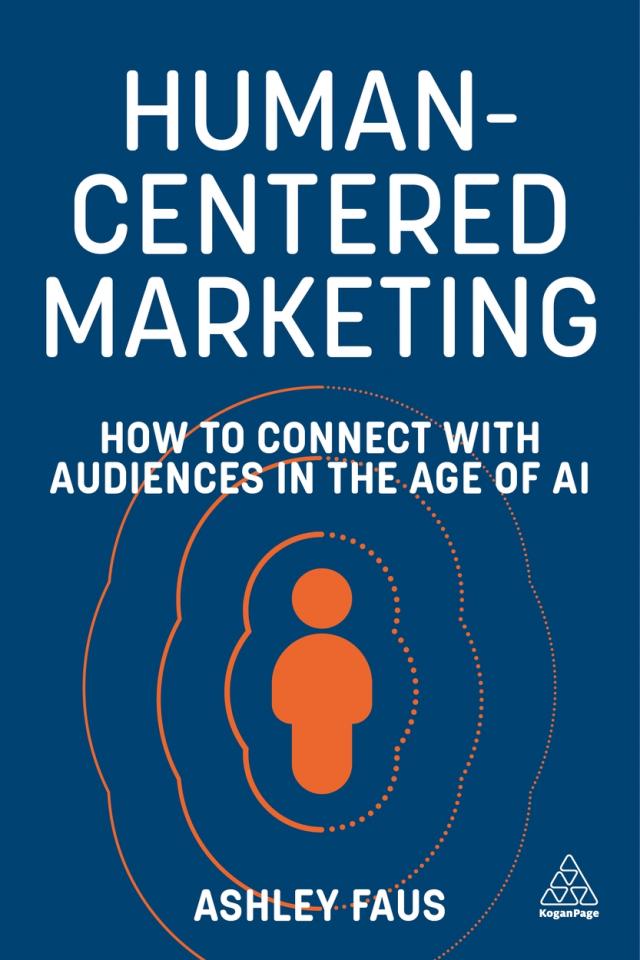
Buy Ashley’s Book Human-Centered Marketing and get 25% off when you use code: KOGANPAGE25.
The Kindle version is available now, with physical copies launching May 27th.
The Trust Crisis is Real
Something has broken in how people relate to brands, leaders, and institutions. The 2025 Edelman Trust Barometer delivered a stark wake-up call: 68% of people now believe that government leaders, business leaders, and journalists deliberately lie and mislead them. That's an 11-point jump from the year before—a massive shift in how people view authority.
This isn't just a cultural problem. It's a business problem.
When trust erodes, everything gets harder. Sales cycles stretch longer. Customer acquisition costs climb. Employee retention drops. The old playbook of push marketing, gated content, and funnel optimization starts to feel tone-deaf in a world where people are actively suspicious of being manipulated.
While most marketers see this trust crisis as an obstacle, smart ones see it as an opportunity. When trust becomes scarce, it becomes valuable. Companies that figure out how to build genuine relationships with their audiences don't just survive—they thrive.
As Ashley Faus explains: "People trust people like themselves and people buy from people they trust." The solution isn't more sophisticated attribution models or better funnel optimization. It's human-centered marketing that treats people like humans, not leads. It's about giving value before asking for anything in return. It's about building trust as a core business strategy, not a nice-to-have.
Building trust isn't some fluffy, feel-good marketing exercise. It drives hard business results.
As Ashley Faus puts it: "This is not fluffy. It's not a nice to have. It's not something that just feels kind of nice and like, you know, wouldn't it be fun if people trusted us? That would be pleasant, right? No, this has significant financial ramifications."
Research from Edelman shows that 58% of people buy or advocate for brands based on values and beliefs. Sixty percent choose where to work based on whether they trust the company. Sixty-four percent make investment decisions through this lens. And 88% of institutional investors now look at environmental, social, and governance impact when making decisions.
These aren't soft metrics. They're revenue metrics. Talent metrics. Investment metrics.
When people trust your brand, they buy from you. When they don't trust you, they don't just avoid your products—they actively warn others away. In a world where a single tweet can reach millions of people, trust becomes your best insurance policy and your biggest competitive advantage.
The companies getting this right are seeing the results. They're attracting better talent because people want to work for organizations they respect. They're closing deals faster because trust shortens sales cycles. They're getting higher customer lifetime value because trusted relationships last longer.
Most marketing frameworks weren't designed to build trust. They were designed to extract value from people as efficiently as possible. And that's exactly the problem.
The traditional marketing funnel treats people like they follow a predictable, linear path: awareness leads to consideration leads to conversion. But that's not how humans actually behave. It's not even how we make simple decisions, let alone complex B2B purchases that involve multiple stakeholders and months of evaluation.
Worse, the funnel is fundamentally company-centric. As Faus explains: "It only recognizes somebody once they're already in a buying process, which means it's retrospective, not forward-looking. And then it locks us into doing the activities that are easiest for us to measure in a dashboard instead of the activities that most resonate with the audience."
Think about it like dating. Yes, if you spend time with someone and get to know them well and share values and enjoy each other's company, you might fall in love and get married. But as Faus puts it: "You didn't get married because there was a proposal." The proposal was just the visible moment in a much longer, messier, more human process.
The funnel mindset makes us focus on the proposal—the moment someone converts—while ignoring all the relationship-building that had to happen first. It treats symptoms as causes and wonders why our marketing feels so transactional.
Meanwhile, our audiences feel the disconnect. They see through the manipulation. They recognize when we're more interested in their email address than their actual problems. And in a world where trust is already scarce, that approach backfires spectacularly.
Instead of forcing people through a linear funnel, what if we created a content playground where they could explore, learn, and engage on their own terms?
This starts with rethinking how we categorize content. Instead of awareness, consideration, and conversion content, think in terms of depth:
Conceptual content covers the what and the why. As Faus describes it: "It helps the audience think about and understand the problem space."
Strategic content gets into process, tools, and key knowledge components. "It equips the audience to do their own research and helps them think about the criteria for success."
Tactical content is where the rubber meets the road. "This is nitty gritty, prescriptive, where the rubber meets the road to implement the strategy."
Here's the key insight: people need all three levels, but not necessarily in order. Someone might discover you through a tactical piece, then go deeper into strategic thinking, then step back to understand the conceptual framework. Let them move around the playground naturally instead of forcing them down a predetermined path.
The second shift is thinking about intent—what people actually want to do next. Most marketers obsess over buy intent and use intent. But there are other valid intents that matter just as much: trust intent, learn intent, and help intent.
Take Atlassian's approach with their Agile microsite. They create conceptual content about the shift from waterfall to agile methodology. They offer strategic content about how to adopt agile practices. They provide tactical content about running standups and grooming backlogs.
As Faus explains: "You can choose Scrum or Kanban projects when you first start setting up your projects... However, that's pretty inefficient. Maybe let's show you how to do that with JIRA." Some of this content mentions Jira's features. Some doesn't. All of it helps people succeed with agile methodology whether they use Atlassian's products or not. That's trust-building in action.
Buy Ashley’s Book Human-Centered Marketing and get 25% off when you use code: KOGANPAGE25.
The Kindle version is available now, with physical copies launching May 27th.
This doesn't mean abandoning measurement. It means getting smarter about what we measure and when.
The problem isn't that marketers measure too much—it's that we measure the wrong things. We optimize for short-term revenue conversion as the only metric that matters. We default to digital touchpoints that are easy to track in a dashboard. We want one-to-one attribution for everything.
As Faus puts it: "Most of the time we don't actually have that discussion of like, here are the video metrics, here are the article metrics." We intuitively understand that watch time makes sense for videos but not for articles, yet we often apply the same success metrics to completely different types of content.
Social media perfectly captures this problem. "You'll get basically dichotomous or opposing views. We wanna optimize for in-feed engagement and CTR. Okay, well, you're not gonna get people commenting and liking and sharing on social media if the only thing you give them to do is to click a link."
The "Learn More" call-to-action perfectly captures this trust-breaking approach. As Faus explains: "I don't know what that is. Am I gonna watch a video? Am I contacting sales? Do I have to register an event? Am I making a purchase? Like what happens when I click that link, right?"
Be specific. Match your calls-to-action to your content intent. If someone is reading a tactical implementation guide, "Download the template" makes sense. If they're reading conceptual thought leadership, "Contact sales" probably doesn't.
The biggest trust-killer in marketing is short-term thinking. The pressure to close business this month, hit quotas this quarter, show immediate ROI on every campaign.
This shows up in tactical decisions that seem small but actually matter a lot. Do you put a human name on your content or just say "written by [company name]"? Do you invest in building up internal thought leaders or worry that they might leave someday?
As Faus points out: "There is a lot of pushback about employees building their personal brand... Because what if they leave, right? That is a very short term mindset."
Think about relationships that continue to create value long after the direct business relationship ends. Faus shares a perfect example: "I no longer have a need for their services and yet they keep in touch with me. We have a good relationship and I have referred multiple clients to them."
None of this shows up in last-touch attribution. You can't track exactly how many deals came from that conference conversation or that helpful email you sent six months ago. But the compound effect is real.
This applies to content strategy too. A tweet has a half-life of maybe eight seconds. An evergreen guide on your website might generate traffic and leads for years. Yet many marketers spend equal time on both, or even more time on the short-lived content because it feels more urgent.
The fundamental shift here is moving from a pushing mindset to a helping mindset. Instead of trying to move people through your funnel, focus on genuinely helping them succeed.
This doesn't mean hiding the fact that you have products or services that could help. As Faus puts it: "If your product genuinely solves someone's problem, you're doing them a disservice by not saying this thing can help you in this way."
Her hot take on gating content perfectly captures this mindset: "If I had it my way, I would un-gate, like, I fundamentally don't believe in gated content at all." The philosophy is simple: "Showing, not telling, giving, not just receiving in a transactional way builds that trust, builds that long-term affinity, and it does ultimately turn into revenue."
Start small. Pick one piece of gated content and ungate it. Create one genuinely helpful resource with no strings attached. Put one employee's name and face on your thought leadership instead of hiding behind your company logo.
In an age of AI, human connection becomes more valuable, not less. People crave authenticity precisely because it's becoming harder to find. Companies that figure out how to build genuine trust won't just survive the current crisis—they'll emerge stronger on the other side.
Trust isn't just the fastest way to long-term ROI. In a world where trust is scarce, it might be the only way.
Ready to earn your C-suite's trust?
Compare potential channels side-by-side based on your specific business goals, audience needs, and team capabilities to make data-driven expansion decisions.
Every B2B marketer eventually hits a wall. You've maxed out your LinkedIn and Google strategies. Your campaigns are optimized within an inch of their lives. Yet growth is flatlining.
The obvious answer? Add a new channel. But doing so typically raises your cost per acquisition, adds complexity to your messaging, and diverts focus from what's already working. In today's economic climate, any spike in CAC comes under intense scrutiny. How can you possibly justify the risk?
Yet the data shows multi-channel strategies pay off. According to McKinsey, companies using multi-channel approaches achieve 25% higher ROI than those relying on a single channel. They also experience sales cycles that are twice as short and see a 30% increase in customer lifetime value because more brand interactions boost loyalty.
The question isn't if you should expand your channel mix, but when and how to do it right.
How do you know when to make the leap? Based on our experience working with dozens of mid-level and enterprise organizations, we've identified three clear signals:
Signal #1: Your current channels run at or above target efficiency. When your customer acquisition cost is sustainable and your existing channels are well-optimized, you've created a foundation strong enough to support experimentation.
Signal #2: Audience research shows your buyers are in places you're not. If you discover your decision-makers are consuming content on platforms you haven't tapped, that's a missed opportunity. Your marketing should be wherever your audience spends time.
Signal #3: You've reached saturation point. When spending more money on your current platforms no longer improves ROAS, you've hit a ceiling. Growth requires new territory.
The goal is finding what Haley Riemann-Schneider, our Head of Advertising, calls the "Goldilocks zone" – the perfect balance of volume and return. Focus too much on ROAS, and revenue suffers. Chase volume at all costs, and efficiency tanks. The sweet spot lies between.
B2B marketers often default to LinkedIn as their primary channel. It's the business social network, after all. But as Ryan Nelsen, StackAdapt's CMO, pointed out in our recent conversation, this narrow focus leaves money on the table.
"LinkedIn is great for targeting business audiences," Nelsen explained. "We're customers ourselves. But we see significantly higher conversions when we expand beyond it."
The data from StackAdapt's platform tells a compelling story about how channels reinforce each other:
These aren't small improvements – they're game-changers. The reason? Channels don't exist in silos. When prospects see your brand in multiple contexts, it creates what Nelsen calls "the everywhere effect."
"The holy grail for marketers is when the CEO gets a text from a friend saying, 'I'm seeing your company everywhere,'" Nelsen noted. That perception of omnipresence builds trust, which accelerates buying decisions.
The distinction between brand and performance marketing is useful conceptually, but can limit our thinking. As Nelsen puts it: "If you only focus on brand, you'll probably get fired for not driving performance. If you only focus on performance, your top of funnel will dry up."
The most innovative campaigns blend both approaches. Remember Coinbase's Super Bowl ad? For 30 seconds, viewers watched a QR code bounce around their screens – a playful nod to the DVD screensaver era. That simple concept drove over 20 million app downloads and made Coinbase the top downloaded app that week.
What made this work? They took a brand channel (Super Bowl TV spot) and transformed it into a direct response vehicle. Instead of spending millions on celebrities, they invested in the backend experience that converts interest into action.
This blending of brand and performance is happening across channels:
"It's such a fun time to be a marketer," Nelsen observed. "The sky's the limit in terms of creativity and the ability to target and measure."
How do you add channels without breaking the bank or losing focus? Start small, measure obsessively, and scale what works.
Technology has democratized access to channels that were previously reserved for deep-pocketed enterprises:
Video production costs have plummeted. "It used to cost hundreds of thousands of dollars to create TV ads," Nelsen noted. "Now AI is making it easy to create world-class video, allowing businesses to shift dollars toward distribution instead of production."
Platforms like StackAdapt remove technical barriers. Their programmatic advertising platform lets you run campaigns across display, video, audio, digital out-of-home, and connected TV without massive platform fees or technical hurdles.
Cross-channel attribution has improved dramatically. New tools show exactly how channels work together, ending the guessing game about which touchpoints deserve credit.
The key is keeping conversion at the center of your strategy, regardless of channel. Whether it's a brand play or a performance tactic, the goal remains the same: convert prospects into customers.
Compare potential channels side-by-side based on your specific business goals, audience needs, and team capabilities to make data-driven expansion decisions.
The multi-channel advantage is real and measurable. But expansion should be strategic, not scattershot.
Before adding any new channel to your mix, ask yourself:
When your current channels are humming, your audience research points to untapped opportunities, and you've hit saturation in your existing mix – that's when the real growth begins.
The brands that win aren't the ones with the biggest budgets or the flashiest ads. They're the ones that intelligently connect with their audiences across multiple touchpoints, creating an impression of omnipresence that builds trust and accelerates deals.
In B2B marketing, being everywhere matters more than being perfect anywhere.
Ready to grow that bottom line?
National Funding is a leading financial services company specializing in providing small and medium-sized businesses with tailored financing solutions.
Following a Google algorithm update, National Funding lost great rankings for focus keywords in their space such as “bad credit business loans.” They approached 97th Floor to reclaim rankings vital for generating new leads.
97th Floor implemented a holistic SEO strategy to fully optimize National Funding’s pages for keyword searches. Their tactics included:
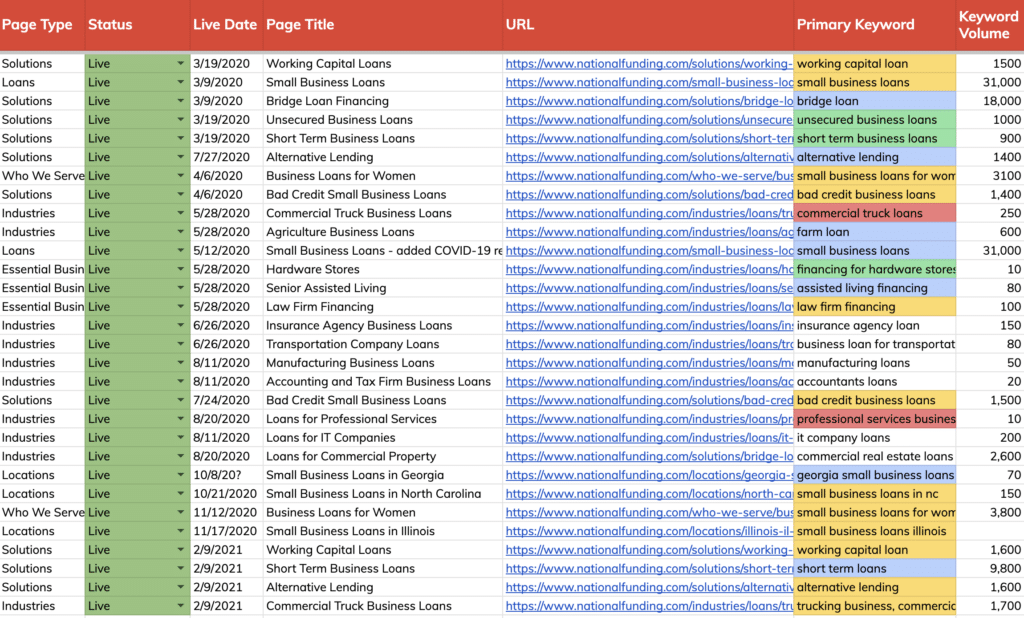
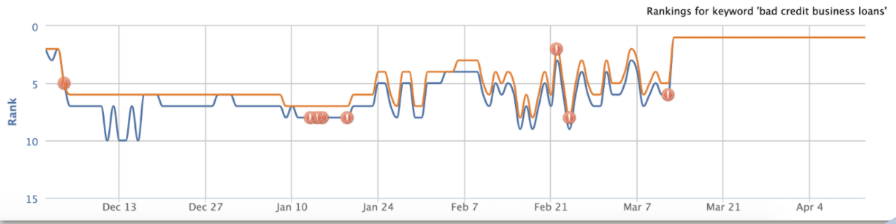
The implemented strategy successfully restored and significantly enhanced rankings for crucial keywords— including "bad credit business loans" ranking #1. These rankings resulted in increased sessions and leads for National Funding.
Get executive buy-in faster by presenting your strategy in the language your board already understands.
Imagine you're in a board meeting, and the CEO looks at you and asks, "What are we really getting from our marketing budget?" It's the question that keeps marketing leaders up at night.
The numbers are tough to swallow. Most CMOs last only 12-18 months in Silicon Valley. Even worse, only 66% of Fortune 500 companies have a marketing leader—and that number is dropping.
The good news is when times get tough, smart marketers actually do better. The secret? They balance quick wins that boards understand with long-term plans that drive real growth. This is how to build marketing that's so clear and reliable that your leadership team will bet on it.
Marketing leaders need to wear many hats. They're part psychologist, part numbers person, part creative genius, and part business manager. They need to know technology (marketing buys tons of software), understand data, get how people think, plan strategy, and run daily operations.
Everything changed with COVID. Now AI is changing things again. But many CEOs and boards still think marketing is just about making things pretty or planning parties.
This creates a big problem. Marketing work has gotten way more complex, but other leaders don't really get what marketers do. The job is super important but often overlooked by the people who control the money.
Karl Vandenberg knows this well. He's the CMO at Illumio and was named Cybersecurity Marketer of the Year in 2024. Before marketing, he ran products, led companies, and handled mergers. This outside view helps him see marketing's unique challenges clearly.
When Karl joined his last company, he was the fifth marketing leader in five years. Trust was gone. His fix? Run marketing like a sales team.
He started by building a computer program that could predict which companies would buy their product. Today you can buy this technology, but his team built it from scratch to prove marketing could be as numbers-driven as engineering.
Here's what they did:
Then Karl did something unusual: monthly pipeline reviews with the board, just like sales teams do. He gave his team quotas and paid them based on hitting sales targets.
This openness worked. By talking in "sales speak"—forecasts, quotas, pipeline numbers—marketing finally made sense to board members. Within six months, he had enough trust to talk about bigger, long-term investments.
Balancing Quick Wins with Big Picture Thinking
When money gets tight, most people focus only on activities that show immediate results. But that's exactly when you should also invest in building your brand.
The problem? Brand building doesn't show instant payback. Karl's answer is to think about "Return on Goals" not just "Return on Investment."
Take their recent AI product launch. Instead of focusing on sales, they aimed for 100 free trial signups per week. It's measurable and shows progress, but it's not directly about money—yet.
For long-term investments like brand building, track early signs of success:
During COVID, while running a startup backed by investors, Karl made a bold choice: invest in brand. They tracked progress with a score card, showing quarterly proof the investment was working even before sales went up.
Think of brand as air cover for your sales team. When people have heard of your company, they're more likely to talk to your salespeople. You can't draw a straight line to sales, but it makes everything else work better.
Key Relationships and Local Teams
After your CEO, your most important work friend is the head of sales. This partnership doesn't always come naturally, especially for technical marketers, but it's crucial.
Working with the product team matters too. But the sales partnership is extra important in B2B tech, where buying decisions involve 15+ people across different departments.
Karl uses what he calls the "franchise model." Marketing and sales work together at the local level. Regional teams get:
This changes how people think. Instead of marketing "owning" the budget, they're investing money to help sellers succeed. Local teams combine marketing skills with sales street smarts, creating better campaigns and stronger trust.
The One-Page Marketing Plan
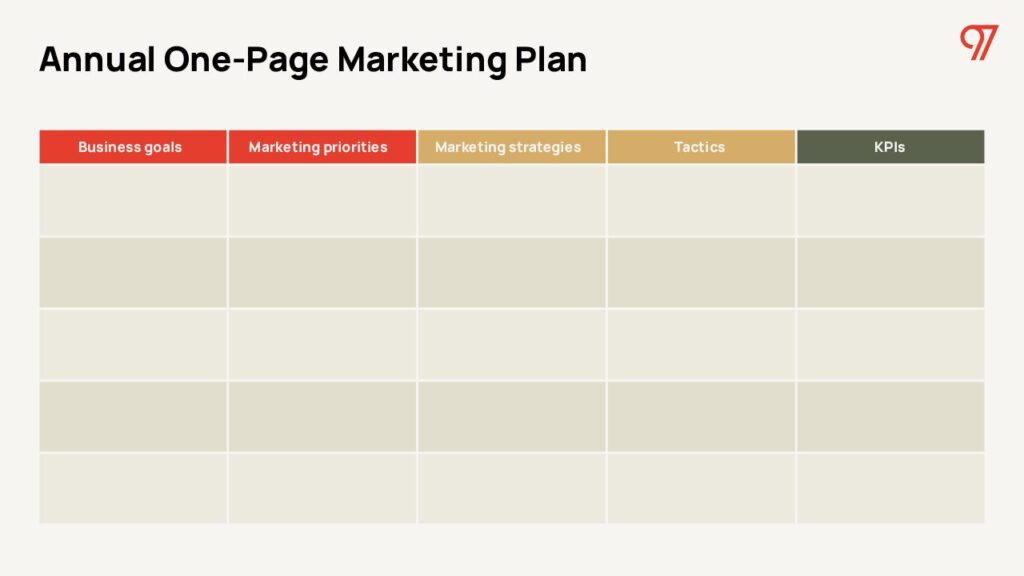
Marketing might be complex, but explaining your plan doesn't have to be. The one-page plan turns your strategy into something any executive can understand in minutes.
Here's how it works:
A good plan might have five company goals, five marketing goals, three or four big projects per goal, and about 10 total measurements. These feed into a simple dashboard for executives.
The magic is keeping it simple. No marketing jargon, no detailed channel plans—just the big picture. When people ask about specific tactics, those details live in your project tools, not executive updates.

Get executive buy-in faster by presenting your strategy in the language your board already understands.
Since 60% of CMOs are first-timers, here's how to succeed:
Start by proving you can deliver leads and pipeline. Show you can hit targets before asking for money for long-term projects.
Accept that you'll spend about 30% of your time teaching others about marketing. You need to think big picture while delivering daily results. There's no way around this balance.
Use data to back up your ideas, not just report what happened. When your models show clear thinking and real facts, people trust you even before you prove results.
Build relationships on purpose. Work closely with sales leaders, product teams, and regional managers. Give local teams responsibility while keeping everyone aligned.
Don't give in to pressure for only quick results. Companies need marketing leaders who can deliver now while building for later. Those who only focus on today fail both themselves and their companies.
Marketing has completely changed. As AI reshapes how we work and how buyers shop, marketing will become even more important to business success.
For marketers ready to handle this complexity, the opportunity is huge. Companies need people who can mix creativity with numbers, big ideas with daily execution, future vision with current results. Those who master this mix won't just earn trust—they'll shape how businesses grow.
In times of big change, one thing is certain: companies that invest in strong marketing leadership will beat those that don't. The question isn't whether to build trustworthy marketing—it's whether you're ready to lead the change.
Ready to earn your C-suite's trust?
Unburden your site of low-value content and watch your SEO performance skyrocket
Content production exploded last year thanks to AI tools, and many of us jumped on board. More content meant more chances to rank, right? Well, it's 2025 now, and the game has changed dramatically.
We're seeing reputable sites hit with serious penalties. Google's quality guidelines are actively flagging AI-generated content, and some organizations are losing millions of monthly sessions. Meanwhile, Google continues tightening crawl budgets across the board.
If your SEO efforts aren't delivering results despite investing in content, you're not alone. The solution may not be creating more content, but strategically consolidating what you already have.
One of the most common misconceptions we hear from clients is that low-performing pages aren't hurting anything. "They're just sitting there," people tell us. "Why bother removing them?"
Mike Witham, our Head of SEO at 97th Floor, explains it this way: "If Google finds a pattern of low-quality content on your site, it will devalue all content and will even stop crawling and indexing your site if the offense is large enough."
Think about it like this: If your site has 100 articles and only 20 are truly excellent while 80 are mediocre, those 80 pages are actively dragging down your entire site's performance. Google has become remarkably good at identifying these quality patterns, and when it spots too many low-value pages, it begins questioning everything you publish.
Your site would benefit from a content consolidation audit if:
✅ Your SEO efforts aren't delivering the expected results
✅ Recent Google updates have hurt your rankings
✅ You're planning a site migration or merge
✅ Your legacy site has been managed by multiple content teams over the years
✅ Too many pages are stuck in "crawled, not indexed" limbo
This approach is particularly valuable for established sites with extensive content libraries. What worked under previous Google algorithms may now be actively hindering your performance.
One of our e-commerce clients came to us with strong technical SEO but declining traffic. After implementing our Content Consolidation Audit recommendations, they saw a 20% increase in ranking keywords, 27% more organic traffic, and—most importantly—a 42% jump in organic revenue.

Unburden your site of low-value content and watch your SEO performance skyrocket
The power of this approach lies in its systematic framework for evaluating every indexed page on your site. Here's how it works:
For the e-commerce client mentioned earlier, we identified hundreds of product category pages competing with each other rather than collectively building authority. By consolidating these into stronger category pages and implementing redirect strategies, we transformed their organic performance.
We've seen similar results across industries. A B2B software client had a blog post about industry trends that attracted substantial traffic but had almost no connection to their core offerings. Rather than removing this valuable traffic source, we added strategic internal links to relevant product pages and introduced a targeted lead magnet. Traffic remained steady while lead generation increased by 23%.
For a financial services client, we found several pages with strong traffic and clear business alignment but poor user metrics. By aligning the calls-to-action with user intent, conversion rates improved by 35%.
The Content Consolidation Audit isn't just a one-time fix—it should become part of your ongoing content approach:
In 2025's SEO landscape, quality trumps quantity every time. A focused collection of high-quality, business-aligned content will outperform a sprawling library of mediocre pages.
By directing your crawl budget toward truly valuable pages, you're not just improving your SEO metrics—you're building a content foundation that genuinely serves your users and supports your business goals.
Ready to see what else is possible?
Artificial intelligence is no longer a future consideration for business leaders. It is actively reshaping how decisions are made, how work gets done, how organizations scale, and how employees interact with their leaders. The pressing issue for executives is how AI changes leadership itself, and what they need to do to survive and thrive in an AI-driven economy.
AI in leadership refers to how executives lead organizations when artificial intelligence plays an active role in analysis, execution, and coordination.
In leadership in the age of AI, executives define goals and values for the company, and AI systems (including AI agents) carry out tasks within those boundaries. This represents a shift from direct oversight to directional influence.
This shift changes how leadership impact is measured. Success is now tied to how effectively leaders enable intelligent systems to support teams and customers. AI in leadership elevates the executive role by freeing leaders to focus on judgment, long-term strategy, and complex trade-offs that machines cannot resolve on their own.
Most of us think of AI as those chatbots that answer questions or write content. But AI agents take things way further. Marie Haynes puts it simply: "An agent is an AI tool that can do things for you, that can take action for you."
From an AI in leadership perspective, agents shift the leader’s role from managing execution to governing systems. Leaders must understand how these agents operate, how they interact, and where oversight is required to ensure outcomes align with business objectives.
What makes agents different from your regular AI tools? They can:
This isn't just theoretical technology. Google CEO Sundar Pichai recently predicted that "within two to three years, agentic solutions will be deeply embedded into our workflow." Similarly, DeepMind CEO Demis Hassabis stated that agents will "fundamentally change how we use the internet within the next couple of years."
Why are these specialized AI helpers so powerful for leaders? Haynes explains it's like building a team: "Each of these will be trained to do one specific role and do that role well. And then eventually these agents will talk to each other and combine, get things done by working with each other, just like a company."
The real game-changer here is how these agents will talk to each other, and what that means for leaders. Google just announced an agent-to-agent protocol that lets different AI systems communicate and work together.
Imagine onboarding a new employee. Instead of scheduling meetings with HR, payroll, and IT, an onboarding agent would coordinate with specialized agents in each department to handle all necessary tasks. As Haynes described, "a lot of the administrative tasks in a company become much quicker to do because of agents. You have to do less paperwork. You don't necessarily need people there to answer questions."
This new aspect of AI in leadership requires executives to think differently about accountability in these scenarios. While agents may execute tasks, leaders remain responsible for the systems that enable them. Clear ownership, escalation paths, and governance structures are essential as automation in their companies increases.
And, this isn't just about automation in the traditional sense. These systems actually understand their domain and can handle unexpected situations. Paxton Gray makes this distinction clear: "It's not the automation of work... it's automation with the knowledge domain behind it."
So what should leaders do to get ready? Haynes has some practical advice: "Encourage all of your employees to be using AI in some capacity at least once or more times a day."
Think of it like learning a new language – you can't get fluent by studying once a month. Regular practice builds competency across the team you lead and helps identify practical applications specific to your business.
Another key recommendation for leaders is designating someone to track developments in AI – essentially creating an AI opportunity scout for your organization. This person can filter through the constant stream of updates and identify which ones actually matter for your business.
The current moment resembles social media's early days around 2005. Back then, businesses couldn't immediately capitalize on platforms like Facebook, but forward-thinking companies were positioning themselves for the shift that was coming. Similarly, today's experimentation with agents builds capabilities that will pay off as the technology for AI in leadership matures.
Expect some bumps along the way. The path to effective implementation of AI in leadership isn't about flipping a switch – it's an iterative process of learning, adjusting, and improving. The organizations that start this journey now will develop valuable expertise that late adopters will struggle to match.
As AI becomes embedded in organizational operations, leaders must develop traits that support effective decision-making in intelligent environments. Traditional management skills are still valuable, but additional capabilities must complement them.
One of these new capabilities is systems thinking. To successfully lead in an AI-driven economy, leaders must understand how people, data, and AI systems interact across the organization. This includes recognizing dependencies, risks, and unintended consequences that may arise when systems operate autonomously.
Leaders also need to develop the ability to make judgment calls under uncertainty. AI can surface insights and recommendations, but leaders need to evaluate their context, ethics, and long-term impact to decide when to trust and when to challenge AI outputs.
And, leaders need to place added focus on adaptability. AI capabilities evolve rapidly, and leaders must be comfortable experimenting, learning, and adjusting their approach over time. These three traits form the foundation of AI in leadership.
AI transformation never happens by accident. It occurs when leaders decide to engage, experiment, and lead from the front. For AI in leadership, transformation starts when executives stop treating AI as a side project and begin treating it as a leadership priority.
Leaders drive AI transformation by setting a clear direction. That means defining where AI should create value, where it should not be used, and how success will be measured. When leaders connect AI initiatives to real business goals, teams move faster and with more confidence. Without that clarity, AI efforts stall in experimentation mode.
Just as important is modeling behavior. Leaders who actively explore AI tools, ask better questions, and share what they are learning signal that experimentation is encouraged. In leadership in the age of AI, credibility comes from active, involved participation.
The best leaders balance momentum with responsibility. They create space to test new ideas while establishing guardrails around ethics, risk, and accountability. AI transformation for leaders means guiding change, shaping judgment, and helping their organization learn its way forward.
AI-ready leadership teams are developed carefully through shared understanding and a willingness to adapt. In AI in leadership, readiness is less about technical expertise and more about how leaders think and work together.
Strong AI-ready teams start with a common baseline of AI literacy. Leaders do not need to understand how models are trained, but they do need to understand how AI systems influence decisions, workflows, and accountability. When leadership teams share that understanding, alignment improves, and friction decreases.
Using AI in leadership development plays an important role here. Organizations that encourage hands-on use, regular discussion, and cross-functional learning help leaders build confidence over time. Designating internal AI champions or working groups can accelerate this process by translating technical progress into strategic insight.
The organizations that succeed in the next phase of AI adoption will not necessarily be those with the largest budgets. They will be directed by leaders who invest early in understanding AI, experimenting responsibly, and building organizational literacy.
AI in leadership is an ongoing journey rather than a one-time initiative. Leaders who engage with the technology today develop instincts and capabilities that will compound over time. As AI agents become more embedded in business operations, these leaders will be positioned to guide change with confidence.
If you want to understand how AI is shaping your organization and where opportunities exist, a structured assessment can help clarify next steps.
Get a free AI audit to evaluate your current readiness, identify leadership gaps, and uncover opportunities to apply AI strategically across your organization.
Here's a reality check for marketers: according to HubSpot's 2024 State of Marketing report, companies spend $92 on attracting visitors for every $1 they invest in converting those visitors into customers. We're pouring resources into filling the top of our funnels while neglecting what happens after people arrive.
Even more eye-opening, Build Wealth reports that less than 2% of websites use any kind of Conversion Rate Optimization (CRO) technologies. This represents a huge missed opportunity, especially as marketing teams face growing pressure to deliver more with tighter budgets.
Let's clear something up right away: CRO is much more than just A/B testing. While testing is part of it, CRO encompasses everything that helps turn visitors into customers. When done right, it dramatically boosts the return on all your marketing efforts by making sure the traffic you've worked so hard to attract doesn't go to waste.
In this article, we'll explore why CRO deserves more attention, how to build an effective optimization framework, and why accessibility might be your biggest untapped conversion opportunity.
Despite being what experienced marketers call "the lowest hanging fruit" for driving growth, CRO remains significantly underinvested in most companies. But why?
Many organizations view CRO as simply testing button colors or headline variations, asking: "How much impact can these small changes really have?" This limited perspective misses the strategic value of a comprehensive CRO program.
When treated as a core marketing function rather than an occasional tactic, CRO becomes transformative. As Chad Sollis, Chief Marketing Officer at AudioEye, puts it, CRO represents an opportunity to "double leads, double revenue really quickly."
The real power of CRO emerges when it serves as a gateway to other marketing initiatives. By understanding how different audience segments interact with your website, you create insights that strengthen everything from content creation to paid media, email campaigns to product development.
Yet CRO often falls to the bottom of priority lists. It requires building a capability that many organizations haven't developed, demanding both technical skills and strategic thinking that crosses department boundaries.
At the heart of effective CRO lies a genuine understanding of your audience—not through fluffy personas that detail what time people drink their coffee, but through actual behavior data that drives action.
According to Sollis, audience understanding makes up 60-70% of successful CRO implementation. The good news? When it comes to CRO, you have an advantage in segmentation compared to broader marketing initiatives: you're focusing specifically on people already visiting your website.
Here's how to gather actionable audience insights:
Web Analytics and User Behavior: Start with the data you already have. What sources bring traffic to your site? Which landing pages get the most visits? This information provides your first layer of segmentation.
First-Click Behavior: The first action a visitor takes reveals volumes about their interests and intent. As Sollis explains, "What is the first click they do? If they're abandoning, then you have a problem with the page that they're actually landing on... But if they create a next action, that creates a segment for you."
These behaviors allow you to make informed discoveries: "These people are interested in product X when I thought they were interested in product Y" or "This is their problem versus that is their problem."
The content visitors consume, the product pages they view, and the search terms they use on your site all provide valuable clues for effective segmentation.
Similar to a lead scoring model, this behavioral segmentation happens through technical tools that track on-site behavior. Different pages and actions carry different weights, with product and pricing pages typically having higher impact than others.
Once you've established your audience segments, it's time to build tests that will improve conversion rates. Sollis recommends a three-component framework:
The key is aligning content to the outcome you're trying to drive. For a B2B or SaaS business, that might ultimately be generating leads or trials. However, recognizing that visitors often need to take several steps before converting is crucial.
"You might have to understand that to get them to trial, you actually need them to go two or three steps into the website before they're willing to engage in a trial," Sollis notes. "So if they're in step one, your goal is get them to the next step. If you're in step three, your goal is to get them into trial."
By understanding this progression, you can optimize each step of the journey rather than focusing solely on the final conversion point.
Perhaps the most overlooked opportunity in CRO is optimizing for accessibility. Many companies view accessibility primarily as a way to avoid lawsuits or as a social responsibility initiative. While these are valid concerns, this perspective misses the significant business opportunity.
"People with disabilities actually account for about 25% of web traffic on the internet," Sollis reveals. "So one in four of every visitor has disabilities. That is an opportunity to personalize and to optimize to a segment."
The numbers are compelling:
Viewed through this lens, accessibility becomes not just a compliance requirement but a substantial CRO opportunity that spans across B2B, D2C, and all types of companies.
A comprehensive accessibility strategy requires more than just installing a plugin. Sollis outlines a three-pronged approach:
This combined approach yields not only the highest level of compliance but also "a level that will achieve the highest conversion for a massive component of your audience."
Beyond direct conversion benefits, accessibility improvements can drive additional value:
The gap between what companies spend on attracting traffic versus converting it represents an enormous opportunity for marketers willing to invest in CRO. By approaching conversion optimization as a comprehensive discipline—with audience understanding at its core—organizations can dramatically improve their marketing ROI across all channels.
The three-part framework of audience segmentation, content alignment, and creative execution provides a structured approach to improving conversions. Meanwhile, accessibility stands out as a particularly underutilized opportunity to reach a significant segment of consumers while building brand loyalty.
As marketing budgets face continued scrutiny, the ability to extract more value from existing traffic becomes increasingly important. CRO offers a path to not just incremental improvements but potential step-changes in performance.
The question isn't whether you can afford to invest in CRO—it's whether you can afford not to.
Search is changing fast. Google's CEO Sundar Pichai said search will change "profoundly" in 2025, and we're already seeing it happen. AI answers now appear at the top of results, and Google's testing a new AI Mode.
This creates both challenges and opportunities for marketers. Many clients are asking: "How do we get mentioned in AI chatbots?" and "What should we do differently for ChatGPT and Gemini?"
This brings us to a new term: GEO (Generative Engine Optimization). But is this just SEO with a different name, or something completely new?
The industry can't agree on this question.
Some argue that GEO is just SEO by another name. They say brands need a strong SEO foundation to appear in AI results since these systems train on content that ranks well already.
Others believe generative search requires an entirely different approach.
Marie Haynes, an AI and SEO consultant, takes the middle ground: "I think they're different things. A lot of the things we do as good SEO are also going to help us with GEO. But there's other things that we can do as well."
While SEO focuses on ranking in search engines, GEO needs content that language models want to reference. The skills overlap but aren't identical.
Don't let these changes overwhelm you. Chaos creates opportunity. When everything's figured out, giant publishers dominate. But during disruption, smaller players can break through.
If there's one thing that matters more than ever now, it's reputation. Being known as the go-to source for your topics is crucial.
As Marie explains: "You might have incredible content, but if you're not known as a go-to source for that topic, then you're less likely to be chosen as a source."
This is why digital PR is becoming more valuable. Google's E-E-A-T principles (Experience, Expertise, Authoritativeness, and Trustworthiness) matter even more in an AI-driven world.
Authenticity is key. AI can tell when content is genuinely valuable versus just churned out with minimal oversight.
This creates challenges for new businesses without established reputations. In the past, the right SEO tactics could get you to the top. Now, it's about being a recognized authority.
But you don't need to be a major brand to succeed. Individuals can become known for specific topics through consistent publishing, speaking, podcasts, and social media. The key is providing value that nobody else offers.
For years, SEO and content worked hand-in-hand—content brought traffic, traffic led to conversions. AI is breaking this relationship.
Think about searching for "how to care for raspberry bushes." Instead of clicking through to a gardening blog, users now get complete answers directly in AI results. No brand gets mentioned, no traffic gets generated—yet that information came from somewhere.
Marie puts it bluntly: "I think that Google used us. And I think that an era is ending."
Google's mission is to organize information, not websites. For years, they gave publishers a way to make money from creating content. Now that AI can synthesize that information directly, the deal is changing.
This hits hardest for content that just curates existing knowledge. If your content simply restates widely known information, its traffic-generating potential is shrinking rapidly.
But new and unique information remains valuable. Original methods, experiments, and insights are what AI needs to incorporate.
What content will AI systems continue to reference? Original research and insights that add to the world's knowledge, not just repackage it.
These approaches work best:
First-person experiences offer unique value that AI can't generate. "It's one thing to say 'here's how to plan a trip to Alaska,'" says Paxton Gray, "It's another thing to say 'here's how our family planned a trip to Alaska.'"
Subject Matter Expert (SME) contributions provide fresh perspectives and specialized knowledge. Make working with SMEs a priority.
Original research and statistics are gold. Marie notes that "language models really like quoting statistics." Even simple surveys of your audience can generate citable data.
When planning content, ask yourself: "If this content disappeared from the web, would anyone miss it?" If not, you need to rethink your approach.
Start with audience needs, not keywords. Ask your customer service team what questions they hear most, then create content that addresses those needs in unique ways.
Here are some practical approaches to boost your chances of being referenced by AI:
Format matters. AI systems favor lists, tables, and structured content. Marie points to "chunks" in leaked API files, suggesting search engines segment content into different types, with lists and tables being especially valuable.
This explains why most cited sources in AI responses are formatted as lists. Try these structured formats in your content.
Visual content helps. With AI models processing both text and images, including relevant visuals can boost your content's value.
You can influence how AI represents your brand. Check what information AI pulls when users search for your brand. It often comes from your homepage or About page, giving you some control over your representation.
Ask AI for feedback. If you're not appearing in AI responses for relevant queries, ask the AI system why. This can provide useful direction.
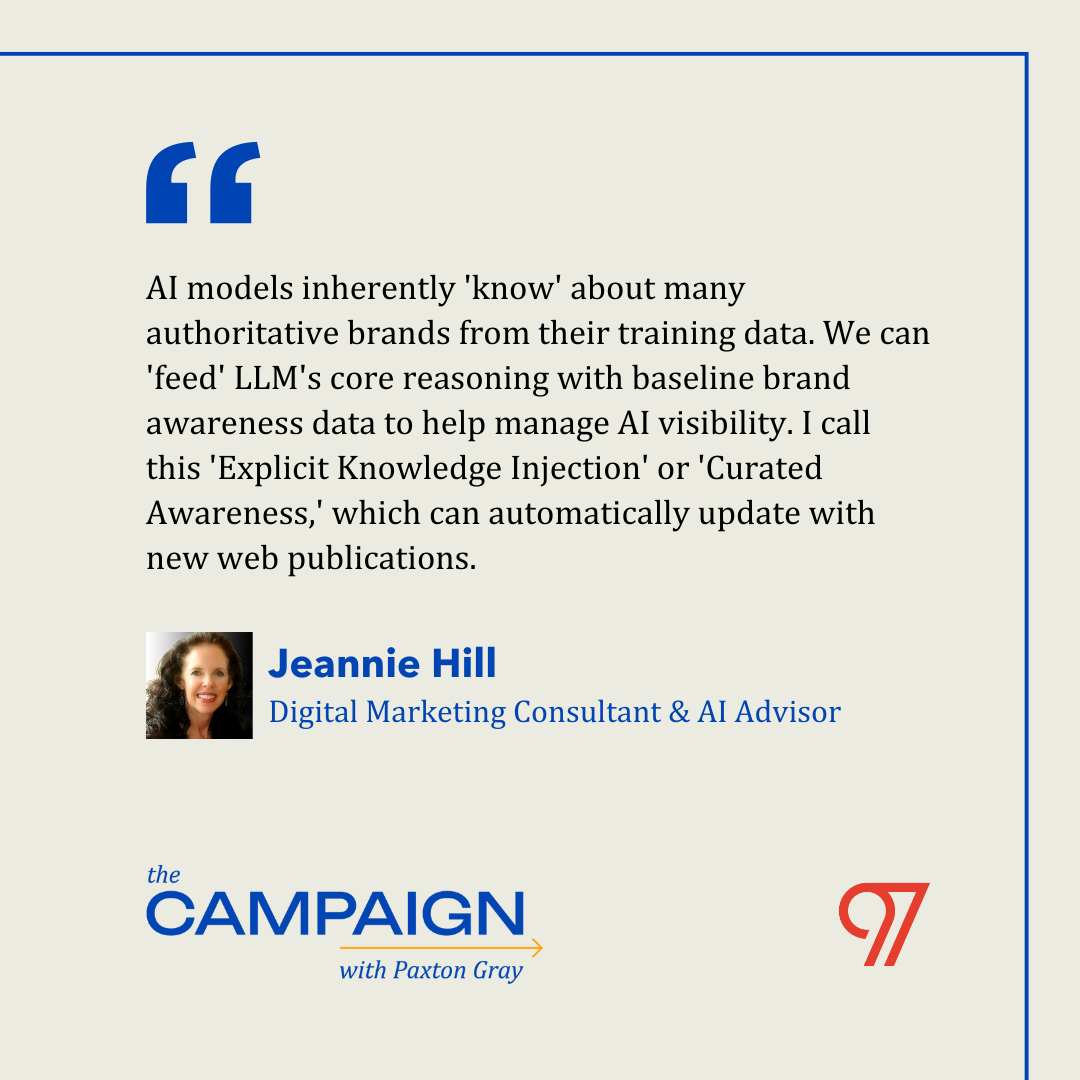
Jeannie Hill, Digital Marketing Consultant and AI Advisor, suggests a more technical approach: "AI models are pre-trained on massive datasets (including large parts of the internet). They inherently "know" about many authoritative brands, their products, industry niche, common associations, and public perception as captured in the training data. We can "feed" LLM's core reasoning with baseline brand awareness data to help manage AI visibility.
A good AI content strategy looks to facilitate easier brand data extraction and transformation for other systems (like Vertex AI pipelines) that may later emerge. I like to call this "Explicit Knowledge Injection" or "Curated Awareness," which can automatically update with new web publications. Initially, I explicitly upload structured (json_data) or unstructured documents about the specific brand I'm working on into a Data Store."
Google's experimental AI Mode represents an even bigger shift than the AI overviews we see now. Currently available through Google Labs in the US, it uses a "query fan out technique"—an agentic search approach.
Instead of just retrieving information from an index, it actively explores multiple websites, performs follow-up searches based on what it finds, and generates comprehensive answers.
"In AI mode, it's very, very quick," Marie explains. "You'll see websites featured there, and then you'll see an AI answer." Unlike current AI overviews, AI Mode answers tend to be highly accurate.
This system allows follow-up questions, turning search into a conversation. This changes how we measure success—traditional Search Console data might not capture these interactions.
For businesses focused mainly on curating information, this creates challenges. But for others, it opens new doors. Marie shared an example of an e-commerce client who struggles in traditional search but appears as a top recommended site in AI Mode.
We're in uncharted territory. No one has all the answers yet, and that's what makes this moment exciting for marketers willing to adapt.
The businesses that will thrive are those that experiment, learn continuously, and focus on providing genuine value.
While these changes might feel overwhelming, they actually level the playing field in many ways. Brands that invest in authentic expertise can stand out regardless of their size.
The future of search is being written right now—and with the right approach, your brand can help shape that story rather than just react to it.
SEO is changing—fast. AI tools are reshaping search results, and what worked yesterday might not work tomorrow. But amid all this change, one thing remains true: people still search for things they need, and businesses still need to connect with them.
In our recent webinar, SEO expert Eli Schwartz shared insights on how companies can maintain steady organic revenue by focusing on people first, not search engines. Here's what matters now.
Most SEO work starts with keywords. You grab a keyword research tool, find popular terms in your market, then create content around those terms. It's what we've all done for years.
The problem? This approach misses the mark on what actually matters.
"Most SEO is really driven around keywords," Eli explained in our webinar. "Instead, I like to think of doing product-led SEO, which is to take many steps back to understand who the user is, why the user is going to fetch something from a search engine."
When SEO teams focus purely on ranking for keywords, they often create content nobody actually wants. Sure, you might rank #1, but if that traffic doesn't convert, what's the point?
Take this real example: a water filter company ranked #1 for "water cycle" and got tons of traffic—from kids doing homework. Were those visitors ever going to buy water filters? Nope. When they shifted focus to terms with actual buying intent, their traffic dropped, but conversions went up.
That's the difference between chasing traffic and building revenue.
Product-led SEO flips the script on traditional methods. Instead of starting with keywords, you start with people and their needs.
The standard SEO approach assumes people want content that matches keywords. But people don't want content—they want solutions to problems. Sometimes that's a blog post, but it could also be a tool, video, image, or interactive experience.
This approach succeeds because it builds for the user, not the algorithm. And that makes it much more resistant to AI disruption.
As Eli pointed out, "AI can give information. It can't give product. It can't be the product for now."
Companies like Zillow excel at this. They've built pages that serve real user needs first. You find them through search, but they deliver an experience that pure information (like what AI can provide) can't match.
The foundation of people-first SEO is understanding who your users really are—beyond basic demographics.
Take this example Eli shared: If you sell queen mattresses, who's searching and why? Is it:
Each person has completely different needs. Some care about comfort. Others about price. Some need delivery options or allergen information.
These aren't keywords—they're needs, pain points, and requirements.
Many companies fail to connect their SEO strategy with what they already know about their customers. If your entire marketing focuses on being the budget option, but your SEO content emphasizes speed, you've created a disconnect.
One company Eli worked with focused all their marketing on being the cheapest option, but their SEO used "fast" in title tags because it had higher search volume. When they changed title tags to emphasize affordability, click-through rates improved immediately.
The takeaway? Your SEO should reflect your actual value proposition, not just chase high-volume keywords.
Let's address the elephant in the room: what about AI and all this talk about "GEO" (Generative Engine Optimization)?
Eli doesn't mince words: "I think that GEO doesn't exist in a vacuum... The best way to be visible in a generative response, whether that's on Google or ChatGPT or Perplexity or any of those engines, is by doing really great SEO."
If you want to show up in AI search results, you need to be visible in traditional search first. These systems crawl and rank the web just like traditional search engines—only the output format changes.
The biggest difference is how quickly AI systems adapt. Traditional search algorithms update slowly, sometimes taking months or years to correct issues. AI systems receive user feedback immediately.
If someone gets an AI response with irrelevant information, they can immediately ask for something better. This teaches the AI system in real-time what works and what doesn't.
"If you game AI... it closes much faster than if you game SEO, which many of those loopholes can last years," Eli noted.
This rapid feedback means optimization tricks won't last long. Quality content that genuinely helps users is your best bet for staying visible.
So how do you actually implement this approach? It starts with shifting your focus:
Don't just create generic buyer personas with irrelevant details. Focus on specific pain points related to your product.
Which customers have the highest lifetime value? What do they have in common? What problems do they share? Your past customers often reveal what your future strategy should target.
Make sure your organic content emphasizes the same value props as your paid channels. If affordability is your main selling point everywhere else, don't suddenly switch to speed or quality in your SEO content.
Traffic that doesn't convert is just a vanity metric. Set goals based on leads, sales, or other meaningful business metrics.
If your organization is stuck in old SEO habits, you'll need to show them a better way exists. Start small—test a new approach on a subset of content and track the results.
"It can't be this grand approach of like, 'okay, I'm throwing out your entire SEO strategy, let's try this new thing,'" Eli advised. "It has to be the steady slow process of selling with data and logic."
SEO isn't dying—it's changing. As search becomes more sophisticated through AI and other technologies, trying to "trick" algorithms will only get harder.
The winners will be those who focus on what doesn't change: people searching for solutions to their problems.
When you deeply understand who your customers are, what they need, and how your product uniquely solves their problems, you create content and experiences that convert regardless of how search results are delivered.
In a world obsessed with algorithms, be obsessed with people instead.
