



As if the world needed more change at the moment, Google announced a new core algorithm update on May 4th and began rolling it out last week — completely disrupting many SERPs and websites in the process.
SEOs can expect 2-4 core updates like this one each year, but this update reaches wider and cuts more severely than most. Core Google algorithm updates can take as long as two weeks to roll out completely, but so far we’ve seen this wave begin in earnest on May 4th and hit hard again on May 8th.
The May 2020 Core Update is now rolling out live. As is typical with these updates, it will typically take about one to two weeks to fully roll out.
— Google SearchLiaison (@searchliaison) May 4, 2020
The effects of this update have been fierce, with some SEOs around the web reporting that it feels more like a penalty than an algorithm update. For some, the negative effects have felt even more insulting given the timing, but of course, where there are losers, there are also a few winners.
The impact seems generally industry agnostic, with all industries seeing fairly similar volatility rates (for better or for worse). However, while SEOs around the globe are reporting fluctuations across virtually all industries, there seems to be a concentration in the chatter around real estate, health, and travel.
There’s no shortage of findings here, but one example worth discussing is news-medical.net (and other health/medical sites), who are seeing a dramatic return to a higher status. News-medical.net is one of many sites who was hit with harsh ranking and traffic drops after Google’s Medic Update in August of 2018.

It’s also fascinating to see lexico.com, oxforddictionary.com, and encyclopedia.com as winners in this turnout given their potential for exposure based on the sheer volume of these sites. In theory all three of these sites are meeting very similar needs in SERPs, yet all three has seen drastic increases.
Perhaps not quite as surprising is seeing sites like beachbodyondemand.com and yogainternational.com leading the pack given that they have risen in popularity organically during these times of isolation.
As for the traffic losers, the theme is more obvious. Streaming, be it video (twitch.tv) or music (allmusic.com, iheart.com, and spotify.com), are all taking notable hits. This is especially strange because one can assume that (like the fitness websites above) these sites should be receiving more visits than ever during times of isolation.
While this list is far from comprehensive, it does shed light on the notable sites who have seen the largest decreases in organic reach with Google. Websites seeing negative outcomes from this update should identify competitor sites or related industry sites who have fared better, and work to determine the difference between their site’s keywords, structure, backlink profile, content quality, and overall EAT (expertise, authority, and trust) and those of the competition. This should lead to a number of actionable SEO recommendations.
SEOs familiar with Google updates know that not much official advice comes from Google when a core algorithm update rolls out.
We know those with sites that experience drops will be looking for a fix, and we want to ensure they don’t try to fix the wrong things. Moreover, there might not be anything to fix at all.
Google adds, “There’s nothing wrong with pages that may perform less well in a core update.”
With vague (and some could say, disheartening) advice like this, it’s natural to want to throw in the towel after devastating losses. But it’s important to remember that these core updates happen multiple times a year, giving SEOs plenty of opportunity to reevaluate their site’s structure, keyword targeting, backlink profile, and quality of content in preparation for the next update.
Smart SEOs are taking this time to reevaluate the on- and off-page metrics and models of their competitors who have won out their SERPs so that they can get a fresh view on what options might be most effective in regaining lost ground. As Google’s core algorithm updates mature, the fixes and actions for SEOs will become more nuanced and specific to the site and SERP, and simple advice like clean up your backlink profile, or have better EAT won’t produce the same value it did in the past.
97th Floor is searching through our client’s analytics and rankings to identify any sites that have seen a negative impact in order to uncover a discernible reasoning behind those whose rankings sunk versus those who were lifted higher. However, we haven’t found any websites with starkly negative results. In fact, most have increased during this shakeup.
This could be indicative of our holistic approach to SEO strategies over a one size fits all tactic. In addition to the above recommendations from the industry, we add that a holistic SEO strategy will beat out a fad fix in the long run every time.
A holistic SEO strategy focuses on the core disciplines of SEO:
Because our clients have fared comparatively well over this set of core updates, we believe that SEOs should be focusing on a comprehensive strategy in addition to fixing the obvious errors on their sites. This is the SEO strategy that will allow sites to weather any algorithm storm and come out strong on the other side.
If you have any questions about this update or want to chat about what we can do to help you be better prepared for the next core update, we’re here for you.
Comments or questions? Hit me up on Twitter.
Google wants to help people find the most accurate and relevant information possible, and with all the changes surrounding COVID-19 this is more true than ever. At 97th Floor, we want to ensure that SEO strategies are adjusting to the recent industry changes as well. Here’s a breakdown of some Google My Business tips, along with some suggestions for SEO strategy you can incorporate into your current digital marketing plan.
In Google My Business accounts, you will now see a new option to mark your business temporarily closed. Many businesses have been closed because of this pandemic sweeping the world, and many people are unsure of what is still operating at this time. This button is an easy way for businesses to communicate with Google (and by extension, their customers) about the current status of the operation.
The types of businesses that could benefit from this would be restaurants, event venues, theaters, or any other business that have to close its doors due to social distancing. If your business has temporarily adjusted hours and non-persistent closures, you can also use the Special Hours feature to keep your customers up to date.

Google just released the following statement regarding functionality limitations for Google My Business:
During the unprecedented COVID-19 situation, we are taking steps to protect the health of our team members and reduce the need for people to come into our offices. As a result, there may be some temporary limitations and delays in support as we prioritize critical services.
Our current focus is on the quality and reliability of information on Google Search and Maps. We want to ensure users and business owners have access to essential features like whether the business is open or has special hours. Learn about best practices for affected businesses, and what you can do to keep your customers informed.
Below is a summary of the limitations as well as what they mean for your brand:
It looks like Google is hoping to get things back to normal as soon as possible, but for now this will be the new normal.
Conferences, events, and other professional gatherings have also seen significant impacts because of COVID-19. As we try to flatten the curve, many events have changed plans to protect attendees from being infected. A new schema update allows publishers to share the status of their event with their users, without having to remove it from the event experience. Using the schema.org eventStatus property will allow you to mark events as canceled, postponed, rescheduled, or moved online. Likely those same businesses who are having to temporarily close their doors or adjust their hours should also look into using this markup for their events, where it applies. This is all outlined in greater detail on Google’s webmaster blog.
If your team can afford to invest in SEO, I’d recommend you still keep your foot on the gas pedal where possible. This is largely due to the fact that once this virus has been contained and the pandemic is over, the market/demand will return. Once that happens, you want to be sure your business is ready to take part (from an SEO perspective).
For example, if you are a niche ecommerce brand and sales are currently down, you’ll first want to take care of your people and customers. Once you’ve done that, you can pivot your organic strategy to focus more on building your brand’s topic dominance via new content. This content should address topics relevant not only to your brand, but also to the way your customers are being impacted by the pandemic. While all these pieces are gaining traction and organic strength, you can utilize internal linking. Linking from these posts to other focus pages on your site will ensure the organic momentum you’re building is being passed on to those key pages essential to your customer journey.
As an agency, we completely understand that running and maintaining an SEO campaign can be costly. And if your business has been negatively impacted by this pandemic, here are some free tools I’d recommend in order to help lessen the financial burden of continuing your SEO efforts:
Running an SEO strategy during a pandemic is challenging to say the least. We acknowledge all SEO practitioners out there who are rolling up their sleeves and getting to work even with the recent changes in the market. It’s safe to say that no one has gone through this situation before — we’re all pandemic SEO noobs. But as we all come together and make sharing information a priority, we’ll be able create a better search experience for users and our clients.
At 97th Floor we love to talk shop. We also love to talk about pop culture, and you better believe that television tropes are frequent points of discussion. You may have heard of the classic trope known as, A.I. is a crapshoot. It’s the scenario where a supposed perfectly created artificial intelligence rises up, and ultimately leads to humanity's demise — or at the very least ruins someone’s day.
This isn’t a new concept. In fact, it features (in varying degrees) in some of the worlds most well known movies and television franchises: Terminator, The Matrix, Avengers: Age of Ultron, 2001: A Space Odyssey, TRON, Logan’s Run, Battlestar Galactica, Dr. Who, and the list continues on until you get to the genteel Pixar classic, WALL-E (I am of course referring to the evil co-pilot robot, not the cute one that saves the world).
If pop culture is any indication, it’s pretty clear that we, as a collective whole, have trust issues when it comes to cold, soulless data. But if that’s the case, then why are marketers so keen on putting the numbers in charge?
Now, don’t get me wrong; I love data. But I have to love data. A digital marketer literally cannot function without data. So when I see “data-driven” on a resume or across an agency’s site, it’s almost like they’re saying nothing at all.
It’s like seeing a pizzeria advertising that they use dough on all of their pizzas. I mean, sure, it’s better than the alternative (although dough-less pizza would be a big hit with the keto crowd). It’s probably just not something that needs to be advertised. It’s a pizzeria; even without being told, we’re already pretty sure that dough is part of the equation.Data and modern marketing are inseparable. So stop bragging about it.
Additionally, I believe there’s a growing flaw in the data-driven mindset, namely that data becomes a dictator in the strategy. But handing over the reigns to analytics programs is exactly how LA got cremated inTerminator, and doing the same thing with marketing strategies is only slightly less careless.
If you’ve ever read a terribly unhelpful blog post, you could probably trace it back to some SEO who saw a valuable long-tail keyword, and then threw together some heavily optimized (but ultimately worthless) dumpster fire of content designed to capture it. Or, if you’ve ever been accosted over email relentlessly asking for a purchase with varying price discounts, it’s probably because the data said that users make purchase after 14.2 emails, which led a marketing automation specialist to believe that hitting you up on a daily basis would make you convert faster.
And yes, obviously analytical insights are invaluable. And strategies built exclusively on data can even work sometimes. But the returns will seldom stack up to what you can get with a flesh-and-blood marketer calling the shots. The point is that data doesn’t run marketing strategy for humans. Humans make campaigns for humans, and we need to keep it that way.
In other words, you never put the robot in charge of the nukes, and you don’t let a spreadsheet do your marketing for you.
The same logic applies to every marketing convention that gets codified as "best practice." Once something earns that label, it belongs to everyone — which means it belongs to no one's advantage. Udi Ledergor, former CMO at Gong and B2B marketing strategist, makes the case that the marketers who win aren't following the consensus — they're the ones who acted before it formed. This short video captures why arriving at a best practice on time is usually arriving too late.
But PJ, you’re in digital marketing. Are you saying you ‘don’t use data?’
No. I’m not saying that I don’t use data. Quite the contrary, we need data. We rely on it — always have, and always will. In fact, let me tell you a story:
In the first version of competitive research I ran at 97th Floor, we collected 43 metrics for each result on the first page of Google, plus the page we were trying to rank.
Don’t worry, I’ll do the math for you: That’s 473 different cells being manually populated. And when I say manually, I really do mean manually. We used 10 different tools to get everything we needed. Metrics ranged from word count, to load time, to followed backlinks, to Google+ shares (do you feel old yet?). A single SERP would take someone 1.5 – 3 hours. Let’s just say I got through a lot of podcasts during this method of competitive research.
And while time consuming, this method of data mining was therapeutic, restful, even invigorating. The process of gathering data by hand was lengthy, but every hour in the trenches saved weeks of bad strategy.
A lot has changed since then at 97th Floor, we’ve scaled that research process into our suite of proprietary software. Now of course we have our competitive research tool (more on that to come later), which lifts all the metrics we need through the glorious use of APIs and some custom formulas. But the core truth, that our data helped us do a better job, remains.
So yeah, we like data. We respect data. We use it and abuse it. But data, all by itself, does not move the needle — like at all. It’s the action you take based on the data that makes all the difference.
I’d be lying if I said that we’re not proud of our new set of proprietary tools that have essentially taken our drawn out processes, and condensed them into something simple, effective, and efficient. But the reason we love these tools so much is because of the time they save us on the front end of a campaign. If we can condense the first week’s worth of data gathering into an afternoon of well coordinated data pulls and analysis, we’re that much further ahead. But we’re certainly not done.
Not all robots are bad. Heck, R2D2 certainly picked up more than his share of the slack. And sure, most of the time data does the heavy lifting.
I remember a relatively recent situation where a newly onboarded client approached us with a keyword they had been struggling with for years. They had a well optimized page for it, the page had many links going to it. On paper they should have been doing better for this keyword.
Once upon a time, that page had been in an above-the-fold position for its SERP. Then it had begun to drop. The client added more copy to the page to counter the dropping ranking. But more copy caused it to drop even further, which suggested to the client that they had to add even more copy. This game of cat and mouse went on until they were off the first page entirely. And that’s where they were when 97th Floor was brought in.
After assessing the situation, we threw the page into our proprietary competitive research tool. Once the data was finished crunching, the answer was obvious. They had vastly over-optimized the page!
When looking at the top 10 results on the front page of Google, the SERP was seeing an average word count of 1,983. But the page our client has built had… any guesses?
17,744 words.
Not characters, words. Oh and the page was using the exact-match keyword more than twice the amount of the average on the SERP.

The data called out a problem. It helped save the day. But the data didn’t come up with the solution.
We got to work crafting a strategy involving everything from keyword usage, to semantic analysis, strategic internal links to alleviate cross page cannibalization, and strategically cutting and reworking sections of the page. Essentially, we deoptimized the page. After the above plan was executed with the client, we saw fruit — jumping from page 2, to spot 2 in less than a week.
I love this story because:
1) The tool saved us a bunch of time upfront on research and on the backend by ensuring we weren’t wasting time reoptimizing what was already too optimized.
2) The SERP data lead us deeper down a very productive rabbit hole; cannibalization, which upon more research, yielded some very actionable tactics.
3) Possibly my favorite, we didn’t have to waste any time and energy on backlinks.
The above story and hundreds before it have happened at 97th Floor. While we can’t function without data, we certainly can’t function with numbers alone. That’s why it’s called digital marketing, not digital analyzing.
That’s why I love this industry. We’re a fun breed of humans that crave and cultivate good data, and then create something bold and beautiful — with or without the data’s support.
I cringe a little when I hear people say, “well, this is what the data says we should do.” I’m sorry did I hear you just imply that this spreadsheet told you to increase your bid strategy? Of course not. What you meant to say was, “I believe we should increase our bid strategy.”
Own that strategy, don’t let data own you.
Don’t be handcuffed by data; have the courage to look beyond surface-level data inferences, and use your own intelligent, problem solving, human brain to figure out the rest. Because, when all is said and done, your clients aren’t interested in hiring a spreadsheet (or even R2D2).
The one thing we can always be sure of when it comes to Google’s algorithm is that change is always around the corner. Unfortunately, with some of these changes, Google can be a bit more tight-lipped about what exactly we can do to adjust to these changes. This seems to be the case with the August 1st Google broad core algorithm update. While there is plenty already written on this topic, I’d like to share what we’ve learned thus far when it comes to the health-related sites affected by the August 1st Google Medic update.
On August 1st, Google began rolling out a broad core algorithm update that, based on internet consensus, largely affected YMYL (your money, your life) sites. The update seemed to favor those sites that had well established E-A-T (expertise, authority, and trust).
The name ‘Medic’ comes from the Update was made popular by Barry Schwarts as he described the effect the broad core algorithm update had on health-related sites. This brings me to the next aspect of the Medic update. Google representatives have consistently stated that algorithm changes are always being tested, but Google sometimes rolls out changes that affect the entire search algorithm. These are called broad core algorithm updates.
On 8/1/10 Google not only confirmed that an update was indeed being rolled out but said that it was a broad core algorithm update.
Other than confirming the existence and type of update being rolled out, Google hasn’t provided much more guidance than in the past (as shown below):
Generally speaking, there has been a lot of discussion regarding YMYL, QRG and EAT and its role in the August 1st medic update. I’ve broken down a synopsis of what these acronyms mean along with how they relate to the update:
While this is helpful for site owners to know on a general level, I’d like to go into some specifics of what we’ve learned as I and others have worked with health-related sites negatively or positively affected by this update.
In order to better understand the effect the algorithm update had on the health industry, we examined 1,267 keywords that we felt represented the current health industry. Below is a description of the dataset we examined:
Based on the trends and common occurrences we saw in each of these verticals, we were able to gather a set of common characteristics for URLs ranking in spots 1-5 for each keyword vertical mentioned above.
“Healthy” Sites: Medic Update Winners
Overall, we noticed the following types of sites seemed to be favored above what was previously at the top of the SERPs prior to the August 1st update:
When it came to what differentiated these sites from all the others now being punished by Google’s update could be put into two camps:
On-page differences:
Off-page differences:
Other differences:
One thing to note about these points is that every keyword vertical is different and these are findings we generalized from the broad data set described above. Looking at a similar data set in a different vertical and industry will yield different findings.
If you have the misfortune of being negatively affected by this and all other updates that have rolled out since then, making changes in line with what Google has prescribed as well as what we’re seeing the medic winners for your vertical do is the best place to start your recovery journey.
Just as Google continues to update its algorithm, sites will continue to have opportunities to improve their organic performance and as with all things SEO, continual improvement regardless of performance will always be the best path to victory.
Keeping your website in optimal condition gives your business an edge against the competition. Regular website audits help identify and resolve issues that may hurt performance, user experience, or search engine visibility. With consistent, comprehensive audits, you can keep your website functioning at top-level, reaching your audience, and supporting your business objectives. Here, I’ll give the SparkNotes version of how to perform a successful audit and maximize your website’s potential.
Whether you’re a novice or an expert in the field, when performing a website audit, you need to start with the basics to identify any glaring issues that require immediate attention. In this article, I’m not going to dive into keyword research. While keyword research is an important step in evaluating the SEO of your website, it requires a longer explanation if you want your research to be perfect. If you want to dive into keyword research, one of our SEO experts, Joe Robledo, covers the steps of a low hanging fruit keyword audit here.
For the steps of an SEO website audit that I’ll be covering, you’ll need to use a few tools and platforms. Here are my recommended platforms to use for this audit.
In the sections below, I’ll break down what to look for, the tools necessary for each section, and also uncover potential issues. Welcome to your SEO audit crash course.
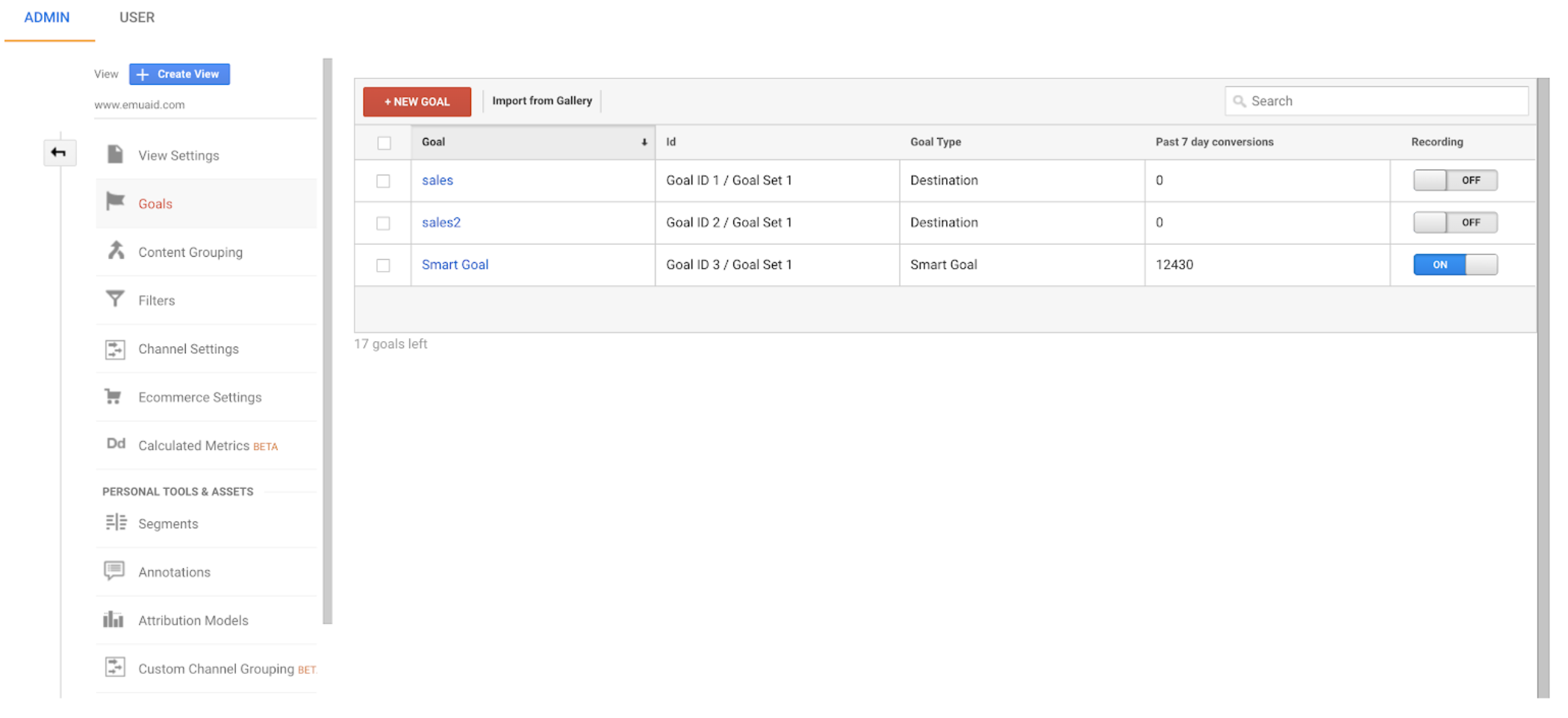
To fully understand the success of your website efforts, you must have accurate data. There are many issues that come from incorrect data or lack of data. I’ll be speaking specifically about Google Analytics in this section. The first step is to review the goals that are set up within your view. Ask yourself, are these goals valuable? Do they represent my team’s KPIs? Does this information help us track revenue and ROI?
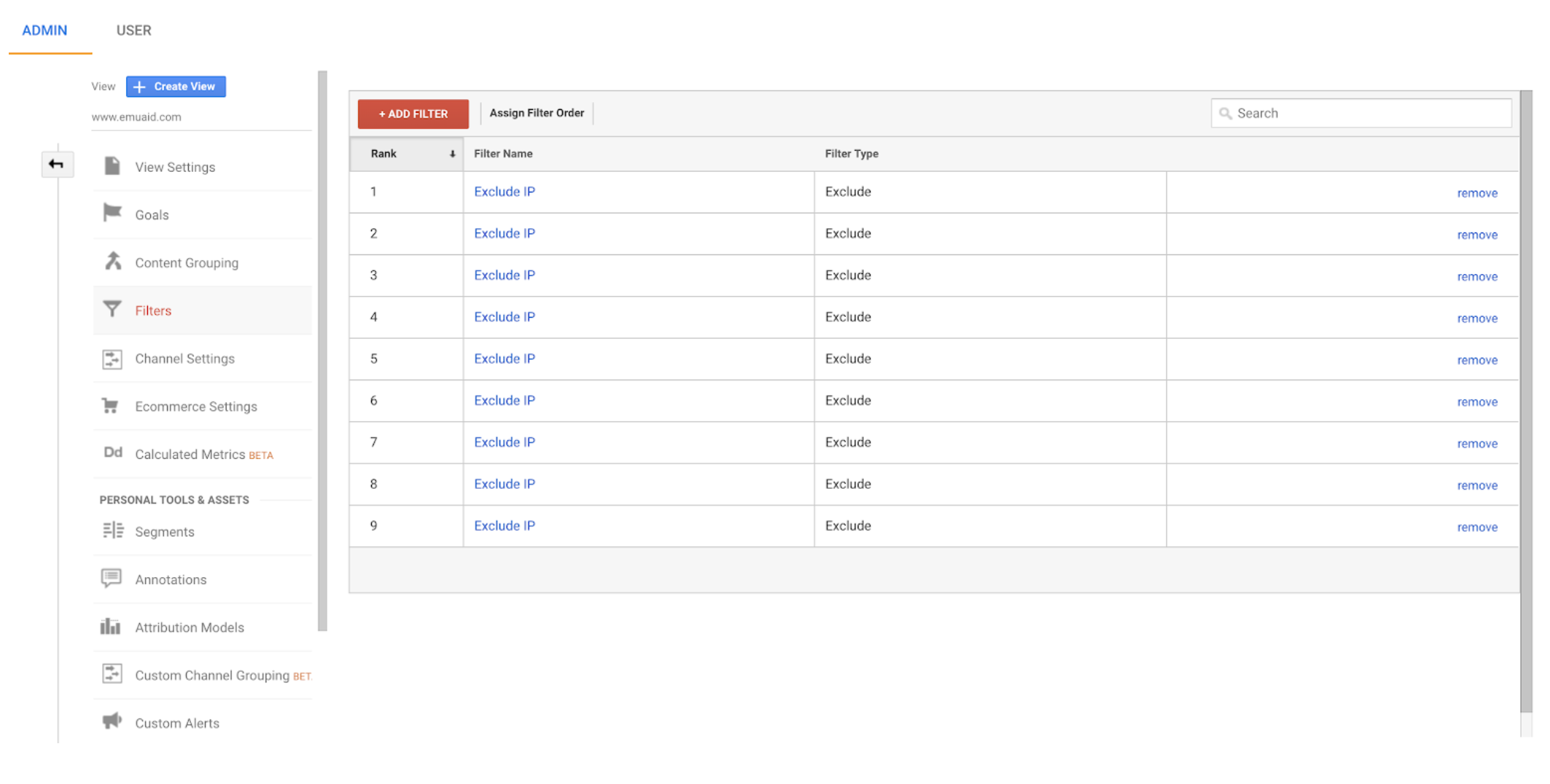
After you’ve ensured your goals are tracking the exact data you’re after, check on your filters tab within your reporting view and review your filters. If it’s not currently added, take your company’s IP address and add it as a filter to your view. You don’t want all the times employees viewed your website pages to skew your data.
Once you’ve properly filtered your IP, go back to your home tab and view your traffic channels located under the ‘All Traffic’ dropdown in your ‘Acquisition’ tab. What is the traffic distribution of your channels? If your direct, other, or not set channels have a traffic percentage larger than 5% then there is a possibility of a tracking error across your website. A possible issue is that you have a login page on your website and haven’t included current users as an excluded filter.
Next, check your organic traffic over the past few years. Are there any major dips in traffic? If there is anything substantial, your website may have experienced a penalty in the past. Gather as much information as you can from past penalties and determine how they were resolved.
The last step to verify all traffic is being recorded properly is to use GAchecker.com. This tool allows you to see if any pages across your website don’t have your UA tracking code. Ensure all the website pages that you want tracked are included in the list of pages with the tracking code.
Indexation
Once you’ve verified that Google Analytics is set up correctly, you’ll need to verify that your website is being indexed in Google. The first items to check are your robots.txt file and sitemap. The robots.txt file can usually be found by typing yourdomain.com/robots.txt. Your robots.txt file should look something like this:
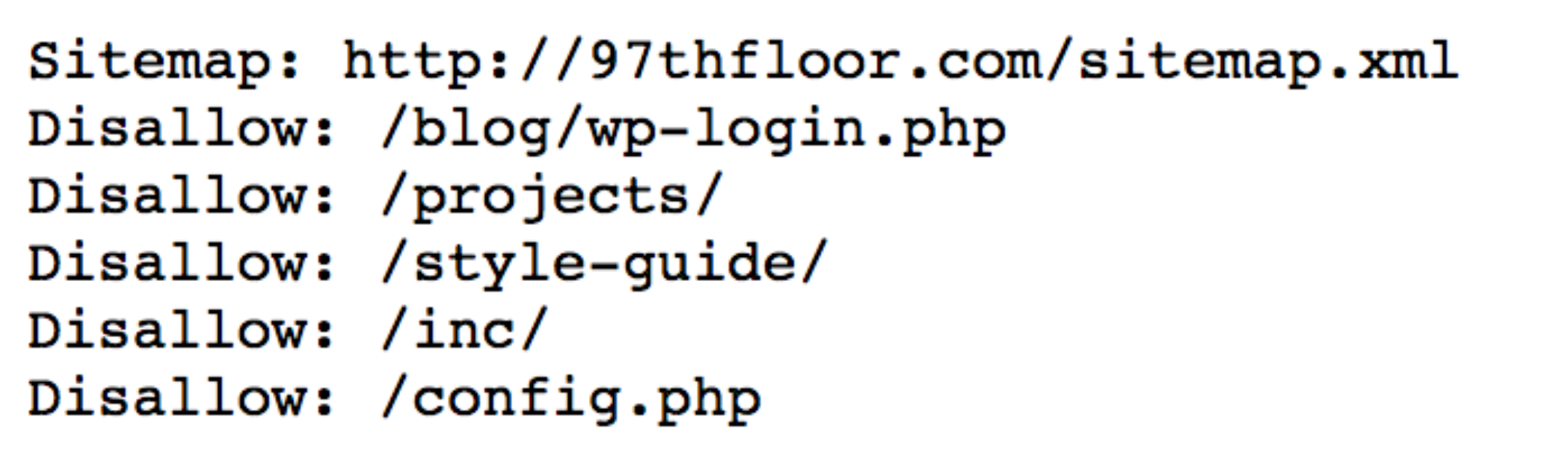
Your robots.txt file tells Google bots what they should and shouldn’t index on your website. Any pages that you don’t want showing up in the SERPs should be added as a Disallow. Such pages include: login pages, internal assets, or any page not needing indexation by Google’s search engine. In the robots.txt file, you also want your sitemap listed for Google bots to easily locate and crawl.
What is a sitemap? A sitemap is your website’s repository of pages, neatly compiled for Google’s bots to crawl. In short, a sitemap is the file that can help Google bots navigate your website and find pages that you want indexed. Even without this file, Google can still crawl and index your website’s pages, but with a sitemap, you can make your pages easier to crawl and improve your chances of sending Google to the right pages.
Another indexation problem that I have seen across a majority of sites is duplicate content. Duplicate content can happen in multiple ways and may cause Google to drop your keyword rankings because it’s not sure which page should rank for certain keywords. The first duplication issues to check are the URLs. Are there variations of the same page that are pulling up a 200 status code instead of redirecting to one page? Examples of potential duplicate URLs are below.
Each of these pages is the same, yet they show up as different URLs. This could be happening across your website and there are two ways to fix this issue. The first solution is to set up site-wide redirects to send any variation of a URL to one specific designation. If your website is ‘HTTPS’ without ‘www’ and contains a trailing slash, then set up all variations to redirect to https://yourdomain.com/.
If you’re unable to set up 301 redirects due to the platform you’re using, or if you need to keep those pages, then set up a rel=canonical tag. The rel=canonical tag signals to Google that a given page is a duplicate page, but to reference the rel=canonical URL as the first and main page when indexing.
Another problem that lowers your chance of showing up in Google SERPs is JavaScript. Google has a hard time reading JavaScript, so if you have on-page elements in JavaScript, it’s possible they may not show up for Google bots. Hubspot’s Matthew Barby explained this issue in describing a robust content category page that his team built that wasn’t showing up in Google’s SERPs. In troubleshooting the issue, they used a JavaScript Switcher extension to see what the page showed to Google and saw nothing. After recognizing this error, with a few tweaks to the page, they were able to rank for their focus keywords.
One of the last steps in reviewing the indexation of your website is checking your mobile-friendliness. Use Google’s Mobile-Friendly Test to see how Google values your mobile pages. With Google’s mobile-first index, the content on the mobile version of your website is going to affect how Google ranks your pages. If you’re not serving a mobile-friendly page, then you could be hurting your rankings.
After reviewing your analytics and the indexation of your website pages, it’s time to dig into the content on your website. When Google is crawling your website pages, you want to ensure everything is in working order and optimized to match the search intent behind searchers’ queries. When reviewing your on-page content, using Screaming Frog will help you uncover issues involving meta information. Run your domain through Screaming Frog’s spider tool and review the items below:
The last step in your SEO website audit is to review additional technical aspects of your website that might improve your website’s rankings. Identifying and fixing major technical issues on your website can be the difference between ranking at the top of page two, or reaching the top of page one in Google’s SERPs.
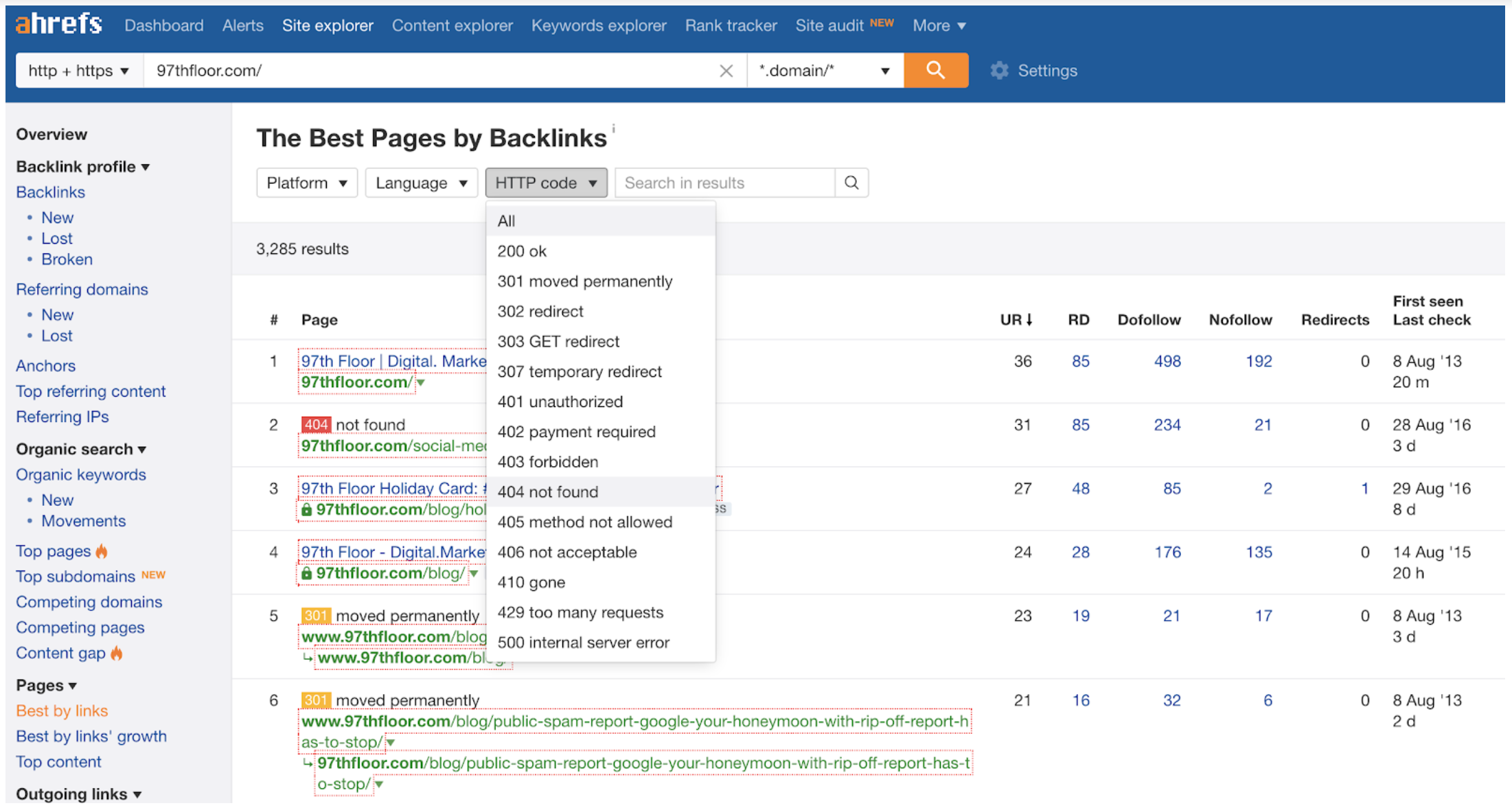
There are a few common mistakes made when conducting website audits. Look out for the following:
Keep an eye out for these pitfalls as you conduct your own website audit. They’re easily avoidable when you know what to look for.
Before you begin diving into new content and off-page optimizations, review this audit list to ensure the site’s health is in top shape. Once your site’s technical issues are in order, then you’ll be ready to crank out new content.
Backlinks have always played a central role in SEO. But as search evolves, the types of backlinks that truly move the needle have changed. Authority alone isn’t enough. Relevance alone isn’t enough. And shortcuts that once seemed harmless now come with real risks.
The best SEO backlinks today are the ones that demonstrate trust, expertise, and real value to users. They come from sites that operate with high editorial standards, have real audiences, and treat links as references instead of transactions.
In this guide, we’ll walk through the full landscape of what the best backlinks look like in today’s environment, how Google and AI systems evaluate link quality, and the practical steps teams can take to earn backlinks consistently. We’ll also break down strategies, examples, and pitfalls to help you build a backlink plan that’s safe, effective, and scalable.
The best SEO backlinks are links from reputable and contextually relevant websites that point to your content because they interpret it to serve a clear purpose. That purpose might be educating readers, providing a unique data point, offering a fresh perspective, or supporting a larger narrative. Regardless of the specific reason, high-value backlinks function as editorial endorsements. They signal that your content is useful to viewers.
Backlinks remain one of the strongest indicators search engines use to evaluate the overall quality and reliability of a page. Google wants to surface information that people can trust, and backlinks help demonstrate that trust at scale. When authoritative sites consistently link to your resources, it strengthens the case that your content:
Here are the specific areas high-value backlinks help shape:
A backlink from a credible site acts as a vote of confidence. The more reliable the linking site, the stronger the trust signal you earn.
Links from relevant domains help establish what your site is about. This strengthens your presence within a topic cluster and reinforces your authority in that specific area.
When respected publications or brands reference your work, it positions your organization as an authoritative voice in your field.
Links often appear when your content is genuinely helpful. Search engines notice this pattern. When real people rely on your content, algorithms tend to do the same.
These signals have a heavy influence on rankings. Backlinks strengthen your entity profile, help AI systems understand what your brand represents, and improve how your content appears across emerging search surfaces. A single high-value backlink from a relevant, authoritative source can outperform dozens of lower-quality links, which is why quality-driven link building is more important now than ever.
Search engines and users both rely on certain characteristics to determine whether a backlink is trustworthy. The more of these qualities a link possesses, the more value it’s likely to provide. Here are a few of the most important qualities to pay attention to when adding backlinks.
Relevance is the foundation of link quality. A backlink from a site that operates within your niche carries far more weight than a link from a topically unrelated domain. Relevance confirms that your content belongs in the conversation and reinforces your association with the subject matter.
Authoritative backlinks come from well-established organizations that demonstrate expertise, editorial oversight, and clear quality standards. This includes major publications, universities, nonprofits, reputable companies, and industry-leading blogs.
The best backlinks can drive real visitors. If a link sits on a page that attracts meaningful traffic, the value is compounded. Search engines can detect when humans interact with your content, and referral traffic is a powerful indicator that the link is genuinely helpful.
Where a link appears matters. Links integrated directly inside informative content carry significantly more weight than links placed in author bios, footers, or lists with no contextual relevance. Search engines understand this difference, and readers do too.
If the page linking to you isn’t indexed by Google, it cannot pass authority. This is an often-overlooked element of link evaluation, but it’s essential. Even the highest-quality link is ineffective if search engines can’t crawl the source page.
Search engines consider the broader “neighborhood” a link lives in. If the linking site is surrounded by low-quality outbound links, link-selling schemes, or spam-heavy patterns, its credibility declines. The company your link keeps matters.
Google’s link evaluation has evolved significantly. Now, it focuses heavily on signals that indicate whether a link genuinely benefits users. Backlinks created solely to manipulate PageRank or boost rankings artificially are considered violations of Google’s guidelines, and patterns of these links can trigger penalties, algorithmic or manual.
Google evaluates link quality based on several factors:
A link from a topical neighbor carries more weight than a link from an unrelated source. Topical mismatch often signals artificial behavior.
Links that appear on sites with strong editorial standards are treated as more trustworthy. Google looks for signs that content is reviewed, moderated, and held to quality expectations.
Contextual positioning within the main body of an article is preferred. Links buried in sidebars, footers, or author bios are treated as lower-value.
A healthy backlink profile includes a variety of unique domains. Hundreds of links from the same site rarely indicate popularity or usefulness — more often, they suggest manipulation.
If Google can’t index the linking page, it can’t evaluate or pass any authority from it.
Patterns like excessive guest posting, scaled link schemes, article farms, or bought placements are easy for Google to detect. These tactics erode trust and invite risk.
The takeaway: strategies built on shortcuts or rapid link accumulation tend to lose ground quickly. Quality-first link-building remains the most sustainable approach.
Understanding what makes the best seo backlinks high-value is one thing. Actually earning those links, at scale, is another challenge entirely. There are dozens of ways to build links, but only a handful consistently deliver relevant, trustworthy, and sustainable results.
Guest posting is one of them.
Guest posting isn’t perfect, and like all link acquisition methods, it has its risks. In May, Google released a statement regarding poor-quality links found in contributor posts. Google warns that when the main intent is to build links in a large-scale way back to the author’s site, these practices are in violation of Google’s Guidelines. However, Google does not officially discourage guest posting, stating, “Google does not discourage these types of articles in cases when they inform users, educate another site’s audience, or bring awareness to your cause or company.”
So what’s the best way to gain backlinks through guest posting? Here are a few tips that stay within Google’s guidelines, benefit site owners, and most of all, provide results for your SEO efforts.
It is crucial to find sites within your niche or industry. Nothing screams spam like getting backlinks from a completely irrelevant site. For example, if you sell barn doors, then you want to get backlinks from sites about home improvement, interior designers, DIY blogs, etc. You wouldn’t want backlinks from sites about video games or fitness. The more relevant the site linking back to your site is, the more natural it will appear to Google.
So, how do you find sites to post to? There are numerous paid tools you can use to find sites. However, simply using Google Search can produce excellent results. Use search parameters in Google to narrow your search. These are a couple of search parameters that you can use:
By replacing keyword with your keyword, you’ll start to find sites that accept contributors. Again, ensure that these sites are relevant to your niche or industry. There are a lot of spam sites that will accept anything. You want to avoid these sites.
It’s important to evaluate your outreach strategy and adapt as necessary. Vary your search parameters depending on what results you’re finding and the niche or industry that you’re outreaching for. Simply switching between “insite” to “inurl” will display different results. If you’re still not finding sites, then just try a good old-fashioned Google Search without any search parameters. This usually produces a broader range of sites, but that might be just right for your industry.
The first thing to look for on a site that accepts guest posts is the posting guidelines. This usually gives a good idea about what the site expects from you and what you can expect from them. In addition, most guidelines will say something about including backlinks in your post. Some sites will not accept any articles with links, while other sites will remove links if they appear to be spammy. Never reach out to sites that ask for money in exchange for backlinks. This is specifically against Google’s guidelines, and if done enough, the site could be penalized.
Next, check the domain authority (DA) of the site. As a rule of thumb, never reach out to sites with a DA below 20. You want to be looking for high-quality sites. Sites that have a DA below 20 typically will not be the quality that you're looking for, and will pass less authority to your site.
Check to make sure the links are followed and the blog posts are indexed. You can do this manually by checking the source code for nofollow or noindex tags. If the site has a decent DA but has nofollow links, you can still reach out and contribute to this site. Diversifying your backlink profile with follow and nofollow links will appear more natural to Google, and ultimately help your ranking strategy. However, there is essentially no value in a noindex blog post. Avoid these sites, as they will not help your strategy.
After you’ve thoroughly qualified the site, reach out to the website via email. This can usually be done through a contact form on the site. However, you’ll be more successful if you can find a contact email on the site. This can take some digging, but if you can contact an actual person, you’ll have a greater chance of getting a response back.
Try to be as personable and specific as possible when reaching out to new sites. There are a few things that you should include in each email. Let the contact know that you aim to provide free high-quality content to their site. Follow this up by adding some ideas for future articles. Also, provide the contact links to your previously published work so that they have a sample of your writing. If you don’t have any published work yet, you can post for free on Medium or Kinja and send them links to those pieces. Most importantly, display thorough knowledge and enthusiasm about their site. Webmasters like to know that their site is enjoyable to users.
This is perhaps the most important step. Poor quality content is the number one reason that content partnerships end. Ensuring that your content, as Google states, “informs users, educates another site’s audience or brings awareness to your cause or company,” will keep your partnership happy and be an ongoing resource for you to gain backlinks.
There are ways to acquire backlinks that might seem easier than guest posting. However, what you sacrifice for ease of use is typically quality of content and quality of backlinks, which isn’t worth the risk of getting penalized. Guest posting can be time-consuming, but when following these steps, it will provide the best and safest ROI.
Not every backlink is worth the effort. Some can actively harm your visibility and credibility, even when they look harmless on the surface. Most teams already know to avoid the obvious pitfalls (spam sites, link farms, paid placements, etc.), but risky link tactics often show up in more subtle ways. These patterns can gradually weaken your backlink profile and create signals that search engines interpret as manipulative.
One of the most common issues is buying backlinks from lists or marketplaces. If a site openly sells links, it’s already on Google’s radar. Even a single placement on a known link-selling domain can dilute the strength of your overall profile. Scaled guest posting can be equally harmful when it lacks editorial oversight. Google doesn’t penalize guest posting itself, but it does penalize repetitive, low-quality content spread across unrelated sites with identical anchor text patterns.
Anchor text misuse is another red flag. When links consistently use the same exact-match phrasing, it signals manipulation rather than natural citation. Low-quality directories fall into a similar category. A few reputable listings can help support local visibility, but hundreds of generic or irrelevant directories don’t provide meaningful value; they only clutter your profile.
Finally, reciprocal link schemes continue to cause issues for teams trying to grow quickly. “I’ll link to you if you link to me” might feel efficient in the moment, but it remains a clear violation of Google’s guidelines and is easy for algorithms to detect.
Sustainable backlink strategies are built on relevance, usefulness, and genuine connections between brands and audiences. When your link-building efforts prioritize value over volume, you gain stronger rankings, more defensible authority, and long-term momentum that lasts.
Strong backlink programs require expertise and a clear understanding of what actually works in today’s search environment. If your team is ready to earn backlinks that strengthen your authority, improve your visibility, and support long-term organic growth, we can help.
We’ve built backlink strategies for some of the world’s most ambitious brands, and we know what it takes to earn links that last. Let’s build something great together.
Lead-generation is a core component of a B2B marketing strategy. However, many businesses struggle to improve lead quality and quantity. Specifically, a survey from ActOn found 37% of SMBs struggle to convert web visitors into leads. While a low conversion rate can be caused by driving the wrong traffic to the site or by pursuing the wrong marketing strategy or having a poorly optimized page, many businesses will benefit most by building a more robust lead-gen strategy first.
Small businesses frequently start their lead generation by creating a core offer to garner interest in their product. These end-of-funnel offers-- free trial, free quote, free consultation, contact us-- are essential components to a lead-gen strategy. However, for businesses with longer marketing and sales cycles, having only these types of offers is a missed opportunity to capture and nurture leads.
In fact, if you have a robust top-of-funnel content marketing strategy in place with a low conversion rate, adding an offer of relevant mid-funnel content can significantly increase your conversion rate. For example, one 97th Floor client had a robust content marketing and SEO strategy driving qualified traffic to the site. Its “Free Trial” offer brought in a good number of leads, but overall, the conversion rate of the site was extremely low.
We decided to test creating an ebook and placing the offer in hyper-relevant locations on the website. Within the first two months the conversion rate for organic traffic increased 3x, and months later the site retained that conversion rate. After the success of the first ebook, we created another gated offer that was relevant to other high traffic content pieces. Organic conversions increased by 43% and were maintained long-term.
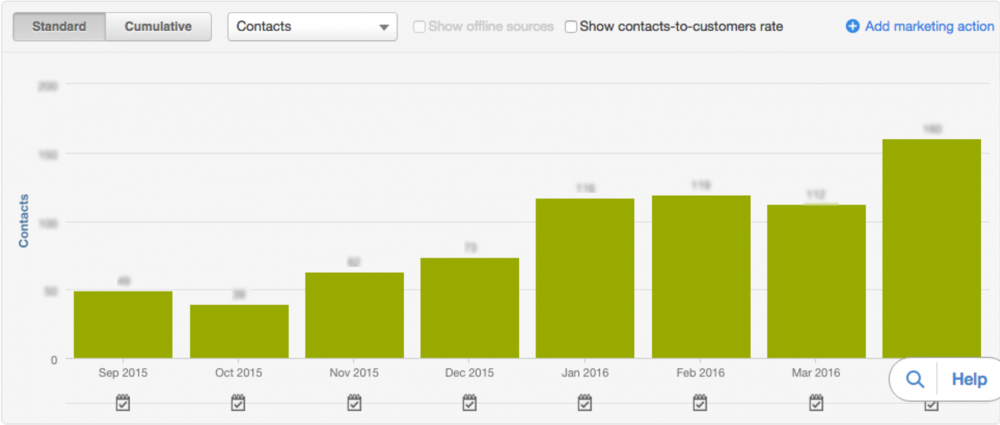
While having mid-funnel content was a key component to the campaign’s success, having effective content was the most critical component for driving quality leads. Many marketers would agree that content marketing is an extremely effective lead-gen tactic. However, it can also be the most difficult to execute well. After all, good content should be unique and insightful while nurturing potential customers all at the same time.
So what process can you follow to create effective lead-gen content?
In the case study cited above, we found there were 3 core questions a buyer needed to answer before making a purchase decision. The majority of that information was difficult to find, requiring visiting multiple websites and fitting pieces of information together while navigating a plethora of buzzwords. The ebook we created offered a comprehensive buyer’s guide that provided a framework for answering those questions and compiled all of the necessary information into a single location.
Content mapping is not a new concept, but many businesses fail to understand how crucial it is. Content should be mapped not just to the stage in the buyer’s journey, but also based on the information the visitor is consuming at the time.
For example, if a visitor comes to your website via a blog post titled “What is content marketing and why does it matter?” an ebook about “How to Optimize Title Tags” is not nearly as relevant as an ebook on “How to Develop Your First Content Marketing Strategy.”
In the case study above, the main CTA to the buyer’s guide was placed on a page with a competitor comparison matrix. Visitors who arrived on that page were already looking for information to help them make a purchase decision, so a comprehensive buyer’s guide was a compelling offer for those visitors. So compelling, in fact, that the click-to-submission rate ranged from 50-65%
Many traditional marketing activities- webinars, trade shows, purchased lists- are one-and-done activities. Once the event is over, it doesn’t continue to generate leads. If the business needs more leads, it has to attend another trade show or produce and promote a new webinar. Gated content, however, can produce a long-term conversion funnel if you create the content with that intention.
Content typically dies because it:
The secret, then, to creating a long-term conversion funnel is to create content that will still be useful to a buyer two years from now and is tied to organic traffic coming to your website. In the buyer’s guide case study, the conversion rate was maintained because SEO was the primary content promotion strategy with only a small percentage of leads coming from social or paid channels.
There is no one-size-fits-all solution in marketing, but by following the principles above you’ll be able to create effective lead-gen content and test whether mid-funnel conversions can have a significant impact on marketing ROI.
You finally took that leap and launched your own healthcare practice. It took grit and guts to get there, and it’ll take grit and guts to keep it going. Now that it’s open, you need to find a continuous flow of patients to fill your practice and keep your business above ground. Or, maybe you've been practicing for a while but are ready to scale and bring your practice to new heights. Regardless of the circumstance, there are some bulletproof healthcare marketing strategies that will get new patients flowing in your doors from a digital audience.
A healthcare marketing strategy defines how healthcare organizations attract patients, build trust, and drive engagement across digital channels while staying compliant.
Unlike general marketing, healthcare marketing prioritizes clarity, accuracy, and confidence at every touchpoint. Patients are not just comparing services. They are evaluating trust, expertise, and ease of access at every step of their customer journey.
A modern digital marketing strategy for healthcare brings together SEO, local visibility, content, and reputation management to support the full patient journey. When executed well, healthcare marketing functions as an extension of your patients’ experience.
Below I've distilled some healthcare marketing ideas and techniques you should be looking into in order to increase the relevance of your healthcare practice online.
Your site is likely the first interaction your potential clients will have with your healthcare brand online. A sloppy, buggy, or thrown-together website can give the impression that your practice is also sloppy, buggy, and thrown-together. In order to nail this first impression, be sure to invest in a well-crafted, visually appealing site that is easy to navigate, provides useful information, and demonstrates your practice’s expertise. A good site is the foundation of an influential online presence.
It should go without saying, but your site needs to look professional and inviting. In today’s digital age there are many avenues to building a website. Though it’s tempting, it’s worth investing in quality over budget when it comes to your site design. In addition to the fact that the average user sees quickly through cheap site design, a good site structure is essential to keep up with your healthcare business as your company scales. It’s important that your site reflects the top notch service and quality you provide.
The good news for you: many of the healthcare sites out there look quite outdated. By updating or creating a well designed site, you can stand out with relative ease.
When people get to your site, it’s for a specific purpose. In your case, people are looking for a healthcare provider that they can trust, with answers to questions only a doctor can answer. They have a specific problem, and they are looking for solutions.
If your website isn’t clear about the value each page brings (or worse, it promises value but doesn’t deliver) that confusion will reflect poorly on your practice. Be clear, be helpful, and put the user-- your potential patient-- first.
Facebook ads can be powerful for your healthcare marketing strategy, but you’ll need to put some thought and strategy into them. The FB ad platform isn’t one that typically brings results by blasting as many users as possible with your ads. The power comes instead from the very specific, granular targeting that can be done. Maybe you focus on sports medicine and want to run a campaign targeted to men and women, aged 20-40, with a particular interest in CrossFit. On Facebook, that’s easy. What if your practice caters to a higher-end clientele? No problem, you can target via income, net worth, home value, location, etc.
Paid social media marketing, such as with Facebook Ads, can be a powerful tool in an online strategy. The key is running tailored campaigns to specific personas. As you refine who you are targeting, you can lower your overall cost of running ads because you aren’t wasting money commercializing to people who will have little interest. To help get you thinking of what campaigns you should run on Facebook, here are some of the targeting options.
If you are embarking on running some social media ads yourself, be sure to read up on all the ins and outs of Facebook’s ad platform and how to use it. There are many options and it is easy to get overwhelmed on your first go. Adspresso has a great guide to get you jump started that can be found here.
Most industries have directories that list professionals within their industry. These directories often put in a lot of time and money in order to rank well for many profitable keywords, which means they are a resource you can use to increase the weight of your own domains. Use these healthcare directories to your benefit while you are getting your site ranked for your chosen keywords.
In most instances, directories will be free (or cheap) and have an easy to fill out form. You will use the form to submit information about your practice to be posted on the public directory.
For example, Healthgrades.com has a comprehensive directory that you should leverage to your advantage. It ranks for many healthcare-focused keywords.
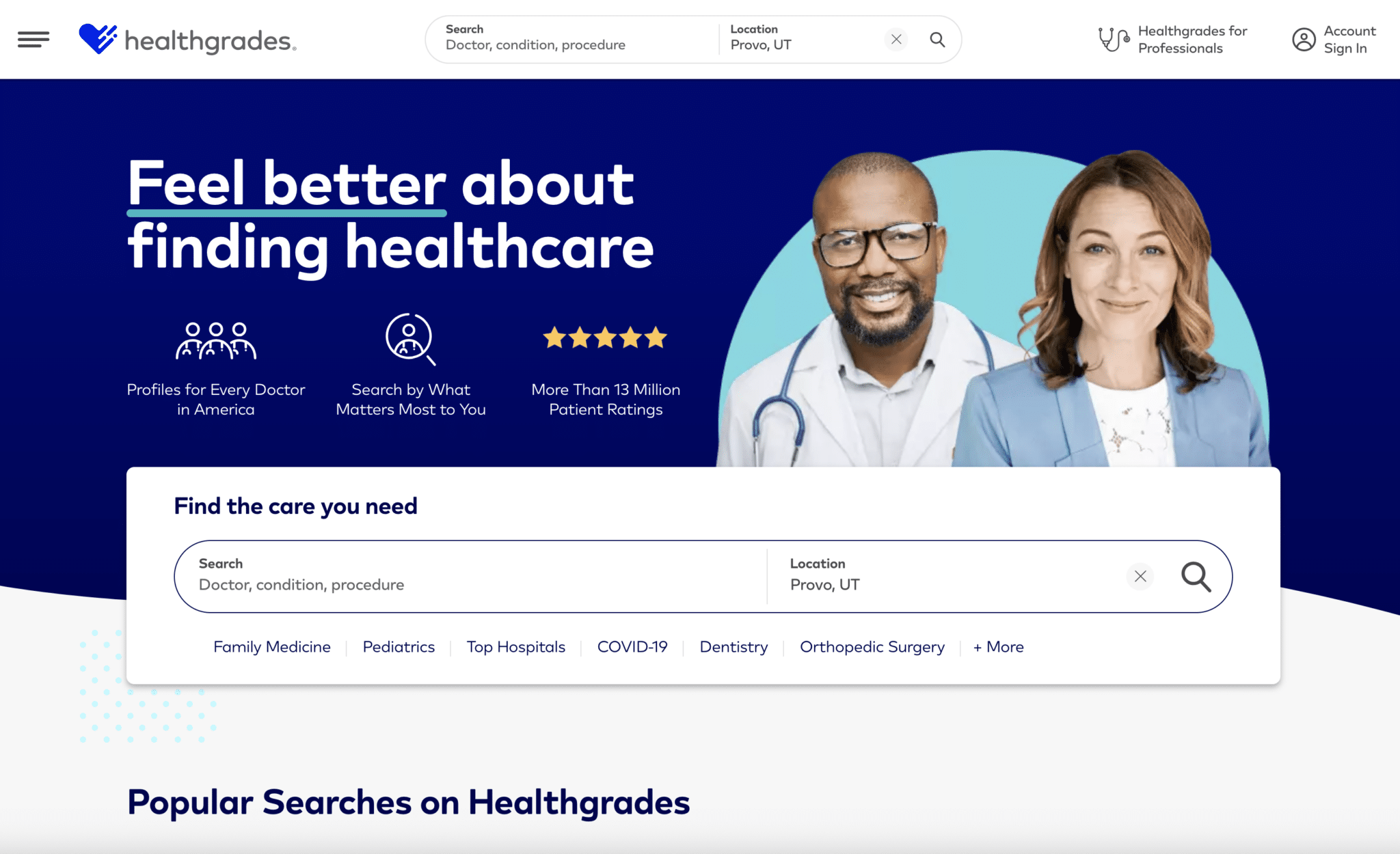
You can create a free Healthgrades.com profile here. It will look something like this:
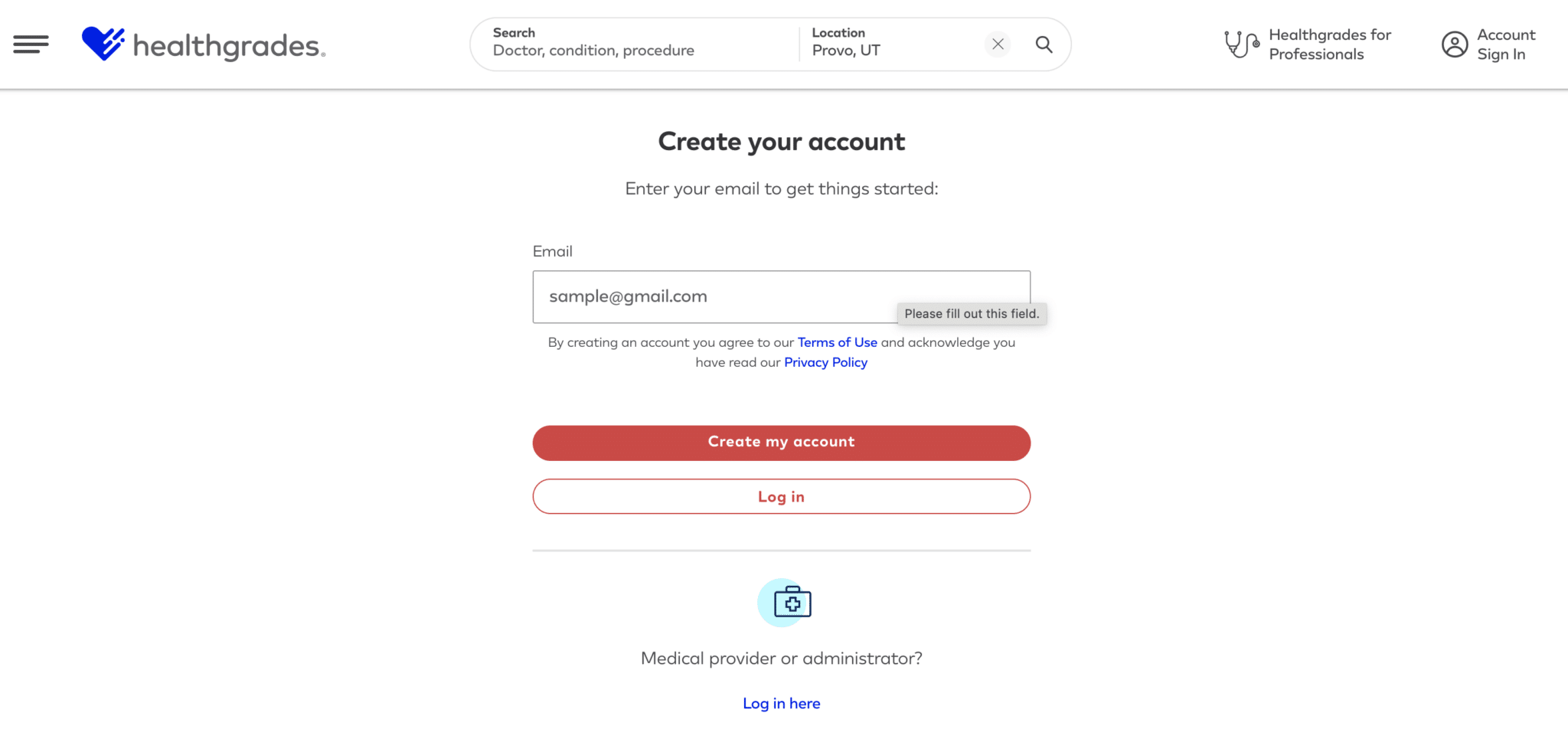
This is a great way to take advantage of all the hard work Healthgrades has put into their site and rankings. And, it’s mutually beneficial. Healthgrades relies on healthcare practices to add themselves to these lists, and you rely on them to aid your ranking positions and lead generation.
Here are a few more healthcare directories that you should be on:
All of the above directories rank for many “healthcare provider in...” type keywords. If this method works for you, don’t stop there! There are many more directories with online clout than the ones listed above. Do a quick search for “healthcare provider in” + “city” to see which directories show up for the city you want to rank for. Be sure to leverage the directories that rank for your target terms first.
Google My Business is incredibly important if you want to show up for local results in Google. I’m sure you’ve seen local results many times, but maybe you didn’t realize it was a part of the Google algorithm that you can leverage. Here’s what a local result looks like when you search “chiropractor SLC”:
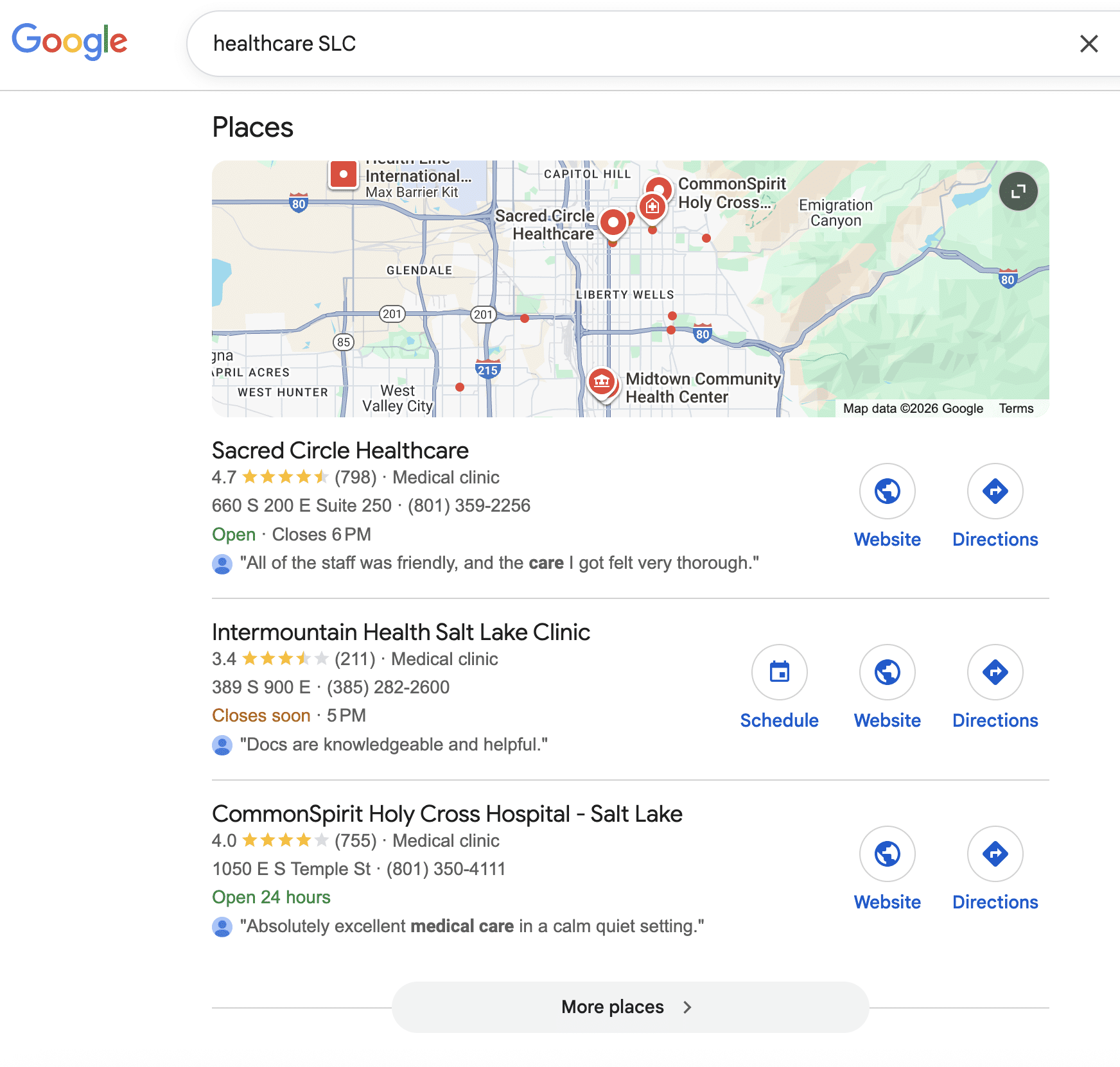
The local box will show different businesses that fit what you are looking for. There are many factors that go into showing up for these, but Google tells us that it comes down to 3 core factors:
So what exactly does Google mean by these?
Relevance is pretty self-explanatory. It refers to how closely your local business listing matches the search someone types in. By doing a thorough job filling out Google My Business and optimizing it to match the queries you want to rank for, you’ll increase in relevance.
Another pretty easy one, distance illustrates how far a person is from your business. In a recent report from Hitwise, it is reported that nearly 60% of searches are now performed through a mobile device. Google will calculate where a user is through their device and use this distance as a factor when providing results.
This is the part where optimization comes in. Prominence tries to gauge how prominent your business is in the offline world and reflect that in local listings.
Many factors are taken into consideration here. Links, local citations, reviews, and your position in traditional SEO results all factor into how “prominent” you are.
You need to verify your business with Google My Business. This is a fairly easy process. After you set up your Google My Business page, Google will send you a postcard with a verification code. You will then enter the code into Google My Business to verify your business listing.
Next, make sure all of your details are up to date and add 3-5 pictures of your business.
After you’ve added some great photos of your business, double check the category that you’ve declared for your business within Google My Business. It is important that you have categorized your business properly.
Thoughtfully fill in your introduction and title of your business in Google My Business so that it represents your business well.
Reviews are very important in local search marketing. Read and thoughtfully respond to reviews about your business. Reviews can make a huge impact on your business for better or for worse. It is beneficial to keep them under control through responding and genuinely taking care of your customers.
Citations are your mentions on various directories on the web. These directories are sites such as Yelp, The Yellow Pages, dexknows.com, chirodirectory.com and more. Building these by hand can take a lot of time, so many companies hire out for citation building.
If you embark on building citations by yourself, make sure you keep all of your information consistent across all of the directories you submit to. Nothing is worse than getting a bunch of citations that have conflicting phone numbers or addresses that you need to go through and clean up.
Traditional SEO for a healthcare practice, sometimes searched online as healthcare SEO, can be immensely powerful. SEO for those who are unfamiliar stands for “search engine optimization.” It is the act of optimizing the elements of your site so that you rank better (closer to the top) within search engines. The idea is that if you are a healthcare provider in Las Vegas, then you want to show up when someone searches “healthcare Las Vegas” within Google or other search engines. And, you want to show up as closely to the top as possible, so more users will click to your site over your competitors’. Performing SEO for your healthcare practice will do more than just generate customers, it will help you build a brand. Here are some of the benefits to investing in SEO.
As a healthcare provider, you are highly skilled in an area where most other people are not. Furthermore, you invested good money in becoming an expert at your craft. Use that expertise to grow your brand through content marketing.
What do I mean by content marketing? You should be consistently publishing content that brings value to your potential patients in a way that only you, as the expert, can. If you’re wondering: “Well, what should I write about?” This is where the keyword research that I mentioned earlier comes in. Keyword research will teach you what people are searching for and how many people are searching for it. In many cases, these search terms represent the questions that your potential patients have for you.
For example, if someone is experiencing upper back pain, they may search “upper back pain” in Google in order to research what the causes could be. Here is a snapshot of what the traffic looks like for some keywords regarding upper back pain.
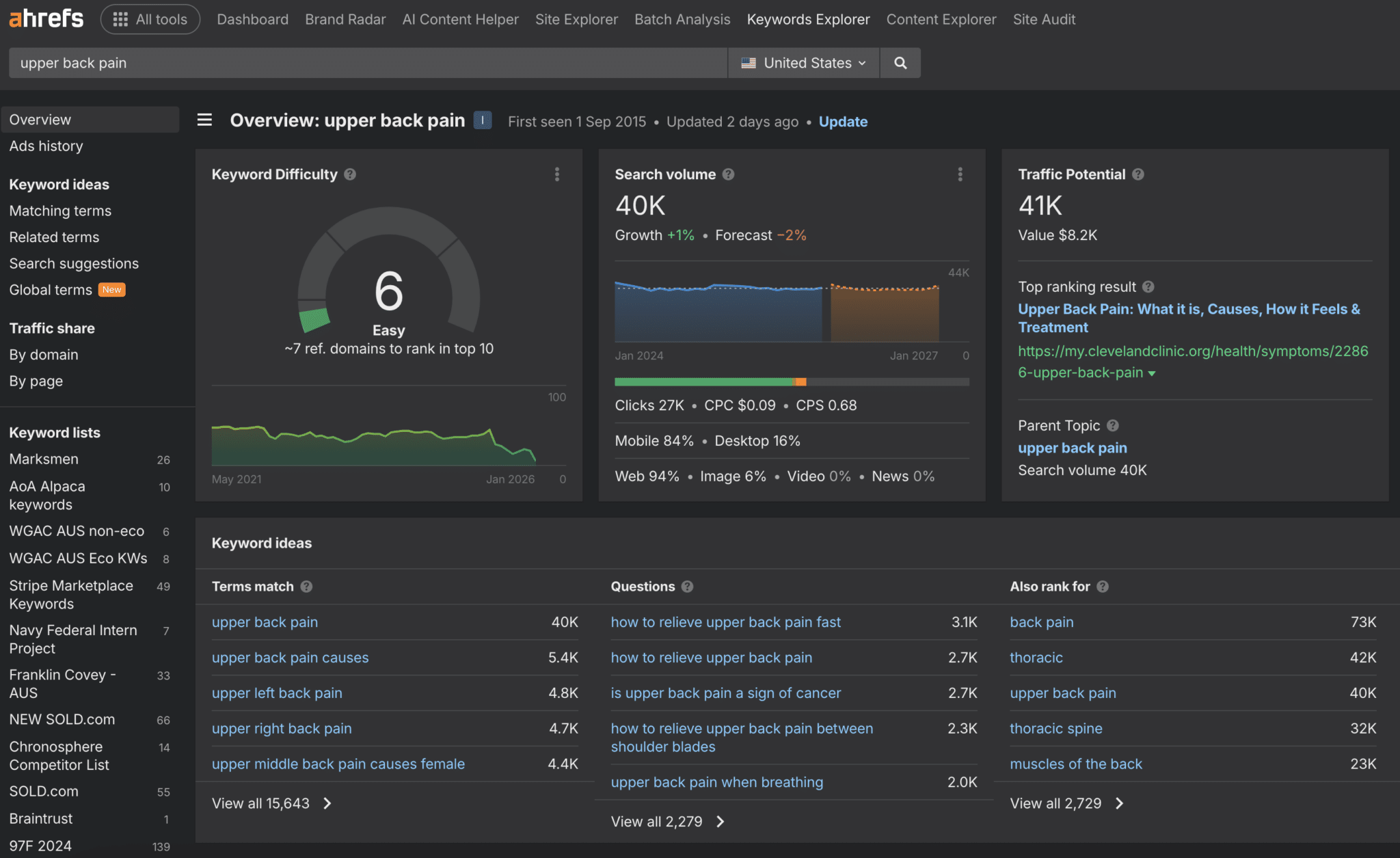
Quick notes -
As you can see in this example, there are many people searching for the keyword “upper back pain” or some variant of it. We also learn that these keywords have relatively low difficulty being in the 20-30 range (out of 100, 100 being the most difficult).
If you, as a healthcare provider, created a piece of content regarding “upper back pain” and optimized it for the above terms, you could begin generating quite a bit of online exposure.
As you begin to show up for searches in Google you will be seen as an authority. The more searches you rank for, the more people will associate you as an authority.
A great example of this is Dr. Josh Axe of Draxe.com. Dr. Axe began by founding the Exodus Health Center in Nashville, helping thousands of families reclaim their lives through improving their health. Furthermore, Josh helped his own mother reclaim her health and beat breast and lung cancer. Realizing that he has a special set of skills, he set out to help more people using the amplification of the internet.
When Dr. Axe started early on, he wrote many pieces of content and published them on his site. Dr. Axe began ranking for many keywords and has since grown to become the “second-most-visited natural health website in the world.”
Here is Dr. Axe’s current site:
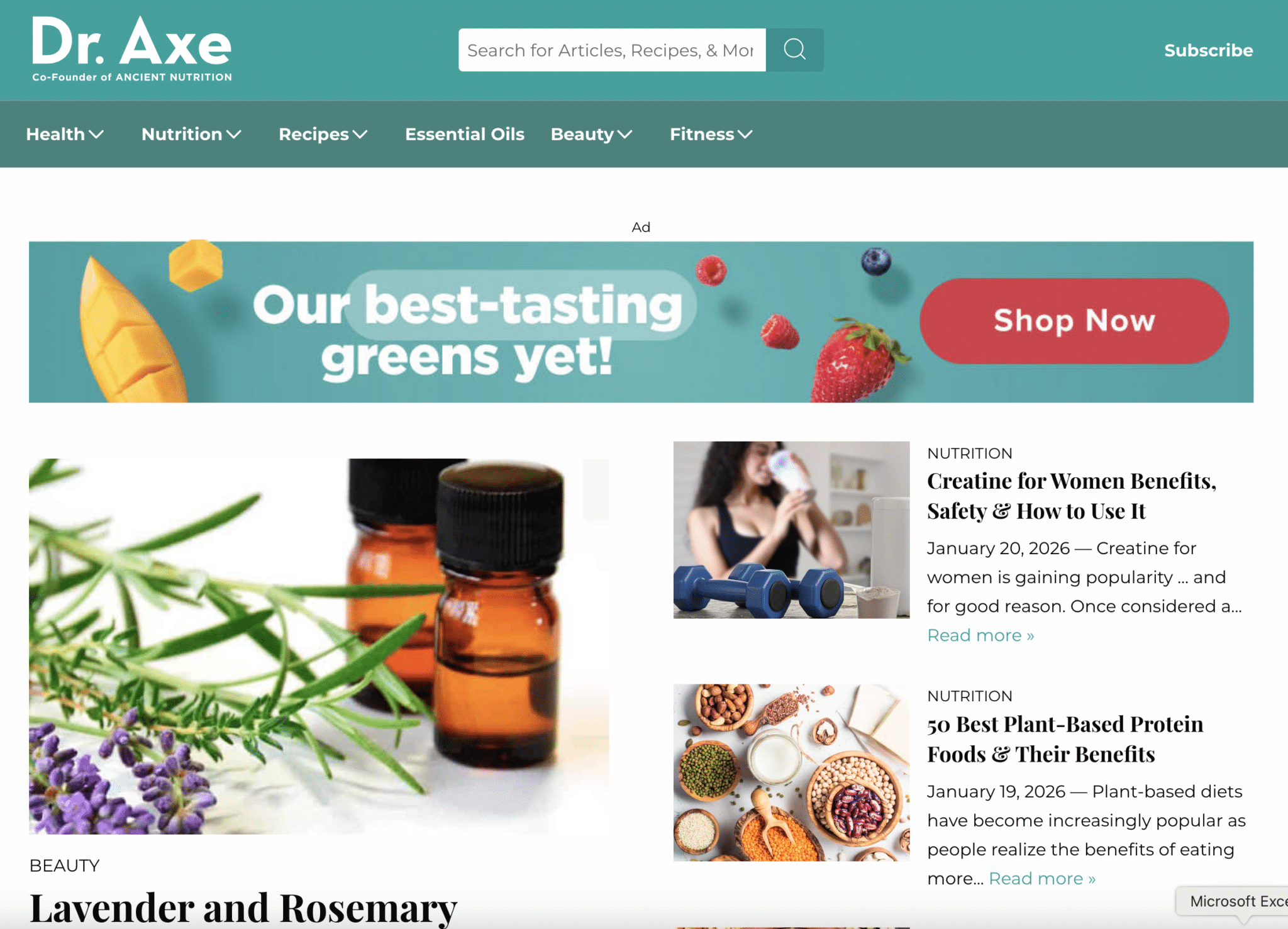
Josh’s site currently ranks for over 1.6 million keywords and generates over 7.5 million monthly visitors (as per Ahrefs).
Dr. Axe is an inspiring case study of what can be done through the leverage of SEO to build a strong brand with immense authority.
Managing your reputation online is at the heart of retaining a good brand image. Google your brand frequently to see what people are saying about you. Better yet, create a Google Alert for your brand name and be notified each time you are mentioned. This way you can jump in and resolve concerns and strengthen your brand.
Patients often research providers across search results, review platforms, and third-party healthcare directories. Monitoring what appears in these spaces helps organizations understand how they are perceived and where gaps in trust may exist. A strong healthcare marketing strategy includes proactive brand monitoring.
Give thoughtful responses to reviews and mentions to show your accountability and reinforce credibility, which is especially valuable when patients are evaluating alternative care options. Over time, this consistency supports a more resilient healthcare marketing strategy by building confidence across digital touchpoints.
For many patients, the first interaction with a healthcare organization happens online. This is often referred to as the digital front door, and it plays a vital role in any healthcare marketing strategy.
A patient-centric digital experience removes friction. Websites should be easy to navigate, quick to load, and clear about services, providers, and next steps. Patients should be able to understand their options, find answers to common questions, and take action without confusion or unnecessary barriers.
A strong digital marketing strategy for healthcare treats the website as more than a brochure. It functions as an access point for care, guiding patients from research to an appointment with confidence. When the digital front door is built around patient needs, marketing efforts convert more effectively, and trust is established before care even begins.
Healthcare is evolving quickly, and patient expectations continue to rise. The organizations that succeed are those that invest in strategy and adapt their healthcare marketing strategy as technology, regulations, and behavior change.
97th Floor helps healthcare teams put their ideas into action and capture the biggest opportunities in the industry. If you’re ready to move beyond tactics and create a strategy designed for today’s healthcare landscape, let’s build it together.
See how an audience-first approach translates to bottom-line results.
Keyword research is at the heart of all the work we do at 97th Floor. In this webinar Director of Marketing Operations Paxton Gray shares advanced keyword research techniques that provide the ground work for solid strategies that garner results, whether for high volume brand awareness or specific product conversions. Whether novice or a pro, you're sure to glean some remarkable and actionable insights.
Get the free downloadable Advanced Keyword Research Template below!
What You'll Find in this Webinar:
[1:28] Who we are
[1:33] Who we work with
[1:41] What we do
[2:10] What is a keyword? 15% of Google search has never been searched, everyday.
[2:45] The Search Demand Curve: Fat Head, Chunky Middle and Long Tail Keywords
[4:15] Google's #1 objective
[4:35] Google Micro-Moments: The consumer journey and you
[5:08] Advanced Keyword Research: What it is, What it's not
[6:07] Think strategy, not specifics.
[6:45] All about expert Paxton Gray
[8:40] Benefits of keyword research
[10:01] Keyword Research: Step 1 "Find Keywords"
[11:20] Keyword Research: Step 2 "Gather Data" and Pillars of Keyword Research Data
[13:23] Tools for pulling data (free and paid)
[15:21] Keyword Research: Step 3 "Analyze Data"
[16:01] Keyword Research: Step 4 "Group by Intent"
[17:00] DEMO and template overview
[36:00] Q&A
[47:00] Next Webinar "How to Get the Most Out of Google Analytics"
[48:24] Questions, comments, concerns? Hit us up at up@97staging.com.
Here at 97th Floor, elevating brands we believe in is part of our culture. In light of this, I thought it would be fun to analyze the digital marketing of a brand whose product I like and am very familiar with and really enjoy. That brand is YNAB.
What Is YNAB?
YNAB stands for You Need a Budget and when answering the question, "what is YNAB?", it's important to understand what YNAB does. It is a computer program used for budgeting and tracking expenses. The software takes a different approach from tools like Mint, which focus on pulling all of your bank accounts and credit/debit card transactions into one place where you can categorize and review transactions after they happen. This reactive approach works for many people and was actually my tool of choice before I discovered YNAB.
YNAB takes an opposite, more proactive approach to finances. By educating users on how to properly plan where each dollar will go, while also providing the technology to track spending, YNAB puts people in charge of their finances. A couple of years ago, a colleague mentioned it to me in a conversation and I’ve used it ever since. It is incredible for keeping track of spending and overall being on top of your finances.
But this isn’t an advertisement. If you want to know more about the program, YNAB has an excellent intro to the finer details here. For now, I’d like to take a step back from what YNAB can do, and instead focus on the digital marketing side of things.
For a while, I’ve wanted to dig into YNAB’s online marketing efforts to see what gems I could offer them as a “here’s to YNAB” type toast. As I dug deeper, I realized that YNAB has done an incredible job in building a devout YNAB community online. It is a difficult task to create a cult-like following (which I mean in the most positive sense) around your product. YNAB has created thousands of YNAB ambassadors by leveraging communities on Reddit, Facebook, and other social media sites, and through effective email campaigns.
But while YNAB is doing great things in the community building space, I want to shift the focus to what they could be doing with organic digital marketing to reach even more people and add another channel to fuel their community. For this post, the focus will largely be on SEO-related potential.
To begin, let's take a look at where YNAB is at organically. YNAB ranks for 6,069 keywords in the top 50 results as per Ahrefs. Again, one thing that is immediately apparent is how great of a brand YNAB has built (I’ll probably echo this many times throughout the post). Its brand search for the keyword “YNAB” generates around 130,000 monthly searches alone. Add the rest of its branded keywords and you have a very substantial amount of branded organic traffic.
YNAB also ranks for many non-branded keywords, albeit not nearly as well. There are many opportunities to push up these peripheral keywords so that they bring in significantly more search volume. We’ll get into this in greater detail further down in the analysis.
Part of YNAB’s building such a strong brand is due to leveraging the passionate following that surrounds the online financial niche. Some of the biggest communities on Reddit, like r/financialindependence, are related to finances, such as the following:
Reddit.com/r/personalfinance - 10,235,956 subscribers
Reddit.com/r/frugal - 628,703 subscribers
Reddit.com/r/financialindependence - 183,573 subscribers
The YNAB online community has done an excellent job siphoning traffic from these various subreddits into their own YNAB Reddit community (Reddit.com/r/ynab). The YNAB Reddit community, or subreddit, has over 30k subscribers. Many subreddits are created and die before they ever get enough users to sustain growth—the Reddit.com/r/budgetfirst/ subreddit, which was created by a group of YNAB Reddit users after YNAB switched to a subscription-based model, is one such example.
Despite the challenge of creating a sustainable reddit community, YNAB has managed to create a community that not only wants to be more involved in the YNAB ecosystem, but also help others in their pursuit to financial freedom. Gotta say, 30k hungry brand ambassadors is never a bad thing to have.
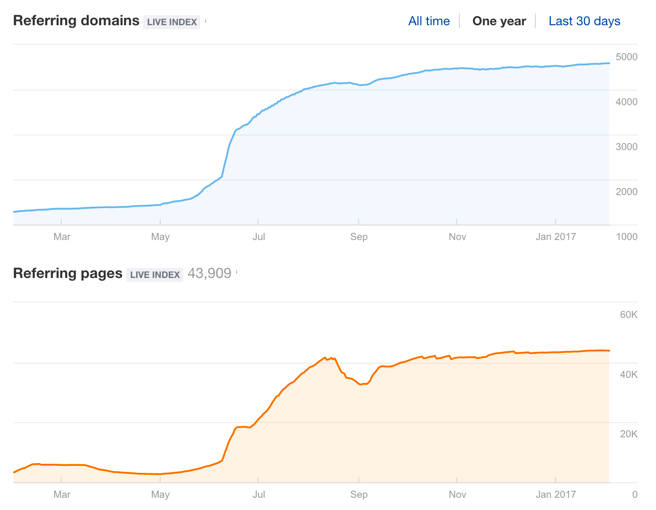
Ahrefs indicates that YNAB is increasing in referring domains quite healthily. The data below raises the question: where is YNAB getting their links from?
One thing I found right away, is that YNAB has some great links on what I like to call “feeder sites.” “Feeder sites” are sites that have content that is syndicated by many other large publications. Finding valuable feeder sites can be immensely powerful for SEO due to the amount and the quality of links that can be obtained.
Below is an example of what this feeder process looks like that YNAB has benefitted from.
An article was placed on the Reader’s Digest’s site, RD.com, entitled “34 Little Life Skills Everyone Needs to Be a Grown-Up.” RD.com is a feeder site to MSN.com as well as a handful of smaller sites. You can see that MSN.com syndicated the same article here. This means that for the effort of creating one very high-quality post, you can net a handful of links, sometimes from some large publications. This can be immensely powerful, and can lead to great jumps in increased rankings,
In the last few months, YNAB has received links like these:
And this is honestly only naming a few of the total links built recently.
YNAB is in a great position. It has the benefit of being able to target money-management communities with its methodology while at the same time targeting sites that focus on cell phone apps. This widens the targetable audience for the amount of websites YNAB can get links from. More links equal more authority, and when properly used, convert into better rankings and more traffic.
YNAB gets numerous mentions on both large and small publications. It is in the great position of garnering many mentions through its thousands of devoted fans. Typically, sites struggle with gaining more authority, therefore, they need a lot of high quality and well-targeted link building.
One note, however, is that many of the specific blog posts on YNAB’s site don’t get as much link love as the core YNAB pages (homepage, feature page, etc.). YNAB would benefit from additional links to their established blog posts, as well as to new posts as they are published. With the right content paired with YNAB’s community, this kind of link building should be cake.
YNAB has opportunities to generate much more organic traffic through their currently ranking pages. In order to diagnose how many opportunities there are, I pulled all ranking keywords (positions 1–50) from Ahrefs. Second, we needed to segment the data in order to see rankings in specific ranking buckets. I segmented rankings by keywords in the top 3 positions, positions 4–5, positions 6–10, page 2, position 21–50, and page 3+ rankings. I did this for every URL on the site in order to gain an understanding of each page and its rankings. The results looked something like this:

From a glance at the spreadsheet above, you can see a particular URL and what keyword positions that it ranks for. This makes it easy to determine which URLs simply need a bump in optimization and authority in order to generate traffic increases. This also allows you to forecast how big the traffic increases will be.
Let’s go through an example of how this data can enable us to take traffic-increasing action.
We see in the above screenshot that the blog post “How to Pay off $26k of Debt in 18 Months on a $35k per Year Income” ranks for 4 keywords in the top 1–3 ranking positions and 9 keywords in positions 4–5. The keywords in positions 4–5 represent around 520 monthly searches. This is what we see on the keyword level.

Looking at the average difficulty of these keywords, as well as taking into account that this post ranks as it does with not many links, YNAB could bump these 9 keywords up into the top 3 with only a handful of inbound links. This would increase the traffic of this page to somewhere between 100–150% with minimal effort. Sure, this is merely a couple hundred visits extra, but considering the minimal effort it would take, it would be worth it. Furthermore, you can see how this strategy can scale across the entire site. YNAB could increase overall traffic to the site by a large margin simply by taking advantage of this strategy applied too many of their blog posts.
The Google Featured Snippets box can be incredibly powerful to leverage. I want to show you how YNAB could leverage it to rank in a position essentially above position #1 (sometimes referred to as position #0). For context, the Google Featured Snippets box was debuted in Sept 2014, and was created as a vehicle for putting relevant answers in user’s hands much more quickly. For example, if you search “how to budget and save money” in Google, you will see something like this (highlights in red are mine):

You can see in the above screenshot that bettermoneyhabits.bankofamerica.com occupies the #0 position in Google’s featured snippet. This gives bankofamerica.com a strong advantage over americasaves.org in positions #1 and #2. Not only does bankofamerica.com have an augmented snippet, it also rank above position #1. This position can generate much more traffic than position #1.
Another value in ranking in the Google Featured Snippets box is that you can circumvent the climb to the top and be picked for a top page ranking, even if your site technically occupies a different rank land somewhere else on page 1. A detailed post on the specifics of how to do this can be found here.
YNAB already ranks on the first page for a handful of keywords that have the Featured Snippets box, but someone else shows up for the Featured Snippet. Because YNAB already ranks on the first page, it could implement some on-page changes and increase its chances of stealing the coveted Featured Snippets position. This would drastically increase the traffic YNAB receives from currently ranking keywords. For example, YNAB ranks in the 10th position for “how to pay off debt." This keyword generates around 5,400 searches per month. At the 10th position, YNAB doesn’t pull in that many of the 5,400 searches. However, if YNAB ranked in position #0, it would pull in a large percentage of that traffic.
Here are some of the keywords that have Featured Snippets YNAB could steal:

The process of optimize live posts is fairly simple, although it takes diligence. Cole Rieben, one of our Campaign Managers here at 97th, has a great post on what changes can be made in order to boost a site into the Featured Snippet spot (found here).
Without a doubt, creating new, high-quality, keyword-targeted content is one of the most rewarding actions YNAB could take. Content should be created for the user first, but in order for it to be valuable, it must also be findable. SEO done well is the perfect marriage between solid content and the ability to have that content found when users are asking questions. Keyword research can further help you understand exactly what kind of content people are looking for. It is an insight into their needs. Think about it, these people are asking questions already, we just need to meet their question with the best answer.
YNAB has created a lot of content. Most of it is fairly short and doesn’t rank for a ton of keywords. In addition, there are so many budgeting-related questions being asked daily. If YNAB can answer these questions with their grade-A philosophy and budgeting tool, it would be a huge win-win. Users get the answers they need, and YNAB grows.
To analyze what the market looks like in terms of budget/finance related keywords, I pulled a lot of data—like, over 111,000 unique keywords worth of data.
After researching the keyword level data, we needed to organize it to make it useful. The goal in leveraging all of this data is to understand a few things.
The first is keyword groupings of well-ranking URLs in the finance space. These URLs are from many other finance related sites. The data allow us to understand what keyword groups Google ranks these pages for. Secondly, I want to understand what it took for these sites to rank well
From Quick Answers to the People Also Ask section, featured snippets have been at the top of numerous result pages and top of mind for many digital marketers and online businesses. First position in Google search is no longer adequate, especially when almost any competitor on the first page could qualify and leap multiple positions to snag the prime real estate above the first organic result. The result pages that have featured snippets tend to have two important elements, an entity and an attribute related to that entity. Here is a diagram Google used to explain the concept in their patent for Inferring attributes from search queries:
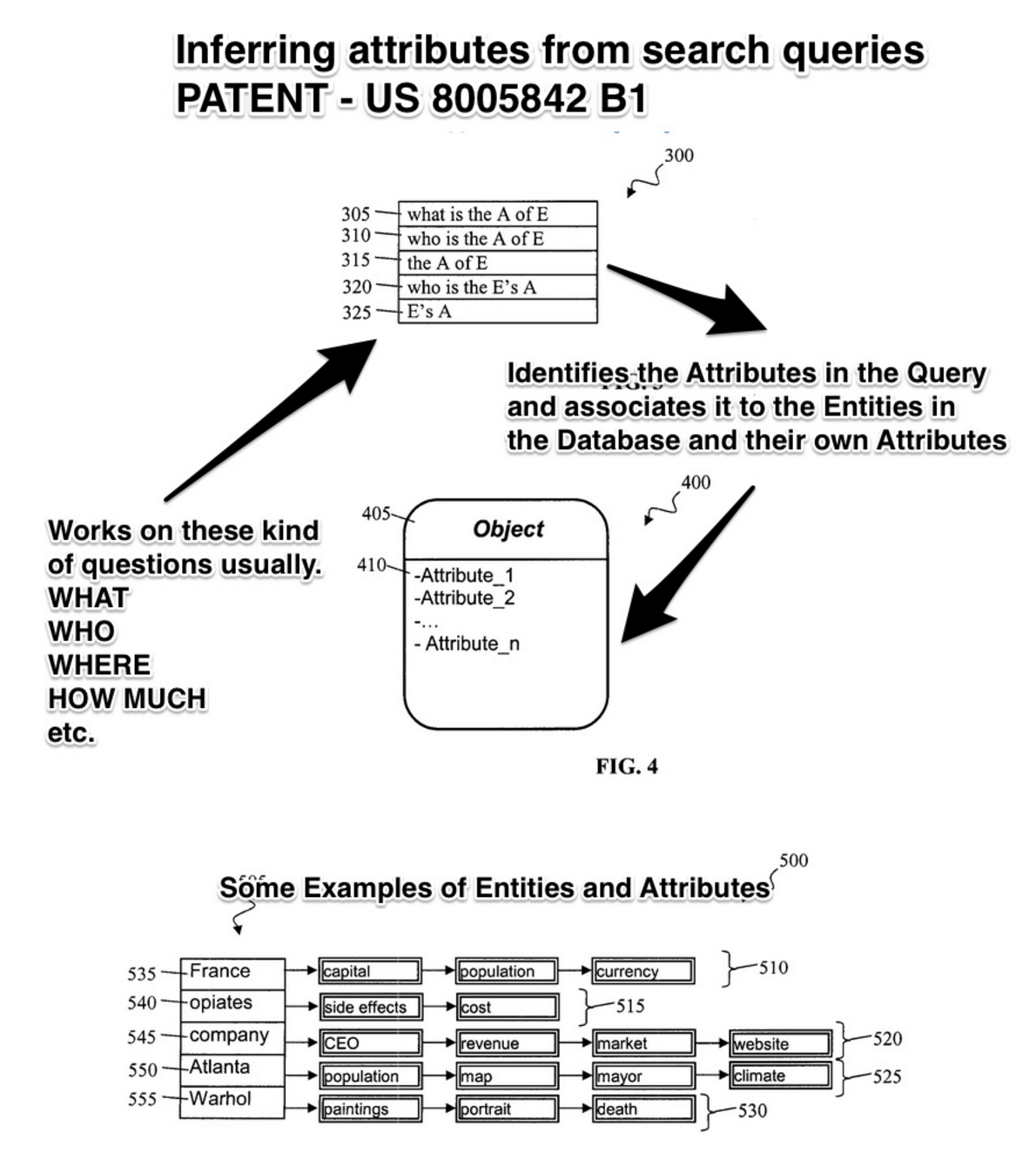
While these results are not new, there are still tons of opportunity to be had. For starters, they’re being rolled out to more international SERPs as time goes on. There are still plenty of US queries for which Google will eventually display a featured snippet. Below are the findings of three consecutive studies performed by Stone Temple Consulting whose data from 855k test queries support the assumption that there is still more growth to be had.
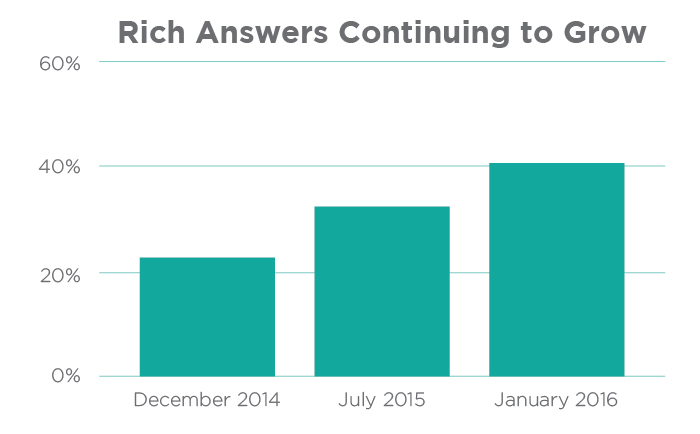
Is Optimizing for a Featured Snippet Worth the Time and Effort?
Before you go any further, and before I get into optimizations and prerequisites for showing up in a featured snippet, you should weigh the potential gains from your efforts. For some markets there aren’t currently any featured snippets present. Don’t forget that Google is still rolling this out to new areas and for more terms. So I would still encourage research and optimizing pages that rank high for potential featured positions. The payoff may not be immediate though.
In most cases where the opportunity currently exists, tests have shown an unexpected increase in click throughs. The assumption is that having a featured snippet on the result page for a query would reduce the clicks to the first position url and subsequent urls. Matthew Barby’s sample of Hubspot urls showed the opposite with an improved amount of click throughs to result #1 that followed the featured snippet. His analysis showed that the urls that displayed in a featured snippet saw a higher click-through-rate than ones that only displayed in regular first page results.
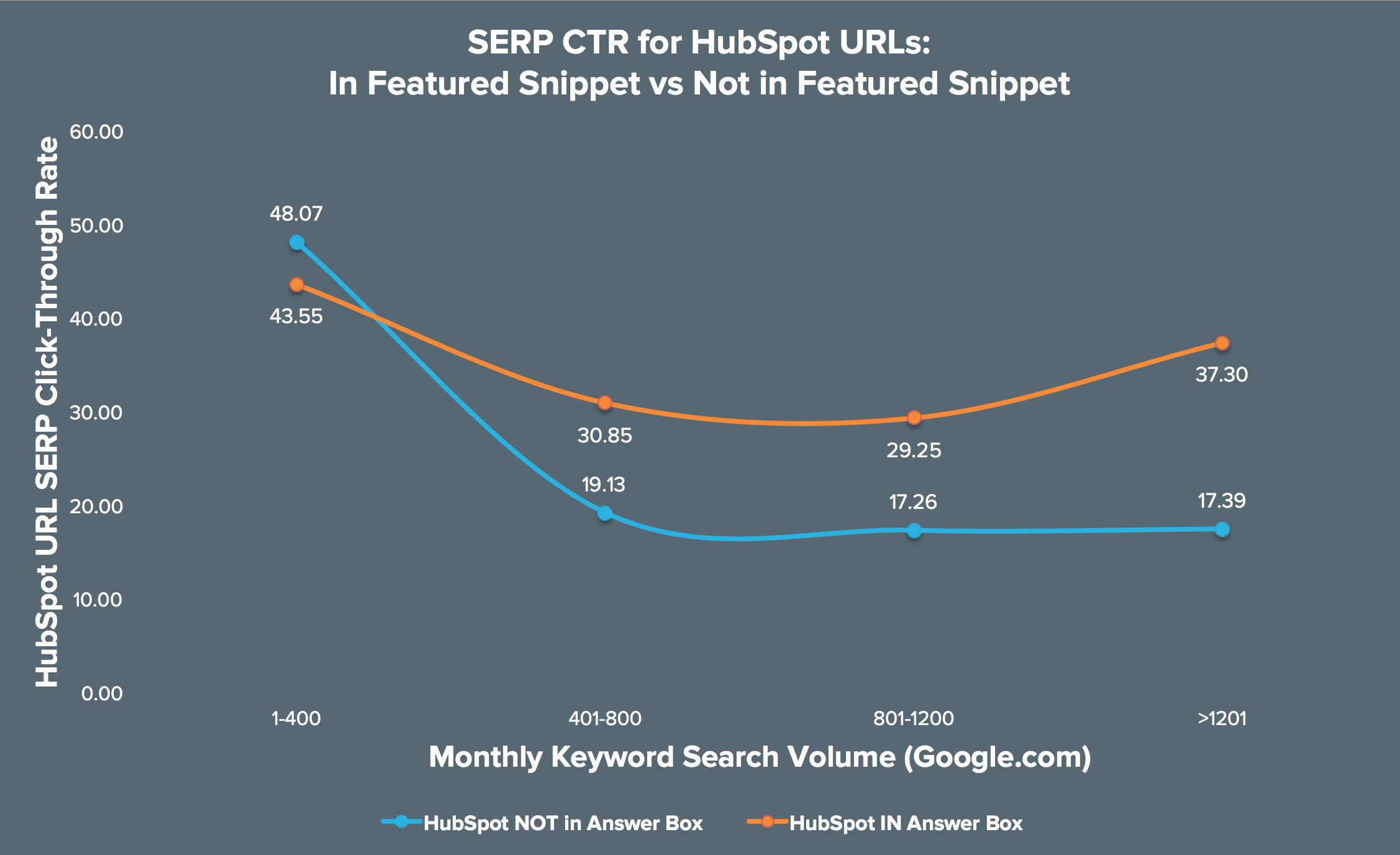
Where to Optimize
I would first start by digging through Google result pages where your site ranks #1. If there are featured snippets on any of those result pages that aren’t pulling from your site then there is great opportunity for some upgrades to your page. If your site ranks for a large amount of queries in position #1 then focus first on the higher volume terms. While it is very possible to grab a featured snippet position if you aren’t ranking #1, there are two separate studies showing that about 30% of featured snippets pull from the #1 result. The graph below was pulled from a study run by Moz on 10k keywords.
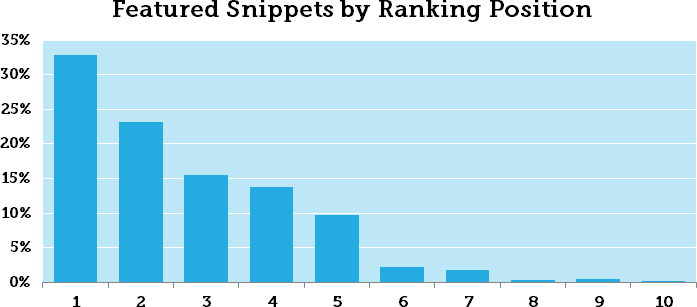
The second study was run by Stat with 1 million competitive keywords. While they found a similar result that about 30% of featured snippet results pulled from the #1 ranking page, they do call out that 70% of featured snippets came from results other than the first organic position. Even more interestingly, they found that a small percentage of queries sourced their featured snippet from positions beyond #10. I would recommend downloading their whitepaper that explains their findings from analyzing 1 million high-CPC terms.
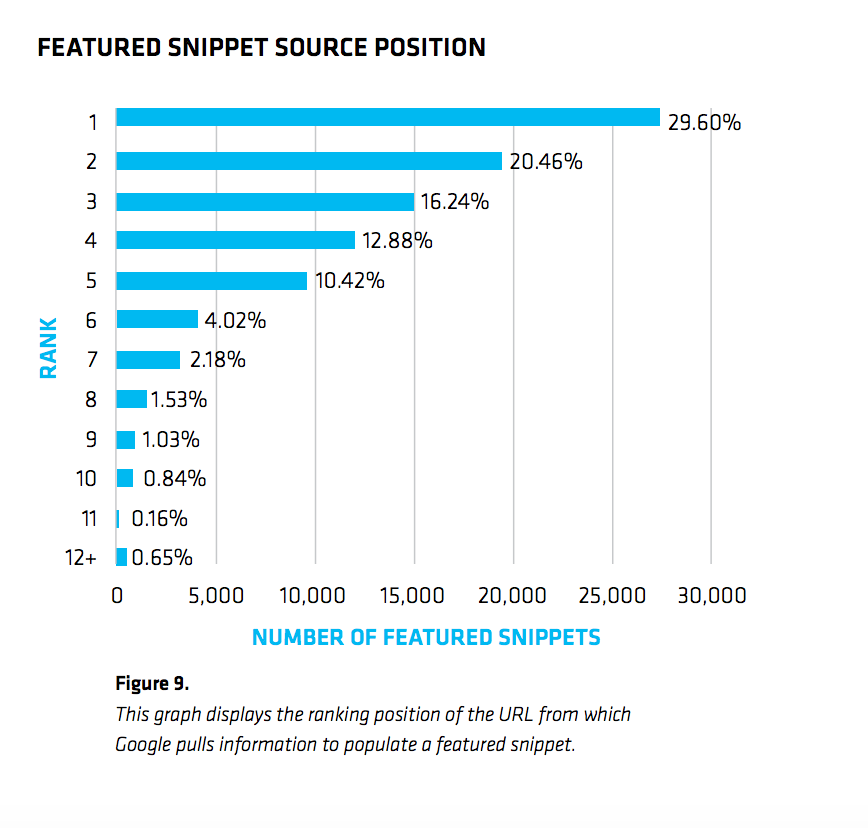
Dr. Peter J. Meyers illustrates this nicely as he proved this to work for Moz and the question phrase “What is page authority?.” Another site lept over Moz’s #1 result for the term to capture the featured snippet position.
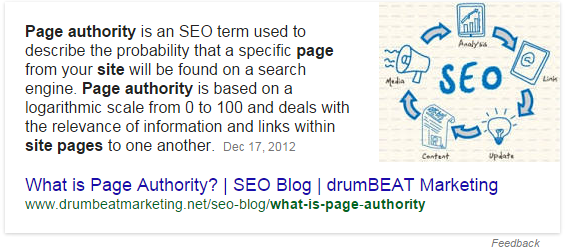
The Moz team noticed that Drumbeat Marketing did a great job of directly and promptly defining page authority and answering the question. Moz promptly upgraded their copy with the question in the header, and to read as follows:
Not long after, they captured the prized featured snippet display for that query while maintaining rank in the first position.
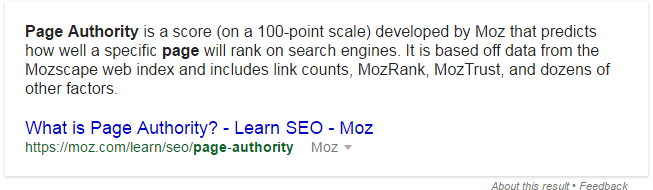
The next area of focus should be on any other keywords your site ranks for on the first page. You could waste a lot of time researching all the keywords you could potentially rank for but your time is most wisely spent on first page positions based on the data from industry tests.
How to Optimize
Now that you know which pages need your attention you can determine which type of featured snippet to rank for. Is it a list? Is it a paragraph answer? Is it a table with information? Google very plainly communicates in their explanation of featured snippets that page markup won’t be a factor in qualifying for these positions.
Where does the answer summary come from?
The summary is a snippet extracted programmatically from a webpage. What's different with a featured snippet is that it is enhanced to draw user attention on the results page. When we recognize that a query asks a question, we programmatically detect pages that answer the user's question, and display a snippet as a featured snippet in the search results.
How can I mark my page as a featured snippet?
You can't. Google programmatically determines that a page contains a likely answer to the user's question, and displays the result as a featured snippet.
So the best thing you can do is upgrade your content to fit the query's featured snippet. In Stat’s research they discovered that paragraph answers are the most common type of featured snippet and displayed that way for more than 80% of the million terms they tracked.

Optimize for Paragraphs
The paragraph featured snippet displays pages that have answer oriented copy as well as the question in a header. Google will only pull a few sentences, so make your answers brief but directed at the searcher. In most cases Google will pull the copy from text they deem most valuable to the user. As such, I have run into an interesting scenario where Google actually selected partial information from a list and displayed it in paragraph form. Below is the result page for “home protection plan”. You will notice that the answer is displayed in a paragraph form, but the page it pulls from actually has it listed out.

The same approach should be considered for the People Also Ask section. Once research is done on related questions, follow the same pattern of addressing the question and exclusively answering it below the header. In most cases you will be building out questions and answers on your landing page and not a designated FAQ page.
Optimize for Lists
The featured snippet that displays a list is one of the more recognizable types and usually occupies more real estate on a result page than paragraph answers. These types of answers tend to show up for how-to’s, cost breakdowns, as well as numbered and bulleted lists of all kinds. To rank for this type of featured snippet you may want to adjust some copy to introduce a list. Do your best to use the term or phrase in the heading of the list. It is important that it stays relevant and increases the value of the page. Another thing to keep in mind, especially if you win these positions, is that you leave the user wanting a little more. Give them a reason to go to your page. Recipes can be a great chance to do this as each step usually involves more details that can’t fit.
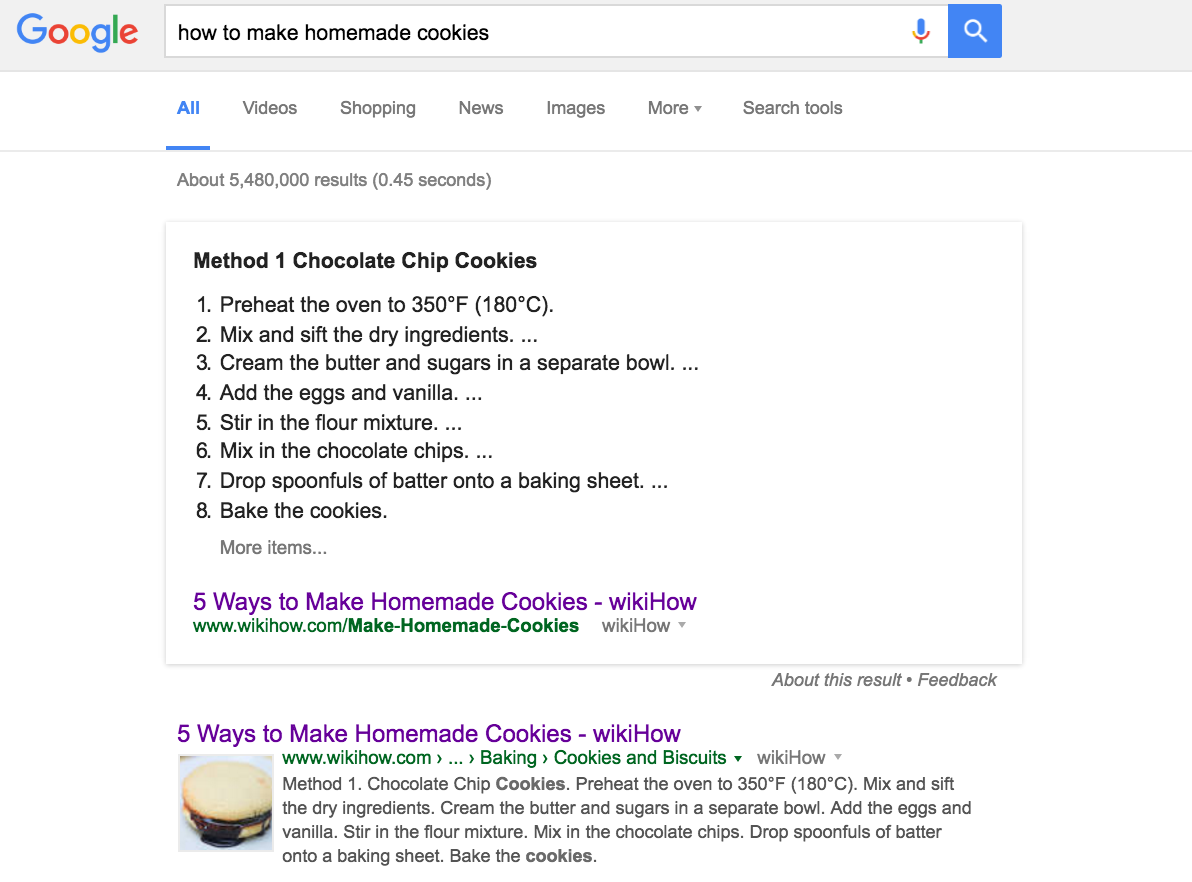
Stat’s research also found the use of <ol> tags on pages are 41.6% more common in featured snippets than in regular results. They saw the use of <table> tags nearly 22% more common in featured areas than in regular results. This brings me to the next type of featured snippet.
Optimizing for Tables
Optimizing for tables really comes down to displaying data or information that may already exist on your page a little differently. If you currently have a list on that page but there is an opportunity to grab a table snippet then find a way to compare the list to another list or just display multiple attributes at once. As mentioned above, it wouldn’t hurt to make sure that you are using <table> tags on your pages.
The most important area to focus on for optimizing your chances of being featured is your on page copy. Backlinks and other external factors for ranking become less important the closer your page is to the first position. Remember that before you optimize any pages you will need to research the Google result pages for keywords you rank for on the first page. The benefits of more clicks are definitely there, and you can always do more to direct the user to your page with enticing copy. This is definitely an area of optimization that you will want to return too often as Google expands to new markets and includes featured snippets in more result pages.
Yesterday, September 23, was the final day of BrightEdge’s Share15 conference in San Francisco. Share15 is a Content Performance Marketing event put on “for digital marketers, by digital marketers.” The conference is a specific opportunity for BrightEdge users to get hands-on. This year’s conference had speakers from several big players in the industry, including BrightEdge, Salesforce, Google, and many others.
.@chrisbennett of @97thFloor shares how to bucket #keywords for #content success at #Share15 pic.twitter.com/JvsydGAGeD
— BrightEdge (@brightedge) September 23, 2015
Chris Bennett, 97th Floor’s CEO, had the chance to speak at the conference yesterday. 97th Floor is a certified BrightEdge Agency Partner, and several of our clients use BrightEdge in their business. Chris was excited for the opportunity to speak here, as this was his first year presenting at a Share conference. He also enjoyed this chance to speak alongside his old friend, Kirill Konrod from Adobe, who had some great insights on Google’s Quick Answer boxes. Chris’s presentation emphasized tactics such as focusing on keyword research, using those keywords to recognize and create better content, and making sure that you are creating altruistic content for the user.
For a session that @97thFloor claims doesn't include earth shattering news, I'm sure loving these ideas! #contentmarketing #share15 — Taylor Harker (@TaylorHarker) September 23, 2015
Not only was Chris one of the speakers at Share15, but 97th Floor was a sponsor of this year’s event, setting up a “swag machine" for use by conference attendees.

The machine was filled with shirts and portable chargers. To get their swag, participants could tweet a selfie in front of the machine, tagging @97thfloor, #share15, and a special hashtag the machine would generate. Once the tweet went out, the machine would dispense the loot.

We figured that Share15 was the perfect opportunity to showcase the machine. Where better than a Digital Conference to share a fun, innovative platform to build social engagement?
At #share15 with @97thfloor #dm858 how cool is this? pic.twitter.com/21KKbXTJ5K
— Lisa Brown (@bunltd) September 23, 2015
Not only did this generate buzz for 97th Floor and Share15, it also fell right in line with Chris’s message from his presentation, and 97th Floor’s own brand, combining creative tactics for bigger results.
@97thfloor #share15 #dm901 awesome swag machine!! pic.twitter.com/IXTsfqGHoy
— Jim Yu (@jimyu) September 23, 2015
Having a great time @97thFloor #share15 #dm042 pic.twitter.com/Tsas0gPgLP
— Sophia Eng (@sophianeng) September 23, 2015
We loved coming to Share15 and working with BrightEdge. Their staff was wonderful to work with and a real class act. They really proved just how much they care about their customers. Thanks, guys!
