



Is user confidence in online content at an all-time low? AI-generated content dominates many key topics, and users can easily find themselves frustrated when searching, finding articles they could have generated directly from a chatbot themselves. There is also an increasing volume of content that is becoming commonly known as “AI slop.”
And that’s without getting into the other struggle: LLMs are not only competing for eyeballs on regular search engines, but also stealing traffic directly. As a result, sometimes it can feel like the rest of us are left to fight over scraps.
If the current outrage over AI slop proves anything, however, it’s this: users still want good content. And marketers still want to give it to them. So — with the internet noisier and more crowded than ever — how can we complete the matchmaking experience and find each other?
At 97th Floor, we have cracked the code, and we can prove it.
A brief history lesson
The internet has always been noisy, overcrowded, and full of shoddy content churned out by marketers hoping to maximize their reach. While many of us like to think of marketing as a noble profession (we are helping people solve their problems!), there will always be those who act in bad faith, trying to game the system however they can. It’s the whole reason “black hat” marketing exists.
Luckily, Google is fighting the good fight, and every update they have made over the years is done so in an attempt to improve the experience of the user, and get them closer to the type of content they need. This means that those focusing more on gaming the system and less on quality content are the ones who are typically hit the hardest by algorithm updates.
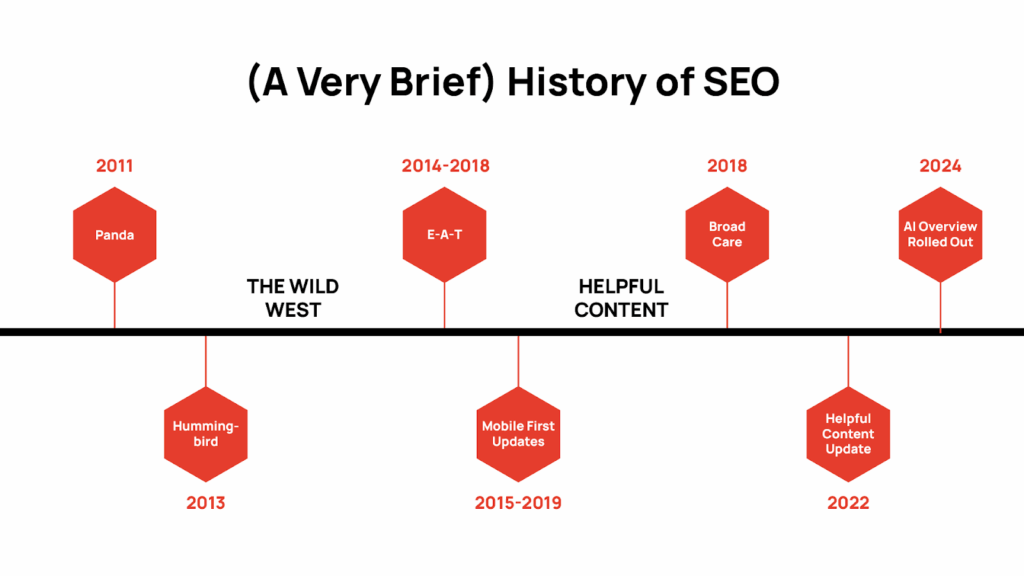
It’s the reason why, if you have been anywhere around content marketing, SEO, or even digital marketing in general for more than a few years, you will no doubt remember getting asked a question a million times, akin to “how do you balance SEO content and quality content.” Real ones know the truth: the best “SEO content” has always been high-quality content. And that kind of content is what has the power to withstand just about any algorithm update.
If that is not reason enough to focus on high-quality content, then let us also add this: The cost of bad content is steep. Analytics company CreativeX recently recently found that the average Fortune 500 company wastes approximately $25 million annually on content that fails to reach its intended audience or is not fully utilized.
It should come as no surprise, then, that the answer to combatting the current cacophony of AI slop is infuriatingly simple: produce high-quality content.
Ok, But…What Actually Is High-Quality Content?
I know, I know, that’s an incredibly unhelpful piece of advice. Because of course, anyone can claim to produce “quality content” but that means different things to different people. So, what do we mean when we say quality content? 97th Floor has a few principles that we have always lived by when it comes to both content and marketing in general.
1. High quality content is audience-focused
One of the main things that people get wrong about content marketing to this day is the how behind making the content itself audience-focused. As marketers, we can get caught up in how great we believe our solutions to be, that we get evangelical about the value that they bring — resulting in us pushing those solutions on our audience, rather than helping them. Quality content starts from a place of “what does my audience want or need?” rather than “what can we as a brand give our audience?”


| ❌ | ✅ |
2. High quality content is relevant to your brand
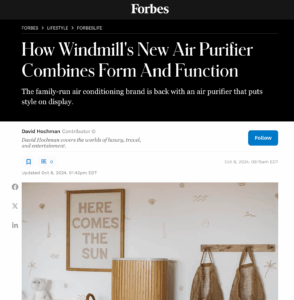
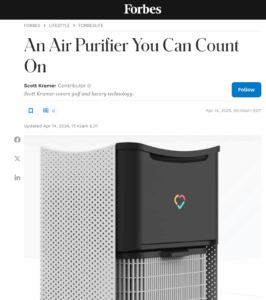
Ok, so you have figured out what the audience needs, and you have a ton of great content ideas. The next pitfall that marketers commonly fall into is trying to write everything. To illustrate: Take a quick moment to Google “best” anything and look at all of the sites that wrote about it, despite it being completely unrelated to their brand, product, or mission.
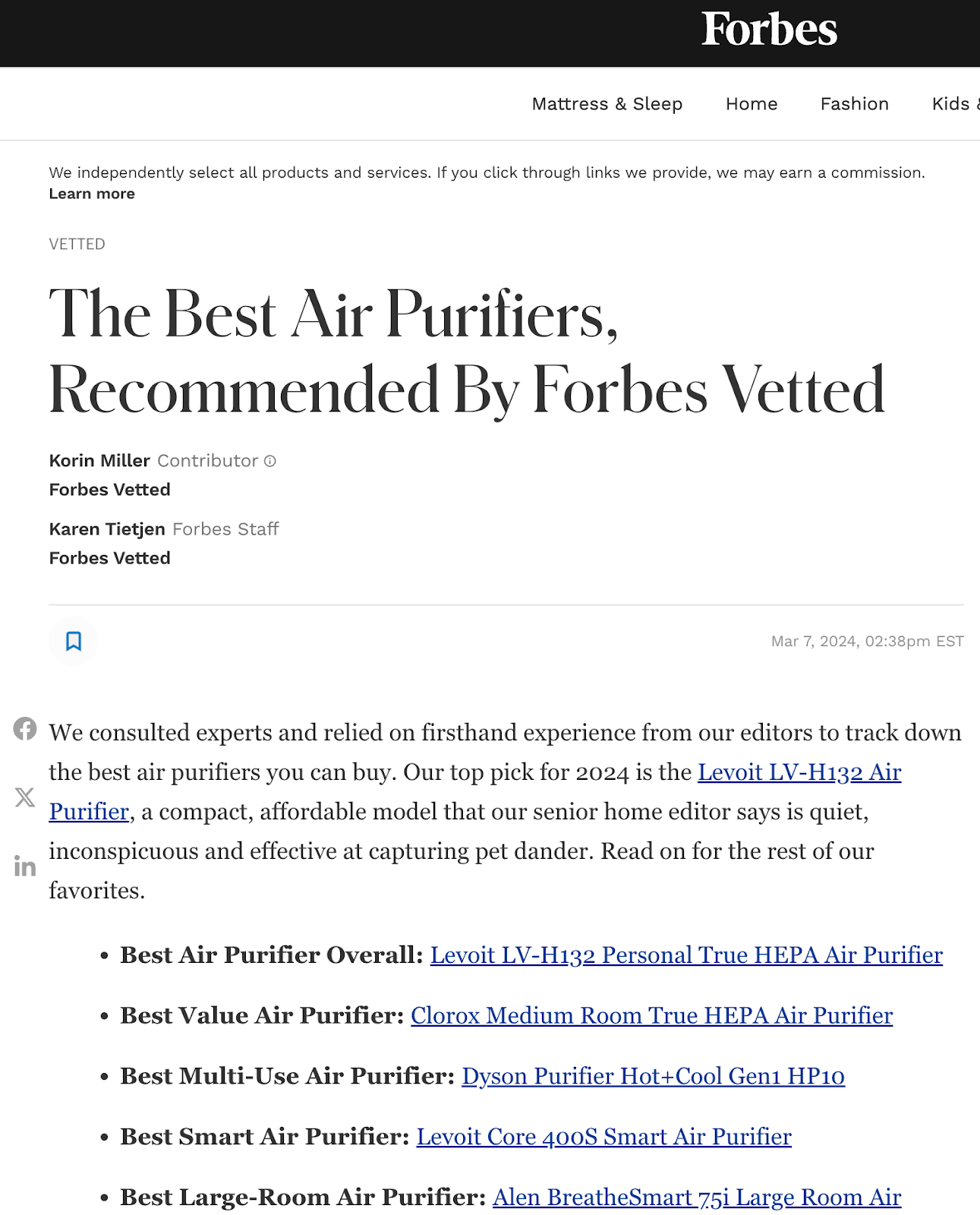
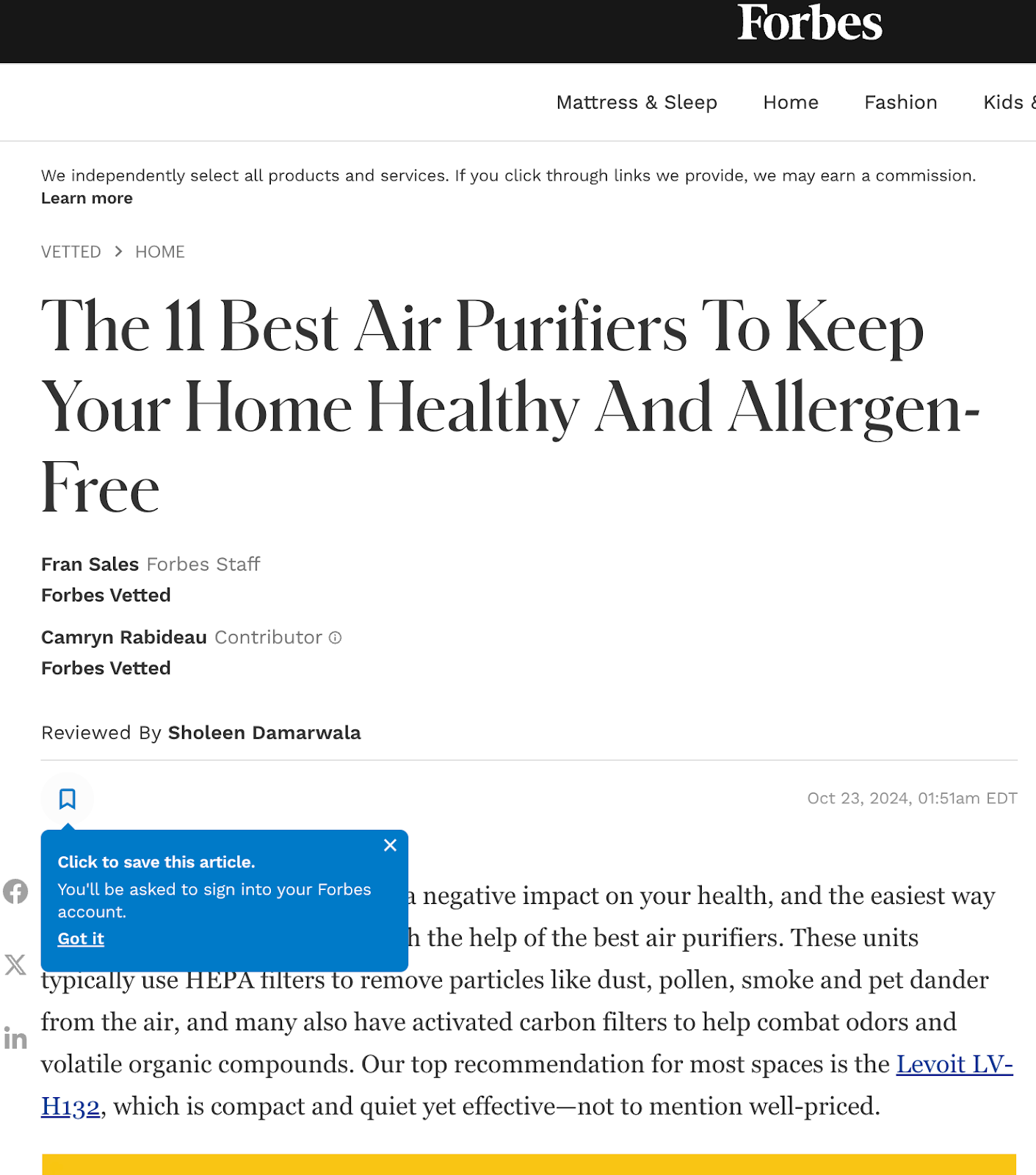
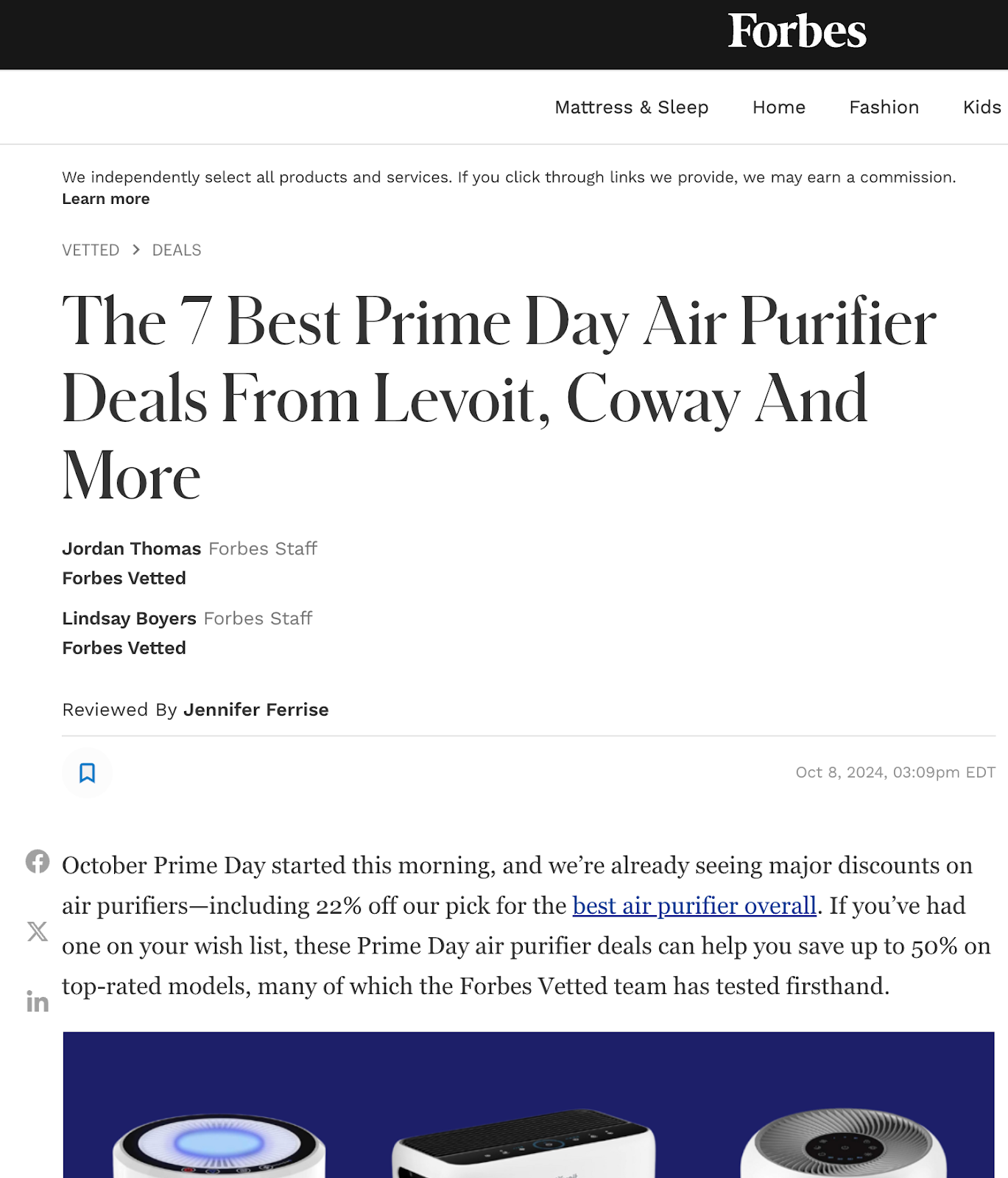
3. You are an expert and/or uniquely qualified to write this content
Authority matters. You might think this is the same as number two, but there’s a slight but significant difference. Something may be relevant to your brand, but you still have to prove yourself uniquely qualified to write it. This might come from expertise, experience, unique insights, or all three. This is also where the human element comes into play — even before AI, but especially now — users want content that they cannot simply generate by asking an LLM themselves. A unique and specialized point of view is more important than ever.
You may have noticed that our three quality content criteria and the use of AI are not mutually exclusive. On the contrary, we are not anti-AI evangelists. In fact, we use AI regularly to aid in efficiency and accuracy in the content creation process. However, it is rare (perhaps impossible) for a piece of content to match all three criteria without first passing by a human expert.
A survey conducted by consulting firm Baringa provides insight into opinions regarding AI-generated content by internet users. A majority of respondents identified at least one reason to value human-generated content above AI-generated content, with 81% citing “authenticity” as the key feature. However, users did not overwhelmingly state that they would avoid AI altogether — especially when it came to the younger demographics.
The fight for quality content is not a fight against AI, rather a delicate dance to make sure that it is used in the most effective way possible.
I Thought You Said You Could Prove It?
Ok, sounds like a nice theory, but does it actually work in practice? And can you prove it? In fact, we can. We have a proven history of this approach to content succeeding time and time again — surviving algorithm updates, changes in user behavior, and more. Here are a few examples.
Blendtec
Earlier, we made the claim that high-quality content will stand the test of time — and withstand algorithm updates. A perfect example of this is an article from way back in 2014 that we produced for Blendtec. A simple listicle of peanut butter smoothies, and accompanying recipes.
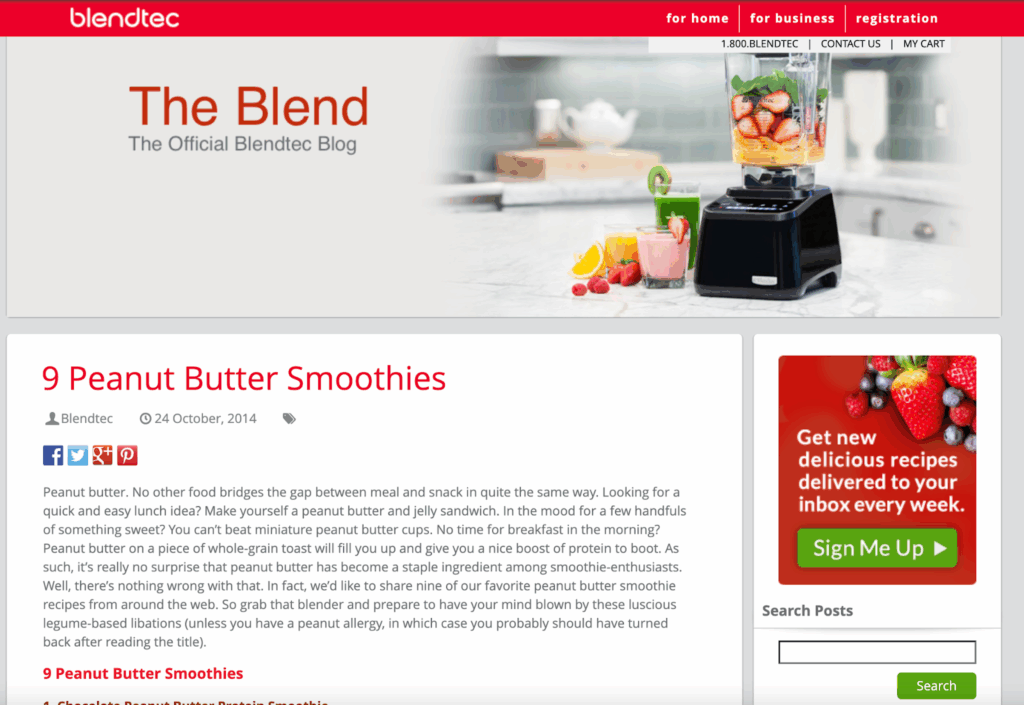
It meets our three criteria to a T and was incredibly successful when published. It continued to rank for several important keywords and survive several algorithm updates over the course of the next 10 years, to remain a top-three traffic driver for the site.
Dr Will Cole
Another example can be found in this guide on increasing progesterone levels for Dr Will Cole that we published and optimized in 2022.

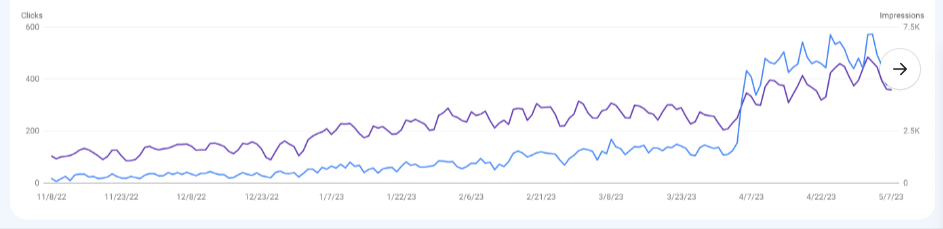
This article saw its biggest jump in traffic after an algorithm update in April 2023.
General Kinematics
But what about now? When AI is everywhere and AI Overview is stealing traffic from many pages. Well, we have countless examples of content that has survived the recent AI-pocalypse through following this simple formula for high-quality content. One such example this simple article for General Kinematics about uses for potash.
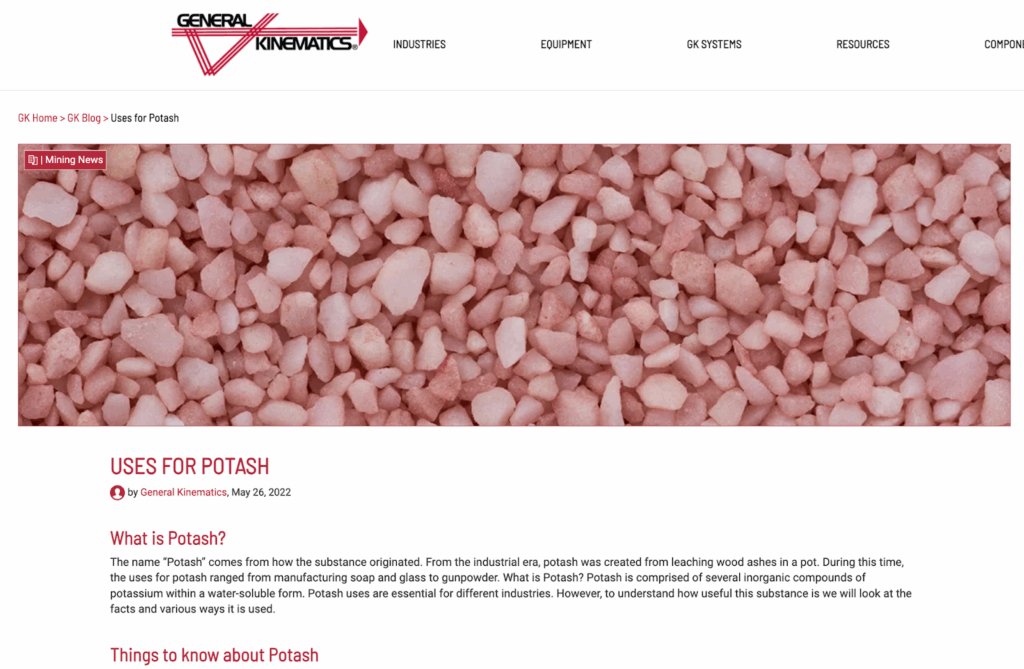
This content is audience-focused, brand-relevant, and something that General Kinematics — a producer of mining equipment — is uniquely qualified to write about. Published in 2022, it was automatically featured in AI Overview upon rollout of the feature in 2024, and has continued to do so since. What’s more: This page actually saw a 60.4% increase in traffic when you compare pre-AIO rollout to post-AIO rollout.
The bottom line: Google agrees with us. Every major and minor Google update in the past decade and change has been to get the search engine closer to prioritizing one of the three facets of quality content as identified by 97th Floor. For example:
1- Helpful content and other updates intended to prioritize user-first content.
2- Updates around brand authority, including recent updates that are deprioritizing irrelevant content for brands (or worse, brands that have spread themselves too thin and made it difficult for Google to assign authority).
3- This one goes beyond Google. Consider this: In a study of hundreds of thousands of citations, the most cited content type was product pages — by some margin. This means that this facet of quality content matters two-fold: Generic blog content is most likely to be directly replaced by LLMs, and product content — i.e. content that you are most uniquely qualified to write — is most likely to be cited. With optimizing both for and against LLMs becoming an increasing priority, this may be the most significant quality content guidepost of all.
I called out just three examples of this, but there are many more where that came from, and so will that continue.
The pattern across every one of those examples points to the same underlying truth. SEO expert Eli Schwartz makes the case that LLM visibility isn't a data or technical problem — it's a brand problem. This short video captures why the brands that consistently show up in AI-generated answers aren't winning on data. They're winning on authority.
Why It Matters Moving Forward
We talked about the ever-increasing noise of the internet. IBM predicts that AI will only continue to expand over the next decade, influencing more than content creation. High-quality content will continue to perform through both search engines and LLMs. The challenge or “noise” as marketers used to be different, but the solution is the same. If you put your audience first and prioritize quality content, the cream will rise to the top every single time.
Further Reading
Of course, that’s only part of the story. Sometimes you have to give even the cream of the crop the best chance to succeed. Next time, we’ll talk about how to get the most out of your content with an audience-first strategy.
If you're ready to show up in AI-generated results, let's build your strategy.
A recent 97th Floor survey of SEOs revealed that "not enough leadership support" is the biggest challenge SEOs face in getting projects moving. The second biggest obstacle, "not enough budget", is often a bi-product of leadership support.

Getting leadership buy-in on the long game of SEO can be hard - especially when other channels are more quickly proven.
That same tension lives in every long-game strategy, and the challenge of getting buy-in goes beyond presenting better data. Bringing a skeptical team along before results are visible is one of the most underrated leadership skills, and most practitioners figure it out the hard way.
Daniel Nisan, startup founder and operator, shares the specific approach he's used to move teams from doubt to conviction — without waiting for results to do the convincing for him. This short video breaks down how to turn your most skeptical stakeholders into your most committed advocates.
Use these three tips to win the hearts of leadership and sell your SEO strategy.
You’ll be a whole person ahead if you have someone in leadership who believes in the massive potential of SEO. Which decision maker seems the most interested in SEO? Who can be a voice for SEO in decision-making meetings?
Identify this stakeholder and then involve them in your SEO work. Consider pitching this executive first, or otherwise involving them in your strategy development. Communicate with them often and be sincere in your efforts to collaborate with them.
This individual’s enthusiasm for SEO, strengthened by their invested time with you in strategy, can make all the difference in prioritizing SEO projects and getting you budget.
To increase the resources coming towards SEO efforts, you need to create urgency by showing the consequences of neglecting SEO—the opportunity cost.
Tom Capper, Senior Search Scientist at Moz, agrees that "when dealing with larger organizations, it's common practice to spell out and estimate the positive ROI of action. What's less common is to spell out the risks of inaction, but often large, established brands, who have a lot more to lose, find it easier to act on this kind of rationale."

Low priority SEO may not sink your company, but how can you show leadership the lost potential (read: revenue) of failing to start?
We have found that competitive comparison as quantified by market share is one of the most effective ways of demonstrating the opportunity cost of neglecting SEO—market analysis is one of the most important jobs of top-level leadership.
Sam Oh, VP of Marketing at Ahrefs, says, "One of the best ways for SEOs to show value to top-level leadership is through competitive analysis. It’s best when you can show it visually in graphs and then add context to educate leadership about what’s happening and why. It may be obvious that a competitor’s organic traffic is exploding, but help leadership see what tactics and strategies would be in play and how long it realistically takes to see results like this."

You may also want to demonstrate the opportunity cost in terms of savings.
Crystal Carter, Head of SEO Communications at Wix, puts it this way, "Leadership cares about revenue, but they also care about savings. Learning your customer’s journey can reveal content that can save the business time and energy. For example, if you learn that customers often contact customer service with the same question, create content that answers that question. This way, your customer service team is addressing real needs instead of sharing basic information.This saves time and energy, while also increasing value for your users."

SEO is a long game. If you want to minimize the irritating, “are we there yet,” conversations, consider handing leadership a map.
Based on your strategy, identify what immediate wins (or signals) leadership can expect, and how long it will take for SEO efforts to reach the bottom line. Set expectations for reporting frequency and metrics.
Perhaps most important, acknowledge to leadership that SEO is impacted by many things that are not in an SEOs control.
Ancestry’s John Crockett explains, “SEO is measured based on what’s going to work and what’s not going to work. We’re only one part of that. We have to worry about how Google’s going to interpret new initiatives. We also have to worry about what our industry competitors are doing. We have to worry about what our search competitors are doing.”

It is imperative that you clarify the difference between branded and non-branded keywords. Distinguishing between the two will help you explain variation in traffic that is unrelated to your SEO work. Branded keywords are heavily dependent on external factors like PR, TV and advertising. Non-branded keywords are in the scope of SEO, so try to delineate and report the traffic, keywords and revenue for non-branded keywords.
By keeping goals specific, timelines clear, and confidently pitching SEO as an important strategy supported by your SEO stakeholder champion, you can win leadership favor and a signed check for your great work.
Inevitably, you’ve discovered technical issues that are hampering your organic growth—and you need development to tackle these optimizations. But getting the ear and time of dev teams can be extremely challenging amongst all the non-SEO initiatives they’re tackling.
Frequently, SEOs will find themselves in these scenarios:
Josh Moody, 97th Floor Executive Director of Palomar, offers five tips for reducing the friction between SEO and development:
Instead of trying to bend development to your SEO-strategy, learn how your development team operates and consider how you can amend your SEO strategy to fit into their existing process.
Get curious about your dev team:
Adjusting your strategy cadence to be more development-friendly decreases frustration for both SEOs and developers.
Before sending over a long list of optimizations, consider how development thinks about implementation. To begin, they’re using a completely different vocabulary than you use. Why in the world are we talking to developers about “optimizations?” Let’s try “bug” instead. Submit tickets, not slide decks.
Ancestry’s Director of SEO John Crockett advises, “Understand a developer’s world enough to talk to them intelligently. I don’t get too much into the solution with them, but I do know enough coding and engineering to be prepared in those meetings with an idea of how we’d accomplish it. Doing the research has taken projects from being labeled as impossible to being done.”
Be respectful of the developer’s expertise. Don’t assume you know what a fix will require from them, but come speaking in their language to show you’re ready to collaborate.
Marketers are always trying to create a story for their target audience. For SEOs, developers are your audience and you should structure your story using the following three components: user description, functionality, and benefit.
Here’s the formula:
As a [description of user] I want [functionality] so that [benefit].
For example,
“As a new or existing website visitor, I want to ensure text remains visible during the page load, so that I can have a better user experience, especially if I’m on mobile devices with a slow network.”
This reads a lot better than “make text visible while the page is loading,” and helps a developer understand why your requests are worth their extremely-limited time.
Writing like a developer is a learnable skill, not a personality trait — Whitney Goldstein makes the case. This short video breaks down what it actually takes for a marketer to close that communication gap.
Get as clear as possible about the problem you are trying to solve and the role development will play in solving the problem.
There’s a huge difference between, “Could you add Google Analytics to the site?” and “Could you add the following JS tracking code to the site via each page’s header?”
A developer’s kryptonite is scope creep—changes made to the project push schedule, budgets, or resource allocation—and every time more clarification is needed, deadlines are at risk. Get clear by helping the developer know exactly what you need from start to finish—you’ll get more accurate estimates and preserve the relationship you’re working so hard to keep with them.
Need a change and want it a certain way?
Phrases like “Add some zing” or “make it more punchy” leave way too much room for interpretation. Whatever those phrases conjure up in your head are drastically different than what it may suggest to a developer. Obviously, you’d never use “zing” or “punchy”, but maybe you’re using other terms with subjective meaning.
Sharing examples side-steps this problem altogether. The best kinds of example you can share are:
Search around Dribbble and other sites to show development what you mean by “zing.”
Bonus Tip: Once a project is completed, share wins with the development team who helped you complete them. CC the boss. CC everyone. Get excited about the ways that SEO is improving customer experience and showcase how each person contributed.
SEOs, remember that your relationship with development is a partnership. Make dev your friends by understanding their world. Developers think literally. They are also extremely busy. Make their job as easy as possible, and your SEO implementations can happen faster and with greater precision.
For seasonal business owners, demand rises and falls with the changing weather. While seasonality is a unique and perhaps daunting challenge, the predictable rhythm of demand means that those businesses who can sync their marketing with the mandates of sun or snow can have success year-round.
97th Floor is no stranger to seasonal marketing; we’ve executed winning strategies for businesses including pool maintenance, sports equipment, cruise lines, pest control, lawn care, solar, and moving services, just to name a few.
In this article, our resident experts in SEO, content, and advertising share five actionable tips for seasonable business marketers.
Search Engine Optimization (SEO) is a long-term game, and waiting until peak season to focus on it can be a costly mistake. It's essential to begin your SEO efforts well in advance, ideally during the off-season.
Head of SEO Mike Witham says, “You need consistent year round efforts to maintain and improve rankings. If your peak season is in March, you should be ensuring you have solid rankings for core pages by no later than December. Do not start working on it the month before your peak season!”
For businesses serving multiple states or a large region of the country, seasonal demand may be different across these various geographies.
Enterprise advertising specialist Spencer Martin uses Google Keyword Planner to anticipate search volume fluctuations in different areas.
He shares, “We launch campaigns early so that we have 2 to 4 weeks to ramp up and capture the full demand. Campaigns need time to scale and learn, so if we wait until the season starts to launch we lose out on potential profits for our clients.”
While digital marketing is crucial, seasonal businesses can see major wins by looking at more traditional advertising. Enterprise Account Executive Nathan Hooper suggests non-digital forms of advertising, such as mailers or community events to target local audiences. Advertising on community calendar pages or local business directories can put your business in front of potential customers who may be researching local services.
Understanding your buyer and their motives for buying is essential for capturing demand at the right time.
Brandon Smithwrick asks what happens to your marketing instincts when you let AI do all the thinking. He breaks down how cognitive offloading quietly erodes the skills great marketers are actually built on.
Senior Director of Campaigns Jon Hammond shares that his clients in the travel industry refer to December through February as “The Wave.” This three-month period is the biggest sales period for travel as people look forward to summer sun during the cold, dark winter months. His clients maximize their ad budget and run major deals and promotions during this time to capture the demand.
Content Marketing Specialist Kaylee Baker emphasizes the importance of targeting specific demographics, such as 18-30 or 25-40-year-old males, who are the main consumers of seasonal services. Consider the platforms they frequent, such as YouTube, to tailor your marketing efforts accordingly.
When reporting to leadership, especially in industries with high historical seasonality, like cruises, it's essential to use Year-over-Year (YoY) data rather than Month-over-Month (MoM) data. This approach provides a more accurate depiction of progress or decline in traffic or sales over the seasons. By analyzing YoY data, you can better understand trends and make informed decisions to optimize your marketing strategies.
In conclusion, marketing a seasonal business requires careful planning, adaptation, and understanding of your target audience. By implementing these five tips, you can maximize your marketing efforts and capitalize on seasonal fluctuations in demand.
Cybersecurity buyers are hard to impress. Ranging from CISOs to security architects, your audience is deeply technical, highly skeptical, and usually immune to generic B2B marketing.
They don’t care about buzzwords or brand storytelling. They do care about substance: what your product actually does, how it solves real security problems, and why they should trust you over a dozen lookalike competitors. Smart, intentional marketing is a must-have skill in the cybersecurity space.
At 97th Floor, we build cybersecurity marketing strategies that reach decision-makers and influence every stakeholder in the buying committee. We’ll break down the best practices we’ve observed, backed by ad examples and persona insights.
Let’s get into it.
Cybersecurity marketing is the specialized practice of promoting cybersecurity products or services to highly technical, security-conscious audiences. It goes beyond traditional B2B marketing by focusing on decision-makers like CISOs, SOC analysts, and IT leadership, all personas who demand depth, clarity, and provable value.
Effective cybersecurity marketing combines SEO, content, advertising, and design to engage buyers throughout a long, complex sales cycle. This involves building credibility, addressing real threats, and positioning your brand as a trusted solution in an oversaturated market.
As you might have experienced, Cybersecurity is a high-stakes environment where mistakes can cost millions (and your audience knows it). The technical acumen of your buyers means any hint of fluff or oversimplification can tank your credibility.
Other challenges include:
To break through, cybersecurity marketing needs to be as intelligent as the people it’s trying to reach. That means aligning every campaign with how your audience thinks, what they’re solving for, and how they evaluate vendors.
Where traditional B2B campaigns can succeed with broad messaging, cybersecurity campaigns must go narrow. They need to:
Bottom line: If your marketing isn’t built for security buyers, it’s not built to perform.
Creating a high-performing cybersecurity marketing strategy means throwing out the one-size-fits-all B2B playbook. We’ve dug through our history as a cybersecurity marketing agency to identify six principles that drive success in cybersecurity marketing, each paired with a unique ad example. Use these tips to help you take your next cybersecurity campaign to a new level.
You’re not marketing to “security teams.” Remember your target, whether it’s marketing to a CISO who oversees a sprawling enterprise, or a SOC Analyst who lives in alerts. Specificity is non-negotiable in cybersecurity marketing, because vague messaging gets ignored.

Darktrace succeeds here by getting specific. Not only are they directly calling out CISOs, but they’re tackling only one facet of security: email. This approach self-eliminates some audiences, but ensures that those who do interact with the ad are likely higher-intent. The headline text could be helped by offering some specifics about what the whitepaper offers, but the ad maintains strong branding and a strong call-to-action.
Brainstorm: What’s the most specific piece of content you can offer to your audience? How can you write ad copy that hits on just one pain point and offers one precise solution?
Cybersecurity buyers are burned out on abstract “platform” talk. What do they actually want? Time back. Fewer compliance headaches. Less operational friction. When your value proposition addresses those second-order benefits, it lands harder.

Identity security company CyberArk’s ad pinpoints a problem experienced by their customers: losing so much time finding the right security solution and dealing with compliance, that important projects get deprioritized. Rather than focusing on CyberArk’s product offerings, the ad leans on a secondary benefit that prospective buyers are eager for. A simple design and minimal colors make the ad visually appealing, and the offering of a personalized audit and compliance call is a strong call-to-action.
Brainstorm: What is the most significant benefit that your solution provides to your audience?
If you’ve been recognized by Gartner or Forrester, or if your solution meets hard-to-hit compliance benchmarks, by all means say it. Security professionals are looking for signs that you actually know what you’re doing. A little proof goes a long way.

Crowdstrike leverages Gartner’s authority in this ad, highlighting their place on Gartner’s Magic Quadrant. Gartner is a trusted source on cybersecurity and IT solutions for CrowdStrike’s audience, and using this report for advertising is a brilliant and low-effort win.
Brainstorm: Have you won any awards or accolades that you can put on an advertisement? What about client testimonials?
Cybersecurity buyers are lifelong learners. They respond to content that teaches them something new, especially when it’s visual, data-driven, and skimmable. If your brand can help them stay sharp, you earn trust and attention.

A10 Networks’ use of data visualization is a great idea. People are more apt to engage with graphs, statistics and data than a chunk of text. This chart invites A10’s audience to see how they stack up against their peers concerning TLS/SSL inspections, and the ad’s call-to-action implies that there is more to learn about how technology leaders consider decryption solutions.
However, this chart isn’t the easiest thing to swallow. This ad would be stronger with just a single metric or with a more simple visual from their data. As is, the ad requires too much of its viewer and, by failing to supply any conclusions about this data, leaves too much ambiguity about where this information puts its audience in relation to A10 Networks.
Brainstorm: What data can you share with your audience that will make them want to learn more about you?
The best cybersecurity brands shape how the industry sees threats. Establishing thought leadership through bold, creative design and clear messaging makes your brand feel indispensable.

Palo Alto Networks’ ad stands out for cohesiveness between copy and design, strengthening the impact of the ad’s message. Pairing the idea of unknown threats with the impression of half-turned blinds evokes that eerie feeling of being watched by something unseen. This strengthens the ad’s promises of protection for “whatever, whenever, wherever.” Palo Alto Networks is positioning itself as an omniscient and omnipresent security solution, putting a certain 2006 babysitter receiving threatening phone calls customers at ease.
Brainstorm: What objects symbolize safety or privacy to your audience? How can you use those objects to create something visually interesting?
Let’s be honest, most cybersecurity ads look like they were built from the same uninspired template. But a little creativity goes a long way—especially when it surprises, entertains, or reframes a threat in a clever way.

All cybersecurity ads pretty much look the same, so we love it when a brand breaks out of the B2B monotony like Carbonite has. The visual analogy is straightforward and intriguing, demanding a pause and inviting a chuckle from its audience. With simple, unique ad creative, Carbonite establishes that its security solutions are so good that its customers can be completely unbothered about threats - even threats as sinister as prowling predators.
Brainstorm: What analogies does your brand or product lend itself to? How can you use that to surprise your audience?
To build a cybersecurity strategy that drives pipeline, you need to know who you’re talking to, what keeps them up at night, and how they influence the buying process. Each persona plays a different role, and each one needs a tailored message.
Below are four common groups we build campaigns around, with tips on how to reach them.
CISOs and Security Leaders
What they care about: Risk reduction, cost justification, strategic alignment
How to market to them: Be brief, credible, and focused on outcomes. CISOs aren’t deep in the weeds—they’re trying to evaluate whether your solution moves the needle on security posture or operational efficiency. Give them high-level proof points, ROI-driven messaging, and third-party validation like analyst reports or compliance frameworks.


Security Practitioners and Implementers
What they care about: Technical specs, real-world application, peer trust
How to market to them: These are the engineers and analysts who will poke holes in your claims. Your marketing needs to speak their language and show technical depth. Use product walkthroughs, architecture diagrams, feature comparisons, and use-case content that demonstrates exactly how your solution works in practice.
IT Decision Makers
What they care about: Integration, scalability, cost, security trade-offs
How to market to them: This group sits at the intersection of IT and security. They want solutions that won’t break their systems or their budget. Emphasize interoperability, performance, and ease of deployment. Case studies and pricing calculators can help them make a confident decision.


Boards and C-Suite
What they care about: Business risk, liability, brand protectionHow to market to them: You're not selling features—you’re selling peace of mind. Frame your messaging around financial impact, regulatory compliance, and business continuity. Use concise, high-trust formats like executive summaries, brief videos, or benchmarking data to support your case.
Marketing in cybersecurity is a high-stakes game. There’s less room for error, more skepticism in the room, and a shorter window to prove your credibility. Here are some do’s and don’ts that help keep cybersecurity campaigns focused, effective, and persona-aligned.
Do speak to specific personas.
Generic messaging gets ignored. Tailor every piece of content, ad, or landing page to one specific role and pain point.
Do lean on data and authority.
Use trusted sources like Gartner reports, industry benchmarks, and analyst quotes to back your claims. Show, don’t tell.
Do invest in content depth.
Your audience can sniff out fluff in a second. Write with substance. Collaborate with your SMEs. Make every piece worth your reader’s time.
Do prioritize technical accuracy.
One wrong detail can undermine the whole campaign. Double-check product specs, terminology, and claims, especially in visual assets.
Do align with the buyer journey.
CISOs don’t click “Buy Now.” Build layered campaigns that nurture interest across awareness, consideration, and validation stages.
Don’t overpromise.
"Total protection" or "unbreakable security" won't land and could backfire. Be confident, but stay grounded in reality.
Don’t assume they’ll connect the dots.
Spell out exactly how your product helps solve a specific problem. Don't rely on vague claims or industry jargon.
Don’t recycle general B2B creative.
Your cybersecurity audience has seen the same ad template 1,000 times. Differentiate with smarter, more persona-aware creative.
Don’t ignore design preferences.
Security audiences favor clarity and simplicity over flash. Avoid overly polished, “marketing-looking” assets that feel insincere.
Don’t skip the proof.
Your audience needs evidence before they trust your brand. If you don’t provide it, they’ll find a competitor who does.
Why Choose 97th Floor as Your Cybersecurity Marketing Partner?
We understand cybersecurity marketing because we’ve done it—successfully—for some of the top names in the industry. If you need to lower your CPA, hit revenue goals, or get in front of the right people, we can help. We build strategies based on research, data, and a deep understanding of how security buyers think. And we always respect your audience’s intelligence, time, and high standards.
Learn more about our cybersecurity marketing services, or get in touch to start your next campaign.
Ready to Grow? Get in touch to see what's possible for your brand.
Podcast advertising is a promising strategy for any marketing campaign, with 51% of podcast listeners agreeing that hearing a podcast ad made them more likely to make a purchase from that brand.
Cybersecurity marketers are in no drought for opportunities here, with dozens of long-running and far-loved shows capturing the ears of your audience.
We used Sparktoro and additional tools to find the top-listened podcasts from decision makers in cybersecurity; put a bug in their ear about you, yeah?
Note that this audience is extremely sales and advertising averse. They don’t appreciate self-promotion. While you can of course pay to sponsor the show and get a host-read ad in front of your audience, be extra thoughtful about your messaging and position as you do so.

Darknet Diaries has amassed a cult-like following for its deep-dive episodes exposing true, first-hand stories about “hackers, breaches, shadow government activity, hacktivism, [and] cybercrime.” Host Jack Rhysider, whose own background is in security operations, makes staggering stories accessible and captivating for both technical and non-technical audiences. The show brags over 90 millions downloads and received praise in The Guardian, Vulture and The New York Times.
Format: Guest Interviews
Update Frequency: Every first Tuesday of the month
On Air Since September 2017
Opportunities: If you happen to know someone or know someone who knows someone with an insane cybercrime story to tell, the connection may be worth making just to get your company’s name floating in Jack’s network. Otherwise, you can contact the team by emailing jack@darknetdiaries.com to inquire about sponsorship. See the complete list of active sponsors here. It includes a number of personal and professional security solutions and IT solutions.

Hosted by former NPR investigations correspondent Dina Temple-Raston, Click Here brings listeners audio stories from the “shadowy characters behind ransomware attacks, disinformation campaigns, and hacks and … the people trying to stop them.” Show topics range from “peek inside a North Korean malware lab” to “how hackers settle their disputes – think People’s Court without all the robes.”
Format: Guest Interviews mixed with investigative reporting and narration from the show host
Update Frequency: Every Tuesday and Friday
On Air Since August 2017
Opportunities: Click Here belongs to an ecosystem of cyber-related news produced by The Record from Recorded Future News. The publication sends a daily newsletter to its audience of “hundreds of thousands” via a mobile app.If you have a news tip, and perhaps an expert to lend, about cybersecurity startups, cybersecurity attacks, or policy surrounding privacy, disinformation or cybersecurity policy, you can pitch your story by reaching out to therecord@recordedfuture.com. The show also has in-show advertisements, maybe one per episode or so.

“2.5 Admins is a podcast featuring two sysadmins called Allan Jude and Jim Salter, and a producer/editor who can just about configure a Samba share called Joe Ressington.” The show covers tech news and answers listener-submitted admin-related questions.The show’s audience is well-educated high-earning IT professionals.
Format: Conversational
Update Frequency: Weekly
On Air Since April 2020
Opportunities: The show welcomes interested sponsors to get in touch at show@2.5admins.com.

Late Night Linux is a family of seven podcasts, including 2.5 Admins, all about "Linux, open source software, and systems administration.” Late Night Linux was the group’s first show, and covers all things free and open source software.
Note that the show contains explicit content.
Format: Conversational, doesn’t appear to host guests
Update Frequency: Weekly
On Air Since December 2016
Opportunities: To advertise on any of the Late Night Linux shows, contact joe@latenightlinux.com.

Hosted by Kurt Seifried and Josh Bressers, Open Source Security Podcast delivers weekly conversations on all things IoT, application security, operational security, cloud, devops, and security news.
Format: Two hosts
Update Frequency: Weekly
On Air Since September 2016
Opportunities: You can email the hosts from their website. Both Kurt and Josh are active on infosec.exchange, part of a decentralized social network powered by Mastodon. Sounds like a good place for some audience research, at the very least.

Hosted by cybersecurity veterans Graham Cluley and Carole Theriault, Smashing Security offers a “helpful and hilarious take on the week’s tech SNAFUs.” Winner of the "Best Cybersecurity Podcast" in 2018, 2019, and 2023, and the "Most Entertaining" in 2022 and 2023, Smashing Security has had over nine million downloads.
Note that the show contains explicit content.
Format: Two hosts, occasional guest interviews
Update Frequency: Weekly on Wednesdays
On Air Since December 2016
Opportunities: Smashing Security has generous options for sponsors, including opportunities “for sponsors to appear in 15-minute featured interviews included within the podcast.” To learn more about sponsorship, email studio@smashingsecurity.com. Smashing Security also conveniently features all past episode guests on a nice list. Pursue it and let ideas flow: who in your organization would fit here? Guest list.

Running for nearly twenty years, Security Now offers weekly conversations on security topics such as malware, ransomware, and hacks; digital identity, data privacy, and policies; hardware and IoT security concerns; software and plug-in security patches and updates; and many more. The show hosts are cybersecurity authority Steve Gibson and technology expert Leo Laporte, each bringing “their extensive and historical knowledge to explore digital security topics in depth.”
Format: Two hosts
Update Frequency: Weekly on Tuesdays
On Air Since August 2005
Opportunities: Security Now belongs to the TWiT faTmily of podcasts, a group that amasses a yearly audience of 25 million downloads. TWiT’s podcasts have built a relationship with listeners over several decades, which is great news for you; not only is 88% of TWiT’s audience tech or IT decision makers, but 88% of listeners have actually made a purchase based on a TWiT host-read ad. Get started by emailing advertise@twit.tv.

Risky Business Media was founded in 2007 by cybersecurity journalist Patrick Gray. A rotating group of hosts including Patrick and others publish multiple episodes each week for their audience of cybersecurity professionals.
Format: Host conversations
Update Frequency: Weekly
On Air Since February 2007
Opportunities: Risky Business’ audience is “top heavy,” meaning that a majority of their more than 25,000 weekly listeners are CISOs or information security decision-makers. View Risky Business’ media kit for more information about their audience, and contact sales@risky.biz for pricing. You can also reach out with editorial opportunities. Note that Risky Business Media also publishes two cybersecurity newsletters.
There are two ways to target your audience vis podcast advertising. The first is with baked-in or title-by-title targeting. Baked-in ads are added to the podcast audio file itself, making them permanent. This means that all listeners will hear the same ad when they listen to that episode of the show, regardless of their location, demographic or when they hit play. These ads can appear anytime in an episode and can be longer than thirty seconds.
Dynamic insertion or audience network podcast advertising inserts ads into ad spots (pre, mid, or post-roll) which can be targeted to the person listening. This allows podcasters to keep the advertising on their shows fresh, and it allows advertisers to select contextual targeting and third-party segments. The ad is then inserted in whatever shows that audience is listening to.
Host-read ads are created and voiced by a show’s host, and are usually read in the style of the show. Because of the host’s narration, these ads seem like a personal endorsement to audiences.
Host-read ads are a great choice for most cybersecurity podcast ads because the target audience aligns closely with specific podcast shows, like those listed above. We can select a show or a few shows and have host-read ads for cyber solutions during those shows.
PRO TIP: For host-read ads, it’s best practice to give the host bullet points instead of an actual script. This way you can make sure that what you want covered gets said, but the host has the opportunity to make it seem more authentic to them.
PRO TIP: Make the host your advocate. Build a relationship with them. Let them experience your product as best they can so that they can speak authentically to their trusting audience.
Pre-recorded ads are scripted by an advertiser and then recorded by a voice talent before being added to the podcast pre, mid, or post-roll. This type of podcast ad is best if your podcast advertisements won’t be on one specific show.
For example, using a title-by-title approach doesn’t sense if your targeting requires a geographic restriction.
Here, we can pick contextual targeting so the podcast episode has to be about that topic. Then, we can also layer on third-party segments, such as the user interests or experiences. Finally, layer on location targeting..
A voice talent will read the pre-recorded ad that can then be dynamically inserted whenever a podcast listener meets all of those requirements.
It all depends on your budget, goals and even the length of your spot. Compare each spot below.

Podcast ads aren’t clickable in most cases, so they are definitely a top-of-funnel awareness play. However, you can drive action from a podcast ad by having a great offer. Most podcast ads have a very enticing offer such as saving a certain percent on a product or a first month free.
PRO TIP: Longer campaigns outperform short ones. Run ads on at least 5 episodes of a podcast to improve recall by 39%. Make each spot different to prevent audience tune-out.
While counting episodes downloads will tell you impressions, use these four tactics to get better success metrics from your podcast advertising.
Story-telling is essential for podcast ads. You don’t have a visual component to draw people in, so you’ve got to hook them with words.
And remember, the offer is so important. Podcast advertising isn’t the most straightforward journey. It’s not like clicking on a LinkedIn ad. We’re asking the user to go to our website manually, so we better offer them a good reason why they should!
See how an audience-first approach translates to bottom-line results.
Marketing leadership faces quite a predicament — organic is consistently a website’s highest-converting channel, while also being completely dependent on an ever-fluctuating search engine.
SEOs need a series of checks and protocols — a response plan — not just to weather the algorithm storms, but to proactively leverage them for growth. They need to quickly assess damages, discover opportunities in the shuffle, and lay out next steps whenever updates roll out.
Yes, Google’s search algorithm is constantly changing. By some estimates, minor updates happen up to six times every day — over 2,000 minor algorithm updates every year — to say nothing of the significant core updates Google pushes about five times every year.
In this algorithm emergency response guide, we outline six critical steps to take in the event of a suspected algorithm update:
An SEO’s job isn’t just to grow a website’s organic traffic, but to communicate to leadership the impact that organic is having on the bottom line. This guide will help you know what to do and what to communicate.
Let’s dig in.
With over 2,000 yearly updates to the algorithm, it’s very possible you won’t see a traffic-impacting update coming your way. It may also be difficult to decipher whether fluctuations are coming as a result of your optimization and backlinking efforts or if Google’s been tinkering again.
Luckily, there are brilliant SEOs with massive access to data and key connections within Google who are constantly reporting. As with any news source, there’s also a fair amount of speculation that can be difficult to sift through.
Here are a few trustworthy sources we immediately turn to when suspicion is running high:
Following these entities and/or setting up Google Alerts for them will ensure you’re aware when an update hits.
The key when assessing every algorithm update is to understand what Google appears to be “targeting” with its update: quality of content, page speeds, backlinks, etc.
Beyond looking for the specific targets, it’s also essential to step back and review Google’s high-level goals. Google makes money by providing the best possible information to users searching on its engine. Every update is made with that goal, so every reactive response we make to these updates should be in the pursuit of improving our end users’ experience.
You need to get your arms around this and it’s best to start with the bottom line. Your leaders’ first question will be: are we making money or losing money as a result of this update?
Using your analytics tools, measure the percentage of loss or gain in both traffic and organic-sourced revenue. Keep tracking this every day for at least two weeks as algorithms tend to roll out gradually.
Digging deeper, you need to know which keywords are shifting.
We use STAT for this because it keeps historical, daily data of Google Rank and Google Base Rank for any keywords you’re tracking, providing precise detail around when rankings change.
Historical ranking data in STAT

Examine how rankings have changed over time to pinpoint precisely when specific keywords could have been impacted by an algorithm update.
You’ll notice that if one keyword has shifted, often other keywords within the same topic will also have moved. This is why it’s best to analyze losses and gains on a page-level.
My favorite way to see this is by pulling up Google Analytics and creating a comparison that only shows you traffic coming from the “google/organic” session source/medium. This is done by going to Reports > Add comparison at the top next to All Users > Include Session source/medium > Dimension values: google/organic > Apply. You can deselect the All Users audience to only see the audience just created.
Building comparisons in GA4
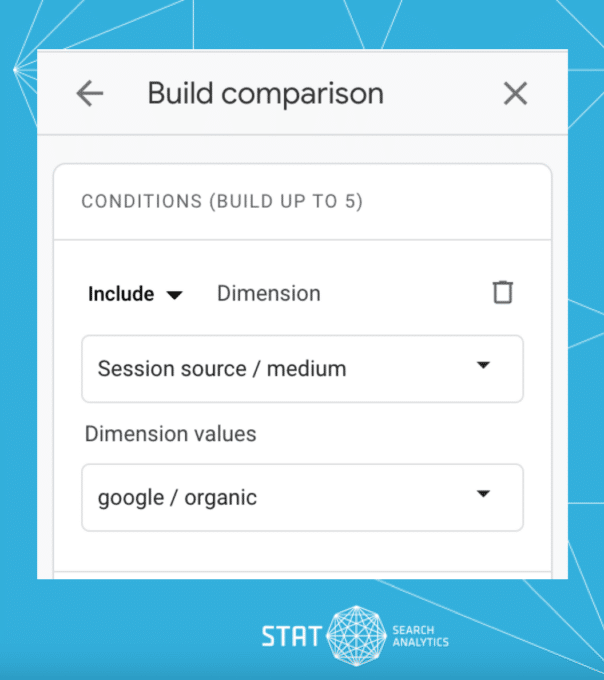
Simply set the conditions for your comparison as shown to isolate your organic traffic in Google Analytics 4.
Once you’ve created your comparison, head over to Reports > Engagement > Landing Page. You’ve now got a list of all your pages that are visited first as a result of an organic search. Start looking at before and after comparisons of the data to see which pages have fluctuated in traffic.
It is at this moment that you must decide whether the algorithm update is so impactful on your rankings, traffic, and revenue that you need to inform top-level leadership. You have the industry reports and you’ve captured the impact on your website — we advise over-communicating with leadership, letting them know that you’re aware of what’s going on and that you’re digging deeper.
Now that you know which of your pages and keywords are seeing fluctuations, it’s time to identify the “winners” and “losers” of the update. The best place to start, regardless of your specific rankings on the SERP, is to analyze the top 10 listings.
STAT’s Archived SERPs feature shows the top 10 listings for any date after which tracking was set up.
The Archived SERPs tab in STAT

Go back in time by selecting a date to see detailed listings of what was on the SERP that day.
First start by asking these questions:
Next, ask:
SEO execution is broadly thrown into three categories: on-page content, off-page authority, and technical — one page at a time, we need to evaluate how our page stacks up to the new standard of the update for each.
On-Page Content
One of the quickest ways to compare your content with the top 10 results is to compare H2s. Does your content address the same subtopics as Google’s favorite results?
You’ll also want to pay attention to characteristics like structure, length, metadata, and multimedia usage such as video and images.
Also consider how other listings are meeting E-E-A-T factors. Does the content have an updated or recent publish date that seems fresh? Is the content author reputable? What sources establish the author’s credibility?
Off-Page Authority
Next up, tune into the off-page authority of competing pages. Look at metrics such as:
Is your page stacking up against competitors well with backlinks or is the discrepancy in volume and/or quality tanking your ranking?
Technical
Finally, investigate the technical page-level components.
Start with the site map. Is this specific page in the site map? Check that the page is not excluded in robots.txt.
Remember to use canonical links to prevent duplicate pages from cannibalizing your page ranking.
Look at your page speed, compare structured page data with other ranking pages, and write alternate text for any images. This consideration for sight-impaired visitors isn’t about ranking, but compliance with ADA requirements improves user experience and may become relevant for ranking down the road.
You may have just discovered a series of important page-level factors that need to be addressed. However, we sometimes run this page-level analysis and find it to be a competitive wash — everyone in the top 10 can look nearly identical from an on-page, off-page, and technical perspective. So, what gives?
Google’s E-A-T guideline identifies Expertise/Experience, Authoritativeness, and Trustworthiness among its most important ranking factors in its algorithm.
This is not only demonstrated on a page level, but on a domain level. It’s the reason why a website could have a page that is arguably “better” than what’s found on the top 10, but not rank. Google needs to see that your domain — and your entire entity — demonstrates these values.
Domain-Level Content
If your domain-level content is suffering, you need to establish topical authority.
“Topical authority is a measure of authority built up through proven expertise and trust in your field. The more high-quality, informative pieces of content there are on your site, the more likely your website is to be perceived as a trusted source of information on a particular topic.” — Zoe Ashbridge, Senior SEO Strategist, Forank (How to earn topical authority in 2022 and beyond)
If your site is hurting here, do keyword research to find the related content keywords, organize your keywords into clusters or pillars, and get to work building and linking new authoritative content.
Domain-Level Authority
Your domain-level authority comes from backlinks. Zoom out and survey your site’s overall domain rating and your overall backlink profile compared to competitors. There are lots of helpful tools that can help you accomplish this — one example (that you can use for free) is Moz Link Explorer.
Domain-Level Technical
Finally, scan your site for glaring technical issues. Check in for these common failures:
With a much clearer picture of what has changed, how it is impacting your business, and what it will take to “win,” you’re ready to execute. More importantly, you also have the ammunition to communicate to key stakeholders.
It’s becoming increasingly rare that an SEO has the skills or access to make all necessary changes to their website. It’s time to communicate with developers, content writers, and top leadership.
Give them a brief that rolls together all of your findings:
And then give them their specific tasks. Do this and you’re on track to mitigate losses, seize opportunities, and prove why you’re an essential asset to the company when so much is dependent on Google.
Cybersecurity is a deeply competitive and complex industry for marketers. In this short webinar, we discuss some of the essential ways marketing leaders should approach their growth.
If you saw photos of a bunch of marketers partying in early October, you got half the story.
97th Floor's Mastermind is an annual marketing leadership conference located in Park City, Utah. This year, from October 3-5, marketing leaders spent two days at The St. Regis Deer Valley participating in expert-led discussions on marketing strategy, listening to keynote speaker Ryan Holiday, and collaborating with peers.
There may or may not have also been a cooking challenge, some painting and hiking, and delicious food all against the stunning background of Park City’s colorful fall mountains.
We’ve pulled together 8 lessons from the bright minds of our attendees. Note that because each discussion leader took a different approach to their topic, each write-up will read a little differently. Here's what you're in for:
Brand-marketing-adverse leadership are armed with one argument: You can’t prove ROI. Sean Michael Colee-Addington and Tatiana Fabregas from NBCU dissolved this argument in their discussion on balancing brand and performance marketing.
But what about tracking? Tatiana is confident that the “data is getting there to give you the ROI" for brand marketing. Brand marketing can be measured; it’s just measured differently through awareness, education, values, introduction, and sustaining a competitive edge. Get creative and think about what other tangible metrics could be driven by brand marketing. You may not see any movement in revenue for the immediate next quarter, but you can see lift and trust that budget spent on brand marketing will pay out with increase in the future.
Asking someone to trust that a spend will pay out — without immediate proof — is exactly what every pitch comes down to. Whether it's a marketing budget conversation or a funding moment, the structure of the ask is the same: conviction, clarity, and a credible case for patience.
Daniel Nisan, startup founder with direct experience on both sides of the investor table, shares what he's learned about making that case when real money is on the line. This short video captures the mindset and mechanics behind a high-stakes pitch that actually lands.
Do This: Reevaluate what percentage of your marketing efforts are branded—if high-funnel, branded campaigns aren't receiving any budget, allocate a small portion of budget to test your ideas and establish a system for measuring value.
97th Floor’s unique team structure isn’t the only thing that makes us the best choice for our clients - it’s also the leadership values and style we practice in the company.
97th Floor CEO Paxton Gray led a discussion about how marketing leaders can develop a productive team. We’ve pulled key takeaways from those who participated.
- Carve out ownership for everyone on your team.
- Don’t take away an opportunity to learn or grow by just doing something yourself.
- When hiring, it's not about finding a culture fit, it's about finding a culture add.
- Embrace a diversity of approaches for the diversity in your team.
- When working with your team, be involved and mirror the passion of what excites them about the work.
Do this: Evaluate your team's feedback loops—how does each team member see and understand the impact they have on the company's bottom line? Build a system for more frequent and thorough feedback.
Sam Oh, Ahrefs' VP of Marketing, led a discussion about developing standard operating procedures that will:
Here's his team's internal process...for creating processes:

Keep in mind that there’s no such thing as a “perfect” system. Train your team to proactively notice blockers in your systems and propose optimizations.
A strong foundational systems that should free up individual contributors' time and attention to be more creative. Scaleable creativity comes from defined systems that get modified and improved on in documented, measurable ways.
Do this: Using Sam's flow and as a marketing team, take 15 minutes to create a documented system for one task your team performs regularly. Set a date for when you'll reevaluate and optimize that process.
Christina Garnett is Hubspot’s Principal Community Manager for Offline Community and Advocacy. Her discussion group benefited from learning Christina's 3 ingredients for turning customers into brand advocates.

Do this: Think about core memories you have with brands. What do these memories inspire you to do for your customers? Hold a brainstorm with your marketing team on how your brand can create core memories.
John Huntinghouse, VP of Marketing at TAB Bank, pulled from proprietary 2020 research to show the importance of thought leadership for decision-makers.
Here's some of the juice:

Put your content through these filters to determine if it will be valuable thought leadership for your space:
Do this: Use John's questions to evaluate your upcoming content calendar—it's not too late to pivot (or even scrap) content that doesn't meet standards.
97th Floor’s not-so-secret sauce for every campaign is an undying commitment to understand our client’s customers before we do anything else. Danny Allen, 97th Floor’s VP of Marketing, discussed how to use personas to create content. Consider this:
4 Lessons from The Internet's Giants
SEO’s never been a very simple game—there’s a reason most small-to-medium sized companies outsource the bulk of it. But what about the largest sites in the world? The ones with millions of pages and hundreds of developers. Simply put, these sites only get more complex with their size.
We’ve interviewed the SEO experts managing these behemoths to uncover the strategies specific to them. This is not your tips-n-tricks, “how to growth-hack your site” kind of article—let’s dive in.
Questions we’re answering:
"There are more people and constant change at a large organization, so we’re always educating and building our credibility. Just as you find things running well with one team, they’ll reorganize. Figuring out how to best work with other teams will always be part of the business."
- John Crockett, Director of SEO at Ancestry
Credibility with other departments will be the foundation for all future efforts—when working on large-scale websites, an SEO leader will often act more as a salesperson pitching SEO strategies internally, than a roll-up-your-sleeves practitioner. It’s no surprise that a large organization has frequent turnover, but don’t let that constant change deter you from building and rebuilding relationships with other teams.
As you have these conversations, consider the following:
Pro Tip: Always be on the lookout for contacts in other departments that champion your work. These are your evangelizers and will help immensely when you’re trying to get your projects prioritized.
Questions we’re answering:

A deep understanding of top leadership’s goals is critical. For many leaders, SEO by nature is not on their agenda, so it is your responsibility to connect how SEO supports the goals they already do have. Crockett says, “At the end of the day, we need to translate those metrics into what’s of greatest concern to those teams.”
Pro Tip: Take the goals of the executive team and articulate how you’ve aligned your SEO KPIs with those in language that’s meaningful to THEM. Educate them so SEO can become a common priority.
Kaleb Gilliland is the Director of Development at Pro Athlete. Pro Athlete manages 4 sporting goods websites that together have over 6.5 million pages to manage. Gilliland shares, “Sometimes SEO isn’t deemed valuable from a business standpoint because you can’t see tangible results immediately.” John Crockett adds that “SEO is measured bets on what’s going to work and what’s not going to work. We’re only one part of that. We have to worry about how Google’s going to interpret new initiatives. We also have to worry about what our industry competitors are doing. We have to worry about what our search competitors are doing. So sometimes it makes it harder to make the case that SEO should be prioritized from a resource standpoint.”
How can you prove the payoff? Crockett shares “Sometimes, you have to iterate your way into things. Don’t jump right into the huge thing that’s going to cost millions of dollars and take half our development resources for the year. You know that’s not going to be feasible. So it's finding ways to step into this until it proves itself, then you can open the floodgates because you’ve proven the value in smaller ways.”
Start with low-risk opportunities and work your way into bigger projects. Document successes and failures along the way. Use whatever analytics you’ve got because, with a website of massive scale, just a 5% increase in organic traffic can easily translate to massive revenue increases. These numbers will show that the ROI for SEO is worth the patience it takes to get to those results.
Pro Tip: Crockett shares, “Anybody can understand the value of getting free traffic, (free meaning there’s not a per-impression expense) and that this traffic has longevity. Show how traffic is leading to revenue.”
A tool like Ahrefs allows you to pull the traffic value for your website. That essentially takes what you are organically ranking for and compares it to how much you would have to spend via ads to show up in those same SERPs. Airbnb saved an estimated $4.8 million this last month. People.com saved an estimated $12.2 million this last month. These numbers are a powerful illustration of how SEO can translate into saving money and making money.
Questions we’re answering:
“SEO should create a partnership with development…It’s not just a business handoff of requirements. It’s not two separate teams. It’s one team doing different things to accomplish the same goal.”
-John Crockett, Director of SEO at Ancestry
If your SEO-development relationship feels strained, you’re not alone. Frequently SEOs will find themselves in these scenarios:
From the perspective of the development team, they may have had new SEO leaders every few years, each with a laundry list of “urgent” changes they need to be fixed. Alternatively, they could have the same SEO leaders consistently for years but due to algorithm/industry changes, the strategy changes frequently. It can be exhausting for them.
Building a partnership with development will require education. Developers may not know why duplicate content is a problem or how impactful mobile speed can be on a site’s ability to rank. Trent Howard, Head of SEO at 97th Floor, suggests, “Consider making a list of all the different areas development touches SEO, then educate your dev team on why they are important. This will help alleviate the pain point of development feeling like SEO comes to them with a new priority every week. This doesn’t replace the importance of ongoing education, but it does demonstrate how vast SEO’s responsibilities are.”

But SEOs need to get educated, too. Crockett advises, “Understand a developer’s world enough to talk to them intelligently.” Research possibilities and find examples to share. Crockett continues, “I don’t get too much into the solution with them, but I do know enough coding and engineering to be prepared in those meetings with an idea of how we’d accomplish it. Doing the research has taken projects from being labeled as impossible to being done.” Be respectful of the developer’s expertise. Don’t over solve it, but come speaking their language to collaborate about new ways to approach the problem.

Pro Athlete Inc has found major success in getting SEO projects prioritized because of its unique team structure. Kristina Kuska, Head of Organic Search at Pro Athlete, shares, “One of our major successes at Pro Athlete is having development on the marketing team. Having developers who understand SEO changes, agree with them, and implement quickly has been invaluable.” Pro Athlete’s structure is heavily influenced by one of their founders who was a big advocate for SEO. Now SEO is baked into everything they do. Gilliard shares, “Development prioritizes projects that are going to keep SEO at the forefront of what we do. If people can’t find us, we’re going to have a hard time no matter what we’re selling or doing.”
Pro Tip: Find creative ways to link the development team closely with the SEO team. Maybe you can’t restructure your org, but try for a monthly collaboration meeting with all the decision-makers present. Set goals that encourage partnership and that lead to mutual benefits.
Whether development is on your team or not, a true partnership can be made if you can learn to speak their language and invest time educating on the benefits of prioritizing SEO.
Questions we’re answering:

39% of people will stop engaging with a website if images won’t load or take too long to load (Hubspot), so don’t underestimate the power of chipping away at the mountain of SEO fixes you may find yourself with. Develop a system to be consistent with your SEO optimizations. John Crockett shares that he stays on top of SEO by considering three things:
Make sure SEO is considered for all future content creation. If SEO can be considered during creation, less of your time is eaten up going back and making fixes. Gilliland shares a counter point, “Don’t ignore the technical aspects of SEO with the sole focus on content. You can produce the greatest content in the world, but if someone can’t load it, what good is it?”
Pro Tip: For many large sites, pages are scaled programmatically, so in that process of automatically building pages, can SEO optimization be built in? Kuska shares that with their webpage generation “everything is structured to best SEO practices, but then we can also go in and optimize pages individually.” Pro Athlete was able to set up this structure to help them remove the chaos of needing bulk changes done to web pages.
When you have millions of pages on your website, it’s going to be impossible to rank for every page. Gilliland says, “You don’t have to have every page on your site ranking and Google crawling it all the time. You’ve got to define the things you want to rank for and make it clear what you want Google to choose for those keywords.” Rely on data to direct your decisions for what to prioritize. Then when you get the question of, “why aren’t we ranking for…[insert keyword]” you can confidently explain the strategy of targeting what’s most important.
Pro Tip: Remember that SEO is an ever-changing industry. Crockett shares, “What was best-practice in SEO 15, 10, even five years ago needs to be revamped, cleaned up, fixed, removed or redirected.” Don’t be afraid to go back and redo things, and to have the conversations explaining to other departments why it has to be fixed again.
You know what’s at stake—the potential for massive revenue, massive brand exposure, improved user experience…the list goes on. But it’s highly unlikely that your organization understands, and unfortunately, we see many enterprise-level SEOs bounce from company to company seeking that perfect landing spot. Take these lessons and proactively build a culture of SEO priority within your org—align your goals to theirs, build up your interpersonal relationships, explore the full impact of SEO on their workload, and ease into a cycle of organic success.
In this no-fluff Prezi video, Paxton Gray, CEO of 97th Floor walks you through his step-by-step process to creating consistent and quality content marketing that works for virtually any budget. If you’ve felt that content marketing hasn’t been producing the results you’ve wanted, this video is for you.
Paxton explains one of the reasons why Buzzfeed content marketing can draw you in — even when you know it’s just clickbait — is because it taps into the “human algorithm.” It's the power of appealing to a person’s curiosity, especially in a content marketing context. Curiosity alone is not enough, though. Paxton explains how to also use data to create content that’s more personal, targeted, and relevant. After all, content marketing made for everybody means it doesn’t really appeal to anybody.
Vivint Solar is a brand that needs no introduction — mostly because they’ve been introducing themselves from our doorways for years. Of course, it doesn’t hurt that they are a multi-billion dollar, door knocking solar juggernaut, but it wasn’t always this way.
Their street presence had never been stronger, they came to 97th Floor with an online presence that was lackluster. Their success in the neighborhoods had left smaller shops eating their digital lunch. They’d seen the gap in their strategy and had a desire to translate their success from the streets to the internet — and in the process, open the door to the even wider audience to be found online.
At the start, we had hardly anything to go on. Vivint Solar hadn’t put a deep SEO plan in place before, and while they organically dominated branded searches, they hadn’t turned any attention to non-branded search terms. So, we began from square one. Not that we minded, we always love painting on a blank canvas.
{% video_player "embed_player" overrideable=False, type='scriptV4', hide_playlist=True, viral_sharing=False, embed_button=False, autoplay=False, hidden_controls=False, loop=False, muted=False, full_width=False, width='1920', height='1080', player_id='25873143908', style='' %}
Vivint Solar needed a clear, intentional SEO strategy. And, because all SEO measures take time to bring in results, it also needed to be enacted soon so that they could establish themselves. With that in mind, we got right to work.
We began as we always do, with market research to reveal the strengths and weaknesses in the strategies of Vivint Solar’s competitors. This kind of research is essential because it identifies gaps that our client can fill — as well as places where they can step up their game in order to keep up.
In Vivint Solar’s case, we discovered that many of their competitors’ ranking pages had great domain authority, and they had already targeted many non-branded terms. With this information, we were armed to take the next step and conduct informed keyword research.
Our keyword research revealed crystal-clear opportunities for optimization and new content. As Vivint Solar was already a known brand — and already bringing in traffic from branded searches — we focused all attention to increase our share of voice via non-branded terms. Our keyword research quickly uncovered non-branded keyword opportunities that would aid consumers along their buyer’s journey. We launched a comprehensive blogging strategy with the intent of attracting inbound traffic through these non-branded terms and increasing on-page conversion through compelling CTAs and copy.
As we mentioned, time was of the essence. We needed to get Vivint Solar’s new blog pages ranking quickly, and link building was an essential part of that race against time. Links build the authority of a page in little time, allowing the page to rank much more quickly than it would on its own.
Our strategy didn’t end there. While our ultimate goal was to increase Vivint Solar’s presence online so they would not be totally reliant on door-knocking, what if there was a way to take advantage of those prolific efforts? Using localized SEO, we launched pages for every locale where Vivint Solar is active, over 100 (but we’ll get to that later). This provided pages tailored to the needs and offers of various states and cities, connecting door-knockers and potential customers quickly and effectively.

With these strategies in place, and a thorough technical audit completed, we put our plans into action — starting with content creation. Together with the Vivint Solar team, we researched, outlined, and produced over 200 articles targeting our various non-branded keywords.
Once article creation was underway, we turned our focus to link building. Our competitive research informed this strategy from the beginning, including the frequency of our backlinks and their quality. After the first month of outreach, we were able to gain over 30 backlinks each month to the Vivint Solar site, each one obtained naturally on quality websites. Not to mention, each link was optimized for a specific page and corresponding keyword. This aided our content in ranking quickly for our intended keywords.
Additionally, we helped Vivint Solar build out robust versions of their local pages, which at the time included 23 states with additional locales within each state. By the time we were done, we had over 100. We built out and optimized local pages and search terms in each of these respective markets.

While the above components are critical to any digital transformation, we knew it was important to look even deeper into Vivint Solar’s funnel than simply awareness-level content. We analyzed the conversion path for Vivint Solar, and identified potential weaknesses or misalignment of message. We then added resources to optimize the user’s experience once they’d entered the funnel, and throughout their journey. We fully audited and optimized email messaging, and created valuable content by breaking down complex industry topics and making them more digestible through quality UX design.
Here at 97th Floor, we love working with remarkable partners like Vivint Solar. Together we moved quickly to not only meet, but exceed the goals we set at the onset of the project.

Before 97th Floor began working with Vivint Solar, only 5% of their organic traffic was non-branded, and today 33% of all visitors are coming from non-branded keywords. Additionally, total organic traffic has increased by an incredible 45% year over year. This was accompanied by a comparable rise in revenue, and a 40% increase in new users. This increase in traffic and conversions has manifested in hundreds of thousands of dollars in recurring revenue brought in from digital channels.
Today Vivint Solar has a shining reputation in residential solar on the streets and on the web — a true physical to digital transformation. Their prospective customers used to have to wait to be found. Now they are able to find Vivint Solar on their own. Through our combined efforts the two methods work together, making Vivint Solar an unstoppable force with a good reputation on the streets and online.
