Elevator Talk: Should You Optimize Content Differently for ChatGPT, Gemini, and Claude?
It started when JennyB asked the team a question in Slack: has anyone actually tested how ChatGPT, Gemini, and Claude cite content, and noticed where they differ? She'd been treating “optimize for AI” as a single bucket, but with client data showing some audiences skew heavily toward one assistant over another, she wondered whether that approach needed to change. What followed was a thread about shared fundamentals, assistant-specific quirks, and how to actually go test the difference instead of guessing at it. Here's how the conversation went.
One Bucket, Even When the Skew Is Obvious

Test the Experiment Before You Trust the Hunch

Same Fundamentals, Different Logic

Same Fundamentals, Real Differences — The Data Says Both

The Search Engine Behind Claude's Citations

Rachel Builds the Thing
The Takeaway
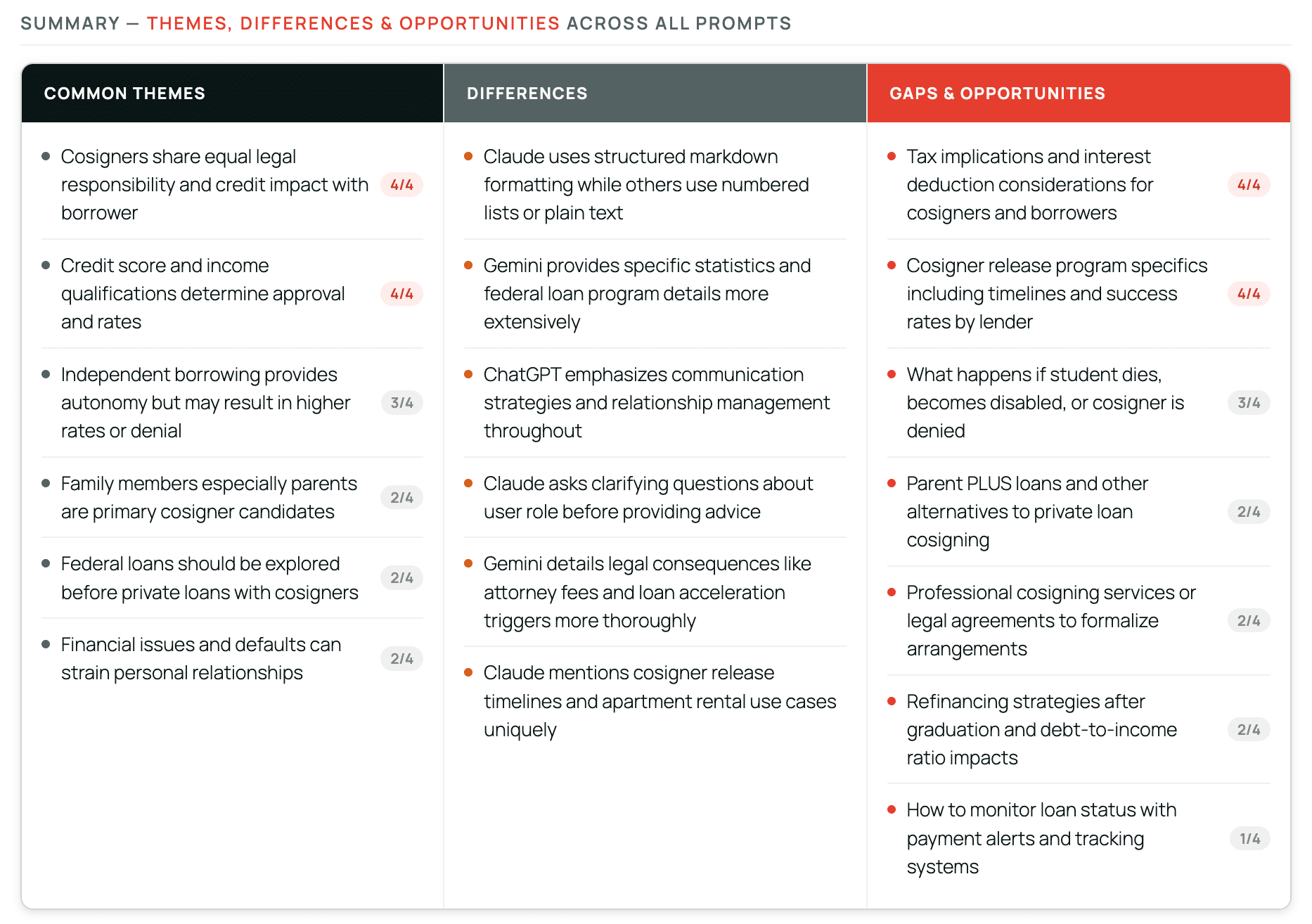
Nobody on the thread had run the test, but outside data backs up the split verdict. Verified structured content still drives the majority of citations across every assistant, but each one weights different signals on top of that. Gemini leans on Google's index, ChatGPT shifts by industry, and Claude is the real outlier: it cites UGC at 2–4x the rate of the others and pulls an estimated 80% of its citations from Brave's top 10 results. The fundamentals aren't a myth. Neither is assistant-specific logic.
The plan now is to test it, not just theorize about it: pick a Claude-skewed audience, optimize deliberately for it (Brave SERP presence included), and track whether the lift stays isolated or spills over to the rest. Rachel's new cross-platform tool means that the test doesn't have to be a guess — it can be measured.
You might also like
Elevator Talk: Does Domain Authority Even Matter for AI Visibility?
Elevator Talk: What Markup, Markdown, and Schema Are Really Doing for AI Search