



Our client is a premier cruise line that carries over a million passengers each year to more global destinations than any other cruise line.
When the premier cruise line approached 97th Floor to become the top Alaskan cruise line, we knew that traditional keyword-focused SEO wouldn't suffice. Search engines now evaluate brands holistically through E-E-A-T, requiring a comprehensive content strategy that engages audiences at every funnel stage.
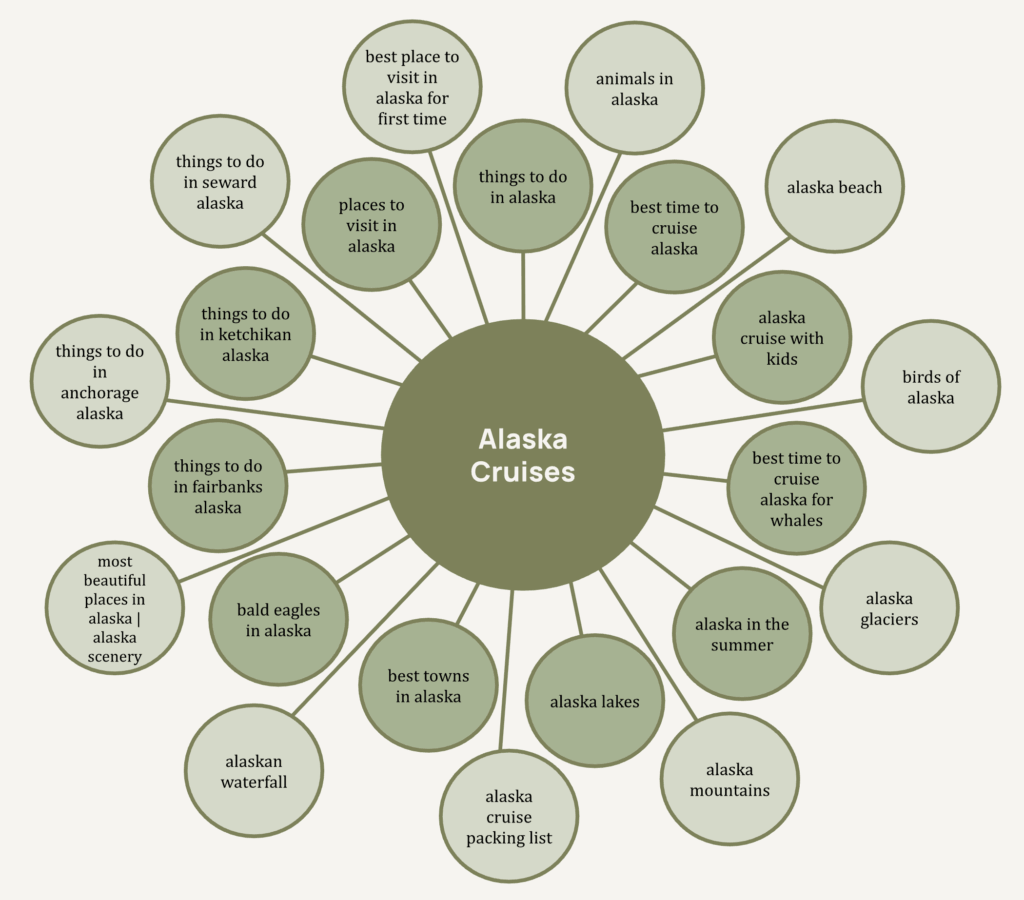
To help Google and LLMs understand our client as the best option for Alaskan cruises, we shifted from targeting individual keywords to building comprehensive topic clusters. This created a network of interlinked content that demonstrates subject matter expertise while helping search engines understand content relationships and site architecture.
We strengthened on-page SEO elements and implemented strategic internal linking to establish interconnectedness between cluster content, ensuring all supporting pages link back to their respective pillar pages.
Deliverables
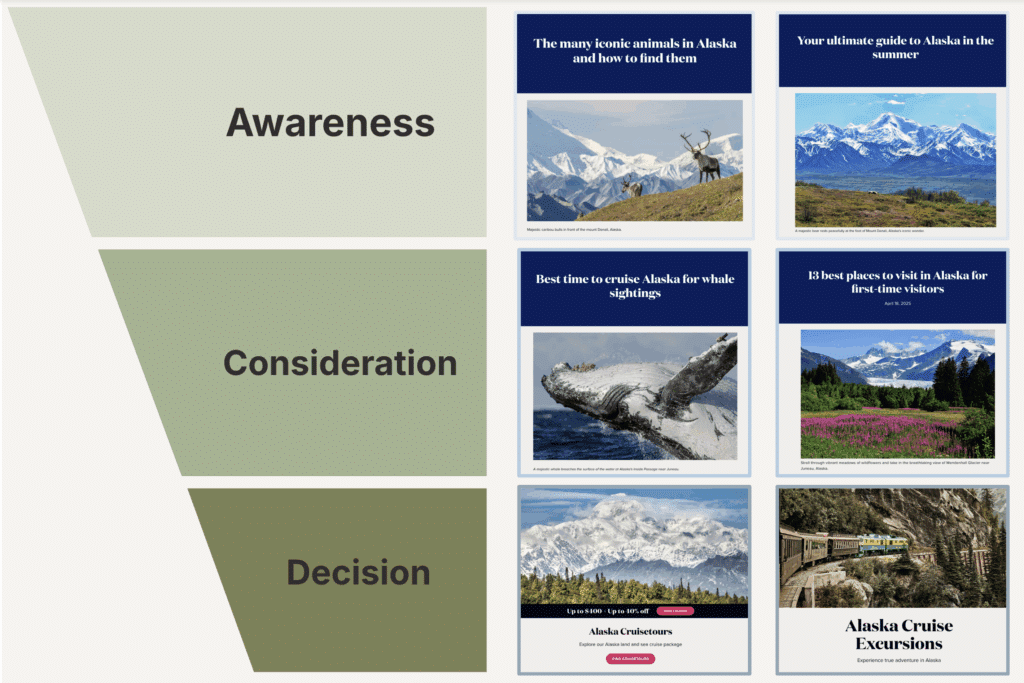
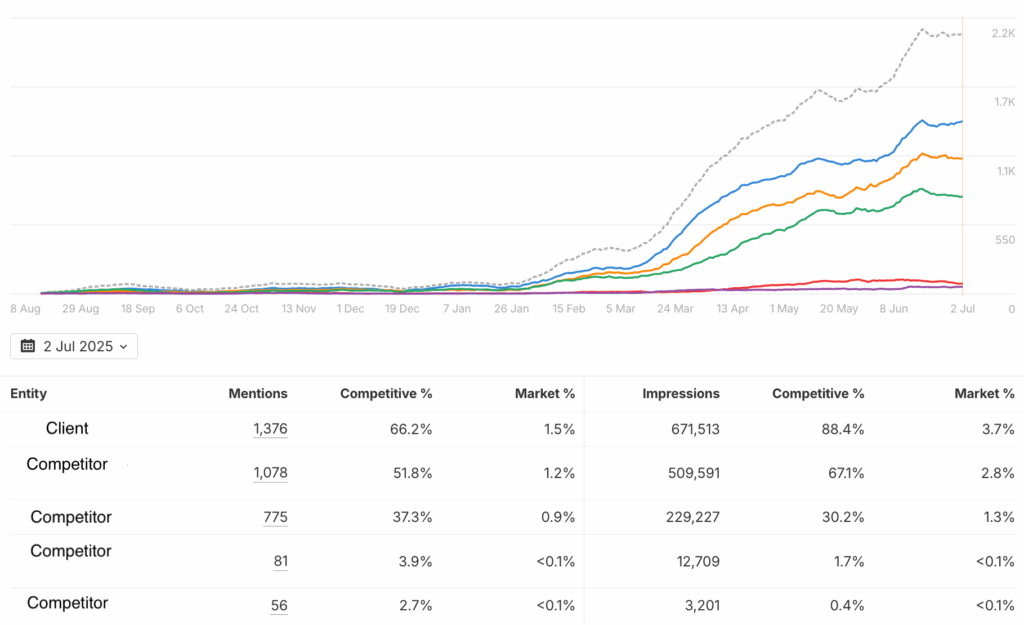
This growth reflects the impact of well-structured, high-intent content being surfaced prominently by AI tools—a strong signal that our content is recognized as authoritative and relevant.
Packd is a travel service offering pre-paid mailer bags to send your vacation clothes home, leaving more room for all the stuff you find along the way.
Packd targets two main audiences: business travelers and families. They needed to reach these audiences while they were experiencing the pain point that Packd solves.


97th Floor launched digital OOH ads (both GIF and still images) in four major airports, tailoring the ad copy and creative to each location.
By putting Packd's audience first and experimenting with a new channel, Packd saw incredible results running this campaign even on a small budget.
19% increase in average engagement time on the site
467% increase in purchases from organic;120% increase in purchases from direct
225% increase in revenue!
For seasonal business owners, demand rises and falls with the changing weather. While seasonality is a unique and perhaps daunting challenge, the predictable rhythm of demand means that those businesses who can sync their marketing with the mandates of sun or snow can have success year-round.
97th Floor is no stranger to seasonal marketing; we’ve executed winning strategies for businesses including pool maintenance, sports equipment, cruise lines, pest control, lawn care, solar, and moving services, just to name a few.
In this article, our resident experts in SEO, content, and advertising share five actionable tips for seasonable business marketers.
Search Engine Optimization (SEO) is a long-term game, and waiting until peak season to focus on it can be a costly mistake. It's essential to begin your SEO efforts well in advance, ideally during the off-season.
Head of SEO Mike Witham says, “You need consistent year round efforts to maintain and improve rankings. If your peak season is in March, you should be ensuring you have solid rankings for core pages by no later than December. Do not start working on it the month before your peak season!”
For businesses serving multiple states or a large region of the country, seasonal demand may be different across these various geographies.
Enterprise advertising specialist Spencer Martin uses Google Keyword Planner to anticipate search volume fluctuations in different areas.
He shares, “We launch campaigns early so that we have 2 to 4 weeks to ramp up and capture the full demand. Campaigns need time to scale and learn, so if we wait until the season starts to launch we lose out on potential profits for our clients.”
While digital marketing is crucial, seasonal businesses can see major wins by looking at more traditional advertising. Enterprise Account Executive Nathan Hooper suggests non-digital forms of advertising, such as mailers or community events to target local audiences. Advertising on community calendar pages or local business directories can put your business in front of potential customers who may be researching local services.
Understanding your buyer and their motives for buying is essential for capturing demand at the right time.
Brandon Smithwrick asks what happens to your marketing instincts when you let AI do all the thinking. He breaks down how cognitive offloading quietly erodes the skills great marketers are actually built on.
Senior Director of Campaigns Jon Hammond shares that his clients in the travel industry refer to December through February as “The Wave.” This three-month period is the biggest sales period for travel as people look forward to summer sun during the cold, dark winter months. His clients maximize their ad budget and run major deals and promotions during this time to capture the demand.
Content Marketing Specialist Kaylee Baker emphasizes the importance of targeting specific demographics, such as 18-30 or 25-40-year-old males, who are the main consumers of seasonal services. Consider the platforms they frequent, such as YouTube, to tailor your marketing efforts accordingly.
When reporting to leadership, especially in industries with high historical seasonality, like cruises, it's essential to use Year-over-Year (YoY) data rather than Month-over-Month (MoM) data. This approach provides a more accurate depiction of progress or decline in traffic or sales over the seasons. By analyzing YoY data, you can better understand trends and make informed decisions to optimize your marketing strategies.
In conclusion, marketing a seasonal business requires careful planning, adaptation, and understanding of your target audience. By implementing these five tips, you can maximize your marketing efforts and capitalize on seasonal fluctuations in demand.
