Key takeaways
- Holistic SEO treats a website as a connected system, aligning user experience, authority, content, and technical performance to drive long-term, compounding growth.
- Modern search engines evaluate the full site experience, which means isolated, tactic-only SEO efforts fall short in competitive and constantly evolving SERPs.
- The XACT framework provides the strategic foundation for holistic SEO by unifying UX, Authority, Content, and Technical priorities under a single approach.
- 97th Floor’s six disciplines operationalize holistic SEO, translating strategy into a structured, repeatable framework that improves performance, resilience, and measurable results.
What is holistic SEO?
Holistic SEO is a unified approach to search optimization that treats a website as a connected system rather than a collection of isolated tactics. Instead of focusing on single levers like keywords or links, holistic SEO aligns user experience, content quality, authority signals, and technical performance to support long-term growth. At 97th Floor, holistic SEO is operationalized through the XACT framework, ensuring every optimization supports both search engines and real users.
Holistic SEO vs. traditional SEO
Traditional SEO is often executed in isolation. Holistic SEO is designed to work as a connected system that compounds over time.
Traditional SEO
- Focuses on isolated tactics (keywords, links, or technical fixes)
- Prioritizes short-term ranking gains
- Optimizes primarily for search engines
- Often reactive to algorithm updates
Holistic SEO
- Integrates UX, content, authority, and technical foundations
- Prioritizes long-term performance and resilience
- Optimizes for users and search engines
- Aligns with Google’s direction toward experience, trust, and relevance
When people ask what is holistic SEO, the simplest answer is this: it’s SEO designed to survive algorithm changes by improving the entire system, not just one part of it.
The core components of holistic SEO (XACT framework)
At 97th Floor, holistic SEO is executed through the XACT framework, which organizes strategy into four core pillars: UX, Authority, Content, and Technical. Together, these components support semantic SEO, topical authority, and sustained organic growth.
UX (User Experience)
- Ensures visitors can easily navigate, understand, and act on your site
- Aligns with Page Experience signals and conversion-focused design
Good UX keeps users engaged, which reinforces relevance and performance signals across search.
Authority
- Builds trust through backlinks, brand signals, and entity recognition
- Supports topical authority by reinforcing expertise at the domain and page level
Authority helps search engines determine who deserves to rank when content quality is similar.
Content
- Addresses user intent comprehensively across topics, not just keywords
- Supports semantic SEO through depth, structure, and contextual relevance
Strong content frameworks allow sites to own topics rather than compete page by page.
Technical
- Ensures search engines can crawl, render, and index content efficiently
- Provides the infrastructure that allows all other efforts to succeed
Without a strong technical foundation, even great content and authority underperform.
Together, these four pillars create a system where improvements compound over time—the defining characteristic of effective holistic SEO.
How holistic SEO works at 97th Floor
Holistic SEO only works when each of these pillars is treated as part of a larger system. Focusing too heavily on one area (content, links, or technical fixes) can create short-term gains. That looks good in reports, but it rarely produces sustainable growth on its own.
That’s because SEO isn’t a monolith. It can’t be painted with a broad brush. A truly comprehensive strategy will act like a flywheel where progress in one area supports others, and over time, results compound.
Or, to put it another way, more SEO doesn’t necessarily lead to proportionally more results. What matters is where those efforts are applied, and how well they work together.
This is the origin of the 6 Disciplines of SEO framework. Designed by 97th Floor, this framework exists to help move teams from doing more SEO, to doing holistic SEO.
SEO's History with Search
As Google’s algorithm has matured, there have been ground breaking updates which have improved overall user experience.
Much of how the industry views SEO today is because of these wide reaching (and sometimes earth-shattering) updates. For over a decade the theme has been Google making changes, and SEOs trying to intuit the signals with moderate success.
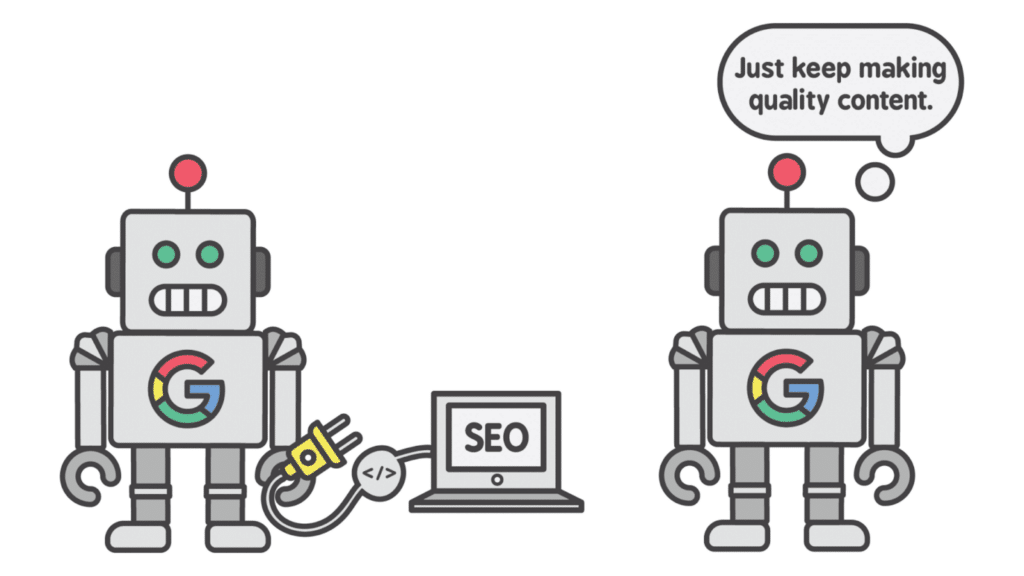
Today, we see that Google is releasing frequent broad core updates aimed at improving the algorithm from a holistic perspective. Google has clarified that for each of these updates the advice they give comes down to making great content that is high quality, expertly written, trustworthy, unique, and valuable to the user.
We suggest focusing on ensuring you’re offering the best content you can. That’s what our algorithms seek to reward.
While this advice is good, it isn’t enough. Optimizing for users over bots makes Google an ally rather than an enigma, as you both work towards the same goal: a better experience for the people behind the searches.
Enter the holistic strategy any SEO can adapt: The 6 Disciplines of SEO.
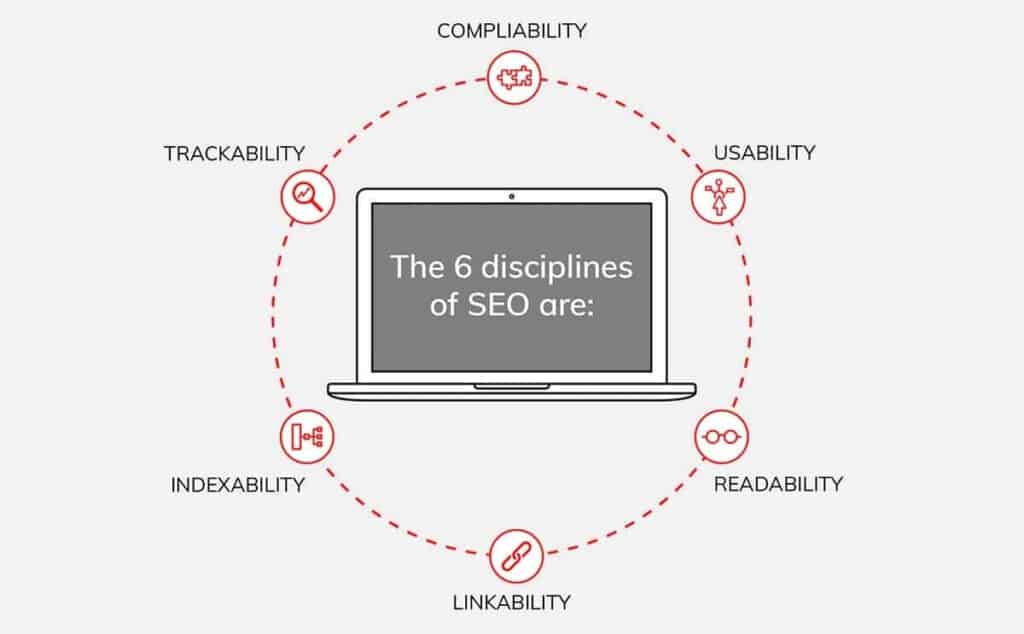
6 Disciplines of SEO
- Compliability: Improving a website’s compliance with Google’s search guidelines
- Usability: Improving the site’s user experience
- Readability: Google’s ability to read and understand a site
- Linkability: Optimizing a website’s backlink profile
- Indexability: Google’s ability to crawl and index a site
- Trackability: Ensuring a website’s SEO performance is being tracked and measured with data
A note on our naming convention: we get that a lot of these words sound made up, but we chose to name the disciplines with a focus on the the ability derived from each. Yes, they are weird. That’s by design; weird things are easier to remember.
Here are some examples of what execution can look like within each of these disciplines.
Compliability:
The SEO industry has a wide and comprehensive list of recommended best practices. And, luckily, Google has provided fairly explicit guidance on what websites can do to be compliant with their guidelines. In addition, we’ve executed internal strategies which have yielded results which challenge previous assumptions and best practices.
Armed with all of this knowledge, you can make sure your site is properly aligned and thereby maximize your SEO efforts.
- Addressing Search Console errors in order to be more in compliance with Google’s search guidelines.
- Enhancement errors
- Page speed fixes
- Mobile usability fixes
- Any type of structured data or other on-page enhancement SC detects to have an error.
- Product page structured data errors
- Recipe page structured data errors
- Etc.
- Manual action penalty resolution
- Enhancement errors
- Understanding the latest updates made to Google’s Search Quality guidelines as they are released
Compliability’s Impact
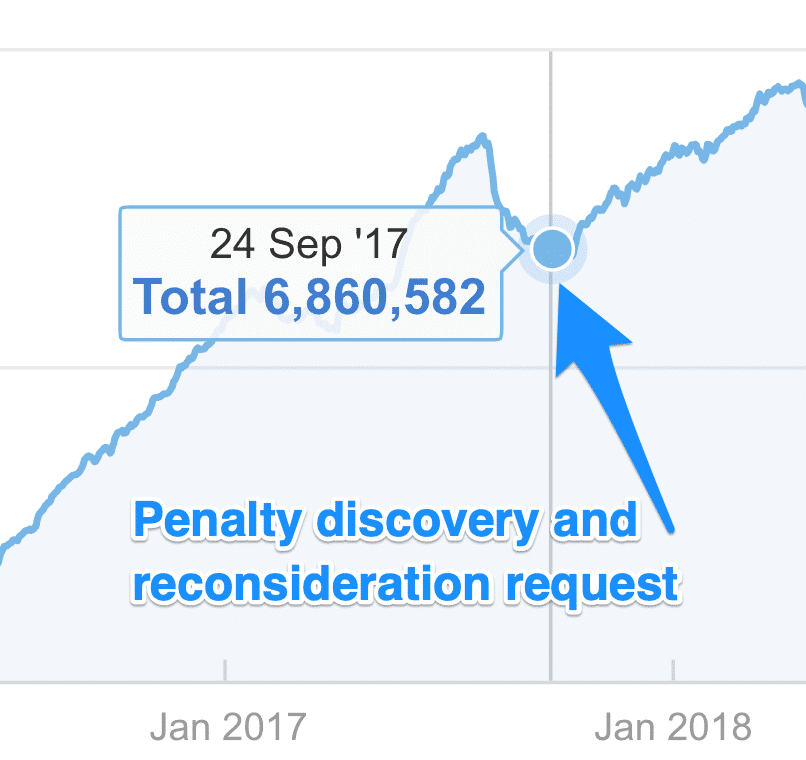
One client came to 97th Floor with stalled SEO efforts, despite their best efforts. Some digging during our onboarding site audit uncovered that they were unaware a manual action penalty had been placed on their site. Google Search Console revealed that structured data was being misapplied to a specific segment of the site's blog pages.
In the past, this site’s posts had included a comments section. But over time the comments became too much to moderate and they ultimately decided to disable comments for the site. In doing this, however, they forgot to disable the structured data on the backend that called out the recently disabled blog comments.
Once this was discovered, it was imperative that all of the residual structured data was removed from those pages. Doing that reassured Google that the client’s site wasn’t claiming to have something on-page that they didn’t actually have. It was a relatively easy fix, but not an obvious find for the untrained eye.
Fixes were applied. The next step was to put together a reconsideration request and submit it to Google. Once the reconsideration request was filed, the penalty was lifted within a week and the site saw significant increases in organic traffic from that point on.
Usability:
Google isn’t outright about much of their algorithm. This is why the latest user-experience based algorithm update Page Experience, is getting so much attention. This update and the trends in recent updates pay particular attention to the Usability discipline, which ensures the overall SEO strategy is UX based.
Improved user experience is important to have baked into any SEO strategy from the beginning, because it has the potential to aid both your SEO-focused goals and your bottom line business goals like conversions.
- Optimizing for core web vitals
- Optimizing for mobile friendliness
- Ensuring that the site does not contain intrusive interstitials
- Ensuring the secure version of the site live and indexed by Google
- Ensure that the best CTAs on page in order to provide the best user experience for visitors
Usability’s Impact
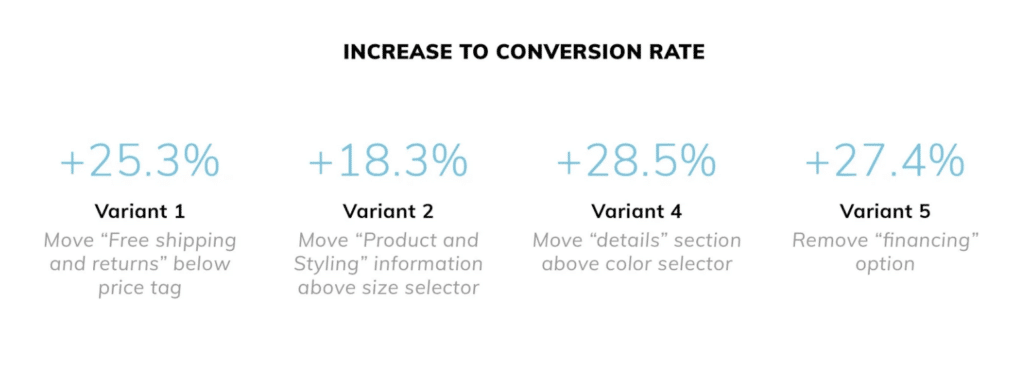
An ecommerce business came to 97th Floor with a dilemma: users were reaching their product pages, but not converting. Hypotheses were formed and ranked as to what site changes might have the greatest impact on UX, but even the most intuitive hypotheses aren’t a place to end.
Multi-variant testing showed which variations brought in the most conversions and new revenue. This was a luxury ecommerce business, even small upticks in conversion rates can show significant increases in revenue, which means they stood to gain quite a bit. In this case, almost every variant showed a positive increase in both conversions and revenue. Overall, implementing these changes led to a 29% increase in revenue over just a few weeks.
In prioritizing the usability, our client gained tangible and actionable information about what their customers like to see on their site, which in this case was removing the financing option from their checkout.
Readability:
Readability in this sense refers to the ease of reading your site for bots, not humans. Readability in this sense should not be confused with user-focused readability scores that measure the sophistication and ease of reading of your copy.
Cleaning up your site’s readability can play a significant role in its ability to rank, because metadata are an important way bots analyze the content on your pages.
Improving the metadata that adorn a site’s pages is an essential way to signal to Google the relevance of the on-page content to the target focus keyword.
The most critical ways to improve readability include:
- Title tag optimization
- H tag optimization
- Structured data optimization
- Copy augmentation
- Featured snippet optimizations
Readability’s Impact
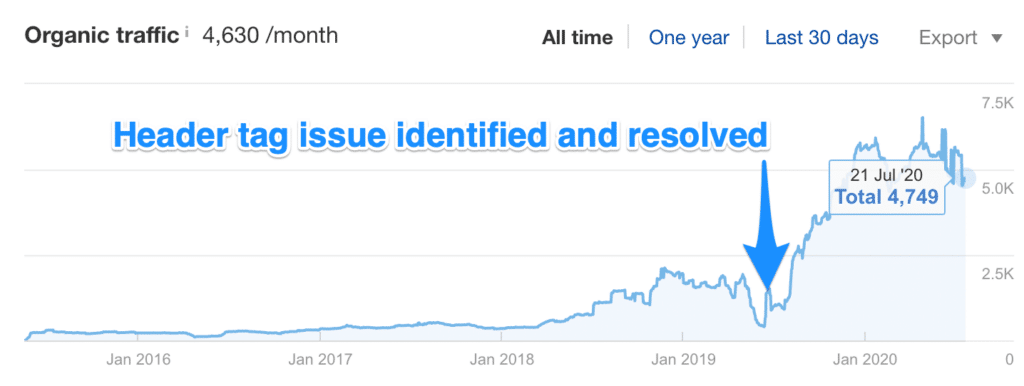
A new client approached us with hopes to increase their blog’s organic traffic. They had been blogging for years, but they weren’t seeing the traffic increases they were hoping for. An audit revealed that they were misusing H1 and H2 tags throughout their blog, at the fault of the customer template they were using. They’d chosen to use more H1 tags as H2 tags, effectively using multiple H1 tags per page. But that looked most attractive on their template, so they unknowingly were shooting their blog’s readability in the foot.
They had no idea they were defying Google’s guidelines. And while their use of H1 tags might have been easier on the eyes, it wasn’t helping them win Google’s favor. Once the H tag errors were resolved, our client saw an immediate jump in traffic. These simple readability changes brought in a golden age of SEO for their site that is still going strong.
Linkability
A healthy backlink profile has always been a major part of a site’s rankability. A healthy backlink profile requires various tactics to not only increase backlinks; including branded links, anchor text distribution, link velocity, and more. Not only external links, but internal linking structure is a critical (and often overlooked) part of the linkability of a site.
Here are a couple ways you can do this:
- Spammy link removal
- Backlink acquisition
- Broken backlinks
- Brand mention link building
- New backlinks
- Anchor text optimization
- Follow/nofollow optimization
- Internal link optimization
Linkability’s Impact
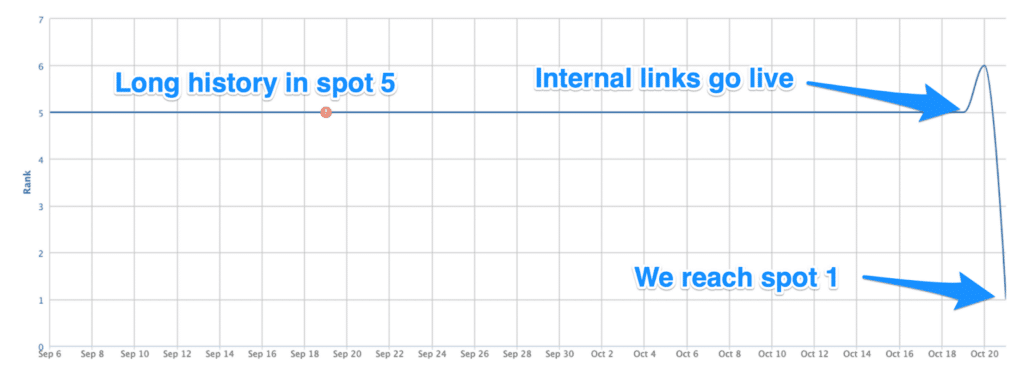
Our client was stalled ranking in position 5 on their chosen SERP, and needed to move up to gain the visibility they desired. An analysis of their site revealed they had several pages that all concerned the same topic, which can create confusion for Google. In addition, most of their pages were four links from the homepage, while few were just one or two links away.
By creating a map for Google’s bots using internal linking (using just 7 new links), the site jumped in ranking from position 5 to position 1.
This keyword had an average month search volume of 15,000 searches, which means moving from spot 5 to spot 1 generated an average of 3,300 additional clicks to the client’s webpage per month for just this keyword alone.
Indexability:
Indexability is how well Google is able to crawl and index a site. Google indexes sites similar to how books are indexed in a library, collecting relevant information about your site and making it easier for users to find. So, it’s in your best interest to be sure Google can easily index your site, and that it’s getting the relevant information from your site that it needs.
While readability deals exclusively with metadata, indexability is a bigger umbrella that deals with the indexability of your entire site.
If Google can’t access and process your website’s content effectively, it won’t rank your site’s URLs very well. If part of your site is unindexed or poorly indexed, Google won’t know what your website is all about. This leads to missing pages, poor rankings, and overall less traffic. Once you discover symptoms of crawlability or indexability issues on your site, you’ll need to investigate further to uncover the source.
These areas of investigation often include:
- 404 pages
- XML sitemaps
- Redirect chains
- Href lang tags
- Robots.txt
- Meta robots
- Log file analysis
Indexability's Impact
In a technical site audit for a client, we discovered some irregularities in their indexation. Further digging uncovered pages missing from the overall coverage of the site, which is a common symptom of an indexability error.
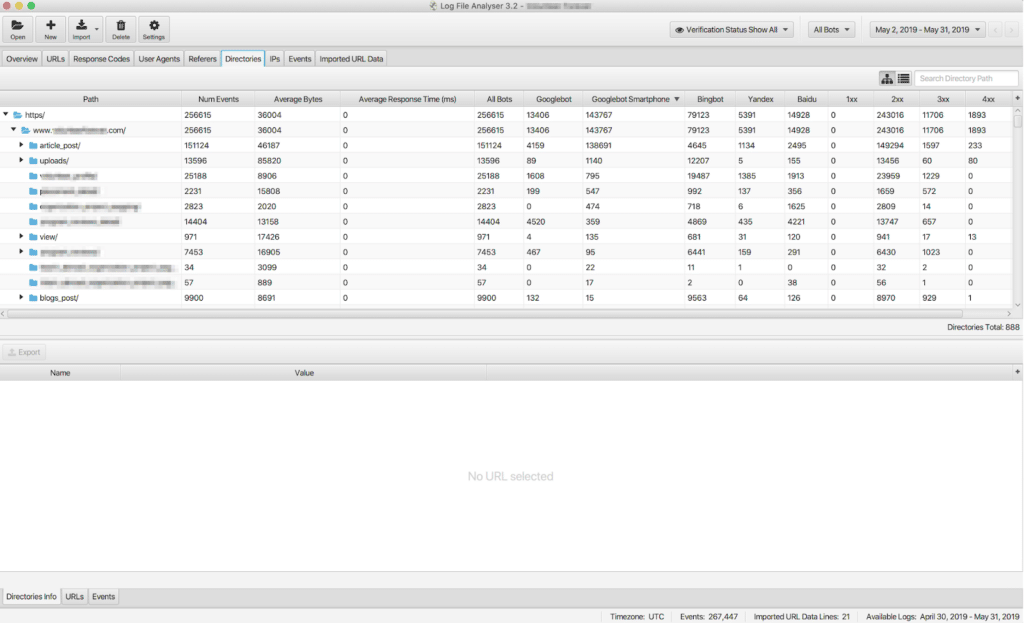
The execution of a log file analysis directed our efforts in improving indexability. The analysis revealed several actions that could be taken to fix the indexing issues the site was experiencing, including: clearing a number of redundant subfiles that Google was crawling, broken pages that needed to be redirected, and other folders Google was crawling that didn’t play a role in the overall SEO strategy.
A strategic clean up of the site’s indexability issues resulted in not only immediately more traffic, but an increase in organic revenue for our client. In the 30 days immediately following the rollout of these changes, Google organic transactions increased by 25.86%.
Trackability:
At 97th Floor we have about a dozen platforms to track our campaign’s performance but most commonly we use Ahrefs, Google Analytics, and Stat. You can decide what platforms and strategies are most effective for your company, however, no matter what platforms you decide to use, it’s important that you’re accurately tracking the progress of your campaigns.
The most crucial part of this data mix is making sure that the deployment and configuration of Google Analytics is not only correct but that it’s tracking the right conversions as they relate to our SEO strategy and client business goals.
Below are some ways that we do this:
- Google Analytics audit
- Tracking Set Up
- Consistent tracking code deployment across all pages
- Top pages breaking overtime
- Traffic source verification
- Conversions review
- eCommerce tracking setup
- Goal and event tracking setup
- Data Connected
- Audience demographics enabled
- Google Search Console connected
- Site search & category search enabled
- Filters Set Up
- Unfiltered data + filtered data view set up
- IP referral exclusion
- Tracking Set Up
- Stat
- Archived SERP changes over time
- Realtime rank monitoring
- Aggregate keyword ranking trends
- Ahrefs
- Organic keyword increases
- Backlinks acquisition progress
- New keyword targeting opportunities
- Organic competitor baseliness
Trackability’s Impact
You can’t make informed decisions if you aren’t tracking relevant data. Our teams consistently identify goals and values for clients in order to better track the impact of the ongoing SEO strategy in place for them.
As we continue to iterate on what is driving the most conversions to the site, we’re able to focus the strategy efforts into the parts of the site that are making the most difference for the client’s bottom line.
Tools and resources for holistic SEO
Holistic SEO requires visibility across the entire system. That means using tools that help teams understand how content, UX, technical performance, authority, and indexing work together.
There is no single “holistic SEO tool.” Instead, effective teams assemble a stack based on their maturity, goals, and internal capabilities.
Below are common tool categories that support holistic SEO execution:
Content & semantic SEO
- Keyword research and clustering tools for understanding topic relationships and intent
- Content optimization platforms that surface gaps in coverage and semantic relevance
UX & page experience
- Core Web Vitals monitoring tools
- Heatmapping and session recording tools to identify friction points
- A/B and multivariate testing platforms for conversion optimization
Technical SEO & crawlability
- Crawling tools to identify technical errors, orphaned pages, and site structure issues
- Log file analysis tools to understand how search engines interact with the site
- Structured data validators to ensure schema is implemented correctly
Indexability & site health
- XML sitemap and coverage reporting tools
- Robots.txt and meta robots testing tools
- Index status monitoring within Google Search Console
Authority & link building
- Backlink analysis tools to evaluate link quality, anchor text distribution, and link velocity
- Brand mention monitoring tools for link reclamation opportunities
- Competitive link gap analysis tools
Trackability & performance measurement
- Google Analytics for traffic, behavior, and conversion analysis
- Google Search Console for query-level performance and indexing insights
- Rank tracking platforms such as STAT for SERP monitoring
- Ahrefs for backlink growth, keyword expansion, and competitor baselining
As teams mature, the goal is not to add more tools, but to ensure the data they provide is actionable and aligned with business outcomes. Tool selection should always be driven by what decisions need to be made, not by feature checklists.
Holistic SEO examples and case studies
Holistic SEO is best understood in practice. The following examples show how aligning multiple disciplines leads to sustainable ranking improvements, traffic growth, and measurable business impact.
National Funding: A holistic SEO strategy leading to #1 rankings for focus keywords
National Funding is a leading financial services company providing tailored financing solutions for small and medium-sized businesses.
The challenge
After a Google algorithm update, National Funding lost rankings for high-value keywords such as “bad credit business loans.” These rankings were critical to lead generation, and isolated fixes were not producing results.
The strategy
97th Floor implemented a holistic SEO strategy focused on restoring trust, relevance, and structural clarity across the site. This included:
- Internal link audits
- Keyword cannibalization audits
- Targeted content optimizations
- Backlink profile analysis
- Disavow file updates
- New backlink acquisition
- Adding strategic links within the main navigation
The results
This systemwide approach restored and strengthened keyword visibility, leading to:
- 41.1% year-over-year increase in organic sessions
- 43.2% year-over-year increase in organic leads
- #1 rankings for core focus keywords, including “bad credit business loans”
Rather than overcorrecting in one area, the holistic strategy allowed improvements to reinforce each other.
Gigamon: The holistic SEO approach that won a #1 keyword
Gigamon is a network analytics vendor providing hybrid cloud infrastructure, security, and observability solutions for enterprise organizations.
The challenge
Gigamon was investing heavily in SEO but could not break into the top rankings for the highly competitive keyword “network security.” Despite doing many things right, progress had stalled.
The strategy
97th Floor took a counterintuitive, holistic approach. Instead of forcing incremental gains on the primary keyword, we:
- Analyzed semantic relationships and SERP composition
- Identified “network security tools” as a lower-volume, higher-opportunity entry point
- Optimized at both the page and domain level
- Executed targeted technical, content, and authority improvements
- Secured 40 new domain links in a single month
The results
The strategy produced rapid and compounding gains:
- Page reached #1 for “network security tools” within two months
- Achieved 5th position for “network security” shortly after
- 94% increase in sessions
- 50% year-over-year increase in organic traffic
Today, this page remains the top driver of organic traffic for Gigamon, a clear example of how holistic SEO can unlock competitive keywords by strengthening the system as a whole.
Why holistic SEO matters
Each of these six disciplines is aimed at taking into account the various aspects of an SEO strategy. When built and executed properly, these six disciplines will positively impact the bottom line and delight your visitors.
Knowing when to reexamine each of these 6 areas of SEO will come down to knowing the symptoms of issues relating to each discipline. This goes beyond just seeing a decline in ranking or traffic. In fact, it’s knowing the specific symptoms and how to treat them that can make your SEO strategy powerful.
Creating and Adapting the SEO Strategy
As you grow to understand each of these 6 realms you’ll be able to build effective. Just remember: you will get more out of strategies that are flexible and produce the greatest yields long-term.
As more time is spent mastering each of the six disciplines, your SEO strategy evolves from a collection of tactics into a cohesive system—one that compounds over time, driving lasting growth and resilience in the face of every algorithm update.