



Get executive buy-in faster by presenting your strategy in the language your board already understands.
Imagine you're in a board meeting, and the CEO looks at you and asks, "What are we really getting from our marketing budget?" It's the question that keeps marketing leaders up at night.
The numbers are tough to swallow. Most CMOs last only 12-18 months in Silicon Valley. Even worse, only 66% of Fortune 500 companies have a marketing leader—and that number is dropping.
The good news is when times get tough, smart marketers actually do better. The secret? They balance quick wins that boards understand with long-term plans that drive real growth. This is how to build marketing that's so clear and reliable that your leadership team will bet on it.
Marketing leaders need to wear many hats. They're part psychologist, part numbers person, part creative genius, and part business manager. They need to know technology (marketing buys tons of software), understand data, get how people think, plan strategy, and run daily operations.
Everything changed with COVID. Now AI is changing things again. But many CEOs and boards still think marketing is just about making things pretty or planning parties.
This creates a big problem. Marketing work has gotten way more complex, but other leaders don't really get what marketers do. The job is super important but often overlooked by the people who control the money.
Karl Vandenberg knows this well. He's the CMO at Illumio and was named Cybersecurity Marketer of the Year in 2024. Before marketing, he ran products, led companies, and handled mergers. This outside view helps him see marketing's unique challenges clearly.
When Karl joined his last company, he was the fifth marketing leader in five years. Trust was gone. His fix? Run marketing like a sales team.
He started by building a computer program that could predict which companies would buy their product. Today you can buy this technology, but his team built it from scratch to prove marketing could be as numbers-driven as engineering.
Here's what they did:
Then Karl did something unusual: monthly pipeline reviews with the board, just like sales teams do. He gave his team quotas and paid them based on hitting sales targets.
This openness worked. By talking in "sales speak"—forecasts, quotas, pipeline numbers—marketing finally made sense to board members. Within six months, he had enough trust to talk about bigger, long-term investments.
Balancing Quick Wins with Big Picture Thinking
When money gets tight, most people focus only on activities that show immediate results. But that's exactly when you should also invest in building your brand.
The problem? Brand building doesn't show instant payback. Karl's answer is to think about "Return on Goals" not just "Return on Investment."
Take their recent AI product launch. Instead of focusing on sales, they aimed for 100 free trial signups per week. It's measurable and shows progress, but it's not directly about money—yet.
For long-term investments like brand building, track early signs of success:
During COVID, while running a startup backed by investors, Karl made a bold choice: invest in brand. They tracked progress with a score card, showing quarterly proof the investment was working even before sales went up.
Think of brand as air cover for your sales team. When people have heard of your company, they're more likely to talk to your salespeople. You can't draw a straight line to sales, but it makes everything else work better.
Key Relationships and Local Teams
After your CEO, your most important work friend is the head of sales. This partnership doesn't always come naturally, especially for technical marketers, but it's crucial.
Working with the product team matters too. But the sales partnership is extra important in B2B tech, where buying decisions involve 15+ people across different departments.
Karl uses what he calls the "franchise model." Marketing and sales work together at the local level. Regional teams get:
This changes how people think. Instead of marketing "owning" the budget, they're investing money to help sellers succeed. Local teams combine marketing skills with sales street smarts, creating better campaigns and stronger trust.
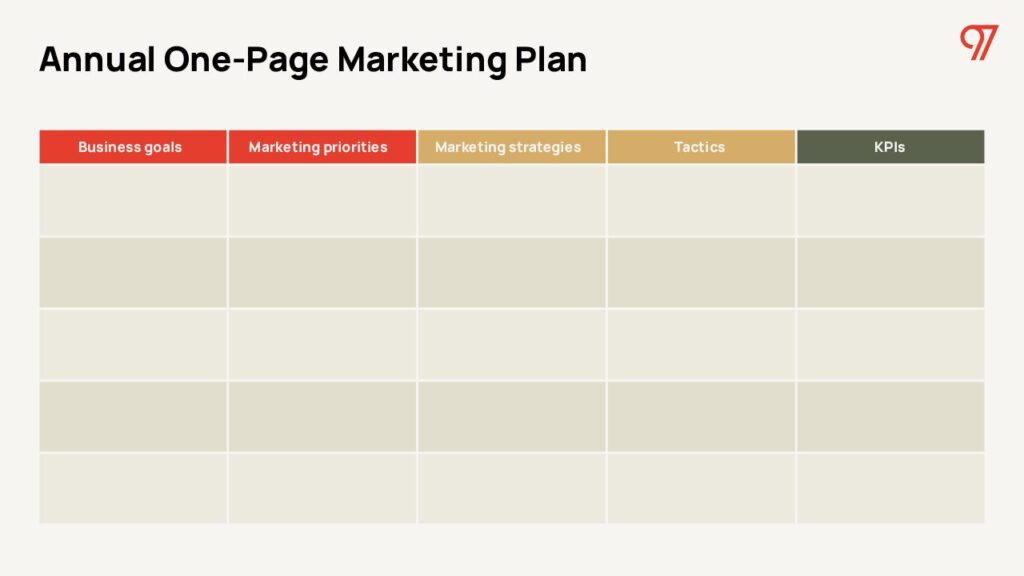
The One-Page Marketing Plan
Marketing might be complex, but explaining your plan doesn't have to be. The one-page plan turns your strategy into something any executive can understand in minutes.
Here's how it works:
A good plan might have five company goals, five marketing goals, three or four big projects per goal, and about 10 total measurements. These feed into a simple dashboard for executives.
The magic is keeping it simple. No marketing jargon, no detailed channel plans—just the big picture. When people ask about specific tactics, those details live in your project tools, not executive updates.

Get executive buy-in faster by presenting your strategy in the language your board already understands.
Since 60% of CMOs are first-timers, here's how to succeed:
Start by proving you can deliver leads and pipeline. Show you can hit targets before asking for money for long-term projects.
Accept that you'll spend about 30% of your time teaching others about marketing. You need to think big picture while delivering daily results. There's no way around this balance.
Use data to back up your ideas, not just report what happened. When your models show clear thinking and real facts, people trust you even before you prove results.
Build relationships on purpose. Work closely with sales leaders, product teams, and regional managers. Give local teams responsibility while keeping everyone aligned.
Don't give in to pressure for only quick results. Companies need marketing leaders who can deliver now while building for later. Those who only focus on today fail both themselves and their companies.
Marketing has completely changed. As AI reshapes how we work and how buyers shop, marketing will become even more important to business success.
For marketers ready to handle this complexity, the opportunity is huge. Companies need people who can mix creativity with numbers, big ideas with daily execution, future vision with current results. Those who master this mix won't just earn trust—they'll shape how businesses grow.
In times of big change, one thing is certain: companies that invest in strong marketing leadership will beat those that don't. The question isn't whether to build trustworthy marketing—it's whether you're ready to lead the change.
Ready to earn your C-suite's trust?
Marketing is changing faster than ever. AI is reshaping workflows and content strategy, budgets are tighter, attribution needs to be crystal clear, and more companies are competing for the same audiences. This is especially true in highly technical industries like cybersecurity, where buyers want real expertise, real insights, and proof that you understand their challenges.
Most marketing teams lack the technical expertise to produce content that resonates with a technical audience. They need subject matter experts (SMEs) who understand the complexities of the industry. Yet according to the Content Marketing Institute, 33% of marketers say getting time with SMEs is their number one blocker to producing effective content.
In cybersecurity, this challenge is magnified. Two-thirds of organizations report talent shortages, and half of cybersecurity professionals expect to burn out next year. With fewer experts carrying heavier workloads, getting their time for content creation becomes increasingly difficult.
Companies that figure out how to tap into SME expertise will win in the long term. Let's explore practical frameworks for collaborating with SMEs to create content that's both accurate and engaging.
Using SMEs in content creation establishes trust between your brand and your audience. This is especially critical in technical fields where credibility determines marketing success.
For marketers without technical backgrounds—which is most of us—finding confidence in your content can be challenging. As Maria Velasquez, Chief Growth Officer and co-founder of Cybersecurity Marketing Society, puts it: "As a marketer, you usually have a hard time finding confidence in your content if you don't come from a technical background. And let's face it, most marketers don't."
In a world where AI creates "sameness," SME-driven content provides a critical differentiator. When everyone can produce generic content with a few AI prompts, the unique insights from your technical experts become invaluable.
When technical buyers see content that resonates with their daily experience and challenges, they're more likely to trust your solutions. This authenticity builds credibility that generic content simply cannot match.
If you have internal SMEs, identify which ones are best suited for content collaboration. Are they on the product team? Engineering team? Do they prefer being on camera or writing blogs?
For organizations without the right technical talent in-house, build an external bench. "I'd find a freelancer," recommends Velasquez. "There are plenty out there that are marketers, true marketers. They understand content strategy... There are those marketers out there that are also technical and understand cybersecurity."
Develop a diverse bench of talent with different expertise and content preferences. Velasquez advises: "Why not have a bench of different types of talents and skills? Because of course there's bandwidth, there's availability."
Look for self-identifying SMEs within your organization. Velasquez notes: "Sometimes they self-identify and they say, yeah, actually, I love writing about that or I love writing technical blogs... Or they just write on their own and just say, hey marketing, by the way, I wrote this. I didn't know what to do with it. Do you want it on the website?"
Another effective strategy is building relationships with team leaders in technical departments. These leaders can often recommend team members who would be well-suited for content collaboration.
When engaging with SMEs, start small and be mindful of their time constraints. Overwhelming them with an entire year's content strategy is a common mistake that can damage the relationship before it begins.
Instead, set realistic expectations with manageable requests. Start with a one-time collaboration and if they enjoy it, they'll likely return for future projects.
A video-first approach yields the most content from a single session. From one webinar, you can create blogs, social media snippets, and cheat sheets—maximizing their time investment.
Be clear about time commitments. Velasquez suggests asking for "a couple hours once a quarter" with the promise that you'll make the most of their limited time.
Build authentic relationships through casual interactions and personal connections. These relationships make SMEs more likely to prioritize your requests.
Many SMEs want to build their personal brand, and as Velasquez notes, "marketing is that perfect vehicle" for them to do so.
When sitting down with an SME, preparation is key. Don't begin by asking them what to write about—come with data, audience insights, and trending topics that align with their expertise.
Focus on topics they're already passionate about and familiar with. When SMEs discuss subjects they genuinely care about, the content becomes more engaging and authentic. Consider topics they've previously presented on at conferences or internal meetings where they already have developed thoughts and confidence.
The most valuable content often comes from capturing authentic "day in the life" insights that can't be found through a simple Google search. Velasquez shares an example: "If they say, 'I am so stressed from the amount of alert fatigue that I get from my security tech stack over the weekend, and it's prevented me from having good quality time with my family.' That's marketing content right there."
These emotional realities of your target audience create compelling angles for your content. "We are selling to humans. Sure, we're in B2B, but it really is human behind that computer screen," Velasquez reminds us.
As buying committees expand in technical fields, consider developing content for different stakeholders. If your analytics show CFOs downloading ROI-focused content, develop more content targeted to financial decision-makers. This might mean engaging with financial SMEs in your organization.
Once SMEs have contributed to your content, ensure they see the impact of their time investment. Internal marketing is crucial for showing appreciation and demonstrating results.
Create regular communication channels to highlight SME contributions, whether through internal newsletters, Slack updates, or team meetings. These efforts not only show appreciation but also help SMEs build their internal reputation.
When possible, connect their content contributions directly to business outcomes. As Velasquez puts it: "Shout out to so and so. Thank you for helping us on the webinar. We had this many attendees and the sales team was able to book two meetings from that. I mean, look, you tie it to revenue. That's gold right there."
Avoid common mistakes that can damage SME relationships. Don't overwhelm them with requests, waste their time with poorly planned sessions, or fail to follow through on content they helped create. Remember that their primary responsibilities lie elsewhere.
Building a sustainable cadence for SME engagement ensures long-term success. Be clear about time commitments, follow through on your promises, and make the collaboration as efficient and painless as possible.
In an AI-driven world where generic content is increasingly easy to produce, SME-driven content provides a crucial differentiator. As Velasquez puts it: "If they can find what's in your content with a simple Google search and everybody else is writing the same thing, then it's not valuable." Successfully engaging SMEs requires understanding their preferences, respecting their time, building authentic relationships, and showing appreciation for their contributions. Remember that even in B2B marketing, we're ultimately selling to humans, and the authentic experiences of your SMEs create connections that generic content cannot match. Start building your SME relationships today—the future of your content strategy depends on it.
Cybersecurity buyers are hard to impress. Ranging from CISOs to security architects, your audience is deeply technical, highly skeptical, and usually immune to generic B2B marketing.
They don’t care about buzzwords or brand storytelling. They do care about substance: what your product actually does, how it solves real security problems, and why they should trust you over a dozen lookalike competitors. Smart, intentional marketing is a must-have skill in the cybersecurity space.
At 97th Floor, we build cybersecurity marketing strategies that reach decision-makers and influence every stakeholder in the buying committee. We’ll break down the best practices we’ve observed, backed by ad examples and persona insights.
Let’s get into it.
Cybersecurity marketing is the specialized practice of promoting cybersecurity products or services to highly technical, security-conscious audiences. It goes beyond traditional B2B marketing by focusing on decision-makers like CISOs, SOC analysts, and IT leadership, all personas who demand depth, clarity, and provable value.
Effective cybersecurity marketing combines SEO, content, advertising, and design to engage buyers throughout a long, complex sales cycle. This involves building credibility, addressing real threats, and positioning your brand as a trusted solution in an oversaturated market.
As you might have experienced, Cybersecurity is a high-stakes environment where mistakes can cost millions (and your audience knows it). The technical acumen of your buyers means any hint of fluff or oversimplification can tank your credibility.
Other challenges include:
To break through, cybersecurity marketing needs to be as intelligent as the people it’s trying to reach. That means aligning every campaign with how your audience thinks, what they’re solving for, and how they evaluate vendors.
Where traditional B2B campaigns can succeed with broad messaging, cybersecurity campaigns must go narrow. They need to:
Bottom line: If your marketing isn’t built for security buyers, it’s not built to perform.
Creating a high-performing cybersecurity marketing strategy means throwing out the one-size-fits-all B2B playbook. We’ve dug through our history as a cybersecurity marketing agency to identify six principles that drive success in cybersecurity marketing, each paired with a unique ad example. Use these tips to help you take your next cybersecurity campaign to a new level.
You’re not marketing to “security teams.” Remember your target, whether it’s marketing to a CISO who oversees a sprawling enterprise, or a SOC Analyst who lives in alerts. Specificity is non-negotiable in cybersecurity marketing, because vague messaging gets ignored.

Darktrace succeeds here by getting specific. Not only are they directly calling out CISOs, but they’re tackling only one facet of security: email. This approach self-eliminates some audiences, but ensures that those who do interact with the ad are likely higher-intent. The headline text could be helped by offering some specifics about what the whitepaper offers, but the ad maintains strong branding and a strong call-to-action.
Brainstorm: What’s the most specific piece of content you can offer to your audience? How can you write ad copy that hits on just one pain point and offers one precise solution?
Cybersecurity buyers are burned out on abstract “platform” talk. What do they actually want? Time back. Fewer compliance headaches. Less operational friction. When your value proposition addresses those second-order benefits, it lands harder.

Identity security company CyberArk’s ad pinpoints a problem experienced by their customers: losing so much time finding the right security solution and dealing with compliance, that important projects get deprioritized. Rather than focusing on CyberArk’s product offerings, the ad leans on a secondary benefit that prospective buyers are eager for. A simple design and minimal colors make the ad visually appealing, and the offering of a personalized audit and compliance call is a strong call-to-action.
Brainstorm: What is the most significant benefit that your solution provides to your audience?
If you’ve been recognized by Gartner or Forrester, or if your solution meets hard-to-hit compliance benchmarks, by all means say it. Security professionals are looking for signs that you actually know what you’re doing. A little proof goes a long way.

Crowdstrike leverages Gartner’s authority in this ad, highlighting their place on Gartner’s Magic Quadrant. Gartner is a trusted source on cybersecurity and IT solutions for CrowdStrike’s audience, and using this report for advertising is a brilliant and low-effort win.
Brainstorm: Have you won any awards or accolades that you can put on an advertisement? What about client testimonials?
Cybersecurity buyers are lifelong learners. They respond to content that teaches them something new, especially when it’s visual, data-driven, and skimmable. If your brand can help them stay sharp, you earn trust and attention.

A10 Networks’ use of data visualization is a great idea. People are more apt to engage with graphs, statistics and data than a chunk of text. This chart invites A10’s audience to see how they stack up against their peers concerning TLS/SSL inspections, and the ad’s call-to-action implies that there is more to learn about how technology leaders consider decryption solutions.
However, this chart isn’t the easiest thing to swallow. This ad would be stronger with just a single metric or with a more simple visual from their data. As is, the ad requires too much of its viewer and, by failing to supply any conclusions about this data, leaves too much ambiguity about where this information puts its audience in relation to A10 Networks.
Brainstorm: What data can you share with your audience that will make them want to learn more about you?
The best cybersecurity brands shape how the industry sees threats. Establishing thought leadership through bold, creative design and clear messaging makes your brand feel indispensable.

Palo Alto Networks’ ad stands out for cohesiveness between copy and design, strengthening the impact of the ad’s message. Pairing the idea of unknown threats with the impression of half-turned blinds evokes that eerie feeling of being watched by something unseen. This strengthens the ad’s promises of protection for “whatever, whenever, wherever.” Palo Alto Networks is positioning itself as an omniscient and omnipresent security solution, putting a certain 2006 babysitter receiving threatening phone calls customers at ease.
Brainstorm: What objects symbolize safety or privacy to your audience? How can you use those objects to create something visually interesting?
Let’s be honest, most cybersecurity ads look like they were built from the same uninspired template. But a little creativity goes a long way—especially when it surprises, entertains, or reframes a threat in a clever way.

All cybersecurity ads pretty much look the same, so we love it when a brand breaks out of the B2B monotony like Carbonite has. The visual analogy is straightforward and intriguing, demanding a pause and inviting a chuckle from its audience. With simple, unique ad creative, Carbonite establishes that its security solutions are so good that its customers can be completely unbothered about threats - even threats as sinister as prowling predators.
Brainstorm: What analogies does your brand or product lend itself to? How can you use that to surprise your audience?
To build a cybersecurity strategy that drives pipeline, you need to know who you’re talking to, what keeps them up at night, and how they influence the buying process. Each persona plays a different role, and each one needs a tailored message.
Below are four common groups we build campaigns around, with tips on how to reach them.
CISOs and Security Leaders
What they care about: Risk reduction, cost justification, strategic alignment
How to market to them: Be brief, credible, and focused on outcomes. CISOs aren’t deep in the weeds—they’re trying to evaluate whether your solution moves the needle on security posture or operational efficiency. Give them high-level proof points, ROI-driven messaging, and third-party validation like analyst reports or compliance frameworks.


Security Practitioners and Implementers
What they care about: Technical specs, real-world application, peer trust
How to market to them: These are the engineers and analysts who will poke holes in your claims. Your marketing needs to speak their language and show technical depth. Use product walkthroughs, architecture diagrams, feature comparisons, and use-case content that demonstrates exactly how your solution works in practice.
IT Decision Makers
What they care about: Integration, scalability, cost, security trade-offs
How to market to them: This group sits at the intersection of IT and security. They want solutions that won’t break their systems or their budget. Emphasize interoperability, performance, and ease of deployment. Case studies and pricing calculators can help them make a confident decision.


Boards and C-Suite
What they care about: Business risk, liability, brand protectionHow to market to them: You're not selling features—you’re selling peace of mind. Frame your messaging around financial impact, regulatory compliance, and business continuity. Use concise, high-trust formats like executive summaries, brief videos, or benchmarking data to support your case.
Marketing in cybersecurity is a high-stakes game. There’s less room for error, more skepticism in the room, and a shorter window to prove your credibility. Here are some do’s and don’ts that help keep cybersecurity campaigns focused, effective, and persona-aligned.
Do speak to specific personas.
Generic messaging gets ignored. Tailor every piece of content, ad, or landing page to one specific role and pain point.
Do lean on data and authority.
Use trusted sources like Gartner reports, industry benchmarks, and analyst quotes to back your claims. Show, don’t tell.
Do invest in content depth.
Your audience can sniff out fluff in a second. Write with substance. Collaborate with your SMEs. Make every piece worth your reader’s time.
Do prioritize technical accuracy.
One wrong detail can undermine the whole campaign. Double-check product specs, terminology, and claims, especially in visual assets.
Do align with the buyer journey.
CISOs don’t click “Buy Now.” Build layered campaigns that nurture interest across awareness, consideration, and validation stages.
Don’t overpromise.
"Total protection" or "unbreakable security" won't land and could backfire. Be confident, but stay grounded in reality.
Don’t assume they’ll connect the dots.
Spell out exactly how your product helps solve a specific problem. Don't rely on vague claims or industry jargon.
Don’t recycle general B2B creative.
Your cybersecurity audience has seen the same ad template 1,000 times. Differentiate with smarter, more persona-aware creative.
Don’t ignore design preferences.
Security audiences favor clarity and simplicity over flash. Avoid overly polished, “marketing-looking” assets that feel insincere.
Don’t skip the proof.
Your audience needs evidence before they trust your brand. If you don’t provide it, they’ll find a competitor who does.
Why Choose 97th Floor as Your Cybersecurity Marketing Partner?
We understand cybersecurity marketing because we’ve done it—successfully—for some of the top names in the industry. If you need to lower your CPA, hit revenue goals, or get in front of the right people, we can help. We build strategies based on research, data, and a deep understanding of how security buyers think. And we always respect your audience’s intelligence, time, and high standards.
Learn more about our cybersecurity marketing services, or get in touch to start your next campaign.
Ready to Grow? Get in touch to see what's possible for your brand.
Cybersecurity solutions buyers are worn out by the constant barrage of stale content flooding their search results, inboxes and social media.
Only brands that are willing to pause the content machine long enough to develop true empathy for their audience will be able to make any progress towards the mecca of trust and authority.
97th Floor believes that Empathy, paired with Innovation and Profitability, produces Great Marketing—marketing that fosters relationships and ultimately sales. We unlock empathy for our client’s customers through an exhaustive process of in-depth persona research and customer journey mapping.
Our customer journey maps reveal the questions, actions and touchpoints of an audience at each stage of the funnel: awareness, consideration and decision. Using these maps as a launching pad for every marketing campaign makes delivering "the right message at the right time" a reality.
The following are real persona customer journey maps created for our clients in and adjacent to the cybersecurity industry. They have been anonymized, but all other information is as-delivered to our clients.
Most buyer personas get built, presented, and shelved. This short video breaks down why — and what the ones that actually drive content decisions look like instead.
Podcast advertising is a promising strategy for any marketing campaign, with 51% of podcast listeners agreeing that hearing a podcast ad made them more likely to make a purchase from that brand.
Cybersecurity marketers are in no drought for opportunities here, with dozens of long-running and far-loved shows capturing the ears of your audience.
We used Sparktoro and additional tools to find the top-listened podcasts from decision makers in cybersecurity; put a bug in their ear about you, yeah?
Note that this audience is extremely sales and advertising averse. They don’t appreciate self-promotion. While you can of course pay to sponsor the show and get a host-read ad in front of your audience, be extra thoughtful about your messaging and position as you do so.

Darknet Diaries has amassed a cult-like following for its deep-dive episodes exposing true, first-hand stories about “hackers, breaches, shadow government activity, hacktivism, [and] cybercrime.” Host Jack Rhysider, whose own background is in security operations, makes staggering stories accessible and captivating for both technical and non-technical audiences. The show brags over 90 millions downloads and received praise in The Guardian, Vulture and The New York Times.
Format: Guest Interviews
Update Frequency: Every first Tuesday of the month
On Air Since September 2017
Opportunities: If you happen to know someone or know someone who knows someone with an insane cybercrime story to tell, the connection may be worth making just to get your company’s name floating in Jack’s network. Otherwise, you can contact the team by emailing jack@darknetdiaries.com to inquire about sponsorship. See the complete list of active sponsors here. It includes a number of personal and professional security solutions and IT solutions.

Hosted by former NPR investigations correspondent Dina Temple-Raston, Click Here brings listeners audio stories from the “shadowy characters behind ransomware attacks, disinformation campaigns, and hacks and … the people trying to stop them.” Show topics range from “peek inside a North Korean malware lab” to “how hackers settle their disputes – think People’s Court without all the robes.”
Format: Guest Interviews mixed with investigative reporting and narration from the show host
Update Frequency: Every Tuesday and Friday
On Air Since August 2017
Opportunities: Click Here belongs to an ecosystem of cyber-related news produced by The Record from Recorded Future News. The publication sends a daily newsletter to its audience of “hundreds of thousands” via a mobile app.If you have a news tip, and perhaps an expert to lend, about cybersecurity startups, cybersecurity attacks, or policy surrounding privacy, disinformation or cybersecurity policy, you can pitch your story by reaching out to therecord@recordedfuture.com. The show also has in-show advertisements, maybe one per episode or so.
“2.5 Admins is a podcast featuring two sysadmins called Allan Jude and Jim Salter, and a producer/editor who can just about configure a Samba share called Joe Ressington.” The show covers tech news and answers listener-submitted admin-related questions.The show’s audience is well-educated high-earning IT professionals.
Format: Conversational
Update Frequency: Weekly
On Air Since April 2020
Opportunities: The show welcomes interested sponsors to get in touch at show@2.5admins.com.

Late Night Linux is a family of seven podcasts, including 2.5 Admins, all about "Linux, open source software, and systems administration.” Late Night Linux was the group’s first show, and covers all things free and open source software.
Note that the show contains explicit content.
Format: Conversational, doesn’t appear to host guests
Update Frequency: Weekly
On Air Since December 2016
Opportunities: To advertise on any of the Late Night Linux shows, contact joe@latenightlinux.com.

Hosted by Kurt Seifried and Josh Bressers, Open Source Security Podcast delivers weekly conversations on all things IoT, application security, operational security, cloud, devops, and security news.
Format: Two hosts
Update Frequency: Weekly
On Air Since September 2016
Opportunities: You can email the hosts from their website. Both Kurt and Josh are active on infosec.exchange, part of a decentralized social network powered by Mastodon. Sounds like a good place for some audience research, at the very least.

Hosted by cybersecurity veterans Graham Cluley and Carole Theriault, Smashing Security offers a “helpful and hilarious take on the week’s tech SNAFUs.” Winner of the "Best Cybersecurity Podcast" in 2018, 2019, and 2023, and the "Most Entertaining" in 2022 and 2023, Smashing Security has had over nine million downloads.
Note that the show contains explicit content.
Format: Two hosts, occasional guest interviews
Update Frequency: Weekly on Wednesdays
On Air Since December 2016
Opportunities: Smashing Security has generous options for sponsors, including opportunities “for sponsors to appear in 15-minute featured interviews included within the podcast.” To learn more about sponsorship, email studio@smashingsecurity.com. Smashing Security also conveniently features all past episode guests on a nice list. Pursue it and let ideas flow: who in your organization would fit here? Guest list.
Running for nearly twenty years, Security Now offers weekly conversations on security topics such as malware, ransomware, and hacks; digital identity, data privacy, and policies; hardware and IoT security concerns; software and plug-in security patches and updates; and many more. The show hosts are cybersecurity authority Steve Gibson and technology expert Leo Laporte, each bringing “their extensive and historical knowledge to explore digital security topics in depth.”
Format: Two hosts
Update Frequency: Weekly on Tuesdays
On Air Since August 2005
Opportunities: Security Now belongs to the TWiT faTmily of podcasts, a group that amasses a yearly audience of 25 million downloads. TWiT’s podcasts have built a relationship with listeners over several decades, which is great news for you; not only is 88% of TWiT’s audience tech or IT decision makers, but 88% of listeners have actually made a purchase based on a TWiT host-read ad. Get started by emailing advertise@twit.tv.

Risky Business Media was founded in 2007 by cybersecurity journalist Patrick Gray. A rotating group of hosts including Patrick and others publish multiple episodes each week for their audience of cybersecurity professionals.
Format: Host conversations
Update Frequency: Weekly
On Air Since February 2007
Opportunities: Risky Business’ audience is “top heavy,” meaning that a majority of their more than 25,000 weekly listeners are CISOs or information security decision-makers. View Risky Business’ media kit for more information about their audience, and contact sales@risky.biz for pricing. You can also reach out with editorial opportunities. Note that Risky Business Media also publishes two cybersecurity newsletters.
There are two ways to target your audience vis podcast advertising. The first is with baked-in or title-by-title targeting. Baked-in ads are added to the podcast audio file itself, making them permanent. This means that all listeners will hear the same ad when they listen to that episode of the show, regardless of their location, demographic or when they hit play. These ads can appear anytime in an episode and can be longer than thirty seconds.
Dynamic insertion or audience network podcast advertising inserts ads into ad spots (pre, mid, or post-roll) which can be targeted to the person listening. This allows podcasters to keep the advertising on their shows fresh, and it allows advertisers to select contextual targeting and third-party segments. The ad is then inserted in whatever shows that audience is listening to.
Host-read ads are created and voiced by a show’s host, and are usually read in the style of the show. Because of the host’s narration, these ads seem like a personal endorsement to audiences.
Host-read ads are a great choice for most cybersecurity podcast ads because the target audience aligns closely with specific podcast shows, like those listed above. We can select a show or a few shows and have host-read ads for cyber solutions during those shows.
PRO TIP: For host-read ads, it’s best practice to give the host bullet points instead of an actual script. This way you can make sure that what you want covered gets said, but the host has the opportunity to make it seem more authentic to them.
PRO TIP: Make the host your advocate. Build a relationship with them. Let them experience your product as best they can so that they can speak authentically to their trusting audience.
Pre-recorded ads are scripted by an advertiser and then recorded by a voice talent before being added to the podcast pre, mid, or post-roll. This type of podcast ad is best if your podcast advertisements won’t be on one specific show.
For example, using a title-by-title approach doesn’t sense if your targeting requires a geographic restriction.
Here, we can pick contextual targeting so the podcast episode has to be about that topic. Then, we can also layer on third-party segments, such as the user interests or experiences. Finally, layer on location targeting..
A voice talent will read the pre-recorded ad that can then be dynamically inserted whenever a podcast listener meets all of those requirements.
It all depends on your budget, goals and even the length of your spot. Compare each spot below.

Podcast ads aren’t clickable in most cases, so they are definitely a top-of-funnel awareness play. However, you can drive action from a podcast ad by having a great offer. Most podcast ads have a very enticing offer such as saving a certain percent on a product or a first month free.
PRO TIP: Longer campaigns outperform short ones. Run ads on at least 5 episodes of a podcast to improve recall by 39%. Make each spot different to prevent audience tune-out.
While counting episodes downloads will tell you impressions, use these four tactics to get better success metrics from your podcast advertising.
Story-telling is essential for podcast ads. You don’t have a visual component to draw people in, so you’ve got to hook them with words.
And remember, the offer is so important. Podcast advertising isn’t the most straightforward journey. It’s not like clicking on a LinkedIn ad. We’re asking the user to go to our website manually, so we better offer them a good reason why they should!
See how an audience-first approach translates to bottom-line results.
Ilumio is a cybersecurity company known for its micro-segmentation solutions, offering network security against cyber threats. Their innovative technology helps organizations effectively secure their network infrastructure.
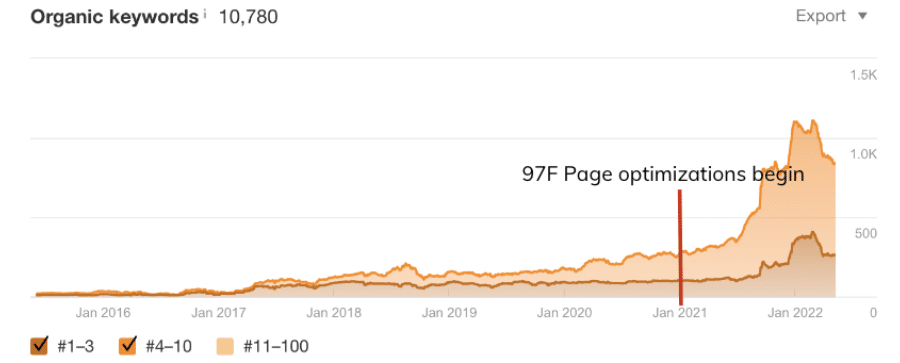
When ilumio came to 97th Floor, they ranking for less than 4,000 total keywords with only 264 of those keywords holding a first-page ranking. Addressing this limitation became a primary focus to enhance Illumio's online visibility and reach.
Audits identified keyword cannibalization issues on Illumio's site. 97th Floor's top priority was eliminating these competing pages to enhance organic traffic.
The next step involved optimizing pages targeting keywords with strong baseline rankings and high search volume. Additional audits and keyword research informed content re-optimization, internal linking, and site structure changes.
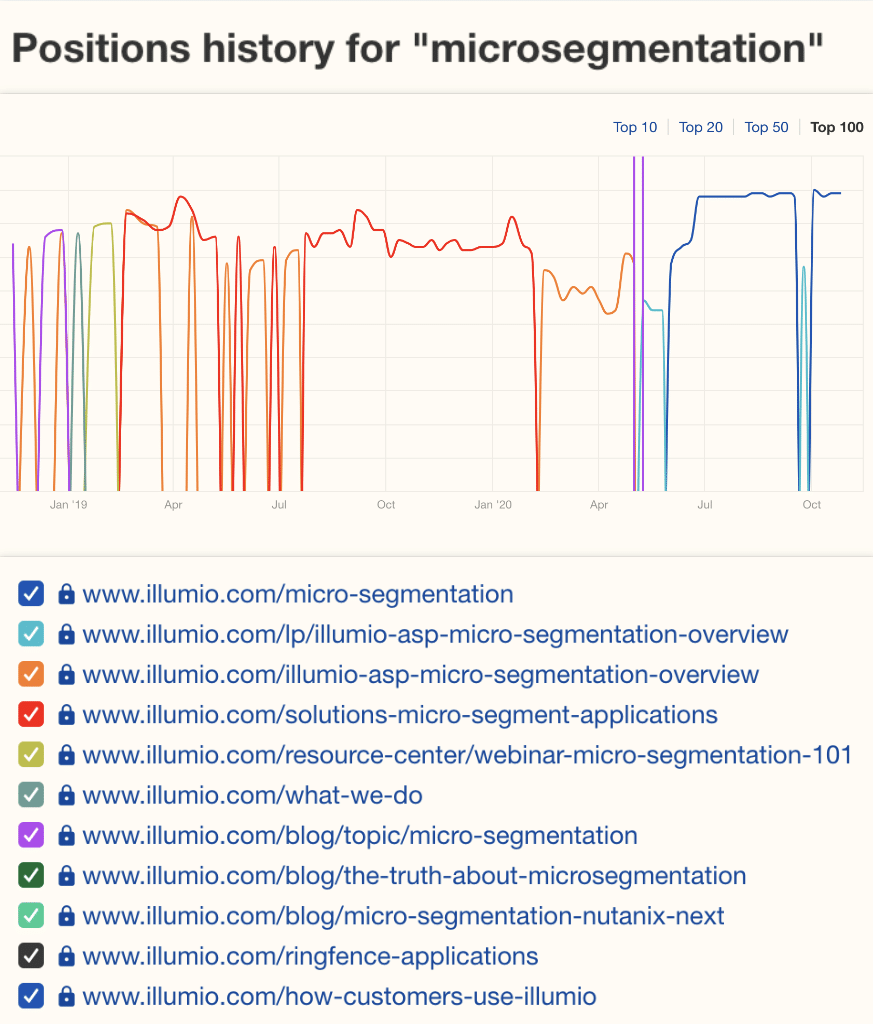
After only one year of working together, Illumio was ranking for 9,671 total keywords, with 812 keywords on the first page.
Gigamon is an analytics network vendor providing hybrid cloud infrastructure, security, and observability solutions for the world’s most demanding enterprises.
Gigamon was doing everything right in pursuit of first-page rankings for their industry's coveted keyword - "network security" - but they weren’t seeing any progress.
A top-10 spot for this keyword would give Gigamon serious edge.
When 97th Floor stepped in, we decided to optimize Gigamon's focus page for a lower-volume keyword.
Page and domain-level reports as well as semantic and technical SERP analysis alerted our team that a series of small optimizations in a holistic SEO strategy could be the counter-intuitive solution to ranking for "network security.”
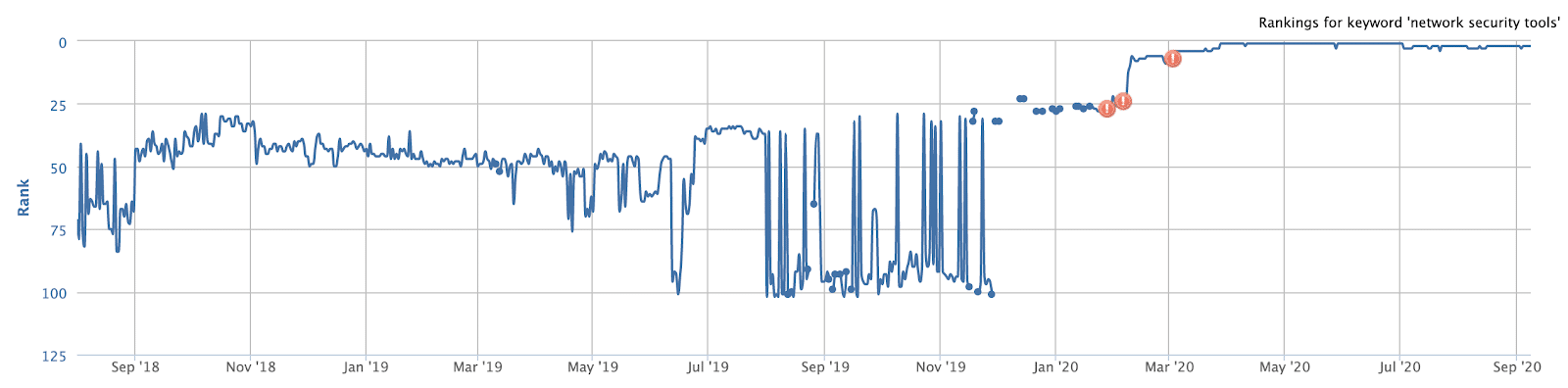
We strategically switched our focus to the keyword “network security tools,” which gets searched just 600 times each month.

Our targeted optimizations quickly propelled Gigamon to the front page for "network security tools" within a month, and to the top position the following month. Concurrently, we secured 40 new domain links in a single month.
Our dual approach effectively boosted Gigamon's SERP standing. Remarkably, the very next month we secured the 5th spot for "network security", the ultimate goal.
This strategy led to a significant 94% increase in sessions for Gigamon. Today, this page continues to attract more organic traffic than any other on their site, playing a pivotal role in their impressive 50% year-over-year increase in organic traffic.
"Choosing 97th Floor has been an unwavering decision for me since working with them at Algorithmia. Their consistent commitment to innovation, unparalleled expertise, and a results-driven approach (focusing on leads and bottom line performance) make 97th Floor not just an agency but a strategic partner for SEO and Paid Advertising. Their dedication to exceeding expectations is why I choose to continue this impactful journey with them, time and time again." – Jonah-Kai Hancock Vice President of Demand Generation
Hiya is the developer of a caller identification application designed to offer a better phone experience to mobile users worldwide. The company's services identify unknown numbers and automatically block scam and spam threats across the globe, enabling users to stay protected and block unwanted calls.
Hiya came to 97th Floor as a startup shortly after they had received series A funding. While Hiya had a stronghold in the consumer market, they needed help developing a lead generation strategy for their new B2B product offering.
97th Floor’s initial audit revealed that existing LinkedIn Ad campaigns were inefficient due to a lack of persona-specific ads and content. Two campaign types - one based on job title and another targeting specific companies- were blended together, prohibiting Hiya from speaking directly to one persona or the other. The generic, broad ads couldn’t cut through the noise to reach end users. We took the following actions:

Within 5 months of re-launching ads, the Hiya and 97th Floor teams recorded the company’s highest-ever B2B Marketing Qualified Lead (MQL) volume, highest-ever Sales Accepted Leads (SAL) rate, and lowest-ever Cost Per Conversion.

Feature Image photo by Markus Spiske on Unsplash.
B2B marketers know the importance of capturing their upper-funnel audience, but foggy attribution and the ease of spending for these non-search ads makes this endeavor feel risky.
To understand how cybersecurity companies are approaching this challenge, we analyzed the upper-funnel advertising strategies of 15 cyber companies.
In our analysis, we’ve identified 4 industry outliers whose distinct upper-funnel ad plays are worth study:

Founded in Romania in 2001, Bitdefender’s now global presence serves small and medium business, mid-market enterprises and consumers. Bitdender is proud of its over 440 patents for core technologies, “including machine-learning algorithms to detect malware and other threats and anomaly-based detection techniques vital to detect and prevent new and unknown threats.” Their guiding mission is to be the most trusted cybersecurity provider.
| Software Development | 1,001-5,000 Employees | $100M-$500M | Founded 2001 |
BitDefender is vastly outspending every other company in our sample, claiming 60% of both spend and impression share over a 12 month period.

They also outpace competitors in number of creatives, totaling 1,112 varieties in 12 months. The runner-up in this category ranks at only 554 unique creatives.

In late September 2022, Bitdefender announced a multi-year partnership with Scuderia Ferrari, the Formula One racing division of Ferrari. Bitdefender’s logo made an appearance on Ferrari cars, helmets, uniforms, and on the SF-23 single-seater days later on October 2nd at the F1 Singapore Airlines Singapore Grand Prix.
While the relationship may seem shallow at first, Co-founder and CEO of Bitdefneder Florin Talpes makes a clear connection between the two industries:
“When every second counts, only the most advanced cars win races on the track, and only the most advanced technology has the power to effectively prevent, defend and respond to cyberattacks."
By partnering with the powerhouse of racing, Bitdefender earns coverage and status as a powerhouse in cybersecurity.

FireEye - now Trellix - was founded in 2004 and quickly earned a reputation uncovering high-profile hacking groups. The company notably participated in taking down Ozdok, a botnet that at its strength accounted for 32% of spam worldwide; detected previously unknown vulnerabilities in Microsoft products; and traced nearly 50% of all 2022 state-sponsored hacking campaigns to China and Russia.
| Computer and Network Security | 1,001-5,000 Employees | $500M-$1B | Founded 2004 |
Trellix boasts the most diverse allocation of budget to different platforms and devices.
While most cyber companies heavily prioritize desktop display advertising, Trellix targets users via Facebook, Instagram, Twitter, YouTube, OTT, Desktop Video, Mobile Video, Desktop Display and Mobile Display.


Trellix also claims the largest OTT spend in our sample at 10% of their budget. We applaud this strategy, as our own strategic OTT spend for cyber clients has paid off big time.

One of Trellix’s top creatives is a video advertisement showing how shockingly calm a security operations team can be when relying on Trellix.
This footage also happens to resemble the internal marketing teams for those brands trusting 97th Floor with their ad spend… just a coincidence, then!

Cybereason is an endpoint protection platform. Their company page describes them as a “new kind of cyber security company -- one that delivers future-ready attack protection that ends cyber attacks on the endpoint, across the enterprise to everywhere the battle is being waged.”
| Computer and Network Security | 1,001-5,000 Employees | $20M-$50M | Founded 2012 |
Cybereason is the only company in our sample whose impression volume outpaces their spend. However, there is a simple explanation for this: 99% of Cybereason’s non-search ad spend is devoted to Desktop Display ads. Display ads always guarantee high impressions, but is this the best way for Cybereason to be spending their budget?
One possible interpretation of this strategy is that Cybereason is playing by the 95-5 rule. The rule supposes that at any given time, only 5% of buyers are in the market and looking to buy. Conversely, 95% of buyers are not looking to buy. However, buyers hold strong biases for companies they already know when preparing to make a purchase decision. Investing in the 95% of out-of-market “future buyers” with brand awareness advertising can yield large dividends down the road as the 95% eventually rotates into the buying stage.

Since its founding in 2012, an owl has been the center of Cybereason’s brand identity. When Cybereason began a rebranding process in 2020, conversations with stakeholders revealed that the owl would stay.
Chief Marketing Officer Meg O’Leary says, “The reality was that our customers and partners not only liked the owl as a part of our visual identity. They felt it reflected their own identity as cyber defenders. They too must be wise thinkers and shrewd hunters who adapt as they go, cutting through darkness and complexity to zero in on and neutralize their targets. The owl symbolized the best in all of us as defenders.”
Cybereason’s owl appears on all the creatives we pulled, featured on a black background to remind audiences that both owls and Cybereason see in darkness to detect and destroy threats. The ‘E’ in End found in the design seems to mimic an owl’s three talons slicing through enemies.
In 2020, the rebrand introduced the League of Defenders - a group of owls with distinct looks and abilities to encompass all of Cybereason’s abilities and services. You can meet the League here.
Cybereason stands out from competitors as a brand with strong visual identity, creating a mascot for the cybersecurity industry.
Founded in 1997 by Steven Thomas and his girlfriend Kristen Tally, Webroot’s first commercial product was a trace removal agent called Webroot Window Washer. Today, Webroot “secures businesses and individuals worldwide with threat intelligence and protection for endpoints and networks.”
| Computer and Network Security | 500-1,000 Employees | $100M-$500M | Founded 1997 |
In a drastic departure from the norm, Webroot spends a massive 88% of their budget on Meta. Perhaps they’ve got on that both B2B and B2C customers are real people who sometimes just love to scroll.

Campaign Highlight: Live a Better Digital Life with Webroot
Leaning heavily towards its consumer audience, Webroot's recent video ads focus on how Webroot protects everyday people from digital dangers like viruses and identity theft. The videos feel honest and relatable; one video features a mother whose daughter has just enabled a virus on their brand new computer. The scene is strewn with toys and other markings of a busy home. Each video is filmed in a set made mostly of Webroot's signature green, and a short jingle sums up the spot: "Live a better digital life with Webroot."
At 97th Floor, we're big believers that Extraordinary Marketing requires three things: deep audience understanding, bottom-line focus, and courageous disruption. Our analysis of these four bold cyber companies leaves us here:
Cybersecurity is a deeply competitive and complex industry for marketers. In this short webinar, we discuss some of the essential ways marketing leaders should approach their growth.
Key takeaways
Holistic SEO is a unified approach to search optimization that treats a website as a connected system rather than a collection of isolated tactics. Instead of focusing on single levers like keywords or links, holistic SEO aligns user experience, content quality, authority signals, and technical performance to support long-term growth. At 97th Floor, holistic SEO is operationalized through the XACT framework, ensuring every optimization supports both search engines and real users.
Traditional SEO is often executed in isolation. Holistic SEO is designed to work as a connected system that compounds over time.
When people ask what is holistic SEO, the simplest answer is this: it’s SEO designed to survive algorithm changes by improving the entire system, not just one part of it.
At 97th Floor, holistic SEO is executed through the XACT framework, which organizes strategy into four core pillars: UX, Authority, Content, and Technical. Together, these components support semantic SEO, topical authority, and sustained organic growth.
Good UX keeps users engaged, which reinforces relevance and performance signals across search.
Authority helps search engines determine who deserves to rank when content quality is similar.
Strong content frameworks allow sites to own topics rather than compete page by page.
Without a strong technical foundation, even great content and authority underperform.
Together, these four pillars create a system where improvements compound over time—the defining characteristic of effective holistic SEO.
Holistic SEO only works when each of these pillars is treated as part of a larger system. Focusing too heavily on one area (content, links, or technical fixes) can create short-term gains. That looks good in reports, but it rarely produces sustainable growth on its own.
That’s because SEO isn’t a monolith. It can’t be painted with a broad brush. A truly comprehensive strategy will act like a flywheel where progress in one area supports others, and over time, results compound.
Or, to put it another way, more SEO doesn’t necessarily lead to proportionally more results. What matters is where those efforts are applied, and how well they work together.
This is the origin of the 6 Disciplines of SEO framework. Designed by 97th Floor, this framework exists to help move teams from doing more SEO, to doing holistic SEO.
As Google’s algorithm has matured, there have been ground breaking updates which have improved overall user experience.
Much of how the industry views SEO today is because of these wide reaching (and sometimes earth-shattering) updates. For over a decade the theme has been Google making changes, and SEOs trying to intuit the signals with moderate success.
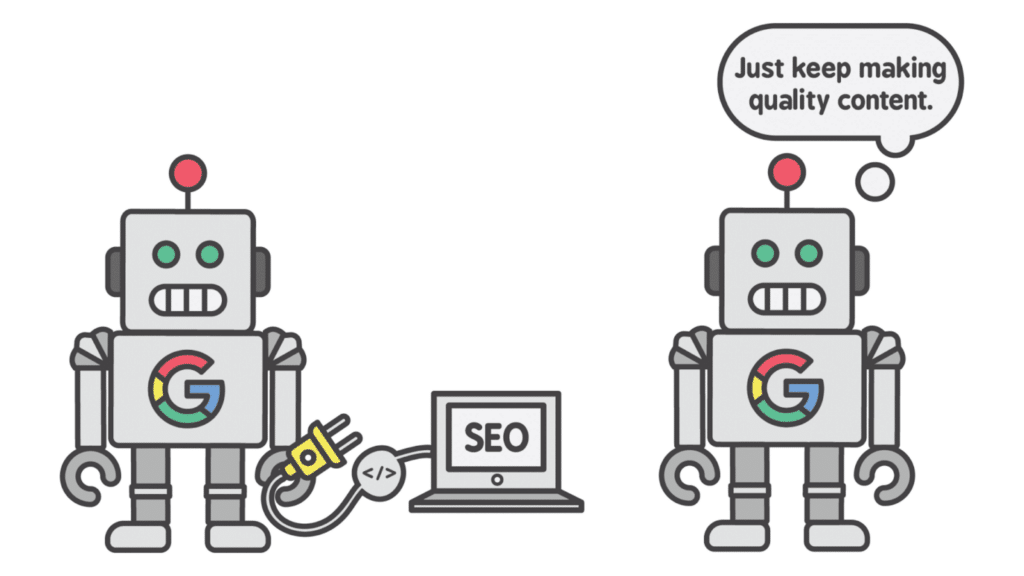
Today, we see that Google is releasing frequent broad core updates aimed at improving the algorithm from a holistic perspective. Google has clarified that for each of these updates the advice they give comes down to making great content that is high quality, expertly written, trustworthy, unique, and valuable to the user.
We suggest focusing on ensuring you’re offering the best content you can. That’s what our algorithms seek to reward.
While this advice is good, it isn’t enough. Optimizing for users over bots makes Google an ally rather than an enigma, as you both work towards the same goal: a better experience for the people behind the searches.
Enter the holistic strategy any SEO can adapt: The 6 Disciplines of SEO.
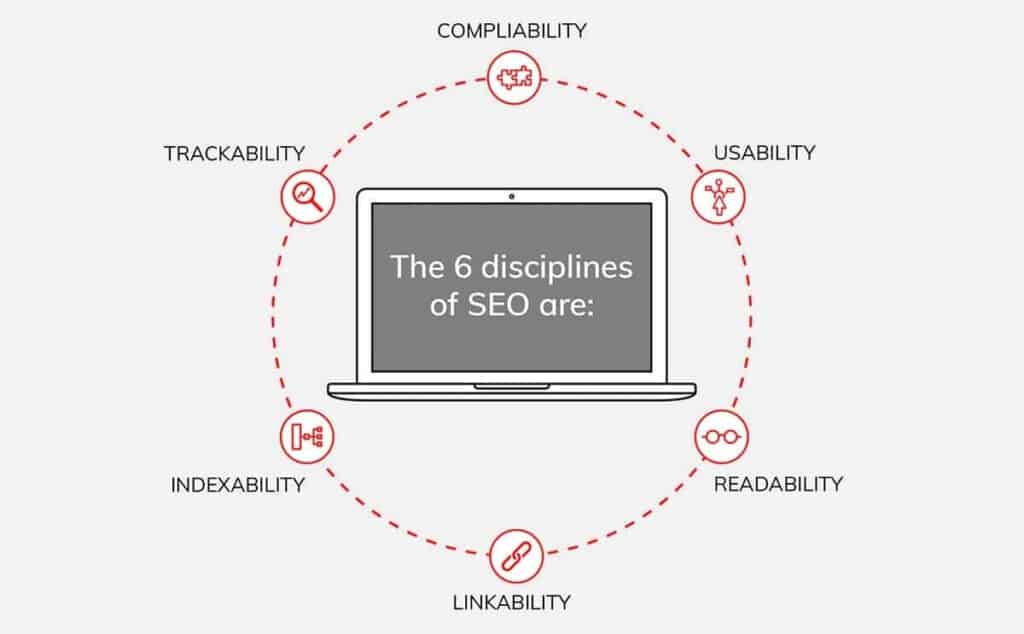
A note on our naming convention: we get that a lot of these words sound made up, but we chose to name the disciplines with a focus on the the ability derived from each. Yes, they are weird. That’s by design; weird things are easier to remember.
Here are some examples of what execution can look like within each of these disciplines.
The SEO industry has a wide and comprehensive list of recommended best practices. And, luckily, Google has provided fairly explicit guidance on what websites can do to be compliant with their guidelines. In addition, we’ve executed internal strategies which have yielded results which challenge previous assumptions and best practices.
Armed with all of this knowledge, you can make sure your site is properly aligned and thereby maximize your SEO efforts.
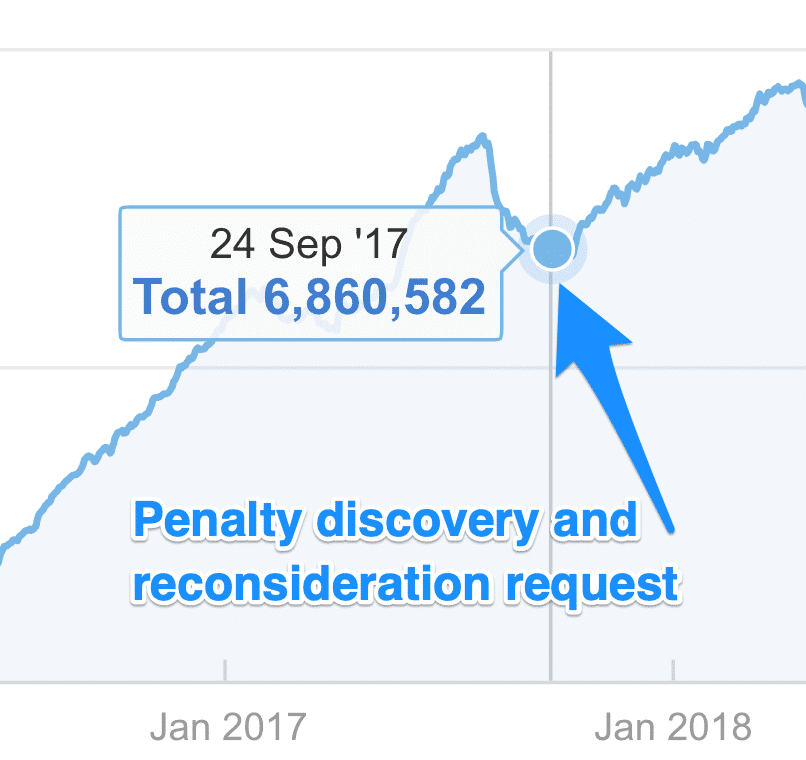
One client came to 97th Floor with stalled SEO efforts, despite their best efforts. Some digging during our onboarding site audit uncovered that they were unaware a manual action penalty had been placed on their site. Google Search Console revealed that structured data was being misapplied to a specific segment of the site's blog pages.
In the past, this site’s posts had included a comments section. But over time the comments became too much to moderate and they ultimately decided to disable comments for the site. In doing this, however, they forgot to disable the structured data on the backend that called out the recently disabled blog comments.
Once this was discovered, it was imperative that all of the residual structured data was removed from those pages. Doing that reassured Google that the client’s site wasn’t claiming to have something on-page that they didn’t actually have. It was a relatively easy fix, but not an obvious find for the untrained eye.
Fixes were applied. The next step was to put together a reconsideration request and submit it to Google. Once the reconsideration request was filed, the penalty was lifted within a week and the site saw significant increases in organic traffic from that point on.
Google isn’t outright about much of their algorithm. This is why the latest user-experience based algorithm update Page Experience, is getting so much attention. This update and the trends in recent updates pay particular attention to the Usability discipline, which ensures the overall SEO strategy is UX based.
Improved user experience is important to have baked into any SEO strategy from the beginning, because it has the potential to aid both your SEO-focused goals and your bottom line business goals like conversions.
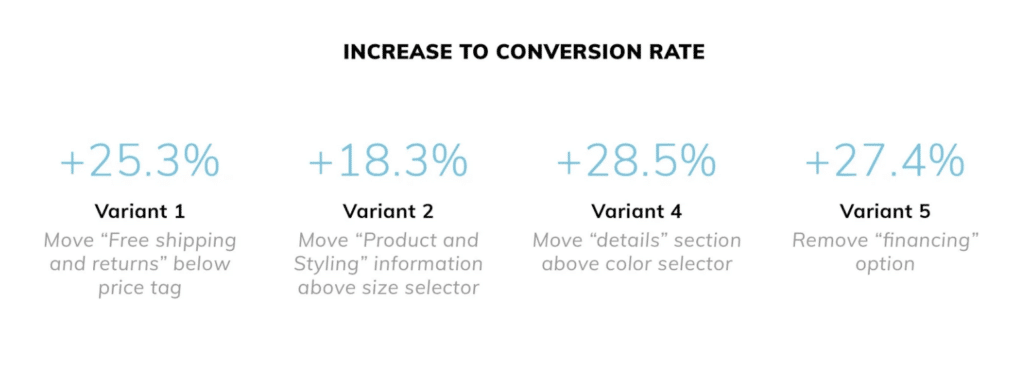
An ecommerce business came to 97th Floor with a dilemma: users were reaching their product pages, but not converting. Hypotheses were formed and ranked as to what site changes might have the greatest impact on UX, but even the most intuitive hypotheses aren’t a place to end.
Multi-variant testing showed which variations brought in the most conversions and new revenue. This was a luxury ecommerce business, even small upticks in conversion rates can show significant increases in revenue, which means they stood to gain quite a bit. In this case, almost every variant showed a positive increase in both conversions and revenue. Overall, implementing these changes led to a 29% increase in revenue over just a few weeks.
In prioritizing the usability, our client gained tangible and actionable information about what their customers like to see on their site, which in this case was removing the financing option from their checkout.
Readability in this sense refers to the ease of reading your site for bots, not humans. Readability in this sense should not be confused with user-focused readability scores that measure the sophistication and ease of reading of your copy.
Cleaning up your site’s readability can play a significant role in its ability to rank, because metadata are an important way bots analyze the content on your pages.
Improving the metadata that adorn a site’s pages is an essential way to signal to Google the relevance of the on-page content to the target focus keyword.
The most critical ways to improve readability include:
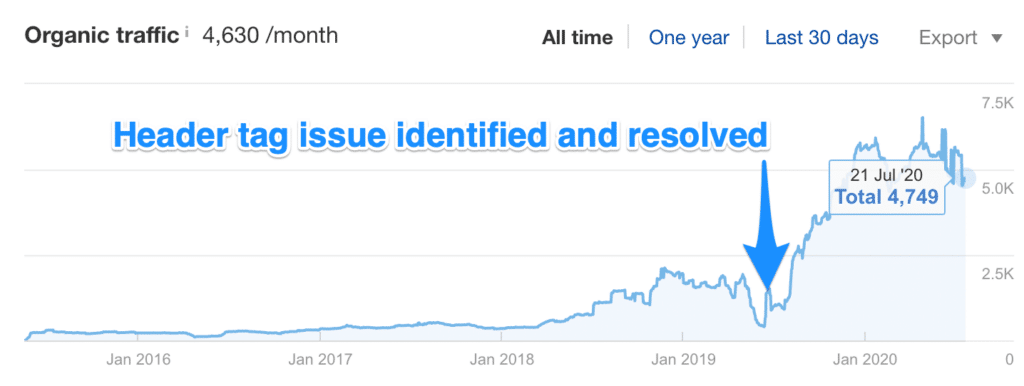
A new client approached us with hopes to increase their blog’s organic traffic. They had been blogging for years, but they weren’t seeing the traffic increases they were hoping for. An audit revealed that they were misusing H1 and H2 tags throughout their blog, at the fault of the customer template they were using. They’d chosen to use more H1 tags as H2 tags, effectively using multiple H1 tags per page. But that looked most attractive on their template, so they unknowingly were shooting their blog’s readability in the foot.
They had no idea they were defying Google’s guidelines. And while their use of H1 tags might have been easier on the eyes, it wasn’t helping them win Google’s favor. Once the H tag errors were resolved, our client saw an immediate jump in traffic. These simple readability changes brought in a golden age of SEO for their site that is still going strong.
A healthy backlink profile has always been a major part of a site’s rankability. A healthy backlink profile requires various tactics to not only increase backlinks; including branded links, anchor text distribution, link velocity, and more. Not only external links, but internal linking structure is a critical (and often overlooked) part of the linkability of a site.
Here are a couple ways you can do this:
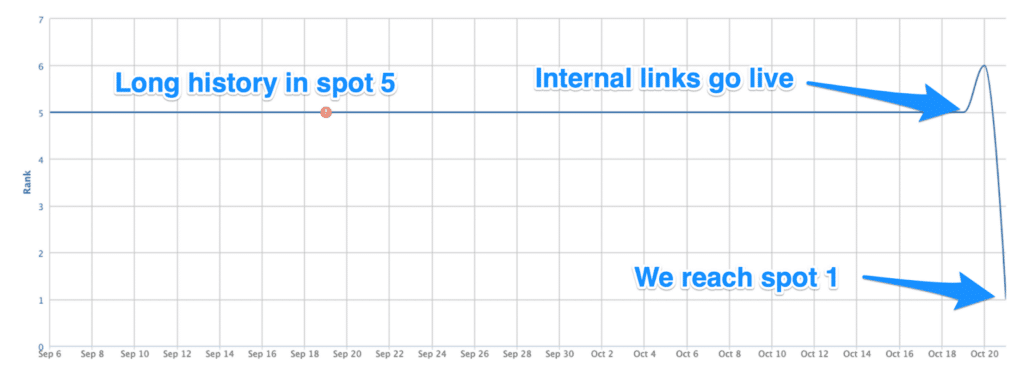
Our client was stalled ranking in position 5 on their chosen SERP, and needed to move up to gain the visibility they desired. An analysis of their site revealed they had several pages that all concerned the same topic, which can create confusion for Google. In addition, most of their pages were four links from the homepage, while few were just one or two links away.
By creating a map for Google’s bots using internal linking (using just 7 new links), the site jumped in ranking from position 5 to position 1.
This keyword had an average month search volume of 15,000 searches, which means moving from spot 5 to spot 1 generated an average of 3,300 additional clicks to the client’s webpage per month for just this keyword alone.
Indexability is how well Google is able to crawl and index a site. Google indexes sites similar to how books are indexed in a library, collecting relevant information about your site and making it easier for users to find. So, it’s in your best interest to be sure Google can easily index your site, and that it’s getting the relevant information from your site that it needs.
While readability deals exclusively with metadata, indexability is a bigger umbrella that deals with the indexability of your entire site.
If Google can’t access and process your website’s content effectively, it won’t rank your site’s URLs very well. If part of your site is unindexed or poorly indexed, Google won’t know what your website is all about. This leads to missing pages, poor rankings, and overall less traffic. Once you discover symptoms of crawlability or indexability issues on your site, you’ll need to investigate further to uncover the source.
These areas of investigation often include:
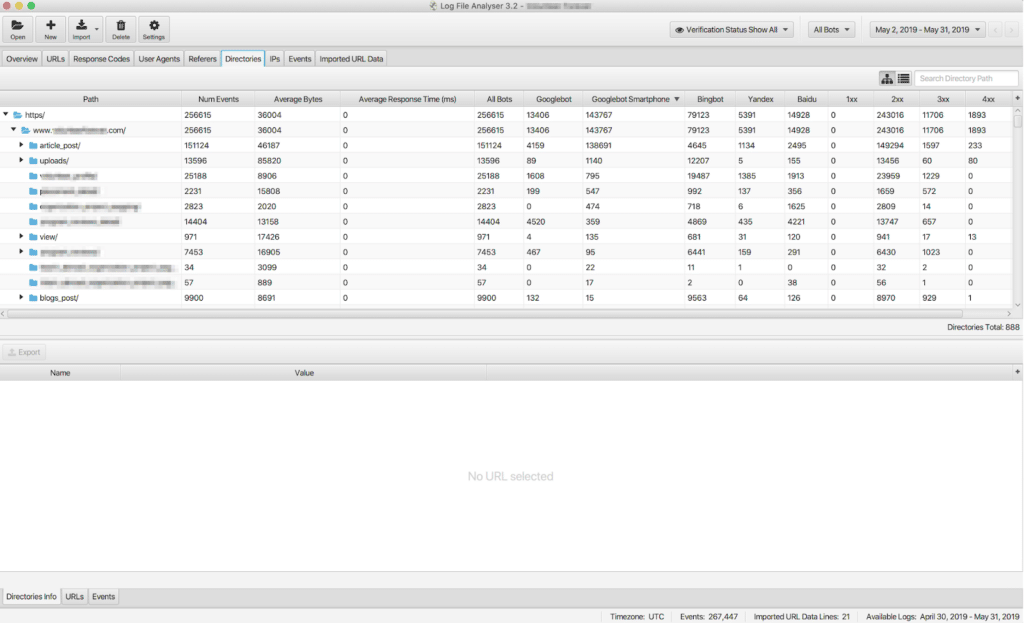
In a technical site audit for a client, we discovered some irregularities in their indexation. Further digging uncovered pages missing from the overall coverage of the site, which is a common symptom of an indexability error.
The execution of a log file analysis directed our efforts in improving indexability. The analysis revealed several actions that could be taken to fix the indexing issues the site was experiencing, including: clearing a number of redundant subfiles that Google was crawling, broken pages that needed to be redirected, and other folders Google was crawling that didn’t play a role in the overall SEO strategy.
A strategic clean up of the site’s indexability issues resulted in not only immediately more traffic, but an increase in organic revenue for our client. In the 30 days immediately following the rollout of these changes, Google organic transactions increased by 25.86%.
At 97th Floor we have about a dozen platforms to track our campaign’s performance but most commonly we use Ahrefs, Google Analytics, and Stat. You can decide what platforms and strategies are most effective for your company, however, no matter what platforms you decide to use, it’s important that you’re accurately tracking the progress of your campaigns.
The most crucial part of this data mix is making sure that the deployment and configuration of Google Analytics is not only correct but that it’s tracking the right conversions as they relate to our SEO strategy and client business goals.
Below are some ways that we do this:
You can’t make informed decisions if you aren’t tracking relevant data. Our teams consistently identify goals and values for clients in order to better track the impact of the ongoing SEO strategy in place for them.
As we continue to iterate on what is driving the most conversions to the site, we’re able to focus the strategy efforts into the parts of the site that are making the most difference for the client’s bottom line.
Holistic SEO requires visibility across the entire system. That means using tools that help teams understand how content, UX, technical performance, authority, and indexing work together.
There is no single “holistic SEO tool.” Instead, effective teams assemble a stack based on their maturity, goals, and internal capabilities.
Below are common tool categories that support holistic SEO execution:
As teams mature, the goal is not to add more tools, but to ensure the data they provide is actionable and aligned with business outcomes. Tool selection should always be driven by what decisions need to be made, not by feature checklists.
Holistic SEO is best understood in practice. The following examples show how aligning multiple disciplines leads to sustainable ranking improvements, traffic growth, and measurable business impact.
National Funding is a leading financial services company providing tailored financing solutions for small and medium-sized businesses.
The challenge
After a Google algorithm update, National Funding lost rankings for high-value keywords such as “bad credit business loans.” These rankings were critical to lead generation, and isolated fixes were not producing results.
The strategy
97th Floor implemented a holistic SEO strategy focused on restoring trust, relevance, and structural clarity across the site. This included:
The results
This systemwide approach restored and strengthened keyword visibility, leading to:
Rather than overcorrecting in one area, the holistic strategy allowed improvements to reinforce each other.
Gigamon is a network analytics vendor providing hybrid cloud infrastructure, security, and observability solutions for enterprise organizations.
The challenge
Gigamon was investing heavily in SEO but could not break into the top rankings for the highly competitive keyword “network security.” Despite doing many things right, progress had stalled.
The strategy
97th Floor took a counterintuitive, holistic approach. Instead of forcing incremental gains on the primary keyword, we:
The results
The strategy produced rapid and compounding gains:
Today, this page remains the top driver of organic traffic for Gigamon, a clear example of how holistic SEO can unlock competitive keywords by strengthening the system as a whole.
Each of these six disciplines is aimed at taking into account the various aspects of an SEO strategy. When built and executed properly, these six disciplines will positively impact the bottom line and delight your visitors.
Knowing when to reexamine each of these 6 areas of SEO will come down to knowing the symptoms of issues relating to each discipline. This goes beyond just seeing a decline in ranking or traffic. In fact, it’s knowing the specific symptoms and how to treat them that can make your SEO strategy powerful.
As you grow to understand each of these 6 realms you’ll be able to build effective. Just remember: you will get more out of strategies that are flexible and produce the greatest yields long-term.
As more time is spent mastering each of the six disciplines, your SEO strategy evolves from a collection of tactics into a cohesive system—one that compounds over time, driving lasting growth and resilience in the face of every algorithm update.
