



Our client specializes in flexible student lending and loan refinancing for undergraduate, graduate, and parent borrowers.
The private student loan company is competing for search presence on the topic of student loans with large players such as Sallie Mae, SoFi, and Earnest. These competitors have a very wide range of content around the topic of student loans that they rank for, which has given them credibility with search engines and LLMs. In order to compete, they needed a better ranking for its existing content and internal linking structure that would signal authority to search engines and LLM crawlers.
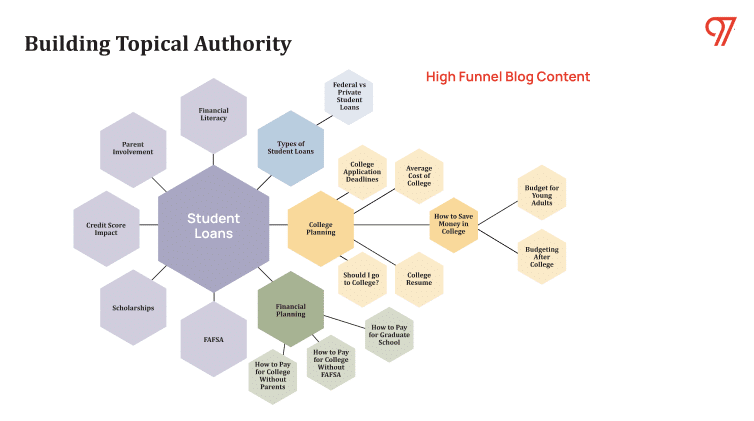
In collaboration with our client, we built a hub and spoke content strategy around the topic of Private student loans. We were able to build 162 optimized content pieces, and re-optimize 62 existing content pages on the site. We also acquired 455 high quality backlinks that are strategically pointed to pages that will improve our visibility in Search for student loan related keywords.
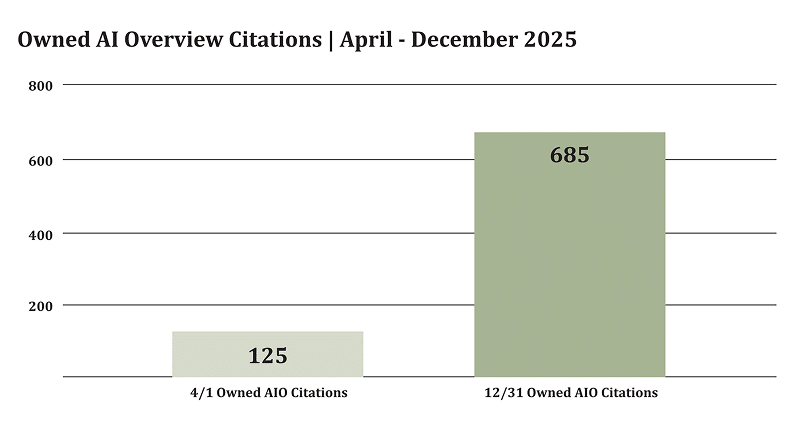
At the midway point of 2025, our client had a total of about 20 owned citations and 35 brand mentions in AI Search. As a result of these efforts, they now own:
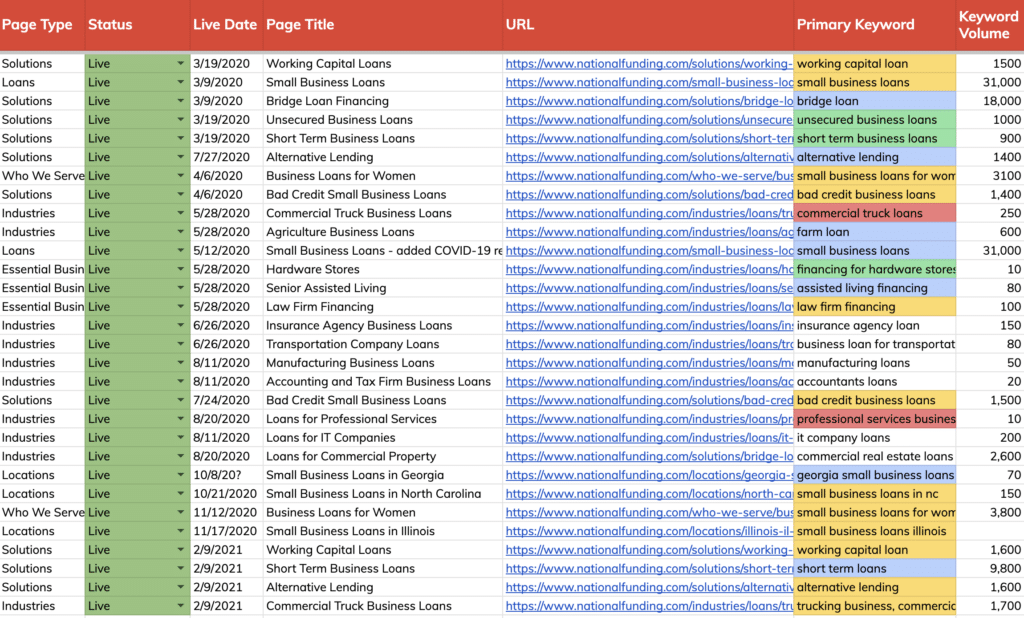
National Funding is a leading financial services company specializing in providing small and medium-sized businesses with tailored financing solutions.
Following a Google algorithm update, National Funding lost great rankings for focus keywords in their space such as “bad credit business loans.” They approached 97th Floor to reclaim rankings vital for generating new leads.
97th Floor implemented a holistic SEO strategy to fully optimize National Funding’s pages for keyword searches. Their tactics included:
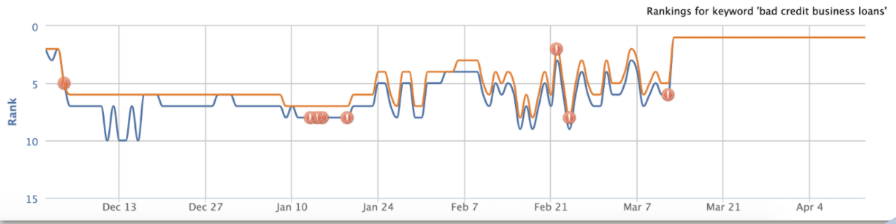
The implemented strategy successfully restored and significantly enhanced rankings for crucial keywords— including "bad credit business loans" ranking #1. These rankings resulted in increased sessions and leads for National Funding.
When it comes to B2B marketing success, personalization isn't just a buzzword – it's a proven strategy. According to McKinsey, 77% of B2B companies that implement personalized experiences see an increase in market share. Yet many organizations struggle to effectively segment their markets, particularly in the B2B space where the rules of engagement differ significantly from B2C.
While consumer marketing can often rely on broad demographic data and personal preferences, B2B segmentation requires a more nuanced approach. Today's B2B buyers expect personalized experiences that speak directly to their unique challenges and pain points. But how do you deliver that personalization at scale while avoiding the pitfalls that derail many segmentation efforts? Let's explore a practical approach to industry segmentation that drives real results.
The B2B landscape presents unique challenges that make traditional segmentation approaches less effective. First, the decision-making process is inherently more complex than in B2C. Instead of convincing a single consumer, you're often dealing with multiple stakeholders, each with their own priorities and concerns.
Adding to this complexity is the reality of smaller audience sizes. While B2C companies might target millions of potential customers, B2B markets often consist of much smaller pools of qualified prospects. This makes traditional statistical approaches to segmentation less reliable and requires a more focused strategy.
Then there's the "95-5 rule" – a fundamental principle of B2B marketing that states only 5% of your potential market is actively looking to buy at any given time. This means your segmentation strategy needs to account for both immediate opportunities and longer-term relationship building.
Finally, B2B products themselves tend to be more complex, often requiring different approaches for different use cases. A solution that works perfectly for a small business might need significant modification for an enterprise client, even within the same industry.
Before diving into complex segmentation models, smart B2B marketers start by understanding the natural segmentation that already exists within their business. Take Bill, a financial operations platform, as an example. They serve two distinct markets: direct companies and accounting firms. These audiences solve similar problems using the same software but in fundamentally different ways.
This natural segmentation often emerges from how sales teams operate. Sales professionals instinctively adjust their approach based on company size, industry, and specific use cases. As Rick Golan, SVP of Growth Marketing at Bill, notes, "Sales will naturally segment in order to best communicate with, best set expectations for, and best sell the product that you have."
Company size frequently serves as a proxy for needs and complexity. A manager at a 2,000-person organization has very different requirements and decision-making processes compared to a small business owner. These natural divisions provide a foundation for more sophisticated segmentation strategies.
Success in B2B segmentation requires balancing rigorous data analysis with real-world sales insights. While large organizations might have teams of PhDs analyzing customer data, smaller companies often rely more heavily on sales team feedback and market testing.
The key is adopting an "explore and exploit" methodology. This means continuously testing different segments while being ready to double down on opportunities that show promise. The story of Divi (now part of Bill) illustrates this perfectly. While the platform wasn't initially built for accounting firms, the team discovered through market exploration that it solved a crucial pain point for accountants and their clients. This discovery led to a highly profitable segment that might have been missed with a more rigid segmentation approach.
To identify and validate segments effectively:
Once you've identified your key segments, the challenge becomes creating targeted messaging that resonates without crossing into what customers might perceive as "creepy" territory. According to research from Smarter HQ, 63% of consumers would stop purchasing from companies whose marketing feels too invasive.
One common challenge is the homepage dilemma – how do you speak to multiple audiences through a single asset? Rather than forcing visitors to self-identify through "Are you X or Y?" buttons, consider a "choose your own adventure" approach. Present key benefits and features that naturally appeal to different segments, allowing visitors to gravitate toward what matters most to them.
Small networks often provide the best opportunities for targeted messaging. When you can speak directly to the specific challenges of a niche industry or role, word-of-mouth marketing – still the most powerful driver of B2B growth – happens naturally.
Implementing effective segmentation requires the right tools and approaches. Popular options include:
The key is working closely with sales teams to identify momentum and amplify success. As Golan puts it, "Great creative work is born out of constraints," and specific segment targeting provides the perfect constraints for creating impactful marketing.
Remember to balance personalization with accuracy. While tools can help identify company characteristics, being wrong about personal details can damage credibility. Instead, focus on business challenges and industry-specific needs that resonate even if some assumptions are slightly off.
Effective B2B segmentation isn't about perfect data analysis – it's about taking action on insights and continuously refining your approach. Start with your natural business segments, validate them through sales team feedback, and test messaging in small networks before scaling.
Remember: "You can't hyper-segment your homepage," but you can create targeted experiences that speak to specific business challenges. Focus on understanding and solving real problems for defined segments, and the results will follow.
The key is to stop overthinking and start testing. Connect with your sales team, identify opportunities, and move quickly to exploit them. In B2B marketing, success often comes from finding and serving smaller networks exceptionally well rather than trying to be everything to everyone.
Altro helps users build credit and financial power through recurring payments and subscriptions. Altro, symbolizing "other," aims to reshape the world by democratizing financial knowledge and resources. It confronts traditional financial power dynamics, ensuring inclusivity across diverse backgrounds.
While Altro had made significant strides in the financial empowerment space, they saw an opportunity for further growth in boosting brand awareness and acquiring more app downloads. They partnered with us at 97th Floor to refine and elevate their organic strategies and paid advertising channels.
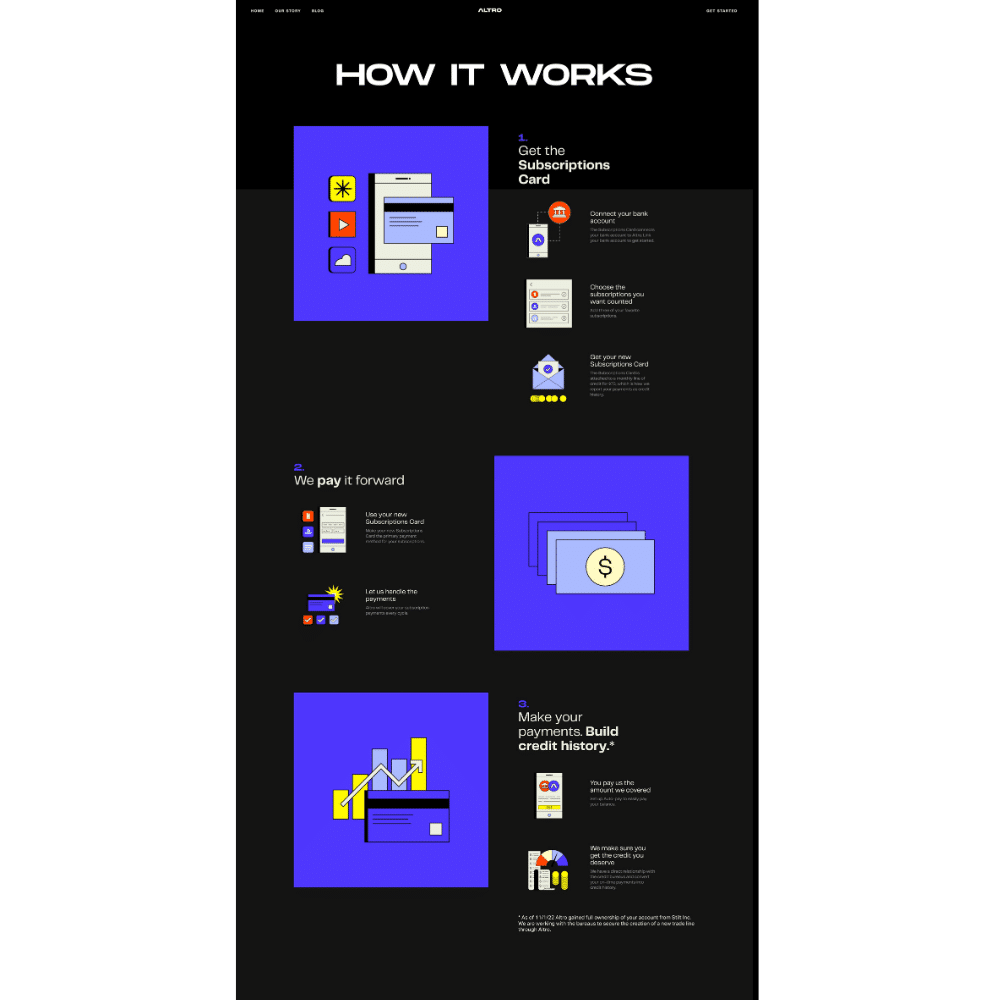
We embarked on User Experience Research (UXR) to pinpoint where Altro's communication strategy lagged behind its competitors. This research revealed that our paid ads were attracting high Click-Through Rates (CTRs), but these weren't converting into desired user actions. To address this, we implemented two key strategies:
Following the "How It Works" page launch, we observed a 72.73% rise in engagement rate and an average session time of 1m 11s. In the three months after introducing the blog, user views increased by 22.74%, engagement time by 17.38%, and event counts by 16.13%.
Key takeaways
Holistic SEO is a unified approach to search optimization that treats a website as a connected system rather than a collection of isolated tactics. Instead of focusing on single levers like keywords or links, holistic SEO aligns user experience, content quality, authority signals, and technical performance to support long-term growth. At 97th Floor, holistic SEO is operationalized through the XACT framework, ensuring every optimization supports both search engines and real users.
Traditional SEO is often executed in isolation. Holistic SEO is designed to work as a connected system that compounds over time.
When people ask what is holistic SEO, the simplest answer is this: it’s SEO designed to survive algorithm changes by improving the entire system, not just one part of it.
At 97th Floor, holistic SEO is executed through the XACT framework, which organizes strategy into four core pillars: UX, Authority, Content, and Technical. Together, these components support semantic SEO, topical authority, and sustained organic growth.
Good UX keeps users engaged, which reinforces relevance and performance signals across search.
Authority helps search engines determine who deserves to rank when content quality is similar.
Strong content frameworks allow sites to own topics rather than compete page by page.
Without a strong technical foundation, even great content and authority underperform.
Together, these four pillars create a system where improvements compound over time—the defining characteristic of effective holistic SEO.
Holistic SEO only works when each of these pillars is treated as part of a larger system. Focusing too heavily on one area (content, links, or technical fixes) can create short-term gains. That looks good in reports, but it rarely produces sustainable growth on its own.
That’s because SEO isn’t a monolith. It can’t be painted with a broad brush. A truly comprehensive strategy will act like a flywheel where progress in one area supports others, and over time, results compound.
Or, to put it another way, more SEO doesn’t necessarily lead to proportionally more results. What matters is where those efforts are applied, and how well they work together.
This is the origin of the 6 Disciplines of SEO framework. Designed by 97th Floor, this framework exists to help move teams from doing more SEO, to doing holistic SEO.
As Google’s algorithm has matured, there have been ground breaking updates which have improved overall user experience.
Much of how the industry views SEO today is because of these wide reaching (and sometimes earth-shattering) updates. For over a decade the theme has been Google making changes, and SEOs trying to intuit the signals with moderate success.

Today, we see that Google is releasing frequent broad core updates aimed at improving the algorithm from a holistic perspective. Google has clarified that for each of these updates the advice they give comes down to making great content that is high quality, expertly written, trustworthy, unique, and valuable to the user.
We suggest focusing on ensuring you’re offering the best content you can. That’s what our algorithms seek to reward.
While this advice is good, it isn’t enough. Optimizing for users over bots makes Google an ally rather than an enigma, as you both work towards the same goal: a better experience for the people behind the searches.
Enter the holistic strategy any SEO can adapt: The 6 Disciplines of SEO.
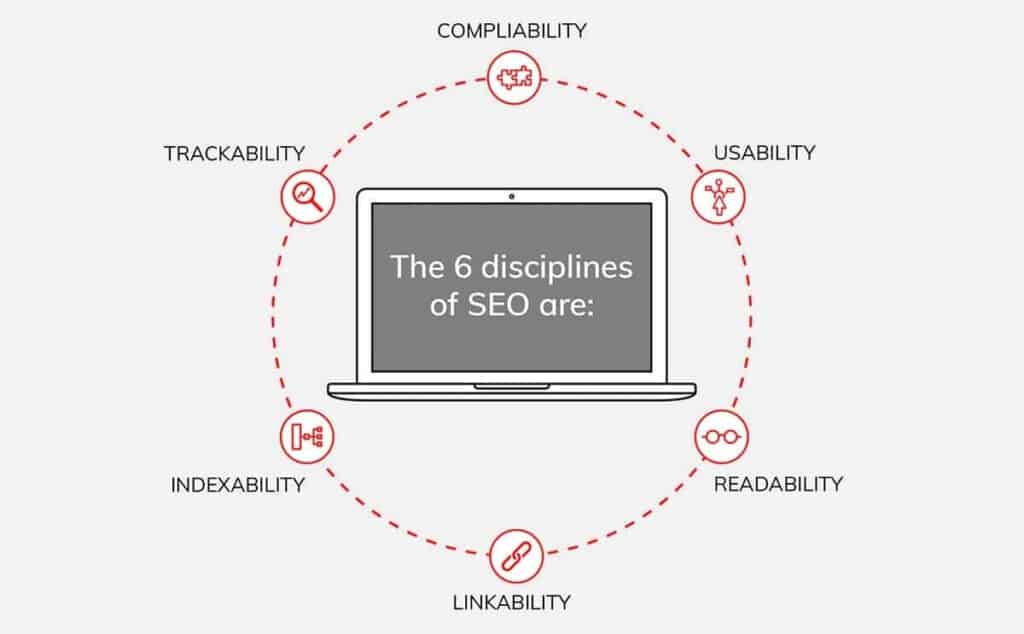
A note on our naming convention: we get that a lot of these words sound made up, but we chose to name the disciplines with a focus on the the ability derived from each. Yes, they are weird. That’s by design; weird things are easier to remember.
Here are some examples of what execution can look like within each of these disciplines.
The SEO industry has a wide and comprehensive list of recommended best practices. And, luckily, Google has provided fairly explicit guidance on what websites can do to be compliant with their guidelines. In addition, we’ve executed internal strategies which have yielded results which challenge previous assumptions and best practices.
Armed with all of this knowledge, you can make sure your site is properly aligned and thereby maximize your SEO efforts.
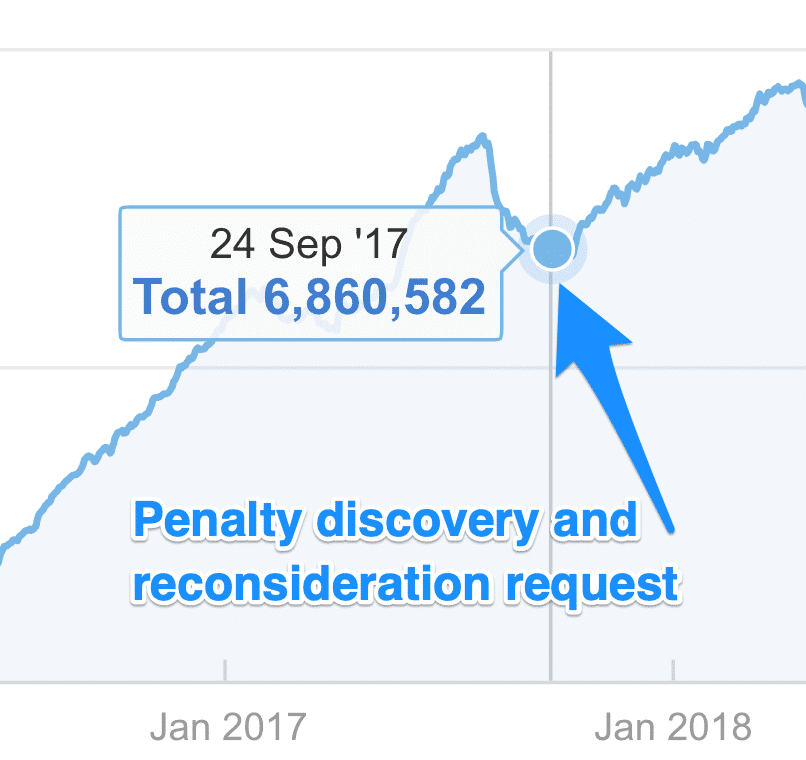
One client came to 97th Floor with stalled SEO efforts, despite their best efforts. Some digging during our onboarding site audit uncovered that they were unaware a manual action penalty had been placed on their site. Google Search Console revealed that structured data was being misapplied to a specific segment of the site's blog pages.
In the past, this site’s posts had included a comments section. But over time the comments became too much to moderate and they ultimately decided to disable comments for the site. In doing this, however, they forgot to disable the structured data on the backend that called out the recently disabled blog comments.
Once this was discovered, it was imperative that all of the residual structured data was removed from those pages. Doing that reassured Google that the client’s site wasn’t claiming to have something on-page that they didn’t actually have. It was a relatively easy fix, but not an obvious find for the untrained eye.
Fixes were applied. The next step was to put together a reconsideration request and submit it to Google. Once the reconsideration request was filed, the penalty was lifted within a week and the site saw significant increases in organic traffic from that point on.
Google isn’t outright about much of their algorithm. This is why the latest user-experience based algorithm update Page Experience, is getting so much attention. This update and the trends in recent updates pay particular attention to the Usability discipline, which ensures the overall SEO strategy is UX based.
Improved user experience is important to have baked into any SEO strategy from the beginning, because it has the potential to aid both your SEO-focused goals and your bottom line business goals like conversions.
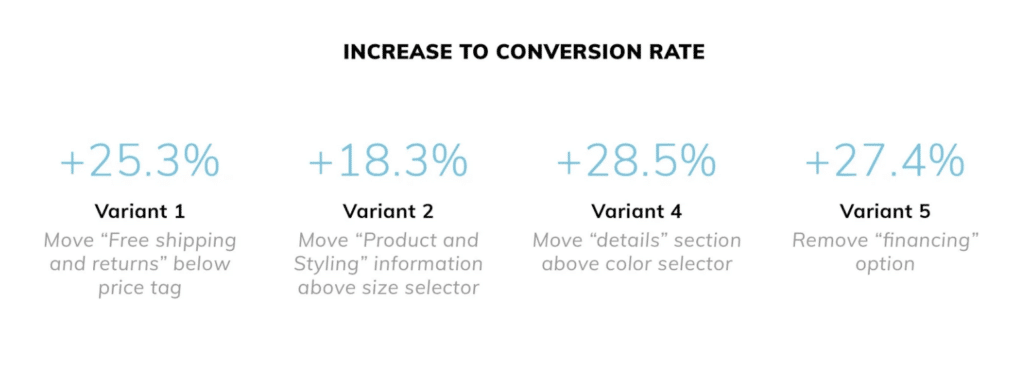
An ecommerce business came to 97th Floor with a dilemma: users were reaching their product pages, but not converting. Hypotheses were formed and ranked as to what site changes might have the greatest impact on UX, but even the most intuitive hypotheses aren’t a place to end.
Multi-variant testing showed which variations brought in the most conversions and new revenue. This was a luxury ecommerce business, even small upticks in conversion rates can show significant increases in revenue, which means they stood to gain quite a bit. In this case, almost every variant showed a positive increase in both conversions and revenue. Overall, implementing these changes led to a 29% increase in revenue over just a few weeks.
In prioritizing the usability, our client gained tangible and actionable information about what their customers like to see on their site, which in this case was removing the financing option from their checkout.
Readability in this sense refers to the ease of reading your site for bots, not humans. Readability in this sense should not be confused with user-focused readability scores that measure the sophistication and ease of reading of your copy.
Cleaning up your site’s readability can play a significant role in its ability to rank, because metadata are an important way bots analyze the content on your pages.
Improving the metadata that adorn a site’s pages is an essential way to signal to Google the relevance of the on-page content to the target focus keyword.
The most critical ways to improve readability include:
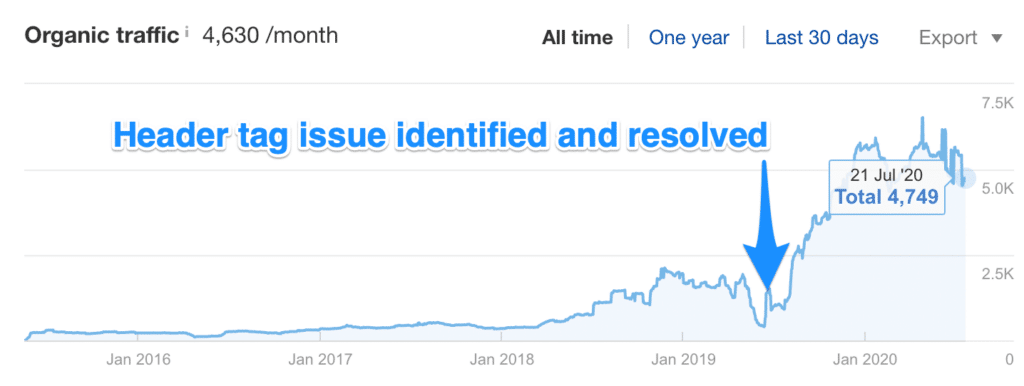
A new client approached us with hopes to increase their blog’s organic traffic. They had been blogging for years, but they weren’t seeing the traffic increases they were hoping for. An audit revealed that they were misusing H1 and H2 tags throughout their blog, at the fault of the customer template they were using. They’d chosen to use more H1 tags as H2 tags, effectively using multiple H1 tags per page. But that looked most attractive on their template, so they unknowingly were shooting their blog’s readability in the foot.
They had no idea they were defying Google’s guidelines. And while their use of H1 tags might have been easier on the eyes, it wasn’t helping them win Google’s favor. Once the H tag errors were resolved, our client saw an immediate jump in traffic. These simple readability changes brought in a golden age of SEO for their site that is still going strong.
A healthy backlink profile has always been a major part of a site’s rankability. A healthy backlink profile requires various tactics to not only increase backlinks; including branded links, anchor text distribution, link velocity, and more. Not only external links, but internal linking structure is a critical (and often overlooked) part of the linkability of a site.
Here are a couple ways you can do this:
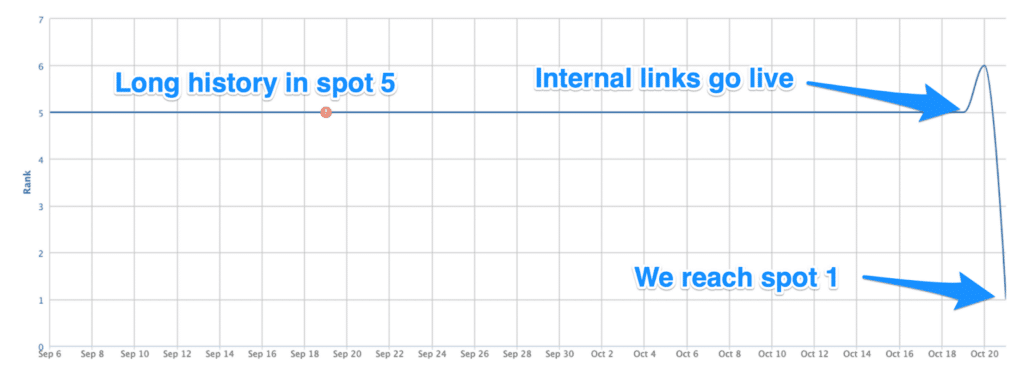
Our client was stalled ranking in position 5 on their chosen SERP, and needed to move up to gain the visibility they desired. An analysis of their site revealed they had several pages that all concerned the same topic, which can create confusion for Google. In addition, most of their pages were four links from the homepage, while few were just one or two links away.
By creating a map for Google’s bots using internal linking (using just 7 new links), the site jumped in ranking from position 5 to position 1.
This keyword had an average month search volume of 15,000 searches, which means moving from spot 5 to spot 1 generated an average of 3,300 additional clicks to the client’s webpage per month for just this keyword alone.
Indexability is how well Google is able to crawl and index a site. Google indexes sites similar to how books are indexed in a library, collecting relevant information about your site and making it easier for users to find. So, it’s in your best interest to be sure Google can easily index your site, and that it’s getting the relevant information from your site that it needs.
While readability deals exclusively with metadata, indexability is a bigger umbrella that deals with the indexability of your entire site.
If Google can’t access and process your website’s content effectively, it won’t rank your site’s URLs very well. If part of your site is unindexed or poorly indexed, Google won’t know what your website is all about. This leads to missing pages, poor rankings, and overall less traffic. Once you discover symptoms of crawlability or indexability issues on your site, you’ll need to investigate further to uncover the source.
These areas of investigation often include:
In a technical site audit for a client, we discovered some irregularities in their indexation. Further digging uncovered pages missing from the overall coverage of the site, which is a common symptom of an indexability error.
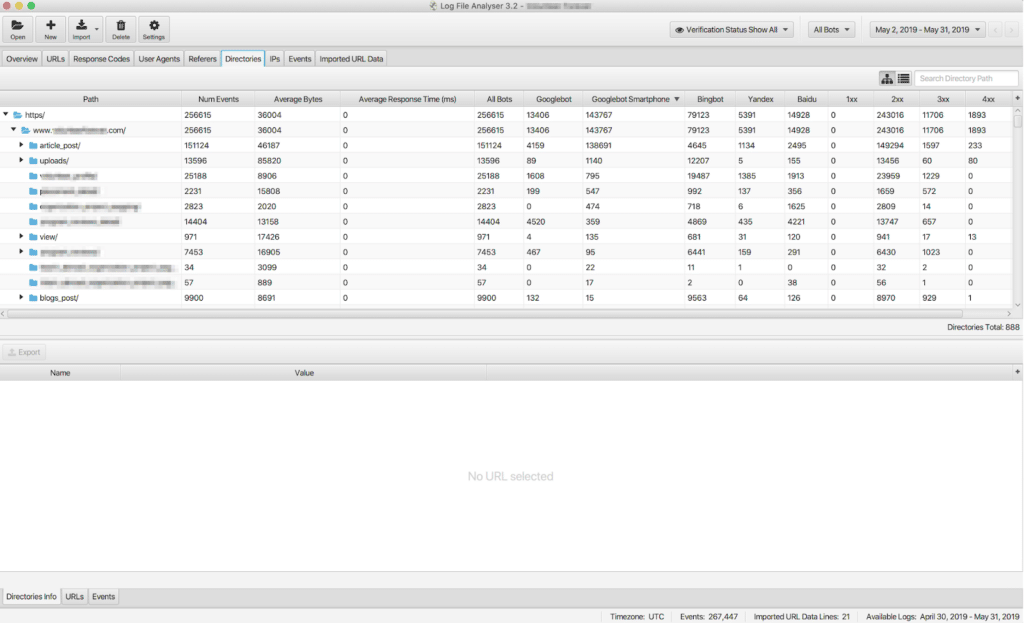
The execution of a log file analysis directed our efforts in improving indexability. The analysis revealed several actions that could be taken to fix the indexing issues the site was experiencing, including: clearing a number of redundant subfiles that Google was crawling, broken pages that needed to be redirected, and other folders Google was crawling that didn’t play a role in the overall SEO strategy.
A strategic clean up of the site’s indexability issues resulted in not only immediately more traffic, but an increase in organic revenue for our client. In the 30 days immediately following the rollout of these changes, Google organic transactions increased by 25.86%.
At 97th Floor we have about a dozen platforms to track our campaign’s performance but most commonly we use Ahrefs, Google Analytics, and Stat. You can decide what platforms and strategies are most effective for your company, however, no matter what platforms you decide to use, it’s important that you’re accurately tracking the progress of your campaigns.
The most crucial part of this data mix is making sure that the deployment and configuration of Google Analytics is not only correct but that it’s tracking the right conversions as they relate to our SEO strategy and client business goals.
Below are some ways that we do this:
You can’t make informed decisions if you aren’t tracking relevant data. Our teams consistently identify goals and values for clients in order to better track the impact of the ongoing SEO strategy in place for them.
As we continue to iterate on what is driving the most conversions to the site, we’re able to focus the strategy efforts into the parts of the site that are making the most difference for the client’s bottom line.
Holistic SEO requires visibility across the entire system. That means using tools that help teams understand how content, UX, technical performance, authority, and indexing work together.
There is no single “holistic SEO tool.” Instead, effective teams assemble a stack based on their maturity, goals, and internal capabilities.
Below are common tool categories that support holistic SEO execution:
As teams mature, the goal is not to add more tools, but to ensure the data they provide is actionable and aligned with business outcomes. Tool selection should always be driven by what decisions need to be made, not by feature checklists.
Holistic SEO is best understood in practice. The following examples show how aligning multiple disciplines leads to sustainable ranking improvements, traffic growth, and measurable business impact.
National Funding is a leading financial services company providing tailored financing solutions for small and medium-sized businesses.
The challenge
After a Google algorithm update, National Funding lost rankings for high-value keywords such as “bad credit business loans.” These rankings were critical to lead generation, and isolated fixes were not producing results.
The strategy
97th Floor implemented a holistic SEO strategy focused on restoring trust, relevance, and structural clarity across the site. This included:
The results
This systemwide approach restored and strengthened keyword visibility, leading to:
Rather than overcorrecting in one area, the holistic strategy allowed improvements to reinforce each other.
Gigamon is a network analytics vendor providing hybrid cloud infrastructure, security, and observability solutions for enterprise organizations.
The challenge
Gigamon was investing heavily in SEO but could not break into the top rankings for the highly competitive keyword “network security.” Despite doing many things right, progress had stalled.
The strategy
97th Floor took a counterintuitive, holistic approach. Instead of forcing incremental gains on the primary keyword, we:
The results
The strategy produced rapid and compounding gains:
Today, this page remains the top driver of organic traffic for Gigamon, a clear example of how holistic SEO can unlock competitive keywords by strengthening the system as a whole.
Each of these six disciplines is aimed at taking into account the various aspects of an SEO strategy. When built and executed properly, these six disciplines will positively impact the bottom line and delight your visitors.
Knowing when to reexamine each of these 6 areas of SEO will come down to knowing the symptoms of issues relating to each discipline. This goes beyond just seeing a decline in ranking or traffic. In fact, it’s knowing the specific symptoms and how to treat them that can make your SEO strategy powerful.
As you grow to understand each of these 6 realms you’ll be able to build effective. Just remember: you will get more out of strategies that are flexible and produce the greatest yields long-term.
As more time is spent mastering each of the six disciplines, your SEO strategy evolves from a collection of tactics into a cohesive system—one that compounds over time, driving lasting growth and resilience in the face of every algorithm update.
Here at 97th Floor, elevating brands we believe in is part of our culture. In light of this, I thought it would be fun to analyze the digital marketing of a brand whose product I like and am very familiar with and really enjoy. That brand is YNAB.
What Is YNAB?
YNAB stands for You Need a Budget and when answering the question, "what is YNAB?", it's important to understand what YNAB does. It is a computer program used for budgeting and tracking expenses. The software takes a different approach from tools like Mint, which focus on pulling all of your bank accounts and credit/debit card transactions into one place where you can categorize and review transactions after they happen. This reactive approach works for many people and was actually my tool of choice before I discovered YNAB.
YNAB takes an opposite, more proactive approach to finances. By educating users on how to properly plan where each dollar will go, while also providing the technology to track spending, YNAB puts people in charge of their finances. A couple of years ago, a colleague mentioned it to me in a conversation and I’ve used it ever since. It is incredible for keeping track of spending and overall being on top of your finances.
But this isn’t an advertisement. If you want to know more about the program, YNAB has an excellent intro to the finer details here. For now, I’d like to take a step back from what YNAB can do, and instead focus on the digital marketing side of things.
For a while, I’ve wanted to dig into YNAB’s online marketing efforts to see what gems I could offer them as a “here’s to YNAB” type toast. As I dug deeper, I realized that YNAB has done an incredible job in building a devout YNAB community online. It is a difficult task to create a cult-like following (which I mean in the most positive sense) around your product. YNAB has created thousands of YNAB ambassadors by leveraging communities on Reddit, Facebook, and other social media sites, and through effective email campaigns.
But while YNAB is doing great things in the community building space, I want to shift the focus to what they could be doing with organic digital marketing to reach even more people and add another channel to fuel their community. For this post, the focus will largely be on SEO-related potential.
To begin, let's take a look at where YNAB is at organically. YNAB ranks for 6,069 keywords in the top 50 results as per Ahrefs. Again, one thing that is immediately apparent is how great of a brand YNAB has built (I’ll probably echo this many times throughout the post). Its brand search for the keyword “YNAB” generates around 130,000 monthly searches alone. Add the rest of its branded keywords and you have a very substantial amount of branded organic traffic.
YNAB also ranks for many non-branded keywords, albeit not nearly as well. There are many opportunities to push up these peripheral keywords so that they bring in significantly more search volume. We’ll get into this in greater detail further down in the analysis.
Part of YNAB’s building such a strong brand is due to leveraging the passionate following that surrounds the online financial niche. Some of the biggest communities on Reddit, like r/financialindependence, are related to finances, such as the following:
Reddit.com/r/personalfinance - 10,235,956 subscribers
Reddit.com/r/frugal - 628,703 subscribers
Reddit.com/r/financialindependence - 183,573 subscribers
The YNAB online community has done an excellent job siphoning traffic from these various subreddits into their own YNAB Reddit community (Reddit.com/r/ynab). The YNAB Reddit community, or subreddit, has over 30k subscribers. Many subreddits are created and die before they ever get enough users to sustain growth—the Reddit.com/r/budgetfirst/ subreddit, which was created by a group of YNAB Reddit users after YNAB switched to a subscription-based model, is one such example.
Despite the challenge of creating a sustainable reddit community, YNAB has managed to create a community that not only wants to be more involved in the YNAB ecosystem, but also help others in their pursuit to financial freedom. Gotta say, 30k hungry brand ambassadors is never a bad thing to have.
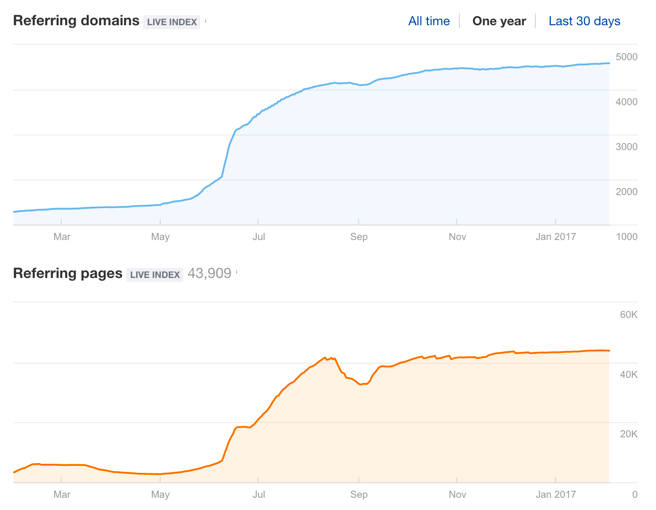
Ahrefs indicates that YNAB is increasing in referring domains quite healthily. The data below raises the question: where is YNAB getting their links from?
One thing I found right away, is that YNAB has some great links on what I like to call “feeder sites.” “Feeder sites” are sites that have content that is syndicated by many other large publications. Finding valuable feeder sites can be immensely powerful for SEO due to the amount and the quality of links that can be obtained.
Below is an example of what this feeder process looks like that YNAB has benefitted from.
An article was placed on the Reader’s Digest’s site, RD.com, entitled “34 Little Life Skills Everyone Needs to Be a Grown-Up.” RD.com is a feeder site to MSN.com as well as a handful of smaller sites. You can see that MSN.com syndicated the same article here. This means that for the effort of creating one very high-quality post, you can net a handful of links, sometimes from some large publications. This can be immensely powerful, and can lead to great jumps in increased rankings,
In the last few months, YNAB has received links like these:
And this is honestly only naming a few of the total links built recently.
YNAB is in a great position. It has the benefit of being able to target money-management communities with its methodology while at the same time targeting sites that focus on cell phone apps. This widens the targetable audience for the amount of websites YNAB can get links from. More links equal more authority, and when properly used, convert into better rankings and more traffic.
YNAB gets numerous mentions on both large and small publications. It is in the great position of garnering many mentions through its thousands of devoted fans. Typically, sites struggle with gaining more authority, therefore, they need a lot of high quality and well-targeted link building.
One note, however, is that many of the specific blog posts on YNAB’s site don’t get as much link love as the core YNAB pages (homepage, feature page, etc.). YNAB would benefit from additional links to their established blog posts, as well as to new posts as they are published. With the right content paired with YNAB’s community, this kind of link building should be cake.
YNAB has opportunities to generate much more organic traffic through their currently ranking pages. In order to diagnose how many opportunities there are, I pulled all ranking keywords (positions 1–50) from Ahrefs. Second, we needed to segment the data in order to see rankings in specific ranking buckets. I segmented rankings by keywords in the top 3 positions, positions 4–5, positions 6–10, page 2, position 21–50, and page 3+ rankings. I did this for every URL on the site in order to gain an understanding of each page and its rankings. The results looked something like this:

From a glance at the spreadsheet above, you can see a particular URL and what keyword positions that it ranks for. This makes it easy to determine which URLs simply need a bump in optimization and authority in order to generate traffic increases. This also allows you to forecast how big the traffic increases will be.
Let’s go through an example of how this data can enable us to take traffic-increasing action.
We see in the above screenshot that the blog post “How to Pay off $26k of Debt in 18 Months on a $35k per Year Income” ranks for 4 keywords in the top 1–3 ranking positions and 9 keywords in positions 4–5. The keywords in positions 4–5 represent around 520 monthly searches. This is what we see on the keyword level.

Looking at the average difficulty of these keywords, as well as taking into account that this post ranks as it does with not many links, YNAB could bump these 9 keywords up into the top 3 with only a handful of inbound links. This would increase the traffic of this page to somewhere between 100–150% with minimal effort. Sure, this is merely a couple hundred visits extra, but considering the minimal effort it would take, it would be worth it. Furthermore, you can see how this strategy can scale across the entire site. YNAB could increase overall traffic to the site by a large margin simply by taking advantage of this strategy applied too many of their blog posts.
The Google Featured Snippets box can be incredibly powerful to leverage. I want to show you how YNAB could leverage it to rank in a position essentially above position #1 (sometimes referred to as position #0). For context, the Google Featured Snippets box was debuted in Sept 2014, and was created as a vehicle for putting relevant answers in user’s hands much more quickly. For example, if you search “how to budget and save money” in Google, you will see something like this (highlights in red are mine):

You can see in the above screenshot that bettermoneyhabits.bankofamerica.com occupies the #0 position in Google’s featured snippet. This gives bankofamerica.com a strong advantage over americasaves.org in positions #1 and #2. Not only does bankofamerica.com have an augmented snippet, it also rank above position #1. This position can generate much more traffic than position #1.
Another value in ranking in the Google Featured Snippets box is that you can circumvent the climb to the top and be picked for a top page ranking, even if your site technically occupies a different rank land somewhere else on page 1. A detailed post on the specifics of how to do this can be found here.
YNAB already ranks on the first page for a handful of keywords that have the Featured Snippets box, but someone else shows up for the Featured Snippet. Because YNAB already ranks on the first page, it could implement some on-page changes and increase its chances of stealing the coveted Featured Snippets position. This would drastically increase the traffic YNAB receives from currently ranking keywords. For example, YNAB ranks in the 10th position for “how to pay off debt." This keyword generates around 5,400 searches per month. At the 10th position, YNAB doesn’t pull in that many of the 5,400 searches. However, if YNAB ranked in position #0, it would pull in a large percentage of that traffic.
Here are some of the keywords that have Featured Snippets YNAB could steal:

The process of optimize live posts is fairly simple, although it takes diligence. Cole Rieben, one of our Campaign Managers here at 97th, has a great post on what changes can be made in order to boost a site into the Featured Snippet spot (found here).
Without a doubt, creating new, high-quality, keyword-targeted content is one of the most rewarding actions YNAB could take. Content should be created for the user first, but in order for it to be valuable, it must also be findable. SEO done well is the perfect marriage between solid content and the ability to have that content found when users are asking questions. Keyword research can further help you understand exactly what kind of content people are looking for. It is an insight into their needs. Think about it, these people are asking questions already, we just need to meet their question with the best answer.
YNAB has created a lot of content. Most of it is fairly short and doesn’t rank for a ton of keywords. In addition, there are so many budgeting-related questions being asked daily. If YNAB can answer these questions with their grade-A philosophy and budgeting tool, it would be a huge win-win. Users get the answers they need, and YNAB grows.
To analyze what the market looks like in terms of budget/finance related keywords, I pulled a lot of data—like, over 111,000 unique keywords worth of data.
After researching the keyword level data, we needed to organize it to make it useful. The goal in leveraging all of this data is to understand a few things.
The first is keyword groupings of well-ranking URLs in the finance space. These URLs are from many other finance related sites. The data allow us to understand what keyword groups Google ranks these pages for. Secondly, I want to understand what it took for these sites to rank well
